
Affordable Press Brake Price Guide for Small Workshops and Fabricators


Introduction to Affordable Press Brake Solutions
For small workshops and independent fabricators, investing in a press brake is often the single most significant step toward scaling production and improving part accuracy. However, navigating the market to find an affordable press brake price for small workshops and fabricators can be daunting. The price of a press brake is not just a single number; it is a reflection of technology, capacity, and long-term reliability. In this guide, we will break down the financial landscape of metal bending machinery, helping you identify where to save money and where to invest for the best return.
Small-scale fabrication requires a balance between versatility and cost-efficiency. Unlike large industrial plants that run 24/7, a small shop needs a machine that is easy to set up, requires minimal maintenance, and can handle a variety of jobs—from custom brackets to architectural trim. Understanding the nuances of the affordable press brake price small workshops fabricators seek involves looking beyond the initial quote and analyzing the total cost of ownership.
HARSLE understands that for a growing business, every dollar counts. Whether you are moving away from manual folding or upgrading from an outdated mechanical brake, this guide provides the technical and financial clarity needed to make an informed decision. We will explore the price ranges for different machine types, the components that drive those costs, and how to calculate the return on investment for your specific workshop environment.
Price Range Overview: What to Expect in Today’s Market
When searching for an affordable press brake price for small workshops and fabricators, the market generally categorizes machines into three tiers based on control systems and tonnage. For most small shops, the “sweet spot” lies in the 30-ton to 100-ton range with a bending length of 1.2 to 3.2 meters. These machines are compact enough for limited floor space but powerful enough for common sheet metal gauges.
Entry-Level NC Press Brakes
NC (Numerical Control) press brakes are the most budget-friendly option. These machines typically use a simple controller like the E21, which manages the backgauge (X-axis) and the stroke depth (Y-axis). For a standard 40-ton to 63-ton NC machine, prices often range from $8,000 to $14,000. These are ideal for shops doing repetitive work where complex multi-step bending sequences aren’t required every day.
Mid-Range Economic CNC Press Brakes
Moving up to a CNC (Computer Numerical Control) system introduces synchronized hydraulic cylinders and more sophisticated controllers like the DA-53T or TP10S. These machines offer better precision and faster setup times. For a small workshop, an economic CNC press brake (e.g., 80 tons / 2500mm) typically costs between $18,000 and $28,000. This tier is the most popular for fabricators looking to balance an affordable press brake price with modern features.
High-Precision CNC and Specialized Models
If your workshop specializes in high-tolerance aerospace or medical components, you may need a high-end CNC machine with 4+1 axes (X, R, Z1, Z2, and crowning). These machines start at $35,000 and can go much higher depending on the brand and specific features. While the price is higher, the reduction in scrap and setup time can justify the cost for high-value projects.

Main Cost Drivers: What Are You Paying For?
Understanding what influences the affordable press brake price small workshops fabricators encounter is essential for effective budgeting. Several key factors dictate the final invoice of a machine. By identifying which factors are non-negotiable for your work, you can avoid overpaying for unnecessary features.
- Tonnage and Bending Length: The physical size of the machine is the primary cost driver. A 100-ton machine requires more steel, larger hydraulic cylinders, and a more robust frame than a 40-ton machine. Similarly, a 4-meter bed is significantly more expensive than a 2-meter bed due to the structural integrity required to prevent deflection.
- Control System Brand: The “brain” of the machine varies in price. Basic Chinese controllers are inexpensive, while European systems like Delem (Netherlands) or Cybelec (Switzerland) add a premium of $2,000 to $5,000 to the machine price but offer superior software and global support.
- Hydraulic Components: High-quality valves and pumps from brands like Bosch Rexroth or Hoerbiger ensure smooth operation and longevity. Opting for these brands might increase the initial price but drastically reduces the risk of leaks and downtime.
- Backgauge Complexity: A simple X-axis backgauge is standard. Adding an R-axis (height adjustment) or Z1/Z2 axes (lateral movement) increases the mechanical complexity and the price. For many small shops, a 2-axis (X, R) or 3-axis system is the perfect middle ground.
Another factor often overlooked is the frame construction. A heavy-duty, vibration-dampened frame ensures that the machine maintains accuracy over years of use. While a lighter frame might result in a more affordable press brake price today, it may lead to accuracy issues as the machine ages and the metal fatigues.
Configuration Impact: Balancing Performance and Budget
The configuration of your press brake determines its versatility. For small workshops, the goal is to choose a configuration that handles 90% of your work efficiently without paying for the 10% of extreme cases that could be outsourced. When looking for an affordable press brake price for small workshops and fabricators, consider the following configuration choices:
Torsion Bar vs. Electro-Hydraulic Synchro
Torsion bar machines (NC) use a mechanical link to keep the two cylinders in sync. They are rugged and cheap. Electro-hydraulic synchro machines (CNC) use electronic sensors and proportional valves to monitor the position of the ram hundreds of times per second. While synchro machines are more expensive, they allow for off-center bending and provide much higher precision, which is often necessary for modern fabrication standards.
Crowning Systems
When bending long sheets, the center of the machine tends to deflect, resulting in a “canoe” shape where the angle in the middle is different from the ends. A crowning system compensates for this. Manual crowning is an affordable add-on (approx. $800-$1,500), while motorized CNC crowning is more expensive but adjusts automatically based on the controller’s calculations. For a 2.5-meter or 3-meter machine, some form of crowning is highly recommended.
Safety Systems
Safety is paramount, but it comes at a cost. Basic light curtains are standard in many regions, while advanced laser protection systems (like DSP or Fiessler) provide better protection for the operator’s hands without slowing down production. These laser systems can add $2,000 to $4,000 to the price. Small shops must weigh the cost of these systems against local safety regulations and insurance requirements.
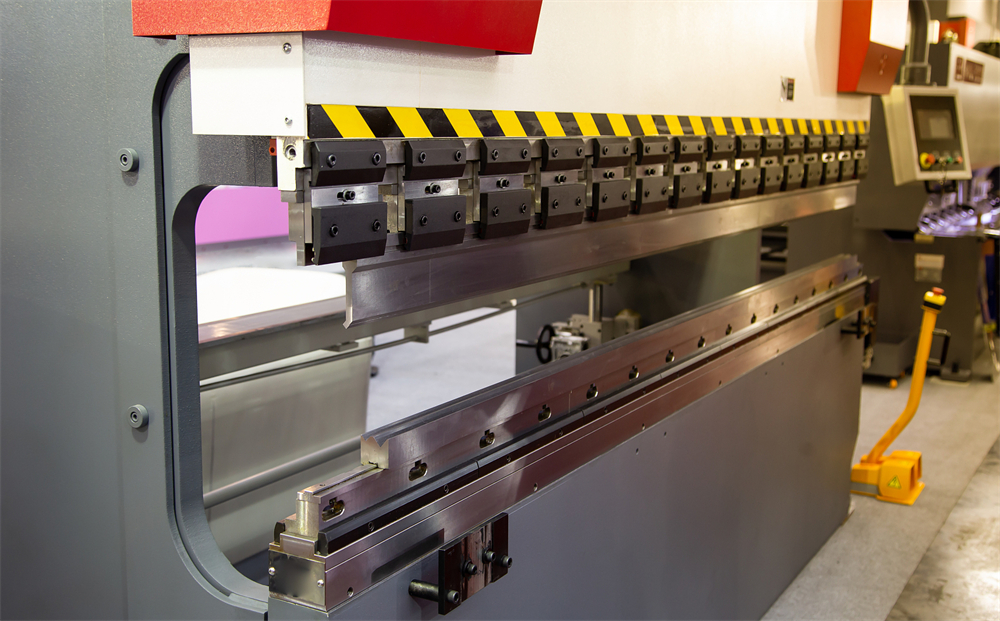
Hidden Costs: Beyond the Sticker Price
The affordable press brake price small workshops fabricators see in a catalog is rarely the final cost to get the machine running. To avoid budget overruns, you must account for several “hidden” or additional expenses that accompany a new machinery purchase.
| Expense Category | Estimated Cost (USD) | Description |
|---|---|---|
| Shipping & Logistics | $1,500 – $5,000 | Ocean freight, port fees, customs duties, and local flatbed delivery. |
| Installation & Training | $1,000 – $3,000 | Technician fees for leveling the machine and training staff on the controller. |
| Tooling (Dies & Punches) | $1,500 – $5,000 | Standard machines often come with one set, but custom jobs require specific V-dies. |
| Electrical Upgrades | $500 – $2,500 | Ensuring your shop has the correct 3-phase power and circuit breakers. |
| Hydraulic Oil | $300 – $600 | Most machines ship dry; you will need 100-300 liters of 46# hydraulic oil. |
Tooling is perhaps the most significant ongoing cost. A “cheap” press brake becomes expensive if it uses a non-standard tooling tang that forces you to buy proprietary, high-priced punches. HARSLE machines typically use standard Amada-style or Euro-style clamping, which allows fabricators to source affordable tooling from various suppliers worldwide. This flexibility is a key part of maintaining an affordable press brake price over the long term.
ROI Calculation: When Does a Press Brake Pay for Itself?
To justify the affordable press brake price for small workshops and fabricators, you need to look at the Return on Investment (ROI). For many small shops, the primary driver for buying a press brake is moving production in-house. If you are currently outsourcing your bending, you are paying for the third party’s overhead and profit margin, plus the logistical cost of moving parts back and forth.
Consider this example: A small shop spends $1,500 per month on outsourced bending services. By purchasing a $20,000 CNC press brake, the monthly finance payment might be around $450. Even after accounting for electricity and labor, the shop is saving over $800 per month. In this scenario, the machine pays for itself in less than two years. Furthermore, having the machine in-house reduces lead times from weeks to hours, allowing the shop to take on more “rush” jobs that command higher prices.
Another factor in ROI is material waste. A modern CNC press brake with accurate backgauging reduces the number of “test bends” and scrapped parts. If you are working with expensive materials like stainless steel or aluminum, a 5% reduction in waste can add up to thousands of dollars in annual savings. When evaluating the affordable press brake price small workshops fabricators are offered, always calculate how much the machine’s precision will save you in raw materials.
Buying Advice for Small Workshop Owners
Choosing the right machine requires a strategic approach. Here are several tips for small fabricators looking to maximize their investment:
- Don’t Overbuy Tonnage: Calculate the thickest material and longest length you actually bend. If 95% of your work is 3mm mild steel at 2 meters, a 63-ton or 80-ton machine is plenty. Buying a 160-ton machine “just in case” is a waste of capital and floor space.
- Prioritize the Controller: If you have multiple operators, a user-friendly touch-screen CNC controller is worth the extra $2,000. It reduces the learning curve and prevents costly programming errors.
- Check the Support Network: An affordable press brake price is meaningless if you can’t get spare parts. Ensure the manufacturer uses standard components (like Schneider electrics or Hiwin liners) that can be purchased locally in an emergency.
- Inspect the Build Quality: If possible, visit a showroom or ask for a video of the machine running. Look at the quality of the welds, the neatness of the electrical cabinet, and the smoothness of the ram movement.
- Consider the Resale Value: Well-known brands like HARSLE maintain their value better on the used market. A machine that holds 60% of its value after five years is a much better investment than a generic machine that is worth scrap value.
Finally, always ask about the warranty. A standard 12-to-24-month warranty on major components provides peace of mind and protects your cash flow during the critical first year of operation. For a small workshop, a reliable machine is a partner in growth, not just a piece of iron.
Frequently Asked Questions
What is the best tonnage for a general-purpose small workshop?
For most small fabricators, a 63-ton to 100-ton press brake is the most versatile. This range allows you to bend 3mm to 6mm mild steel over reasonable lengths, covering the vast majority of light-to-medium fabrication tasks.
Is a used press brake a better deal than a new affordable one?
While a used machine might have a lower sticker price, it often comes with hidden risks like worn hydraulic seals, outdated controllers, or lack of safety features. A new, affordable press brake price for small workshops and fabricators from a reputable manufacturer like HARSLE often provides better long-term value due to the warranty, modern CNC features, and lower maintenance costs.
Can I run a press brake on single-phase power?
Most industrial press brakes require 3-phase power (220V, 380V, or 480V). While some very small electric models can run on single-phase, most hydraulic machines will require a phase converter or a power upgrade to your workshop. This should be factored into your initial budget.
How much space does a small press brake require?
A typical 2.5-meter press brake has a footprint of approximately 3 meters by 1.6 meters. However, you must also leave at least 1 meter of clearance on all sides for maintenance and material handling. Always check the machine’s dimensions before finalizing your purchase.
How often does a press brake need maintenance?
Daily maintenance involves checking oil levels and cleaning the scales. Monthly, you should grease the backgauge and guide rails. A full hydraulic oil change is usually required every 2,000 to 4,000 operating hours. Proper maintenance is the key to ensuring your affordable press brake price doesn’t turn into an expensive repair bill later.












