Heavy Duty Press Brake Price Guide: Cost Ranges for Large Bending Jobs


Introduction to Heavy Duty Press Brake Investments
In the world of heavy metal fabrication, the press brake is the heart of the production line. When dealing with large-scale projects—such as shipbuilding, bridge construction, or heavy machinery manufacturing—standard press brakes simply won’t suffice. This is where heavy-duty press brakes come into play. These machines, typically ranging from 300 tons to over 3,000 tons in bending force, are engineered to handle thick plates and long workpieces with precision and reliability.
However, the primary question for any facility manager or business owner is: “What is the actual cost?” Understanding the Heavy Duty Press Brake Price : Cost Ranges Large Bending Jobs is not just about the sticker price on the machine. It involves a deep dive into technical specifications, customization options, and long-term operational costs. This guide aims to provide a comprehensive breakdown of the financial landscape surrounding these industrial giants, helping you make an informed decision for your next capital investment.
Investing in a heavy-duty press brake is a strategic move that can significantly expand a shop’s capabilities. By being able to bend thicker materials in-house, companies can reduce lead times and eliminate the high costs associated with outsourcing large bending jobs. As we explore the price ranges, keep in mind that the most expensive machine isn’t always the best fit, but the cheapest one often leads to higher costs in maintenance and downtime.
Heavy Duty Press Brake Price Range Overview
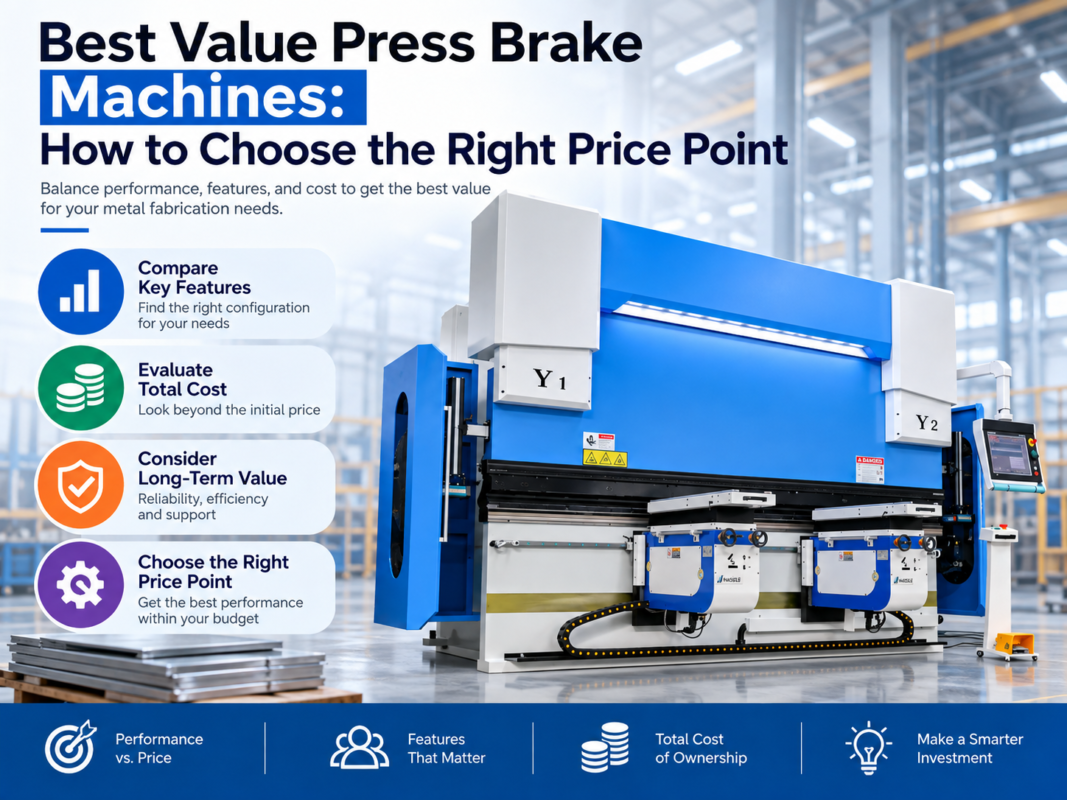
The price of a heavy-duty press brake varies wildly based on its tonnage and length. To provide a clear picture, we can categorize these machines into three primary tiers based on their capacity and typical market pricing. These figures represent the base machine cost and can increase significantly with high-end controllers or specialized tooling.
Tier 1: 300 to 500 Tons (The Entry-Level Heavy Duty)
Machines in the 300 to 500-ton range are common in general fabrication shops that occasionally handle thicker plates (up to 12mm or 16mm over several meters). For a standard CNC-controlled model in this category, prices typically range from $80,000 to $160,000. Factors such as the number of axes (e.g., 4+1 or 6+1) and the brand of the hydraulic system (like Rexroth or Hoerbiger) will push the price toward the higher end of this spectrum.
Tier 2: 600 to 1,000 Tons (Mid-Range Heavy Duty)
When you move into the 600 to 1,000-ton category, the engineering requirements for the frame and hydraulic cylinders increase exponentially. These machines are designed for heavy infrastructure components and large industrial tanks. The price range for these units generally falls between $180,000 and $450,000. At this level, features like hydraulic crowning and high-precision laser guarding become standard requirements rather than optional extras.
Tier 3: 1,000 Tons and Above (Ultra-Heavy Duty & Tandem Systems)
For the most demanding applications, such as utility poles or massive structural beams, machines exceeding 1,000 tons are required. Often, these are configured as “Tandem” systems, where two press brakes work in synchronization to bend extremely long parts. Prices for these systems start at $500,000 and can easily exceed $1,500,000 for custom-engineered solutions with 3,000+ tons of force and 12-meter bending lengths.
Main Cost Drivers for Large Bending Machinery
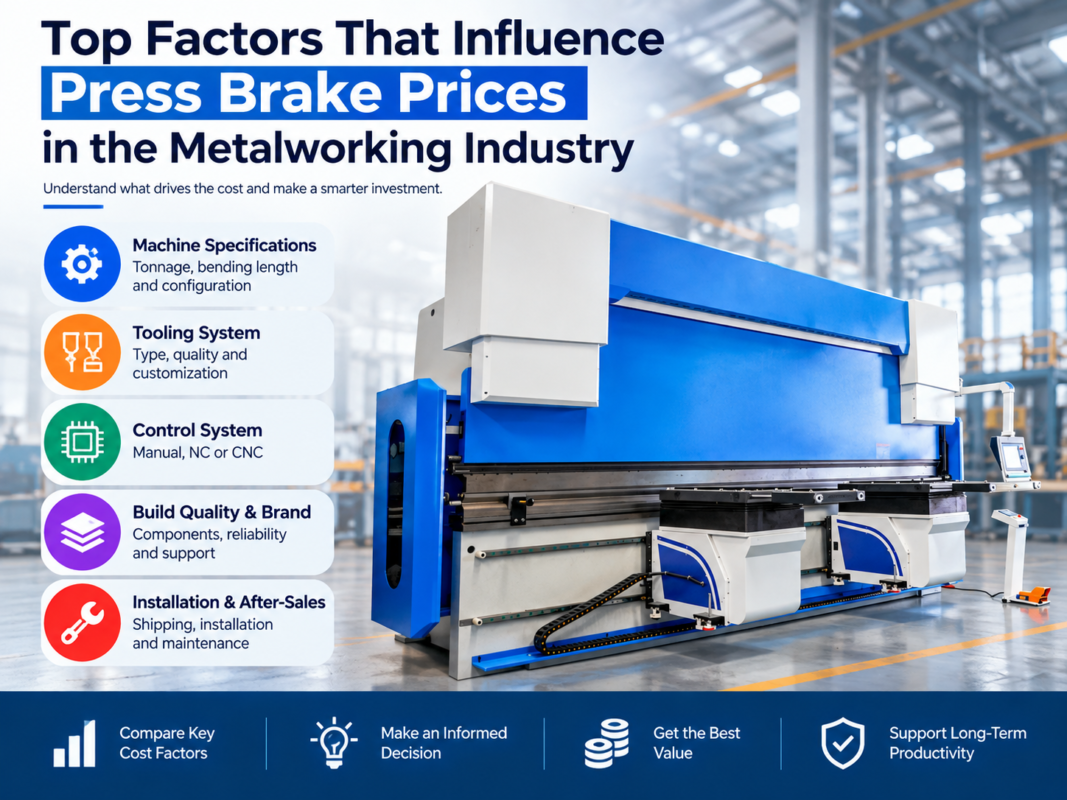
Why does one 500-ton machine cost $90,000 while another costs $140,000? Several critical factors drive the manufacturing cost and, consequently, the retail price of heavy-duty press brakes.
1. Frame Construction and Material Quality
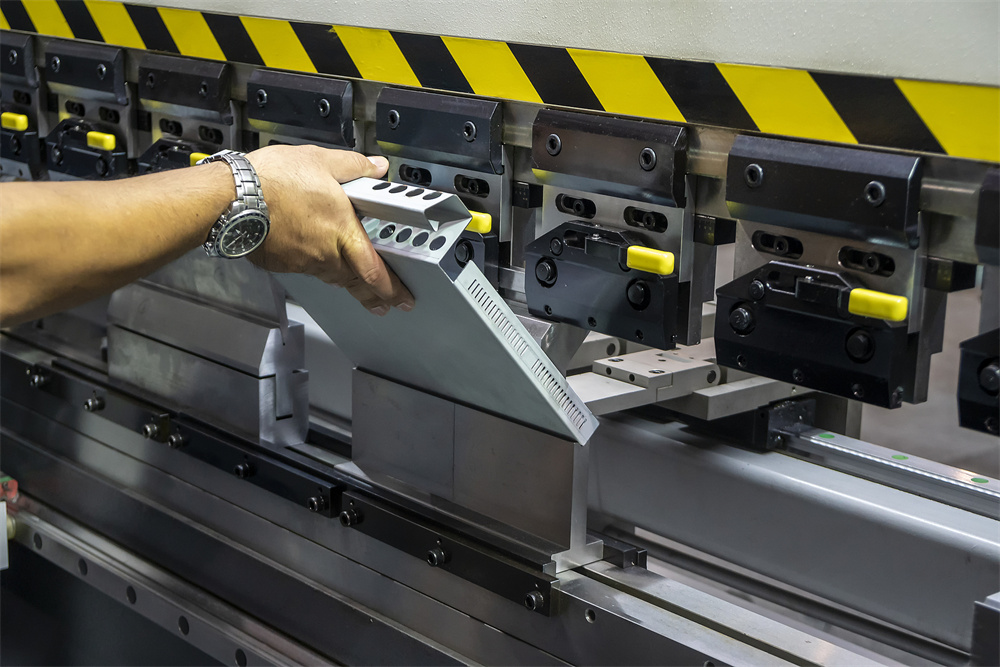
The sheer volume of steel required to build a 1,000-ton press brake is immense. However, it’s not just about the weight; it’s about the quality of the steel and the welding process. Heavy-duty frames must be stress-relieved through vibration or heat treatment to ensure long-term accuracy. A frame that flexes too much under load will result in inaccurate bends and premature wear on the hydraulic seals. High-quality manufacturers like HARSLE invest heavily in the structural integrity of the side frames and the bed.
2. Hydraulic System Sophistication
The hydraulic system is the muscles of the machine. In heavy-duty applications, the system must manage massive pressures while maintaining micron-level precision. Premium valves from brands like Bosch Rexroth or Hoerbiger are more expensive but offer better reliability and smoother transitions between high-speed approach and slow-speed pressing. Additionally, the cooling system for the hydraulic oil becomes a significant cost factor in high-tonnage machines that operate in multi-shift environments.
3. Throat Depth and Stroke Length
Standard machines come with a set throat depth (the distance from the center of the tool to the back frame). For large bending jobs, you often need a deeper throat to accommodate large flanges. Increasing the throat depth requires a much stronger (and heavier) frame to prevent the “C” frame from opening up under pressure. Similarly, a longer stroke length for deep box bending adds to the cost of the hydraulic cylinders and the overall height of the machine.
4. Tonnage and Bending Length
It is a simple rule of thumb: more tons and more meters equal more money. However, the price increase is not linear. Moving from a 4-meter bed to a 6-meter bed requires a significant increase in the thickness of the bed and ram to prevent deflection. This is why a 6-meter machine is often 40-50% more expensive than a 4-meter machine of the same tonnage.
Configuration Impact: CNC Controllers and Backgauges
The “brain” and the “positioning system” of the press brake are where you can see the most variation in the Heavy Duty Press Brake Price : Cost Ranges Large Bending Jobs. Choosing the right configuration is a balance between budget and the complexity of the parts you intend to produce.
CNC Controller Options
The controller dictates how easy the machine is to program and how well it handles complex sequences. Entry-level heavy-duty machines might use a basic NC controller (like the E21), but for large jobs, a full CNC system is highly recommended. Controllers from Delem (DA-53T, DA-66T, DA-69T) or Cybelec are industry standards. A high-end Delem DA-69T with 3D visualization can add $10,000 to $20,000 to the machine’s price compared to a basic 2D controller, but it significantly reduces setup time for complex parts.
Backgauge Complexity (The Axis Count)
A standard heavy-duty press brake usually comes with a 2-axis backgauge (X and R). However, for large, heavy plates that are difficult to maneuver, you might need additional axes:
- Z1 and Z2: Lateral movement of the fingers, essential for varying part widths.
- X-Prime (X1, X2): Allows for tapered bending.
- R-axis: Vertical movement of the backgauge, necessary for parts with multiple flange heights.
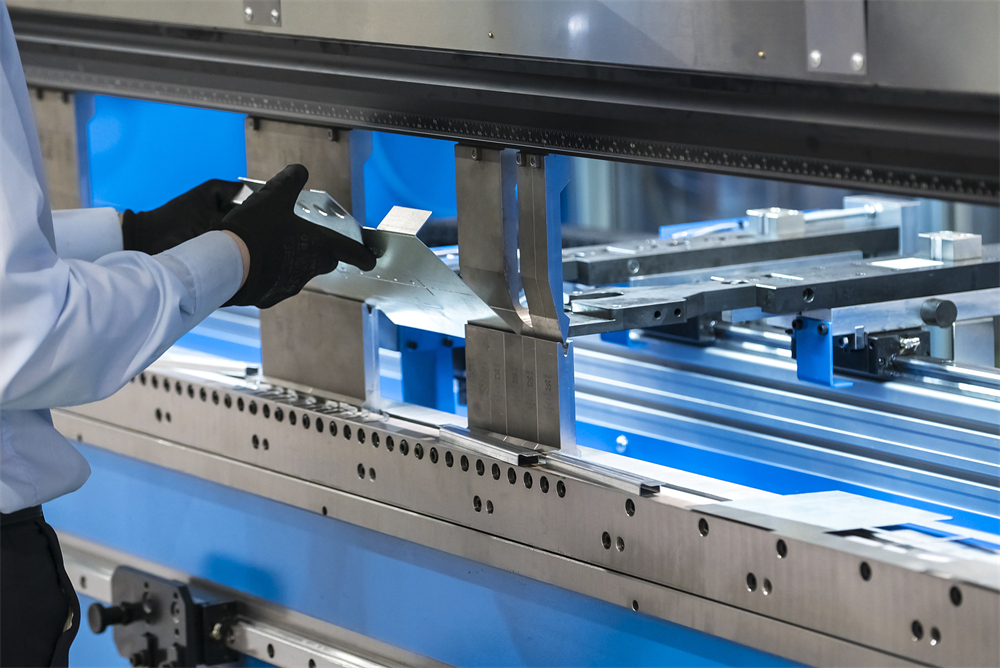
Each additional axis adds between $3,000 and $7,000 to the total cost. For heavy-duty machines, the backgauge itself must be built much more ruggedly to withstand the impact of heavy plates being loaded by cranes.
Crowning Systems
In long-bed machines, the bed and ram will naturally deflect in the center. To compensate for this and ensure a consistent angle across the entire length, a crowning system is required. Mechanical crowning (built into the table) is generally preferred for heavy-duty applications over hydraulic crowning because it offers more precise control across a wider range of materials. A high-quality motorized mechanical crowning system is a $5,000 to $15,000 investment depending on the length of the machine.
Hidden Costs of Owning a Heavy Duty Press Brake
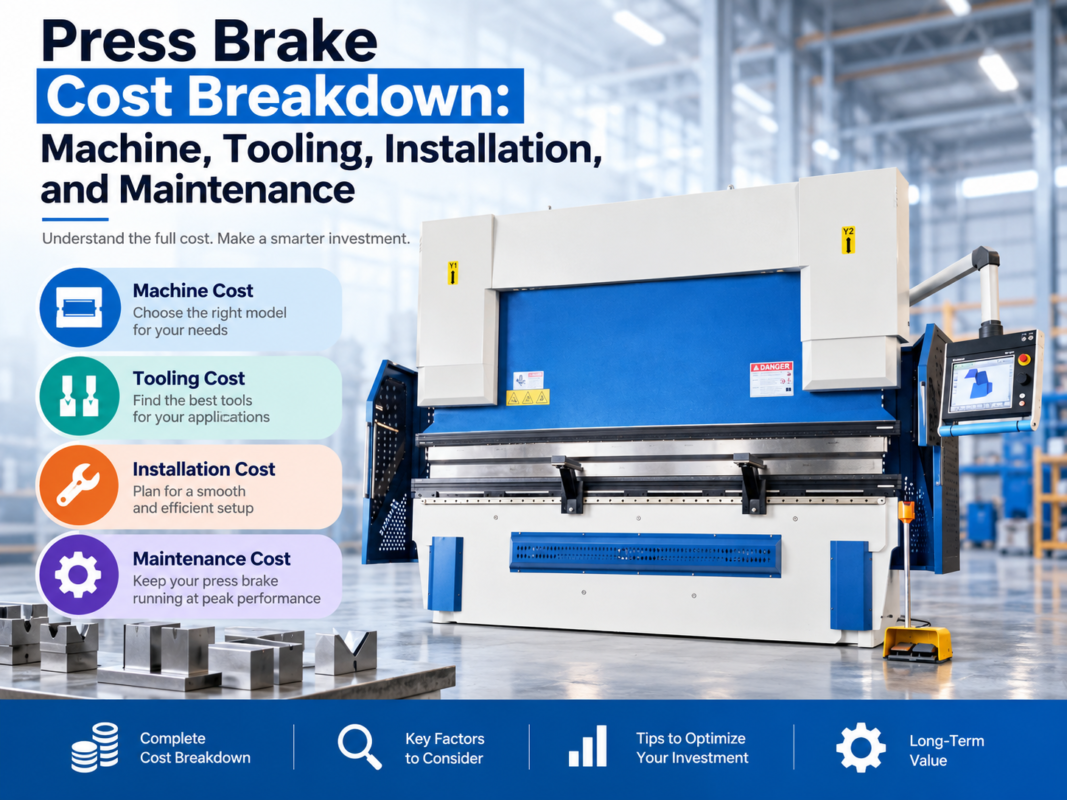
The purchase price is just the beginning. When budgeting for a heavy-duty press brake, you must account for several “hidden” costs that can add up to 20-30% of the initial investment.
1. Foundation and Pit Requirements
Unlike small press brakes that can sit on a standard factory floor, heavy-duty machines (especially those over 500 tons) often require a specialized reinforced concrete foundation. Some machines are so tall that they must be partially installed in a pit to keep the working height manageable. Excavating, reinforcing, and pouring a technical foundation can cost anywhere from $10,000 to $50,000 depending on soil conditions and machine size.
2. Shipping and Rigging
Transporting a 60,000-lb to 200,000-lb machine is a logistical challenge. It often requires oversized load permits, escort vehicles, and specialized trailers. Once it arrives, you will need a heavy-duty crane or a specialized rigging team to move it into place. Shipping and rigging for a large press brake can easily cost $5,000 to $25,000.
3. Tooling Costs
Heavy-duty tooling is significantly more expensive than standard tooling. A single 4-way V-die for a 1,000-ton machine can cost several thousand dollars. If you need a variety of radii or specialized punches for high-tensile steel (like Hardox), your initial tooling package could range from $15,000 to $50,000. Furthermore, heavy-duty tools are heavy; you may need to invest in tool-changing aids or storage racks.
4. Hydraulic Oil and Power
A large press brake might require 500 to 2,000 liters of high-grade hydraulic oil. Filling the tank for the first time is a notable expense. Additionally, the electrical requirements for a 50HP or 100HP motor may require upgrades to your facility’s electrical panel and will certainly impact your monthly utility bill.
Calculating ROI for Large Bending Jobs
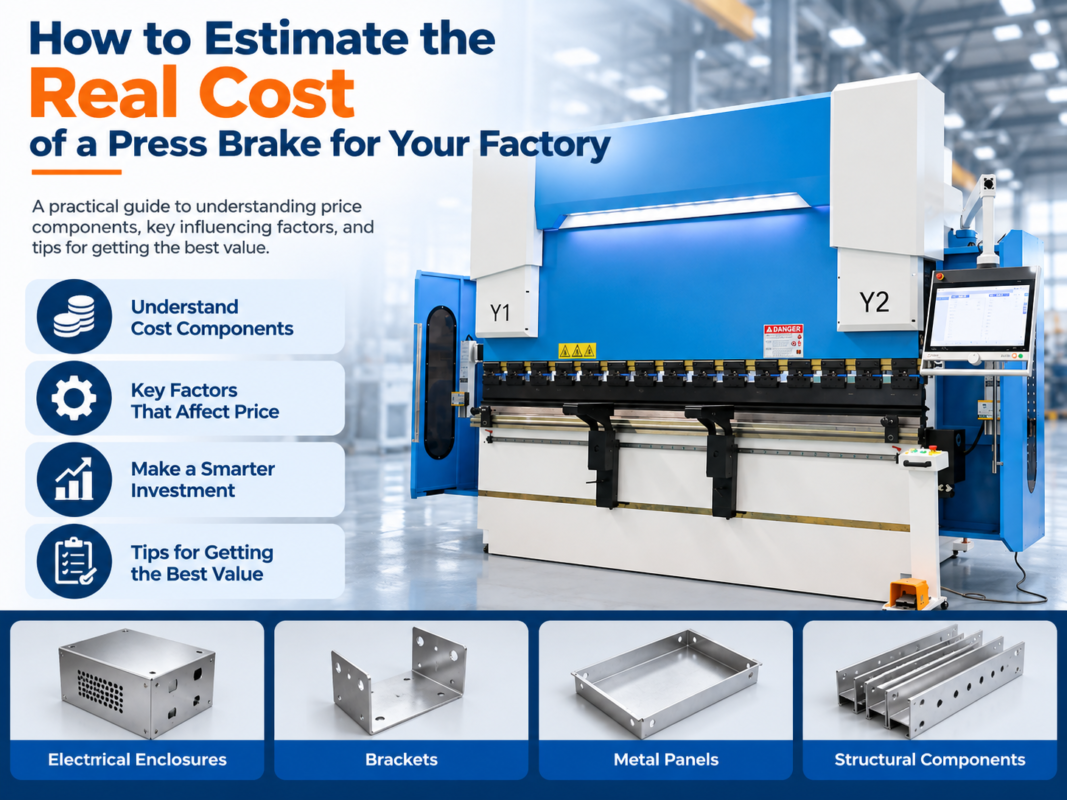
Despite the high Heavy Duty Press Brake Price : Cost Ranges Large Bending Jobs, the Return on Investment (ROI) can be remarkably fast if the machine is utilized correctly. Here is how to calculate the value:
Reduction in Outsourcing Costs
Many shops pay a premium to have thick plates bent by specialized service centers. If you are spending $5,000 a month on outsourcing large bending jobs, that’s $60,000 a year. A $150,000 machine could pay for itself in less than three years just by bringing that work in-house.
Material Savings and Accuracy
Modern CNC heavy-duty press brakes reduce scrap. When working with expensive materials like stainless steel or high-strength alloys, a 5% reduction in scrap due to better bending accuracy can save thousands of dollars annually. Furthermore, the ability to bend long parts in one piece instead of welding multiple smaller sections together saves significant labor and inspection costs.
Increased Market Competitiveness
Owning a 1,000-ton press brake puts you in an elite group of fabricators. You can bid on contracts that your competitors cannot, allowing for higher profit margins on specialized work. The “capability premium” is often the biggest driver of ROI for heavy-duty machinery.
Buying Advice: How to Choose the Right Machine
When you are ready to move forward, follow these steps to ensure you get the best value for your investment:
- Define Your Maximums: Don’t just buy for what you do today. Look at the thickest, longest, and highest-tensile material you plan to bend in the next five years. It is much cheaper to buy more capacity now than to replace the machine in two years.
- Check the Support Network: A heavy-duty machine is a long-term asset. Ensure the manufacturer (like HARSLE) has a solid reputation for technical support and spare parts availability. Downtime on a machine of this scale is incredibly costly.
- Request a Bending Test: Before finalizing the purchase, have the manufacturer perform a test bend on your specific material. This confirms the machine’s tonnage and crowning system can handle your specific requirements.
- Consider a Tandem Setup: If you occasionally need to bend very long parts but usually work on shorter ones, a tandem system (two smaller machines that can work together or separately) might offer more flexibility than one massive machine.
HARSLE offers a wide range of heavy-duty solutions tailored to specific industrial needs. By focusing on structural rigidity and integrating top-tier components, HARSLE ensures that the Heavy Duty Press Brake Price reflects true long-term value rather than just an initial cost.
Frequently Asked Questions (FAQ)
What is the lifespan of a heavy-duty press brake?
With proper maintenance, a high-quality heavy-duty press brake can last 20 to 30 years. The mechanical frame is almost indestructible; most upgrades over the years will involve the CNC controller and the hydraulic seals.
Can I bend thin materials on a heavy-duty press brake?
Yes, but it is not efficient. A 1,000-ton machine has a much slower cycle speed than a 100-ton machine. Additionally, the precision required for very thin gauges might be harder to achieve on a massive machine designed for thick plates. It is best to use the machine within its intended range (typically 20% to 100% of its rated capacity).
How often does the hydraulic oil need to be changed?
For heavy-duty machines, oil should be tested annually and typically changed every 2,000 to 4,000 operating hours. Keeping the oil clean and cool is the single most important factor in extending the life of the hydraulic pumps and valves.
Is CNC crowning necessary for all heavy-duty jobs?
If your bending length exceeds 2.5 or 3 meters, some form of crowning is essential to maintain a consistent angle. For heavy-duty jobs where material thickness varies, CNC-controlled mechanical crowning is highly recommended as it allows the controller to adjust the compensation automatically based on the program.
What is the difference between a torsion bar and an electro-hydraulic press brake?
Torsion bar machines use a mechanical link to keep the ram level, which is cheaper but less precise and harder to use for off-center loading. Electro-hydraulic (synchro) machines use independent hydraulic cylinders and electronic scales to ensure the ram is perfectly level, which is the standard for modern heavy-duty applications.