Hydraulic Press Buying Guide: How to Choose the Right Machine for Your Workshop


Introduction to Hydraulic Press Selection
In the world of metal fabrication, the hydraulic press stands as a cornerstone of versatility and power. Whether you are involved in deep drawing, punching, bending, or assembly, selecting the right machine is a critical decision that impacts your workshop’s productivity for decades. This Hydraulic Press Buying Guide: How to Choose the Right Machine for Your Workshop is designed to navigate the complexities of technical specifications, cost structures, and operational requirements. By the end of this guide, you will have a clear roadmap for the Hydraulic Press Buying : Choose Machine Workshop process, ensuring your investment yields the highest possible return.
Hydraulic presses operate on Pascal’s principle, using fluid pressure to generate massive amounts of force. Unlike mechanical presses, which have a fixed stroke and force curve, hydraulic presses offer full pressure throughout the entire stroke. This flexibility makes them indispensable for modern manufacturing. However, the sheer variety of configurations—from C-frame and H-frame to four-column designs—can be overwhelming for buyers. Understanding your specific application is the first step in narrowing down the options.
Price Range Overview: What to Expect
The cost of a hydraulic press varies significantly based on its capacity, complexity, and build quality. For a workshop looking to integrate new machinery, understanding these price brackets is essential for budgeting. Generally, hydraulic presses are categorized into three main tiers: entry-level, mid-range, and high-performance industrial systems.
Entry-Level and Small Workshop Presses
Entry-level machines typically include small C-frame presses or manual H-frame shop presses with capacities ranging from 10 to 50 tons. These are often used for light assembly, bearing removal, or small-scale bending. Prices in this category can range from $2,000 to $15,000. While affordable, these machines often lack the precision and speed required for high-volume production environments.
Mid-Range Production Presses
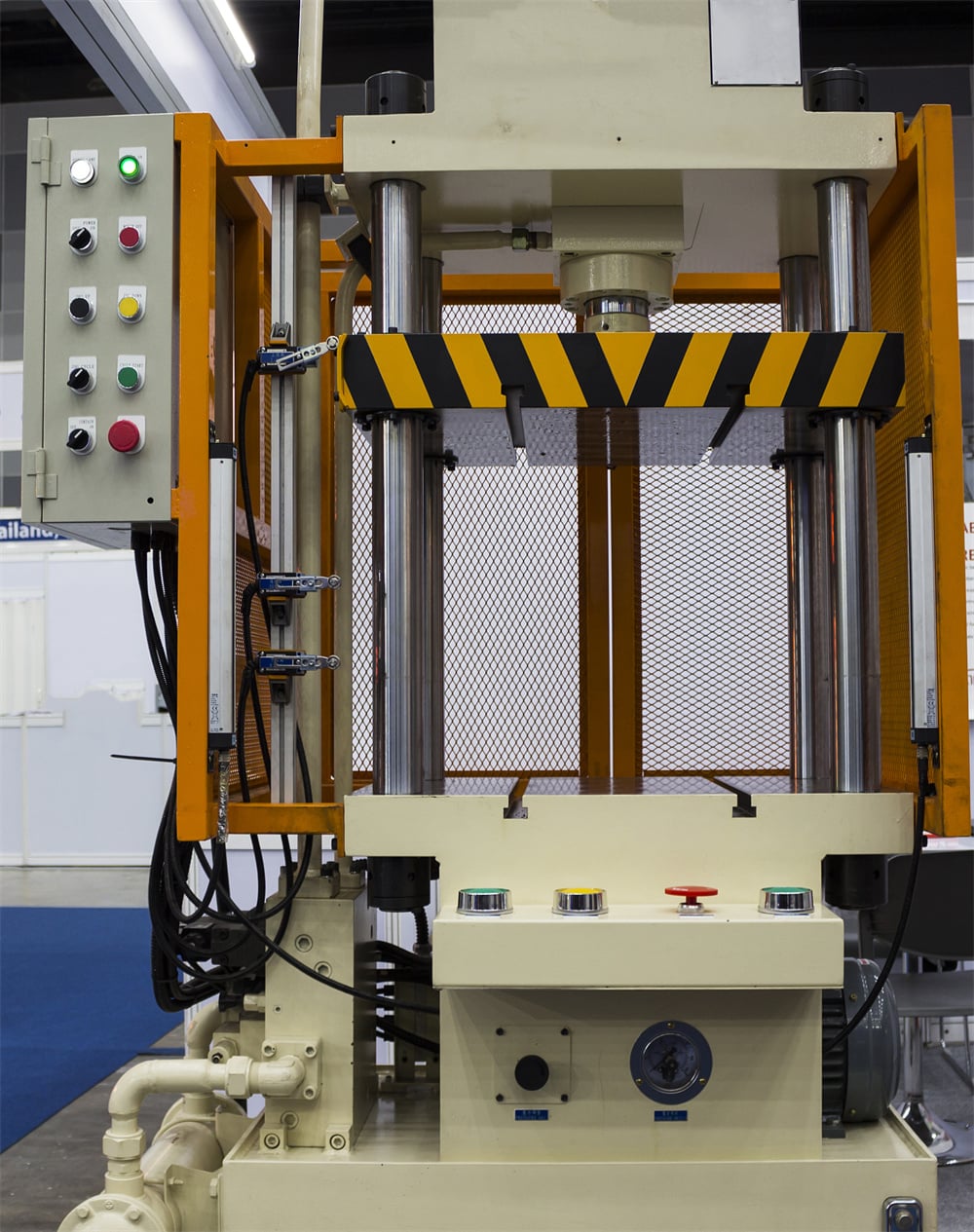
Mid-range presses are the workhorses of most metal fabrication shops. These include standard 4-column presses and reinforced H-frame models with capacities between 100 and 500 tons. These machines often feature semi-automatic controls and basic safety systems. Expect to invest between $20,000 and $80,000 for a reliable mid-range machine that can handle consistent daily shifts.
High-End and Specialized Industrial Systems
At the top of the spectrum are high-tonnage (1,000+ tons), CNC-controlled, or specialized deep-drawing presses. These machines are equipped with advanced servo-hydraulic systems, precision sensors, and custom tooling interfaces. Prices for these systems can exceed $150,000, reaching into the millions for massive automotive or aerospace forging lines. These are high-precision instruments designed for maximum efficiency and minimal waste.
Main Cost Drivers in Hydraulic Press Acquisition
When evaluating the price of a hydraulic press, several technical factors drive the final quote. Understanding these drivers allows you to prioritize features that matter most to your specific production needs.
Tonnage and Frame Rigidity
The primary cost driver is tonnage. Higher tonnage requires larger hydraulic cylinders, more robust pumps, and a heavier steel frame to withstand the internal stresses. A 500-ton press requires significantly more raw material and engineering than a 100-ton press. Furthermore, the frame type (C-frame vs. H-frame) affects cost; H-frames are generally more expensive due to their four-sided support, which minimizes frame deflection under load.
Stroke Length and Daylight
Daylight refers to the vertical opening between the bolster plate and the ram in its retracted position. Larger daylight and longer stroke lengths require longer cylinders and taller frames, increasing both material costs and shipping complexities. If your parts are deep or require significant clearance for loading, you will need to pay a premium for these dimensions.
Speed and Cycle Time
In a production environment, time is money. Standard hydraulic presses have three speeds: fast approach, pressing speed, and rapid return. Increasing these speeds requires larger hydraulic reservoirs, high-flow valves, and more powerful motors. Servo-driven hydraulic systems, which offer the highest speeds and energy efficiency, are a significant cost driver but offer substantial long-term savings.
Configuration Impact: Customizing for Your Needs
The configuration of your hydraulic press determines its versatility and ease of use. Choosing the right configuration is a balance between current needs and future-proofing your workshop.
Control Systems: Manual vs. CNC
Basic presses use manual lever controls or simple push-buttons. While cost-effective, they rely heavily on operator skill. Modern CNC (Computer Numerical Control) systems allow for precise control over pressure, position, and speed. These systems can store hundreds of “recipes” for different parts, drastically reducing setup times and ensuring consistency across batches. For any workshop looking to scale, a PLC or CNC interface is a wise investment.
Safety Features and Compliance
Safety is non-negotiable in modern manufacturing. Standard configurations should include dual palm buttons and emergency stops. However, advanced configurations include light curtains, safety interlocks on gates, and hydraulic monitoring systems that prevent the ram from dropping in the event of a power failure. While these add to the initial cost, they are essential for OSHA compliance and protecting your workforce.
Table and Bolster Options
The work surface of the press can be customized with T-slots, die cushions, or moving bolsters. Die cushions are particularly important for deep drawing applications, as they provide controlled resistance to the metal sheet as it is formed. Choosing a removable bolster can also make maintenance and tooling changes much faster.

Hidden Costs of Owning a Hydraulic Press
The purchase price is only one part of the Total Cost of Ownership (TCO). Buyers must account for several “hidden” costs that can impact the budget during and after the acquisition.
- Logistics and Rigging: Hydraulic presses are incredibly heavy. Shipping a 200-ton press requires specialized freight, and moving it into your facility often requires professional riggers and heavy-duty forklifts or cranes.
- Foundation Requirements: Large presses generate significant vibration and concentrated loads. You may need to excavate your workshop floor and pour a reinforced concrete pad to support the machine’s weight and prevent floor cracking.
- Installation and Commissioning: Most industrial presses require a technician from the manufacturer (like HARSLE) to oversee the assembly, fill the hydraulic oil (which can be hundreds of gallons), and calibrate the sensors.
- Training: To get the most out of a CNC-controlled press, your operators will need specialized training. Budgeting for a few days of professional instruction is vital for safety and productivity.
- Energy Consumption: Traditional hydraulic systems can be energy-intensive. While servo-hydraulics reduce this cost, the ongoing electrical draw of a large motor is a monthly operational expense that must be planned for.
ROI Calculation: Justifying the Investment
To determine if a Hydraulic Press Buying : Choose Machine Workshop decision is sound, you must calculate the Return on Investment (ROI). This involves looking beyond the price tag to the value the machine adds to your business.
First, consider Productivity Gains. If a new CNC press reduces setup time from 60 minutes to 5 minutes, and increases cycle speed by 20%, how many more parts can you produce per shift? Multiply this by your profit margin per part to see the direct revenue impact. Second, factor in Scrap Reduction. High-precision presses with repeatable accuracy significantly reduce the number of rejected parts, saving on material costs.
Third, consider Labor Savings. An automated or semi-automated press may allow one operator to manage multiple machines or perform secondary tasks while the press cycles. Finally, evaluate Capability Expansion. A higher tonnage or more precise press might allow you to bid on contracts that were previously out of reach, opening new revenue streams for your workshop.
Buying Advice: A Step-by-Step Checklist
When you are ready to make a purchase, follow this checklist to ensure you choose the right machine for your workshop:
- Define Your Maximum Requirements: Don’t buy a press for your average job; buy it for your toughest job. Calculate the maximum tonnage, bed size, and stroke you will ever realistically need.
- Evaluate Material Types: Different materials (stainless steel, aluminum, high-strength alloys) react differently under pressure. Ensure the press has the control sensitivity required for your specific materials.
- Check Component Quality: Look for reputable brands in the hydraulic and electrical components (e.g., Rexroth valves, Siemens electronics, Schneider electrics). This ensures easy access to spare parts in the future.
- Assess Manufacturer Support: Choose a manufacturer like HARSLE that offers robust after-sales support, technical documentation, and a clear warranty policy.
- Request a Test Run: If possible, send samples of your material to the manufacturer for a test press. This confirms the machine can achieve the desired results before you commit to the purchase.
Frequently Asked Questions (FAQ)
How often does a hydraulic press need maintenance?
Routine maintenance should be performed daily (checking oil levels and leaks), weekly (greasing moving parts), and annually (oil filtration and comprehensive sensor calibration). Proper maintenance can extend the life of a press to 20-30 years.
Can I use a hydraulic press for both punching and bending?
Yes, hydraulic presses are highly versatile. With the correct tooling and a press that offers precise stroke control, you can switch between punching, bending, and forming. However, ensure the press frame is rigid enough to handle the off-center loading sometimes associated with multi-stage dies.
What is the advantage of a 4-column press over a C-frame?
A 4-column press provides equal pressure distribution across the entire bolster area and has virtually zero frame deflection. This makes it superior for high-precision work and large dies. C-frames offer better access from three sides but are prone to “yawning” (slight opening of the frame) under maximum load.
Is a servo-hydraulic system worth the extra cost?
For high-volume production, yes. Servo-hydraulic systems only run the motor when the press is moving, saving up to 50-70% on energy costs. They also offer much higher precision and quieter operation, which improves the workshop environment.
What safety standards should I look for?
Ensure the machine meets local industrial standards, such as CE certification for Europe or OSHA/ANSI standards for the United States. Key features include redundant hydraulic circuits, safety blocks for maintenance, and light curtain integration.
Conclusion
Choosing the right hydraulic press is a transformative step for any metal fabrication workshop. By focusing on the Hydraulic Press Buying : Choose Machine Workshop criteria—tonnage, configuration, and total cost of ownership—you can select a machine that not only meets your current production needs but also provides a platform for future growth. Remember that the cheapest machine is rarely the most cost-effective in the long run. Invest in quality, prioritize safety, and partner with a manufacturer that understands the rigors of industrial production. With the right hydraulic press, your workshop will be equipped to handle the most demanding fabrication challenges with precision and efficiency.