Hydraulic Press Buying Guide: Capacity, Frame Type, and Control Options Explained


Introduction to Hydraulic Press Procurement
In the world of metal fabrication, the hydraulic press remains an indispensable workhorse. Whether you are involved in deep drawing, punching, blanking, or assembly, selecting the right machine is a critical decision that impacts your production efficiency, part quality, and long-term profitability. This Hydraulic Press Buying : Capacity, Frame Type, Control Options Explained guide is designed to navigate the complexities of the market, helping you understand the technical nuances that separate a standard machine from a high-performance industrial asset.
At HARSLE, we understand that a hydraulic press is a significant investment. The modern manufacturing landscape demands higher precision and faster cycle times than ever before. Consequently, buyers must look beyond the sticker price and evaluate the machine’s structural integrity, hydraulic efficiency, and control sophistication. This guide provides a comprehensive breakdown of the factors that influence cost and performance, ensuring you make an informed choice for your facility.
Price Range Overview: Understanding the Market Tiers
The price of a hydraulic press can vary significantly based on its intended application and technical specifications. Generally, the market is divided into three primary tiers: entry-level workshop presses, mid-range industrial machines, and high-end custom-engineered systems. Understanding where your needs fall within these tiers is the first step in budgeting for your new equipment.
Entry-level hydraulic presses, often used for simple maintenance tasks or small-scale fabrication, typically range from $2,000 to $15,000. These machines usually feature manual or basic electric controls and lower tonnage (under 50 tons). While they are cost-effective, they lack the rigidity and speed required for continuous high-volume production. For most professional metal fabrication shops, these are considered auxiliary tools rather than primary production machines.
Mid-range industrial hydraulic presses, which are the focus of most professional buyers, typically fall between $20,000 and $150,000. These machines offer capacities ranging from 100 to 1,000 tons and feature robust frame designs like the H-frame or four-column configuration. In this price bracket, you can expect advanced features such as PLC controls, safety light curtains, and high-quality hydraulic components from brands like Rexroth or Vickers. These machines are built for 24/7 operation and offer the precision needed for complex forming tasks.
At the top of the spectrum are high-end, custom-engineered hydraulic press lines, which can exceed $500,000. These systems are often integrated into fully automated production cells, featuring robotic loading/unloading, multi-station dies, and sophisticated servo-hydraulic systems. These are typically found in the automotive, aerospace, and appliance manufacturing sectors where high-speed precision and massive tonnage (up to 5,000 tons or more) are mandatory.
Main Cost Drivers in Hydraulic Press Manufacturing
Several technical factors contribute to the final price of a hydraulic press. The most prominent is the tonnage capacity. As the required force increases, the machine must be built with thicker steel plates, larger hydraulic cylinders, and more powerful motor-pump groups. A 500-ton press requires significantly more raw material and engineering than a 100-ton press, which is reflected in the cost.
The quality of hydraulic components is another major driver. A press equipped with premium valves, pumps, and seals will have a higher initial cost but will offer better reliability and easier maintenance. For instance, using a Bosch Rexroth valve system ensures precise pressure control and long-term availability of spare parts, whereas generic components may lead to frequent downtime and inconsistent part quality.
Speed and Cycle Time also play a role. Standard presses move at a moderate pace, but high-speed presses require specialized hydraulic circuits, accumulators, and cooling systems to handle the heat generated by rapid cycling. If your application requires high output, the investment in a high-speed hydraulic system is necessary, though it adds to the machine’s complexity and price.
Configuration Impact: Capacity, Frame Type, and Controls
1. Tonnage Capacity: Calculating Your Needs
Determining the correct tonnage is the most critical step in the buying process. If the capacity is too low, the machine will stall or fail to form the part correctly; if it is too high, you are overpaying for energy and equipment. The required tonnage is calculated based on the material type, thickness, and the perimeter of the cut or the surface area of the form. For example, deep drawing stainless steel requires significantly more force than blanking aluminum.
2. Frame Type: C-Frame vs. H-Frame vs. Four-Column
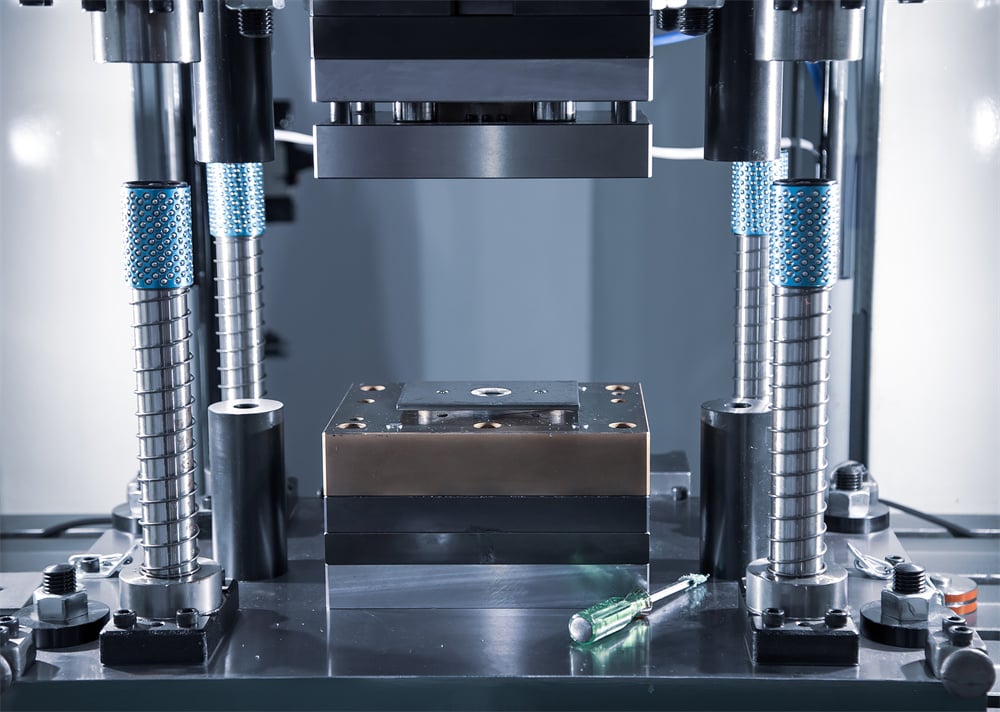
The frame design dictates the machine’s rigidity and accessibility. C-Frame (Gap Frame) presses offer three-sided access, making them ideal for small parts and manual loading. However, they are prone to “yaw” or deflection under high loads. H-Frame (Straight-Side) presses are much more rigid, distributing the load evenly across the structure, which is essential for high-precision work and heavy tonnage. Four-Column presses offer the best versatility and visibility, allowing for large dies and off-center loading capabilities.
3. Control Options: From Manual to CNC
Modern hydraulic presses offer a range of control options. Manual controls are simple but rely heavily on operator skill. NC (Numerical Control) systems allow for the setting of stroke limits and pressure setpoints via a digital interface. The most advanced option is CNC (Computer Numerical Control), which uses a PLC to manage complex sequences, integrate with external automation, and provide real-time diagnostics. CNC systems are essential for applications requiring high repeatability and data logging for quality control.
Hidden Costs of Owning a Hydraulic Press
When budgeting for a hydraulic press, the purchase price is only part of the equation. Installation and Foundation costs can be substantial, especially for high-tonnage H-frame presses. These machines often require a reinforced concrete pit or a specialized foundation to handle the vibration and weight. Failure to provide an adequate foundation can lead to frame misalignment and premature wear of the hydraulic seals.
Tooling and Die Sets are another significant ongoing expense. A hydraulic press is only as good as the tools it uses. High-quality dies made from hardened tool steel are necessary for long production runs, and these must be factored into the initial project cost. Additionally, consider the cost of Hydraulic Oil. Large presses can require hundreds of gallons of specialized hydraulic fluid, which must be filtered and replaced periodically to maintain system health.
Finally, don’t overlook Training and Safety Compliance. Operators must be trained not only on how to run the machine but also on how to perform daily maintenance and safety checks. Investing in safety upgrades, such as light curtains, interlocking guards, and dual-hand palm buttons, is mandatory in most jurisdictions and adds to the total cost of ownership but prevents costly accidents and legal liabilities.
ROI Calculation: Is the Investment Worth It?
Calculating the Return on Investment (ROI) for a hydraulic press involves looking at both tangible and intangible benefits. The most direct ROI comes from increased production speed. If a new CNC hydraulic press can produce 20% more parts per hour than your old equipment, the machine can pay for itself through increased revenue alone. Furthermore, the precision of modern controls reduces scrap rates, saving money on raw materials.
Energy efficiency is another factor. Modern servo-hydraulic systems only consume power when the ram is moving, unlike traditional systems where the motor runs constantly. This can lead to energy savings of up to 50%, which adds up significantly over the lifespan of the machine. Additionally, the versatility of a well-configured press allows a shop to take on a wider variety of jobs, expanding the customer base and increasing market competitiveness.
| Factor | Traditional Hydraulic Press | Modern CNC Hydraulic Press |
|---|---|---|
| Energy Consumption | High (Constant motor run) | Low (Servo-driven/Variable) |
| Setup Time | Manual (30-60 mins) | Digital (5-10 mins) |
| Precision | Moderate (+/- 0.5mm) | High (+/- 0.01mm) |
| Scrap Rate | 3-5% | < 1% |
Buying Advice: How to Choose the Right Supplier
Choosing the right manufacturer is just as important as choosing the right machine. When evaluating suppliers like HARSLE, look for a track record of reliability and a commitment to after-sales support. A reputable supplier should provide detailed technical documentation, a clear warranty policy, and access to skilled technicians for installation and troubleshooting.
Before finalizing a purchase, request a sample test. Send your material and drawings to the manufacturer to ensure the machine can produce your specific parts to the required tolerances. Also, inquire about the availability of spare parts. In the industrial world, a machine that is down for two weeks waiting for a $50 valve from overseas is a massive liability. Ensure your supplier has a robust supply chain and local or rapid-response support.
Frequently Asked Questions (FAQ)
What is the difference between a hydraulic press and a mechanical press?
A hydraulic press uses fluid pressure to generate force, providing full tonnage throughout the entire stroke. A mechanical press uses a flywheel and crankshaft, delivering maximum force only at the bottom of the stroke. Hydraulic presses are generally more versatile and easier to set up, while mechanical presses are faster for high-volume blanking.
How often should I change the hydraulic oil?
Typically, hydraulic oil should be changed every 2,000 to 4,000 hours of operation, or at least once a year. However, regular oil analysis can help determine the exact timing based on contamination levels and additive depletion. Keeping the oil clean is the single most important factor in extending the life of your pumps and valves.
Can I upgrade the controls on an older hydraulic press?
Yes, many older presses can be retrofitted with modern PLC or CNC control systems. This is often a cost-effective way to improve precision and safety without the expense of a completely new machine. However, the mechanical structure of the press must be in good condition to justify the upgrade.
What safety features are mandatory for a hydraulic press?
Standard safety features include light curtains to detect hand entry into the work zone, dual-hand start buttons to ensure the operator’s hands are clear, and emergency stop buttons. Additionally, many regions require safety blocks or pins to be used during die changes to prevent the ram from falling due to gravity.
How do I determine the stroke length I need?
The stroke length should be determined by the height of your tallest finished part plus the clearance needed to remove the part from the die. It is always better to have a slightly longer stroke than necessary, as it provides more flexibility for future projects, though it may slightly increase the cycle time.