A Complete Hydraulic Press Buying Guide for Small and Medium Fabrication Businesses


Introduction to Hydraulic Press Procurement for SMBs
For small and medium-sized fabrication businesses (SMBs), investing in a hydraulic press is a pivotal decision that can redefine production capabilities. Whether you are transitioning from manual metalworking to automated forming or expanding your existing workshop, understanding the nuances of A Complete Hydraulic Press Buying Small Medium Fabrication Businesses is essential. A hydraulic press is the workhorse of the metalworking industry, utilizing Pascal’s principle to generate massive force for applications ranging from deep drawing and punching to assembly and straightening.
HARSLE, a leader in metal fabrication machinery, understands that for an SMB, every dollar spent must translate into measurable productivity. The market is flooded with various models, tonnages, and configurations, making the selection process daunting. This guide is designed to demystify the technical jargon and provide a clear roadmap for business owners to make an informed investment that balances cost, performance, and longevity.
Price Range Overview: What to Expect
When considering A Complete Hydraulic Press Buying Small Medium Fabrication Businesses, the first question is always about the budget. Prices for hydraulic presses vary significantly based on tonnage, frame type, and automation level. For a small shop, an entry-level C-frame press (also known as a gap frame) might start as low as $5,000 for a 10-ton manual unit, while a sophisticated 500-ton four-column press with CNC controls can exceed $150,000.
Generally, SMBs find their “sweet spot” in the 60-ton to 300-ton range. These machines offer the versatility to handle most common fabrication tasks without the massive footprint or utility requirements of heavy-duty industrial presses. Below is a general breakdown of the price tiers currently seen in the global market for quality machinery like those offered by HARSLE.
| Press Type | Tonnage Range | Estimated Price (USD) | Primary Application |
|---|---|---|---|
| C-Frame (Y41 Series) | 20T – 100T | $8,000 – $25,000 | Punching, Assembly, Small Bending |
| Four-Column (Y32 Series) | 100T – 500T | $20,000 – $85,000 | Deep Drawing, Molding, Large Forming |
| H-Frame / Gantry | 100T – 1000T | $35,000 – $150,000+ | Heavy Plate Straightening, Large Dies |
| Servo-Hydraulic Press | Any | +30% Premium | High Precision, Energy Efficiency |
It is important to note that while lower-priced machines from unverified manufacturers may seem attractive, they often lack the structural rigidity and component quality (such as Rexroth valves or Siemens electrics) that HARSLE integrates into its designs. Investing slightly more upfront in a reputable brand often saves thousands in maintenance and downtime over the machine’s lifespan.
Main Cost Drivers in Hydraulic Press Manufacturing
Understanding what drives the cost of a hydraulic press helps you decide where to invest and where to save. The most significant cost driver is Tonnage. The higher the force required, the larger the hydraulic cylinders, the more robust the frame, and the more powerful the motor must be. However, tonnage is not the only factor.
Frame Construction: A press frame must withstand the intense forces generated without excessive deflection. Cast iron frames are excellent for vibration dampening but are expensive. Most modern HARSLE presses utilize high-grade welded steel plates that are heat-treated to relieve internal stresses. The thickness and quality of this steel directly impact the price and the machine’s precision over time.
Hydraulic Components: The “heart” of the machine consists of the pump, valves, and seals. High-end machines use variable displacement piston pumps and manifold blocks that reduce piping, which minimizes leak points. Using world-class brands like Bosch Rexroth or Vickers increases the initial cost but ensures that replacement parts are available globally and that the machine operates with high volumetric efficiency.
Control Systems: A basic manual press uses simple lever-operated valves. In contrast, a modern fabrication business usually requires a PLC (Programmable Logic Controller) with a Touch Screen HMI (Human Machine Interface). These systems allow for precise control over stroke length, pressure holding time, and speed transitions, which are critical for complex forming tasks. The complexity of the software and the number of sensors (linear scales, pressure transducers) significantly influence the final quote.
Configuration Impact: Matching Machine to Task
The configuration of your hydraulic press is perhaps the most critical part of A Complete Hydraulic Press Buying Small Medium Fabrication Businesses. Choosing the wrong frame type can limit your production capabilities or lead to premature machine wear. There are three primary configurations to consider:
1. C-Frame (Gap Frame) Presses
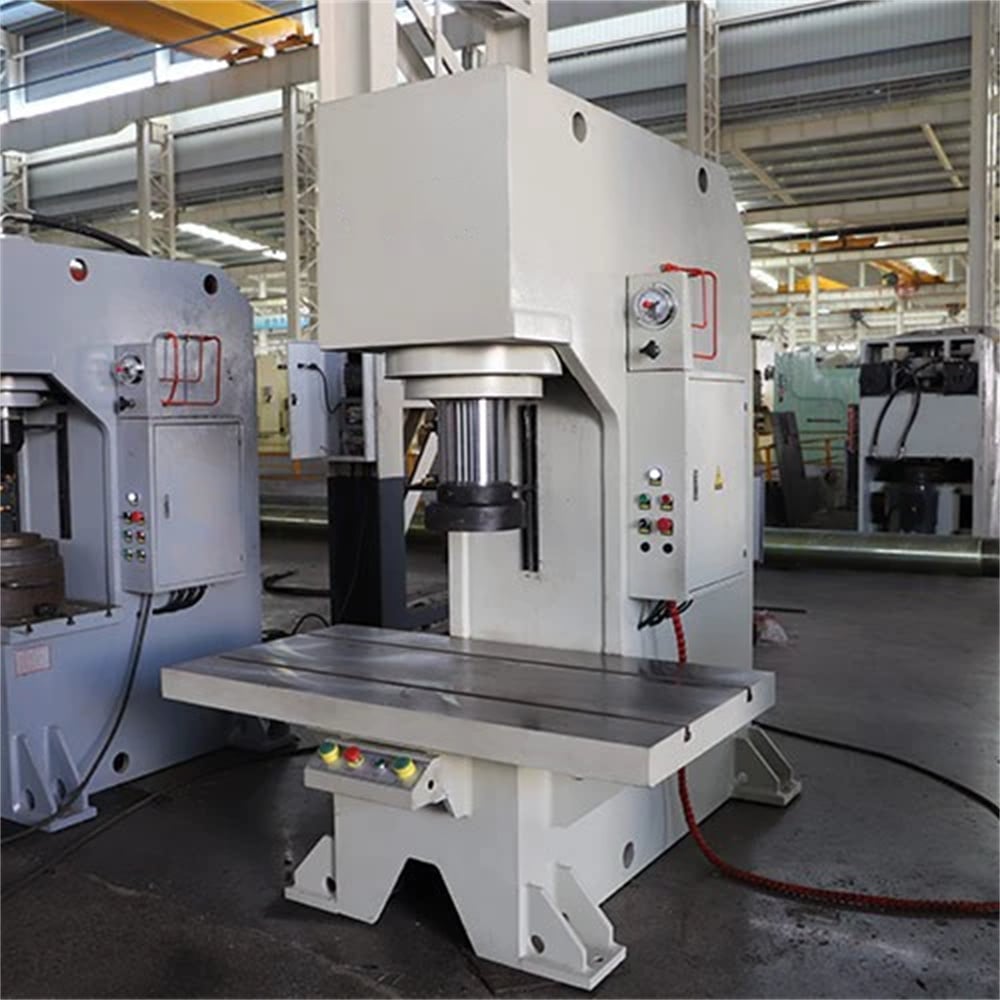
C-frame presses are characterized by their “C” shape, which provides three-sided access to the work area. This is ideal for smaller parts, manual loading/unloading, and applications where the operator needs to be close to the die. They have a smaller footprint, making them perfect for cramped SMB workshops. However, because of their open design, they are prone to a small amount of “yaw” or deflection under maximum load, which may affect high-precision die alignment.
2. Four-Column Presses
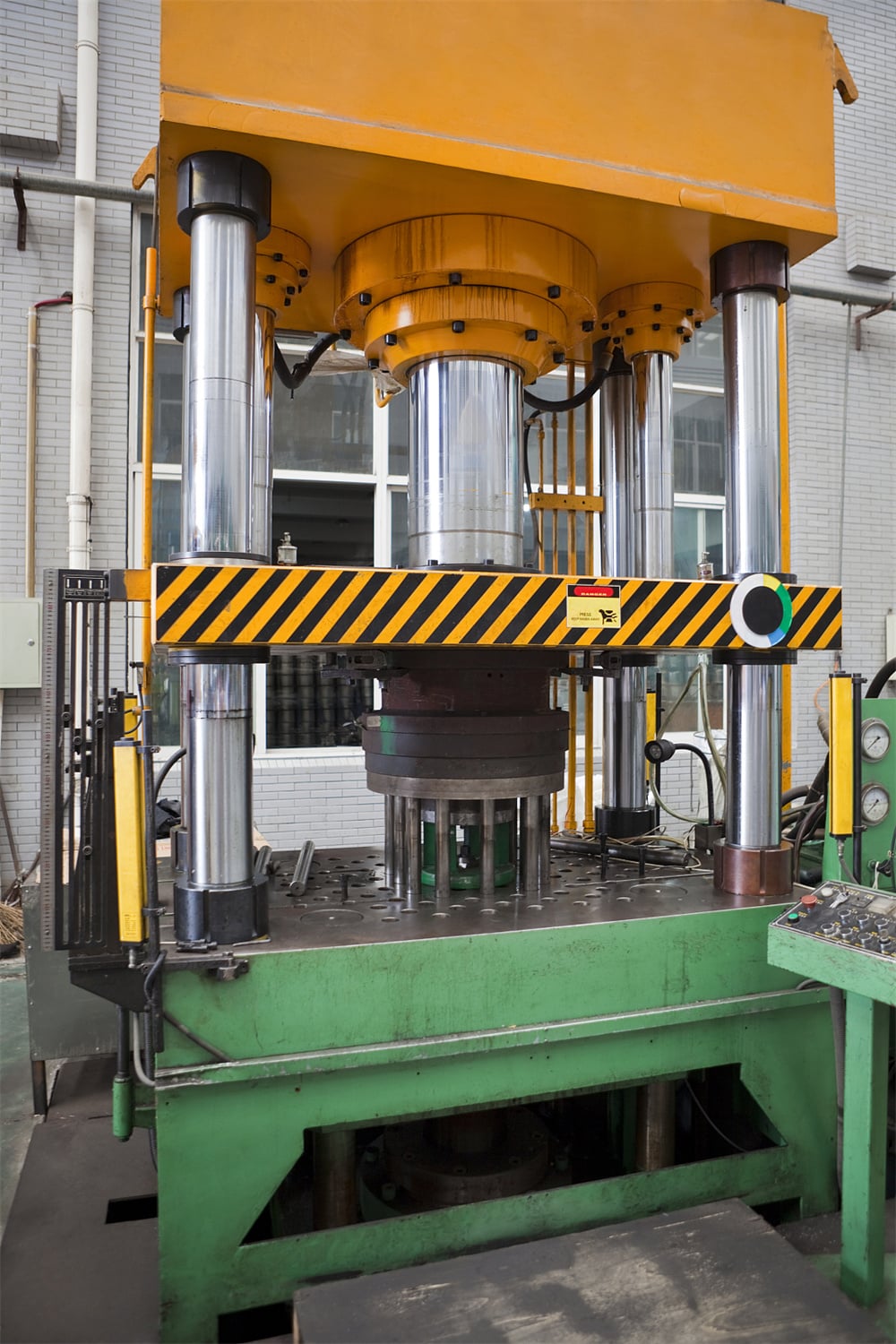
The four-column design (like the HARSLE Y32 series) is the gold standard for versatility and precision. The four pillars guide the moving slide (platen) with extreme accuracy, ensuring that the pressure is distributed evenly across the die. This configuration is essential for deep drawing, where uneven pressure can cause material tearing or wrinkling. It also allows for large die sets that can be accessed from all four sides.
3. H-Frame and Gantry Presses
H-frame presses are incredibly rigid and are typically used for heavy-duty applications. Gantry presses, where the hydraulic head can move laterally across a large bed, are specialized for straightening large plates or frames. For most SMBs, an H-frame is chosen when the work involves heavy structural steel or very high tonnage requirements where frame deflection must be zero.
Hidden Costs of Owning a Hydraulic Press
The purchase price is just the beginning. To truly understand A Complete Hydraulic Press Buying Small Medium Fabrication Businesses, you must account for the total cost of ownership (TCO). Many first-time buyers overlook these expenses, which can lead to budget overruns.
- Shipping and Rigging: Hydraulic presses are incredibly heavy. Shipping a 200-ton press requires specialized logistics, and once it arrives, you will need a heavy-duty forklift or a crane team to move it into position. This can cost anywhere from $1,000 to $10,000 depending on location and machine size.
- Foundation Requirements: A high-tonnage press cannot simply sit on a standard 4-inch shop floor. It may require a reinforced concrete pad or even a pit to manage the machine’s height and vibration. Failure to provide a proper foundation can lead to the floor cracking or the machine losing alignment.
- Hydraulic Oil: A large press can require hundreds of gallons of high-quality hydraulic oil. This is a significant initial expense and a recurring maintenance cost, as the oil must be filtered and occasionally replaced.
- Tooling and Dies: The press is useless without the dies. Custom die sets for deep drawing or specialized forming can cost as much as the machine itself. SMBs should budget for a versatile set of starter tooling.
- Electrical Upgrades: Industrial presses often require 3-phase power. If your shop is currently set up for single-phase, the cost of a phase converter or a utility upgrade must be factored in.
ROI Calculation: Is the Investment Worth It?
Calculating the Return on Investment (ROI) is crucial for any SMB. To justify the purchase of a HARSLE hydraulic press, you should look at three main areas: labor savings, material efficiency, and new market opportunities.
Labor Savings: A modern hydraulic press with fast approach and return speeds can significantly reduce cycle times compared to older mechanical presses or manual methods. If a press saves 30 seconds per part on a 10,000-part run, that is over 80 hours of labor saved. Furthermore, PLC-controlled machines reduce the skill level required for operation, allowing your most skilled workers to focus on complex setup tasks.
Scrap Reduction: Precision control over pressure and stroke means fewer ruined parts. In deep drawing applications, the ability to fine-tune the blank holder pressure can reduce scrap rates from 5% down to less than 1%. For businesses working with expensive materials like stainless steel or aluminum, these savings go straight to the bottom line.
Capability Expansion: Often, the ROI comes from work you couldn’t do before. With a 200-ton HARSLE press, an SMB can bid on contracts involving thicker plate forming or complex automotive components that were previously outsourced. This vertical integration keeps more profit in-house and improves lead times for your customers.
Buying Advice for Small and Medium Businesses
When you are ready to pull the trigger on A Complete Hydraulic Press Buying Small Medium Fabrication Businesses, follow these expert tips to ensure a smooth acquisition:
- Define Your Maximum Requirements: Don’t buy a press for your average job; buy it for your hardest job. If you occasionally need 150 tons of force, don’t buy a 100-ton press and try to “push” it. Overloading a machine leads to catastrophic failure.
- Prioritize Safety: Ensure the machine is equipped with light curtains, dual-hand start buttons, and emergency stop circuits. Safety is not just a legal requirement; it protects your most valuable asset—your employees. HARSLE integrates CE-certified safety components into all export models.
- Check the After-Sales Support: A machine is only as good as the support behind it. Ask the manufacturer about their warranty terms, the availability of spare parts in your region, and whether they offer remote technical support. HARSLE provides comprehensive documentation and video support to help SMBs maintain their equipment without needing a full-time mechanic.
- Consider a Servo-Hydraulic Option: If your electricity costs are high, a servo-driven pump system is worth the extra investment. These systems only run the motor when the machine is actually moving, potentially cutting energy bills by up to 50% and reducing oil heating, which extends the life of seals and components.
Frequently Asked Questions (FAQ)
What is the difference between a hydraulic press and a mechanical press?
A hydraulic press uses fluid pressure to provide full tonnage throughout the entire stroke, making it ideal for deep drawing and heavy forming. A mechanical press uses a flywheel and crankshaft, providing maximum tonnage only at the bottom of the stroke, which is better for high-speed blanking and punching.
How often does the hydraulic oil need to be changed?
For most SMB environments, hydraulic oil should be tested every 2,000 operating hours. If the oil is kept clean and cool, it can last several years. However, filters should be changed more frequently, typically every 500 to 1,000 hours, to prevent valve contamination.
Can I use a hydraulic press for both metal and plastic?
Yes, hydraulic presses are extremely versatile. With the right temperature-controlled platens, a HARSLE hydraulic press can be used for compression molding of plastics, composites, and rubber, in addition to metal fabrication.
What safety features are mandatory for an industrial press?
At a minimum, you should have light curtains to prevent operation if a hand enters the work zone, an emergency stop button, and a “two-hand tie-down” system that requires the operator to use both hands to initiate the press cycle.
Is it better to buy a new or used hydraulic press?
While used presses are cheaper, they often come with hidden wear in the cylinders or outdated electrical systems that are hard to repair. For an SMB, a new HARSLE press offers the peace of mind of a warranty, modern safety features, and higher energy efficiency, which usually outweighs the initial savings of a used machine.
How do I determine the tonnage I need?
Tonnage is calculated based on the material type, thickness, and the length of the cut or the area of the form. Most tooling manufacturers provide formulas, but HARSLE’s technical team can also assist you in calculating the required force for your specific applications to ensure you choose the right model.