Hydraulic Press Applications for Deep Drawing, Punching, and Forming: An Industrial Guide

Introduction to Hydraulic Press Versatility in Metal Fabrication
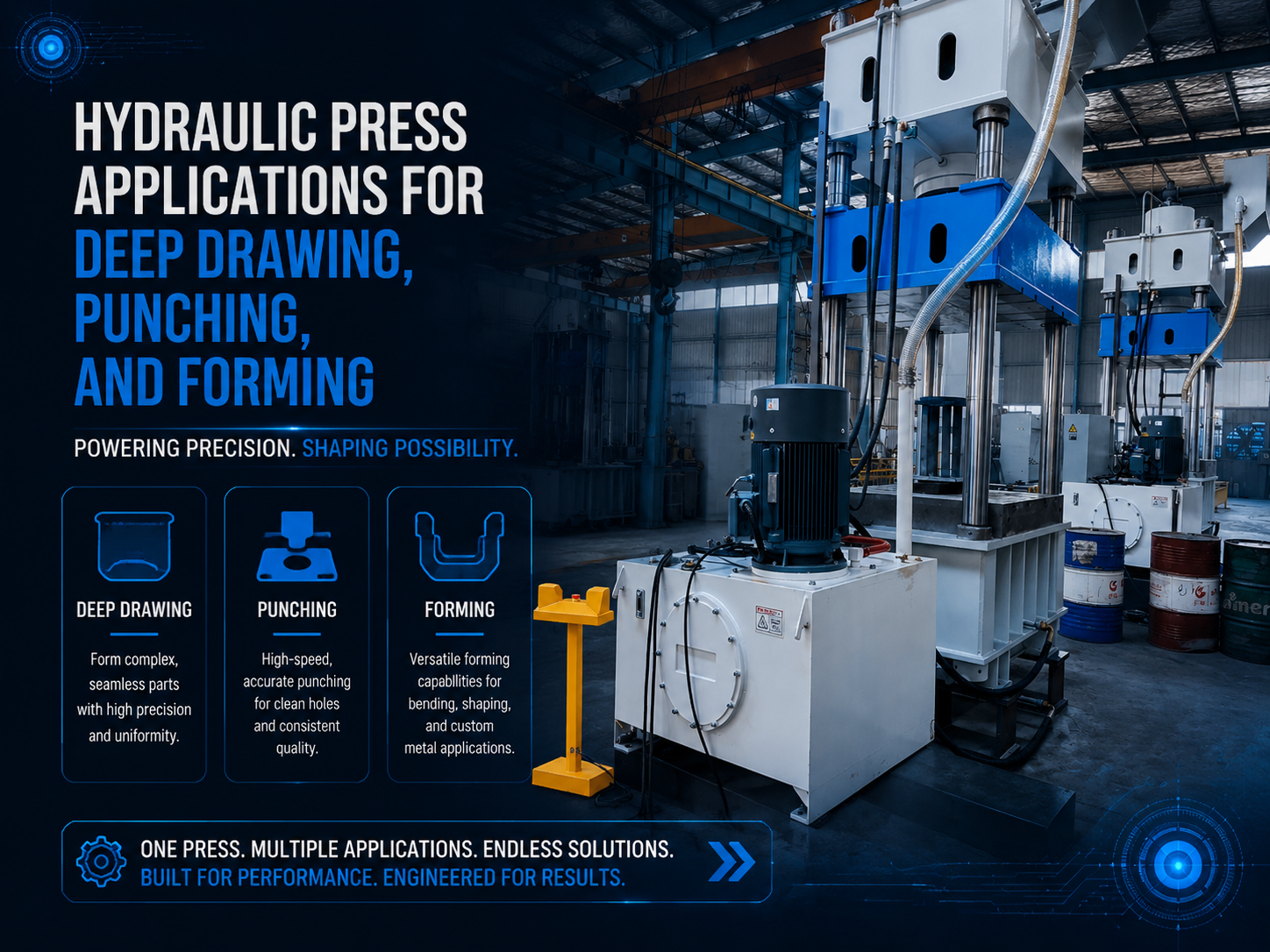
In the realm of modern metalworking, the hydraulic press stands as a cornerstone of industrial productivity. Its ability to deliver immense force with precision control makes it indispensable for a variety of processes, most notably deep drawing, punching, and forming. As manufacturers strive for higher efficiency and tighter tolerances, understanding the nuances of Hydraulic Press Applications Deep Drawing, Punching, Forming becomes essential. HARSLE, a leader in metal fabrication machinery, provides advanced hydraulic solutions designed to meet these rigorous demands.
Unlike mechanical presses, which rely on a flywheel and crankshaft to deliver energy, hydraulic presses utilize fluid pressure to generate force. This allows for full tonnage throughout the entire stroke, adjustable pressure at any point, and a more controlled movement that is ideal for complex metal deformation. Whether you are producing automotive body panels, kitchen sinks, or intricate industrial brackets, the hydraulic press offers a level of flexibility that is unmatched in the industry. This guide explores the specific applications, technical requirements, and machine configurations that define successful hydraulic press operations.
Application Scenarios: Deep Drawing, Punching, and Forming
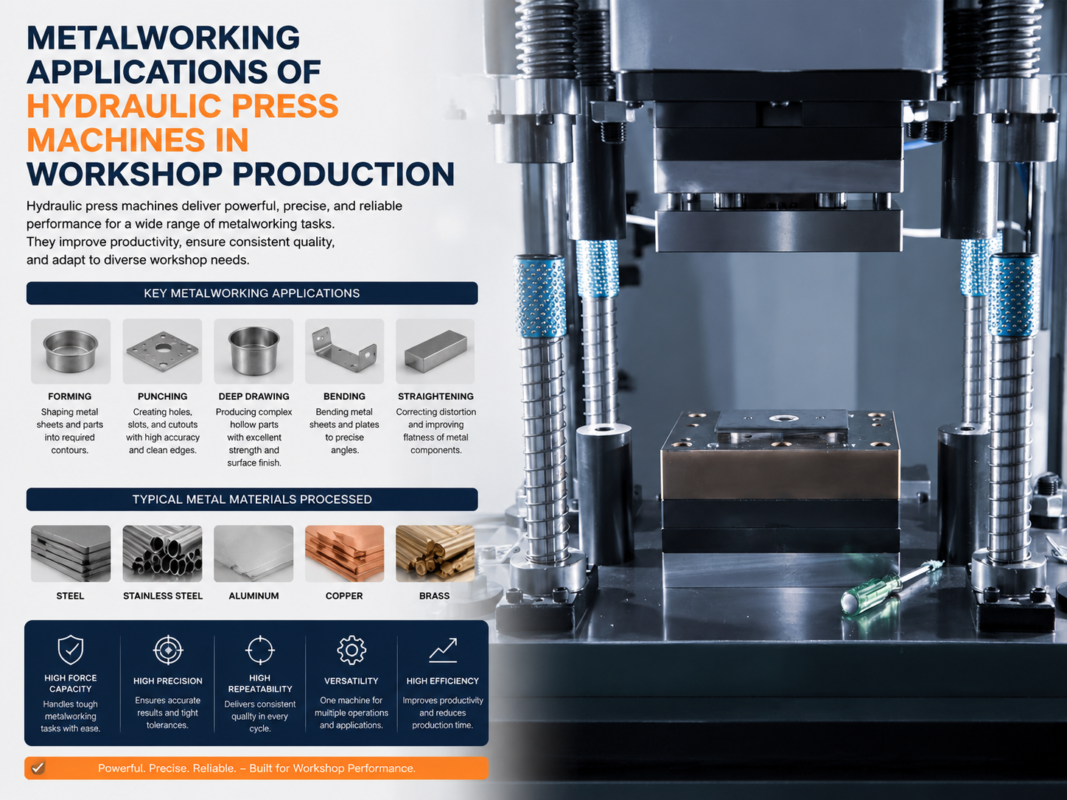
Deep Drawing Applications
Deep drawing is a manufacturing process where a sheet metal blank is radially drawn into a forming die by the mechanical action of a punch. It is considered “deep” drawing when the depth of the drawn part exceeds its diameter. This process is widely used in the production of hollow vessels, such as beverage cans, kitchen sinks, automotive fuel tanks, and fire extinguishers. The hydraulic press is the preferred machine for deep drawing because it allows for a constant drawing speed and precise control over the blank holder force, which prevents wrinkling and tearing of the material.
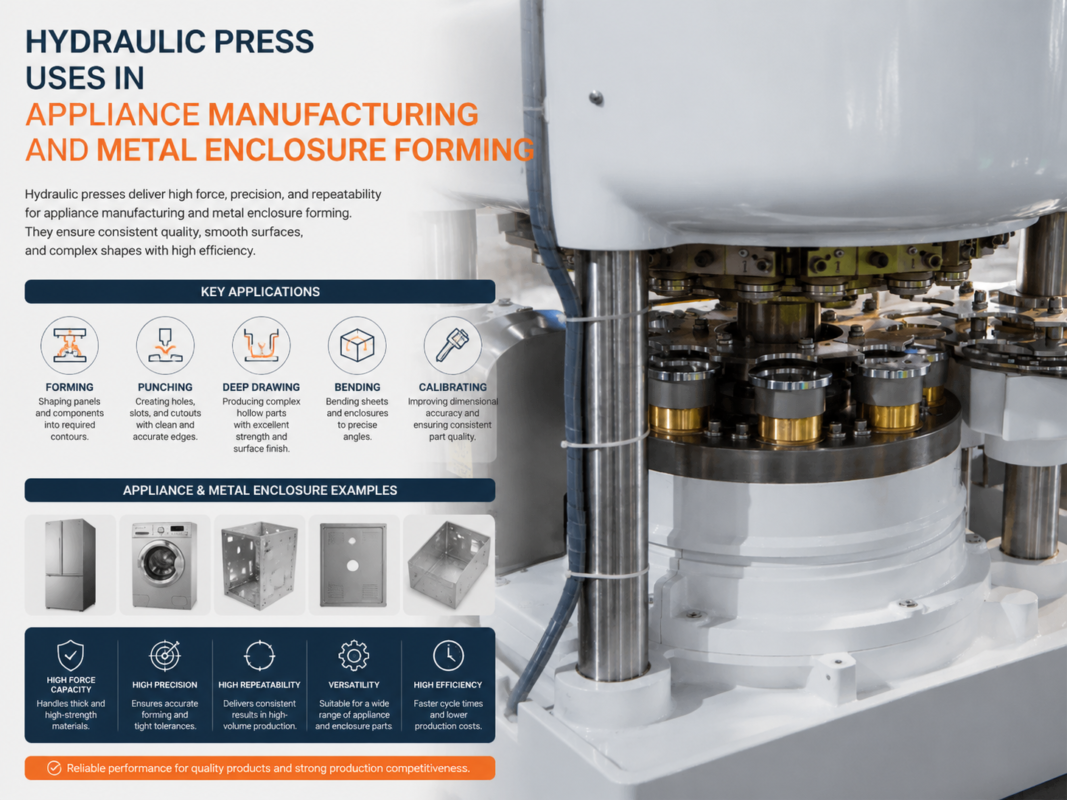
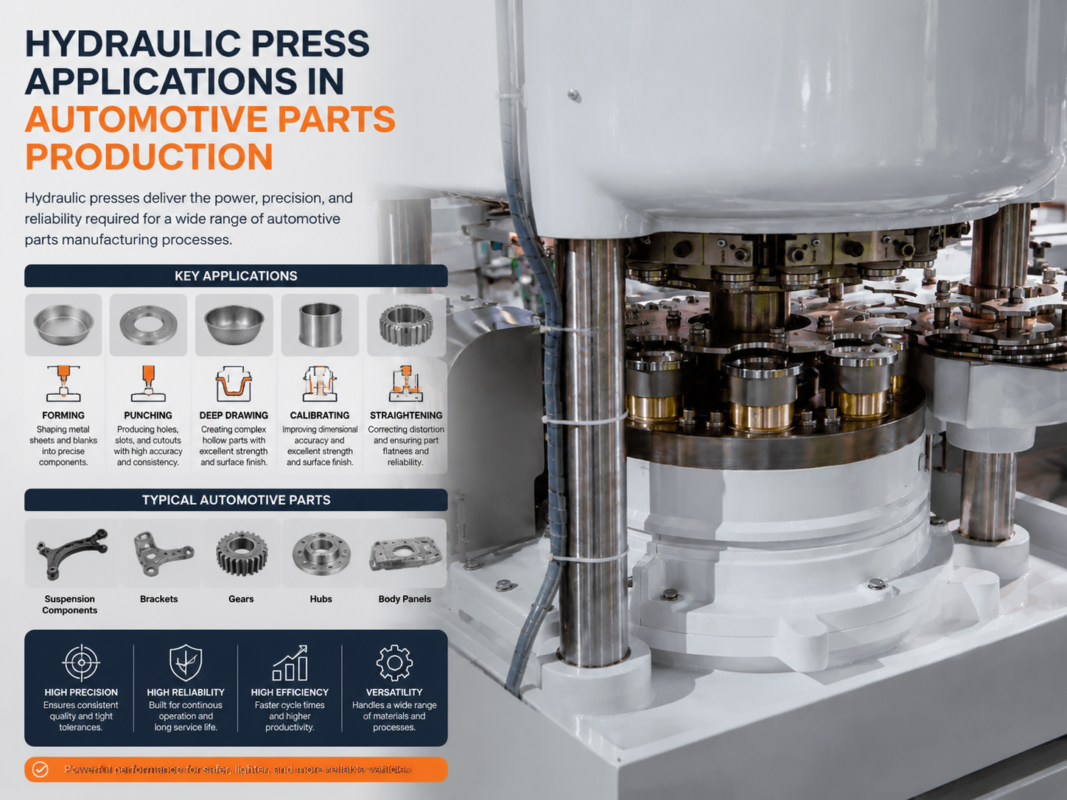
In the automotive industry, deep drawing is used to create complex structural components and exterior panels. The ability of a hydraulic press to maintain steady pressure ensures that the metal flows smoothly into the die cavity, maintaining uniform wall thickness. For household appliances, stainless steel deep drawing is common for washing machine drums and refrigerator liners. The process requires a high degree of synchronization between the main ram and the hydraulic cushion, a feature where HARSLE hydraulic presses excel.
Punching and Blanking Operations
Punching involves the use of a hydraulic press to create holes or cutouts in a metal sheet, while blanking is the process of cutting a specific shape out of a larger sheet. While mechanical presses are often used for high-speed, light-gauge punching, hydraulic presses are the go-to choice for heavy-duty punching and thick-plate applications. The controlled stroke of a hydraulic press reduces the shock and vibration typically associated with punching, which extends the life of the tooling and improves the edge quality of the workpiece.
Industrial applications for hydraulic punching include the fabrication of structural steel beams, heavy-duty brackets for the construction industry, and perforated plates for filtration systems. Because hydraulic presses can be equipped with multi-tool stations or CNC-controlled feeding systems, they are highly effective for low-to-medium volume production runs where flexibility is more important than raw speed. The ability to adjust the stroke length also means that the press only travels as far as necessary, saving energy and reducing cycle times.
Forming and Bending Processes
Forming is a broad category that includes bending, embossing, and coining. In these applications, the hydraulic press reshapes the metal without removing any material. Bending is perhaps the most common forming operation, used to create V-shapes, U-shapes, or channel shapes in sheet metal. Hydraulic presses are particularly useful for large-scale bending operations, such as those required for shipbuilding or heavy machinery frames, where the force required exceeds the capacity of standard press brakes.
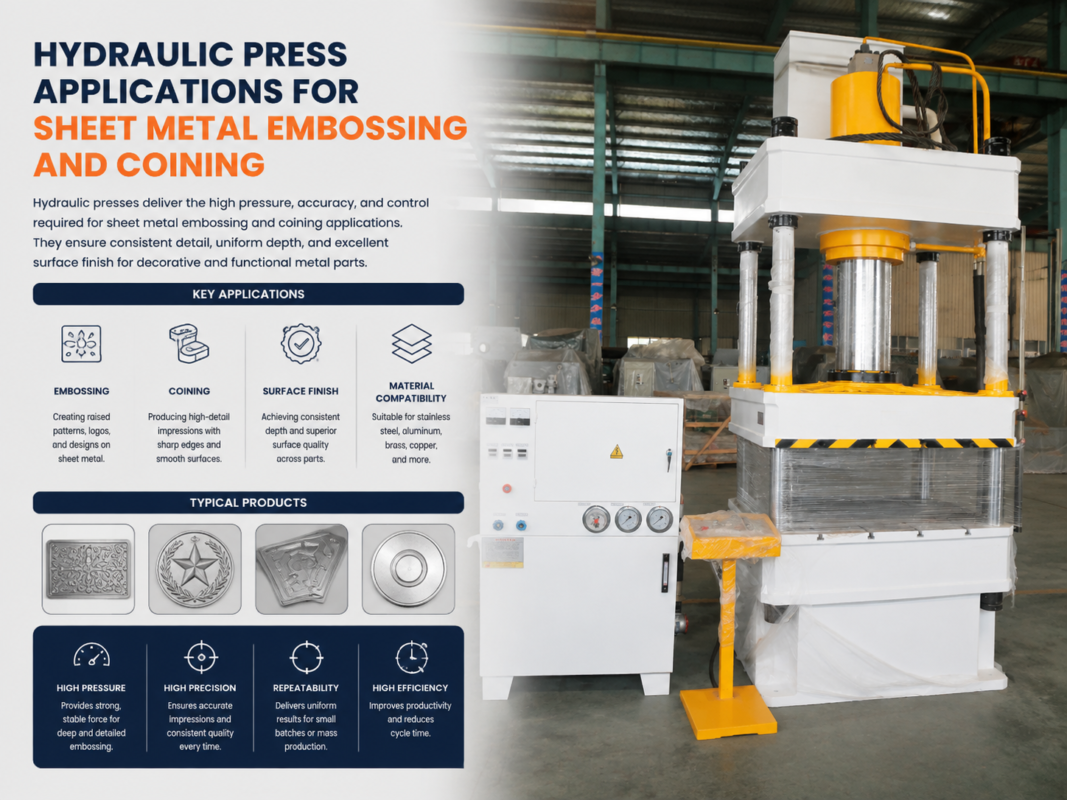
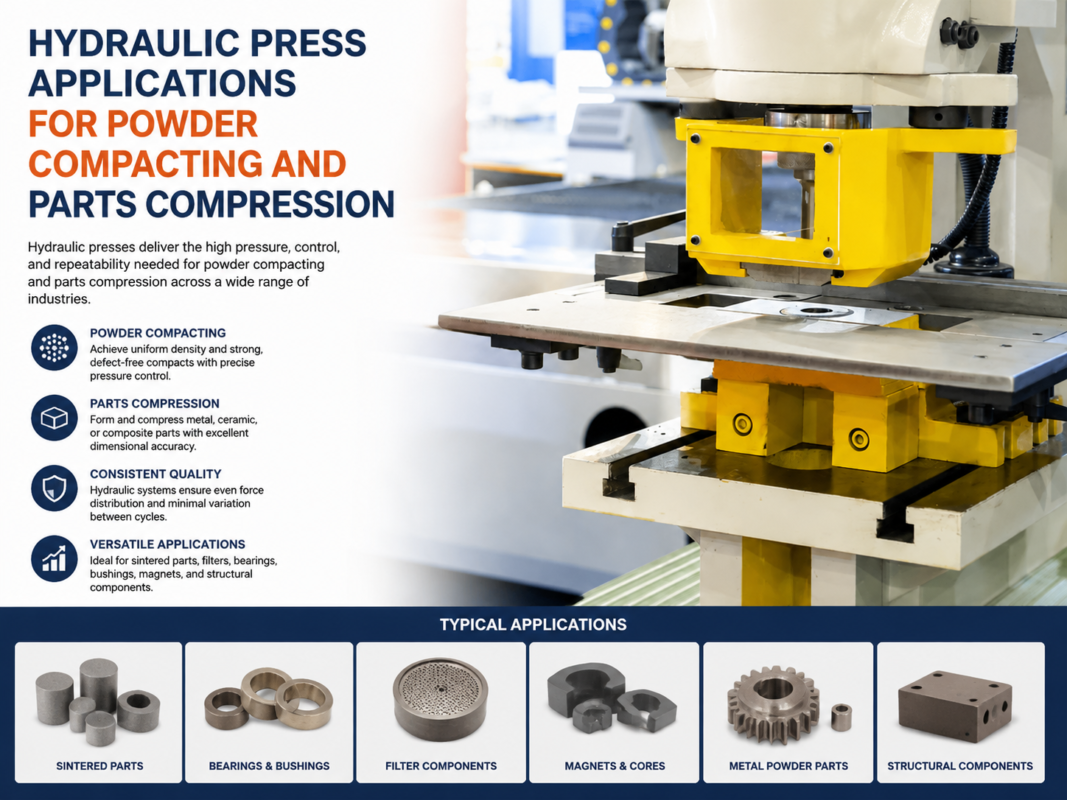
Embossing and coining require extremely high pressure to force the metal into the fine details of a die. This is used for decorative panels, heat exchanger plates, and even coinage. The hydraulic press’s ability to dwell at the bottom of the stroke—maintaining peak pressure for a set duration—is critical for ensuring that the material fully conforms to the die geometry. This “dwell time” is a unique advantage of hydraulic systems over mechanical ones, leading to higher precision in complex forming tasks.
Material and Process Requirements
Material Selection and Behavior
The success of any hydraulic press application depends heavily on the material being processed. Common materials include carbon steel, stainless steel, aluminum, copper, and brass. Each material has unique properties, such as yield strength, tensile strength, and ductility, which dictate how it will react under pressure. For deep drawing, materials with high ductility (the ability to stretch without breaking) are preferred. Stainless steel 304, for example, is a popular choice for deep-drawn kitchenware due to its excellent forming characteristics.
When punching or blanking, the hardness and thickness of the material determine the required tonnage. Harder materials require more force and put more wear on the punches. It is also essential to consider the “springback” effect, where the metal attempts to return to its original shape after the pressure is released. Hydraulic presses allow operators to compensate for springback by fine-tuning the pressure and stroke depth, ensuring the final part meets the design specifications.
Lubrication and Friction Management
In deep drawing and forming, friction between the workpiece and the die can lead to heat buildup, material galling, and premature tool failure. Proper lubrication is vital. For deep drawing, high-pressure lubricants or specialized drawing oils are applied to the blank to facilitate smooth flow into the die. In some cases, synthetic films or dry lubricants are used to maintain a clean working environment. The hydraulic press’s ability to control the speed of the draw also helps manage friction, as slower speeds can sometimes reduce the risk of material tearing in high-friction zones.
Tonnage and Pressure Calculations
Determining the correct tonnage is a critical step in the process. For punching, the formula typically involves the perimeter of the cut, the thickness of the material, and its shear strength. For deep drawing, the calculation is more complex, involving the blank holder force and the drawing force. Using a press with insufficient tonnage can lead to incomplete parts or machine damage, while excessive tonnage can waste energy and cause unnecessary wear. HARSLE provides technical support to help customers calculate the precise requirements for their specific Hydraulic Press Applications Deep Drawing, Punching, Forming.
Recommended Machine Configuration
Frame Design: H-Frame vs. Four-Column
The structure of the hydraulic press is fundamental to its performance. For deep drawing and heavy forming, the Four-Column Hydraulic Press is often recommended. This design provides excellent accessibility from all four sides and ensures even pressure distribution across the bolster. It is particularly effective for large dies where off-center loading might occur. The four-column design allows for the integration of hydraulic cushions in the bed, which are essential for controlling the blank holder force during drawing.
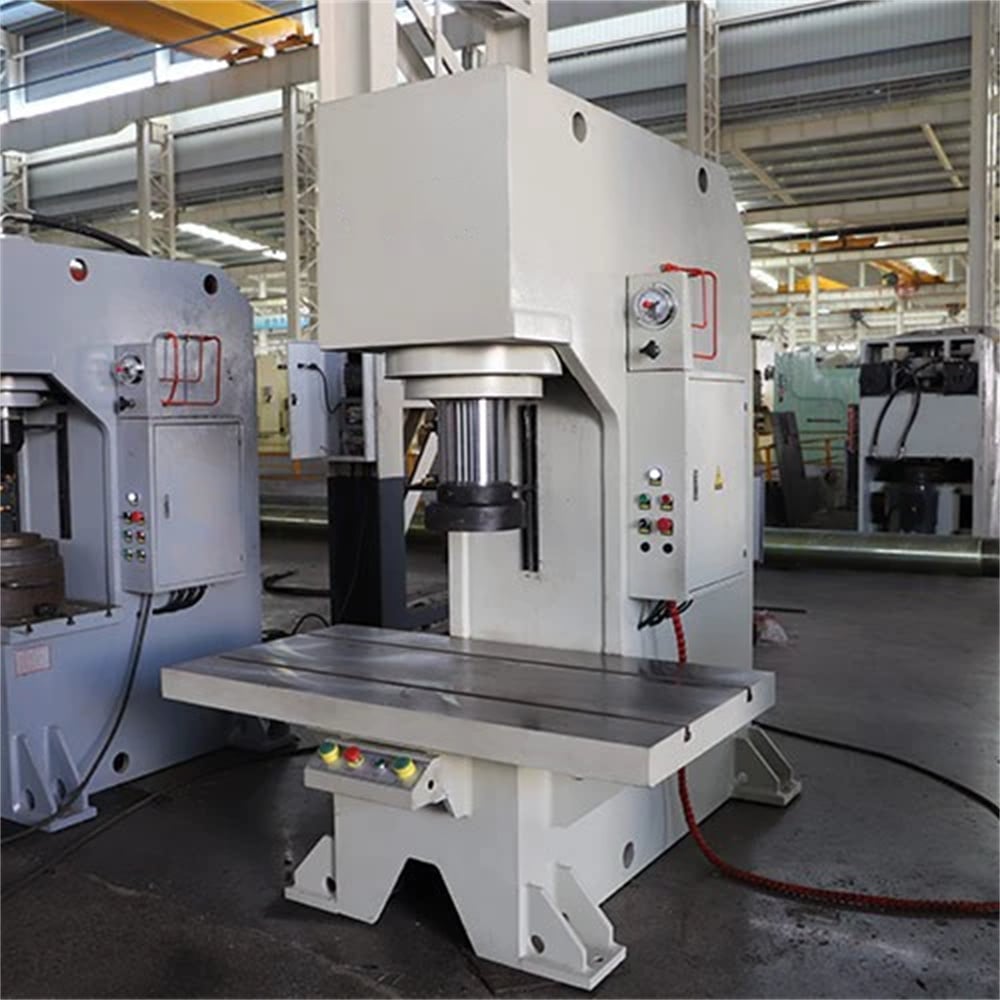
For punching and smaller forming tasks, an H-Frame (or Gantry) Press offers superior rigidity. The robust steel frame minimizes deflection under high loads, which is crucial for maintaining punch and die alignment. This rigidity results in cleaner cuts and longer tool life. HARSLE’s H-frame presses are engineered with finite element analysis (FEA) to ensure they can withstand the repetitive shocks of high-tonnage punching operations.
Hydraulic and Control Systems
Modern hydraulic presses are increasingly equipped with Servo-Hydraulic Systems. Unlike traditional systems where the pump runs constantly, servo-driven pumps only operate when movement or pressure is required. This leads to energy savings of up to 50-70%, reduced noise, and less heat generation in the hydraulic oil. Furthermore, servo systems offer much higher precision in ram positioning and pressure control, which is a significant advantage for complex forming and deep drawing.
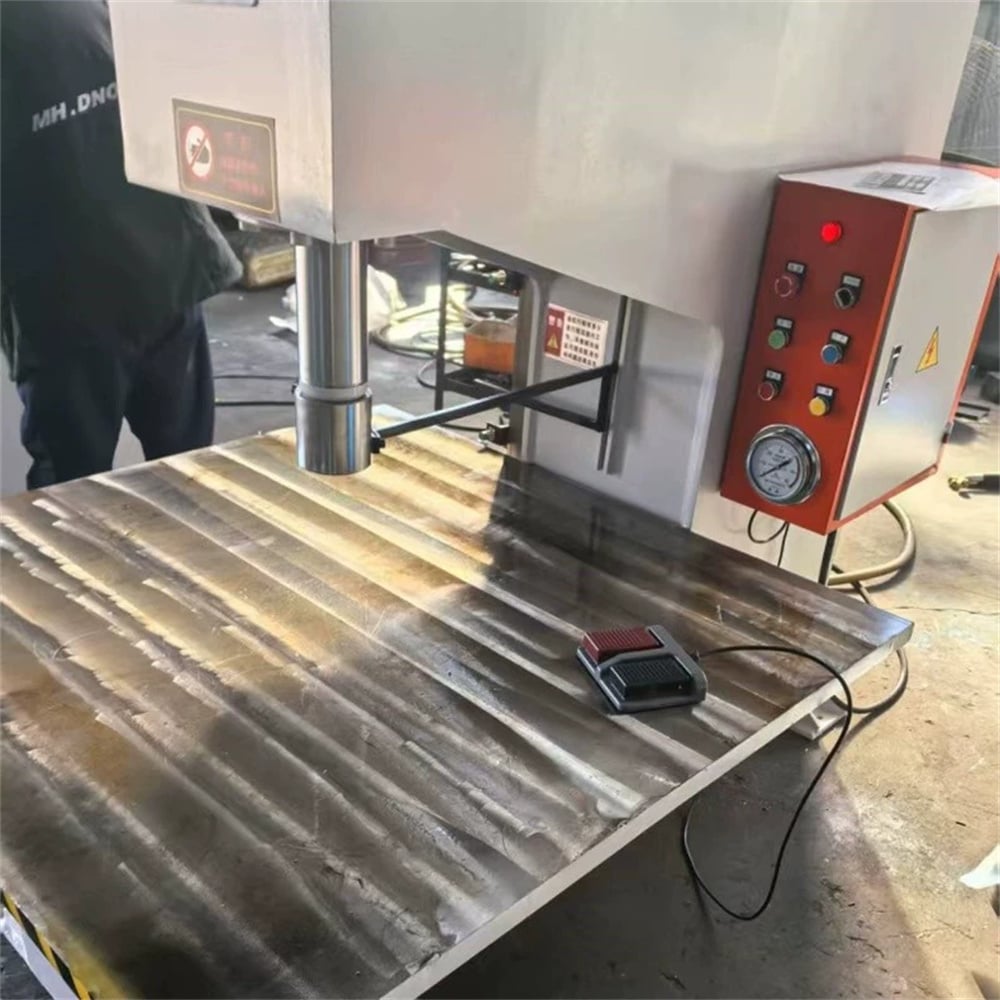
The control system is the brain of the press. CNC (Computer Numerical Control) and PLC (Programmable Logic Controller) systems allow operators to program multiple stages of the press cycle. For example, a deep drawing cycle might involve a fast approach, a slow drawing speed, a dwell at the bottom, and a controlled decompression before the ram returns. Touchscreen interfaces make it easy to store and recall “recipes” for different parts, reducing setup time and ensuring consistency across production batches.
Workflow of Hydraulic Press Operations
- Material Preparation: The metal sheet or blank is cut to the required size and cleaned. If necessary, lubrication is applied to the surfaces that will contact the die.
- Die Setup: The punch and die set are mounted onto the press ram and bolster. Alignment is checked to ensure that the punch enters the die cavity perfectly, especially in punching and blanking operations.
- Parameter Programming: The operator enters the required tonnage, stroke length, speed, and dwell time into the CNC or PLC system. For deep drawing, the hydraulic cushion pressure is also set.
- Loading: The blank is placed onto the die. In automated systems, this is handled by a robotic arm or a sheet feeder.
- The Press Cycle: The ram descends. In deep drawing, the blank holder engages first to grip the edges of the metal. The punch then pushes the metal into the die. In punching, the ram descends rapidly to shear the material.
- Decompression and Return: Once the operation is complete, the system undergoes a controlled decompression to prevent hydraulic shock. The ram then returns to the top position.
- Ejection and Unloading: The finished part is ejected from the die, often by a knock-out pin or the hydraulic cushion, and removed from the press.
Productivity Benefits of Hydraulic Presses
The adoption of hydraulic presses for deep drawing, punching, and forming offers several key benefits that directly impact a manufacturer’s bottom line. First and foremost is versatility. A single hydraulic press can perform a wide range of tasks simply by changing the tooling and adjusting the software settings. This makes it an ideal investment for job shops and manufacturers with diverse product lines.
Another major benefit is precision and quality. The ability to control the speed and pressure of the ram throughout the entire stroke means that parts are produced with high dimensional accuracy and superior surface finishes. This reduces the need for secondary operations like grinding or straightening, saving time and labor costs. Additionally, the built-in safety features of modern hydraulic presses, such as light curtains and dual-hand controls, protect operators and reduce the risk of workplace accidents.
Finally, energy efficiency and maintenance have seen significant improvements. Servo-hydraulic technology has revolutionized the power consumption of these machines. Because hydraulic presses have fewer moving parts than mechanical presses (no flywheels, clutches, or brakes), they generally require less maintenance and have a longer service life. When maintenance is required, the modular nature of hydraulic components makes it easier to diagnose and fix issues quickly.
Case Example: Stainless Steel Sink Production
A leading kitchenware manufacturer recently upgraded their production line with a HARSLE 500-ton four-column hydraulic press specifically for deep drawing stainless steel sinks. Previously, they struggled with high scrap rates due to material tearing and inconsistent wall thickness. By utilizing the HARSLE press with a CNC-controlled hydraulic cushion, they were able to precisely vary the blank holder force during the draw cycle.
The result was a 30% reduction in scrap and a 20% increase in production speed. The servo-hydraulic system also reduced their energy costs significantly. This case illustrates how the right machine configuration, tailored to specific Hydraulic Press Applications Deep Drawing, Punching, Forming, can transform manufacturing efficiency and product quality.
Frequently Asked Questions (FAQ)
What is the difference between a hydraulic press and a mechanical press for deep drawing?
A hydraulic press offers full tonnage throughout the entire stroke and allows for precise control over speed and pressure, which is essential for the slow, steady flow of metal required in deep drawing. Mechanical presses have a fixed stroke and deliver peak energy only at the bottom, making them better suited for high-speed, shallow punching rather than deep drawing.
How do I choose the right tonnage for my hydraulic press?
Tonnage depends on the material type, thickness, and the perimeter of the part being formed or punched. For deep drawing, you must also account for the blank holder force. It is always recommended to consult with a manufacturer like HARSLE, who can provide tonnage calculations based on your specific application and material samples.
Can a hydraulic press be automated?
Yes, modern hydraulic presses are easily integrated into automated production lines. They can be equipped with robotic loaders/unloaders, coil feeding systems, and transfer systems for multi-stage forming. HARSLE offers various automation interfaces to help customers achieve “lights-out” manufacturing capabilities.
What maintenance is required for a hydraulic press?
Regular maintenance includes checking and changing the hydraulic oil, inspecting seals for leaks, ensuring the cooling system is functioning, and lubricating the guide rails or columns. Monitoring the oil temperature and cleanliness is crucial for preventing damage to the hydraulic pumps and valves.
Conclusion: Partnering with HARSLE for Your Fabrication Needs
The versatility and power of the hydraulic press make it an essential tool for any metal fabrication facility. By mastering Hydraulic Press Applications Deep Drawing, Punching, Forming, manufacturers can produce high-quality parts with greater efficiency and lower costs. Whether you are looking for a standard four-column press or a custom-engineered solution with servo technology, HARSLE has the expertise and equipment to help you succeed.
Investing in a HARSLE hydraulic press means investing in reliability, precision, and the future of your production line. Our team of engineers is ready to assist you in selecting the perfect machine configuration for your specific needs, ensuring that you get the most out of your metal forming processes. Contact HARSLE today to learn more about our innovative hydraulic solutions and how we can help you elevate your manufacturing capabilities.