Industrial Uses of Hydraulic Presses in Automotive Parts Production: A Comprehensive Guide


Introduction to Hydraulic Presses in Modern Automotive Manufacturing
The automotive industry stands as one of the most demanding sectors for metal fabrication, requiring a blend of extreme precision, high-volume output, and structural integrity. Central to this production powerhouse is the hydraulic press. The Industrial Uses Of Hydraulic Presses In Automotive Parts Production have evolved from simple stamping tasks to complex, multi-stage forming processes that define the safety and aesthetics of modern vehicles. From the sleek curves of a car’s exterior to the rigid safety cage of the chassis, hydraulic presses provide the necessary force and control to shape high-strength materials into functional components.
HARSLE, a leader in metal fabrication machinery, understands that the automotive sector requires equipment that can handle the rigors of 24/7 operation while maintaining tight tolerances. Hydraulic presses are preferred in this industry due to their ability to deliver full pressure at any point in the stroke, their versatility in handling various die sizes, and their adaptability to automated production lines. This guide explores the multifaceted roles these machines play, the technical requirements of the materials they process, and how to configure the ideal setup for maximum productivity.
Application Scenarios: Where Hydraulic Presses Excel
Body-in-White (BIW) Components
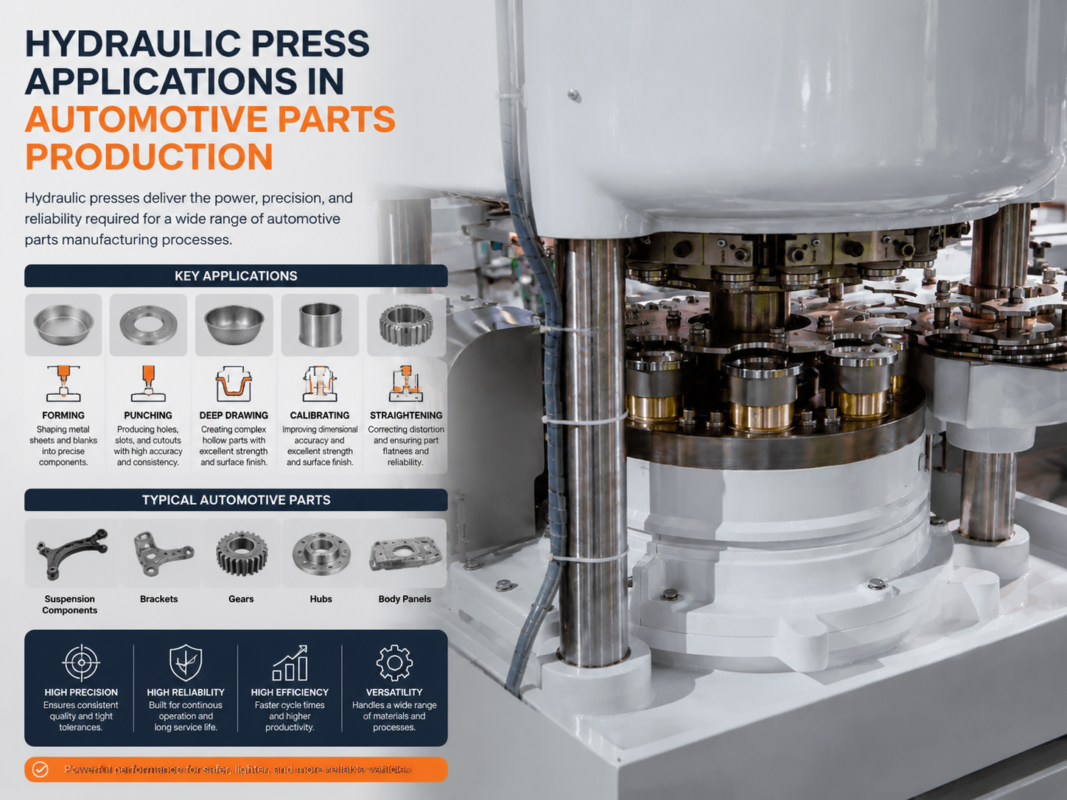
The most visible application of hydraulic presses in automotive production is the creation of Body-in-White (BIW) components. This includes large exterior panels such as hoods, fenders, roof panels, and door skins. These parts require deep drawing capabilities where the hydraulic press must stretch the metal sheet into complex, three-dimensional shapes without tearing or wrinkling. The controlled speed of a hydraulic press is essential here, as it allows the material to flow into the die cavities uniformly.
Beyond exterior aesthetics, internal structural components like A-pillars, B-pillars, and cross-members are also produced using high-tonnage hydraulic presses. These parts are often made from Advanced High-Strength Steel (AHSS) to ensure passenger safety during collisions. The ability of a hydraulic press to maintain a constant dwell time at the bottom of the stroke ensures that these high-strength materials are properly set, reducing spring-back issues that are common with mechanical presses.
Chassis and Suspension Systems
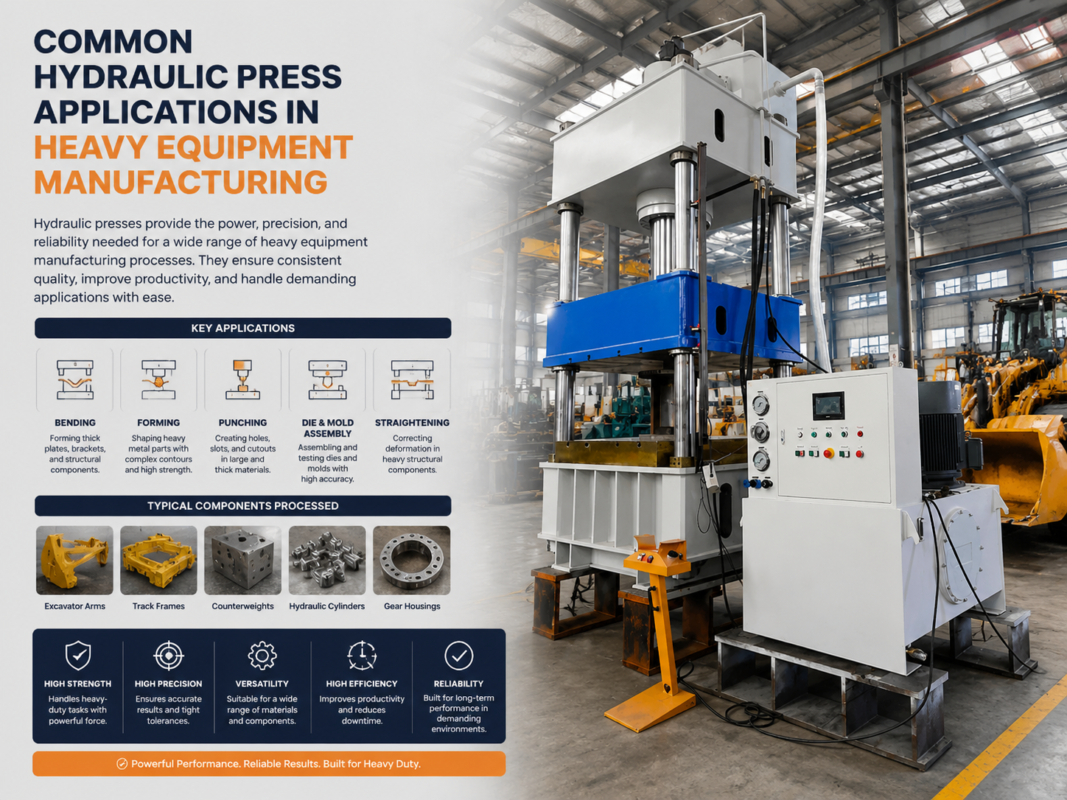
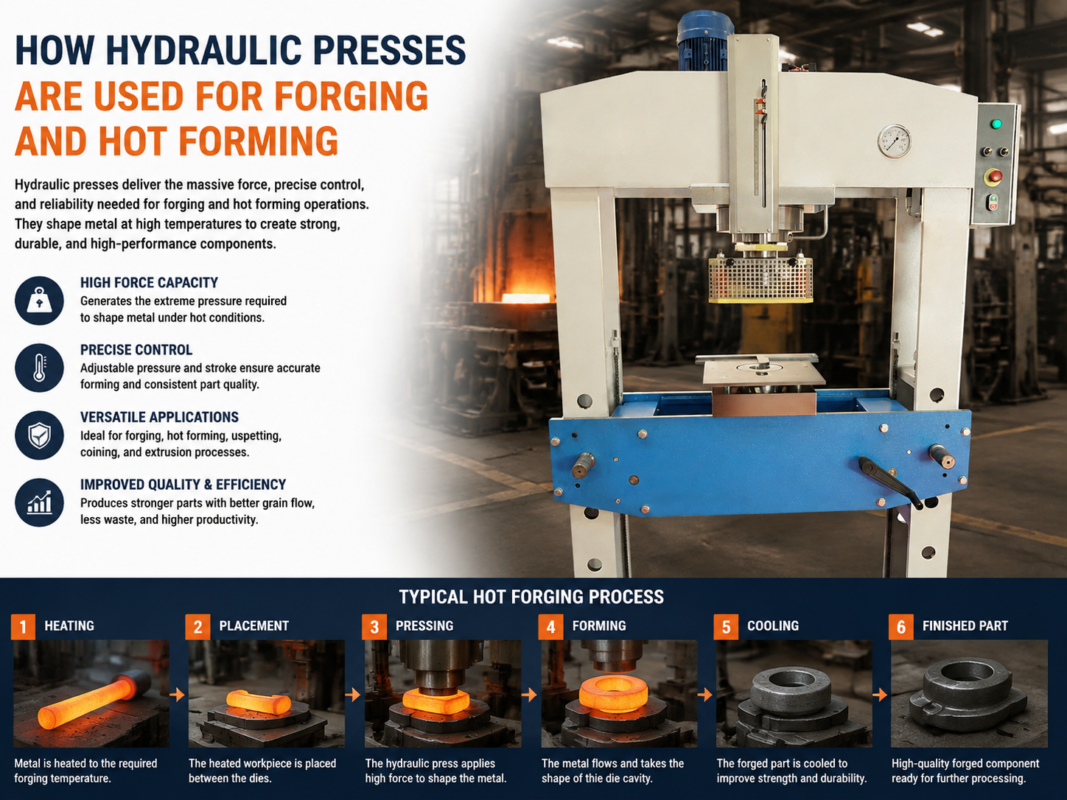
The chassis is the backbone of the vehicle, requiring components that can withstand immense stress and vibration. Hydraulic presses are used to forge and form heavy-duty parts such as control arms, subframes, and shock absorber housings. For these applications, the press must deliver massive force to shape thick-gauge steel or aluminum alloys. Cold forging and warm forging processes are frequently employed using hydraulic systems to increase the density and strength of the metal, ensuring the longevity of the vehicle’s suspension system.
Powertrain and Transmission Parts
In the engine bay and transmission assembly, precision is paramount. Hydraulic presses are utilized for the assembly of interference-fit parts, such as pressing bearings into housings, gears onto shafts, and valve seats into cylinder heads. The fine-tuned pressure control of modern CNC hydraulic presses allows manufacturers to set exact force limits, preventing damage to delicate machined surfaces while ensuring a secure fit. Additionally, clutch plates and transmission housings are often formed using specialized hydraulic molding and stamping techniques.
Interior and Trim Components
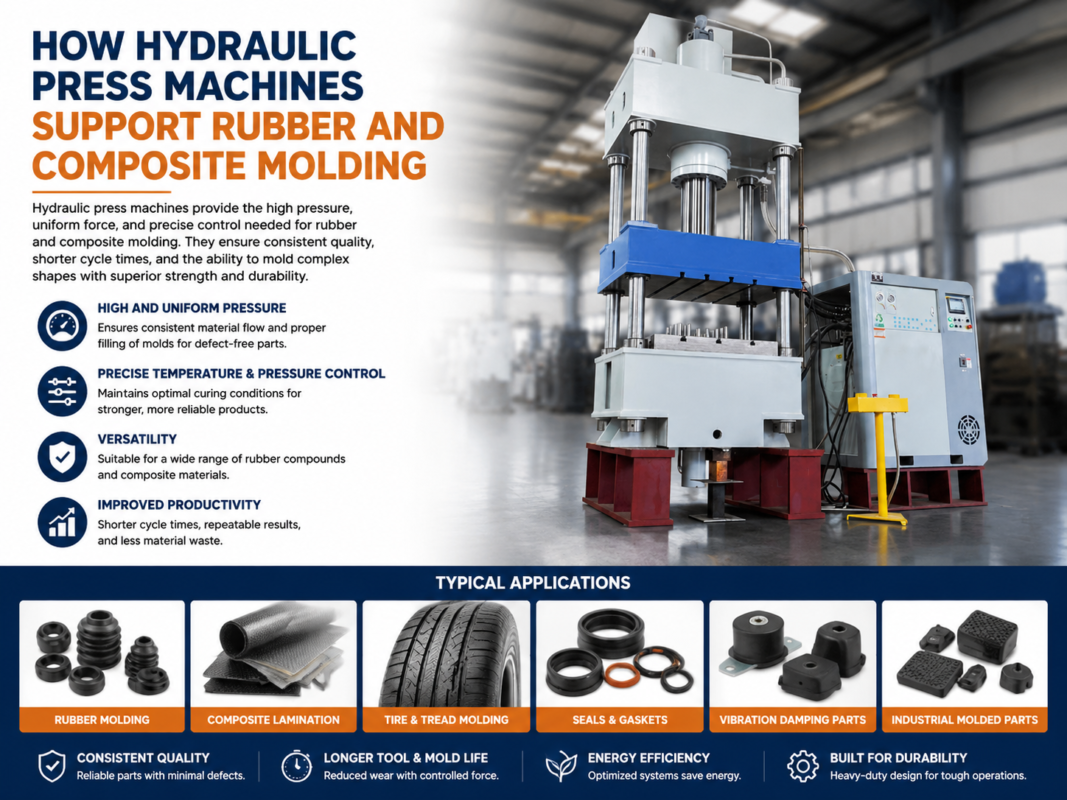
While often associated with heavy metalwork, hydraulic presses also play a role in the production of interior components. This includes the compression molding of composite materials for dashboards, door panels, and headliners. In these scenarios, the press is often equipped with heated platens to cure resins and bond different material layers together. The versatility of the hydraulic system allows it to switch between high-force metal stamping and lower-force composite molding with relatively simple adjustments to the hydraulic circuit and control parameters.
Material and Process Requirements
Handling Advanced High-Strength Steel (AHSS)
Modern automotive design focuses heavily on weight reduction without compromising safety. This has led to the widespread use of AHSS. Processing these materials requires hydraulic presses with high rigidity and precise pressure regulation. Because AHSS has a high yield strength, the press must exert significant force to achieve the desired deformation. Furthermore, the hydraulic system must be capable of managing the “snap-through” shock that occurs when the material finally yields, protecting the die and the machine frame from premature wear.
Aluminum Alloy Forming
Aluminum is increasingly used for body panels and structural parts to reduce vehicle weight and improve fuel efficiency. However, aluminum has lower ductility than traditional mild steel and is more prone to tearing during deep drawing. Industrial Uses Of Hydraulic Presses In Automotive Parts Production involving aluminum require sophisticated lubrication systems and precise control over the ram speed. Variable speed control, a hallmark of HARSLE’s advanced hydraulic systems, allows for a slow draw speed that accommodates aluminum’s unique flow characteristics, followed by a rapid return stroke to maintain cycle times.
Deep Drawing and Hydroforming
Deep drawing is a critical process for creating fuel tanks, oil pans, and complex structural shells. This process requires a double-action hydraulic press or a single-action press with a high-performance hydraulic cushion. The cushion provides a controlled blank-holding force, preventing wrinkles while the punch draws the material into the die. Hydroforming, a specialized subset of hydraulic pressing, uses pressurized fluid to expand metal tubes into complex shapes (like exhaust manifolds or engine cradles), offering superior strength-to-weight ratios compared to welded assemblies.
Recommended Machine Configuration for Automotive Lines
Choosing the right machine configuration is vital for meeting the rigorous standards of automotive manufacturing. HARSLE recommends several key features for hydraulic presses dedicated to this sector:
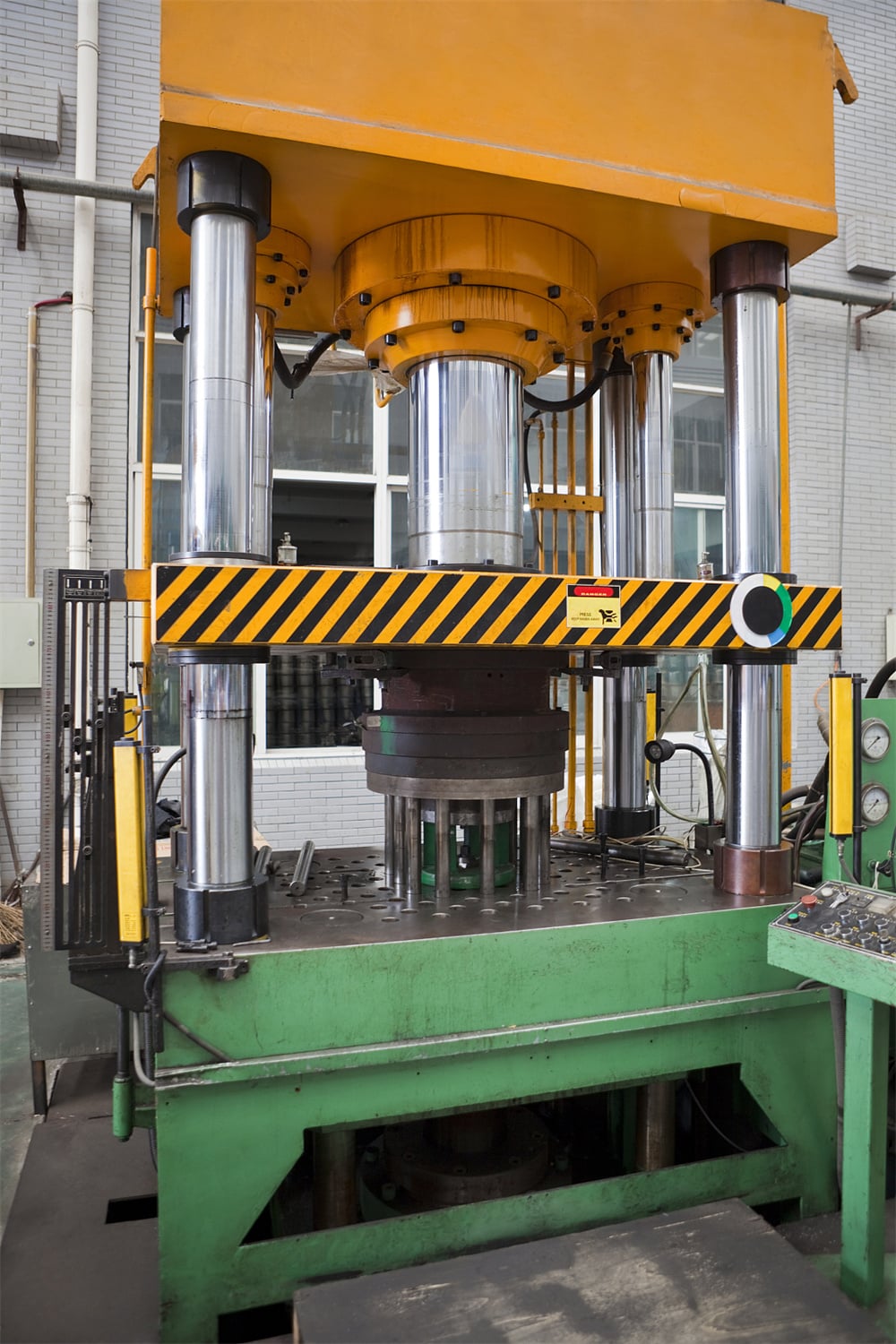
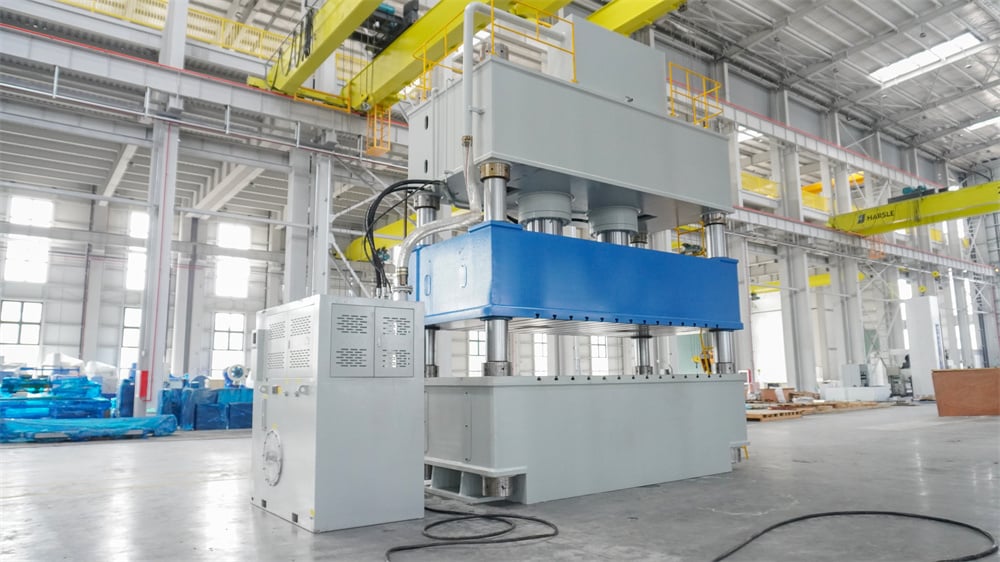
- Frame Structure: For high-precision stamping, a H-frame (or tie-rod) structure is preferred over a C-frame. The H-frame offers superior rigidity and minimizes deflection under heavy loads, which is essential for maintaining die alignment and part accuracy.
- Tonnage Capacity: Automotive parts typically require presses ranging from 200 tons for small brackets to over 3000 tons for large body panels and chassis components.
- CNC Control Systems: Modern production requires programmable logic controllers (PLCs) with touchscreen interfaces. These systems allow operators to store hundreds of “recipes,” ensuring consistent pressure, speed, and dwell settings for different parts.
- Servo-Hydraulic Technology: To reduce energy consumption and noise, servo-driven pumps are highly recommended. These systems only consume power when the ram is moving, offering energy savings of up to 50% compared to traditional constant-delivery pumps.
- Safety Features: Light curtains, dual-hand start buttons, and hydraulic safety locking blocks are non-negotiable in an automotive environment to protect operators and comply with international safety standards.
Workflow in Automotive Hydraulic Pressing
The workflow for producing automotive parts via hydraulic pressing is a highly orchestrated sequence designed for efficiency and quality control. It generally follows these steps:
- Material Preparation: Sheet metal coils are unrolled, straightened, and cut into blanks. For some parts, the blanks may be pre-heated (hot stamping) to improve formability.
- Die Setup and Lubrication: The specific die set is bolted to the bolster and the ram. Automatic lubrication systems apply drawing compounds to the blank to reduce friction and heat during the press cycle.
- The Pressing Cycle: The blank is positioned (often by robotic arms). The ram descends at high speed, transitions to a controlled pressing speed as it contacts the material, and exerts the programmed force. If deep drawing, the hydraulic cushion engages to manage material flow.
- Dwell and Decompression: The press may hold the pressure for a fraction of a second to set the shape. The system then undergoes a controlled decompression to prevent hydraulic shock before the ram retracts.
- Ejection and Transfer: Hydraulic or pneumatic ejectors push the finished part out of the die. A transfer system or robot moves the part to the next station for trimming, piercing, or welding.
- Quality Inspection: Automated sensors or manual gauges check the part for dimensional accuracy and surface defects before it moves further down the assembly line.
Productivity Benefits of Hydraulic Presses
Integrating high-quality hydraulic presses into an automotive production line yields significant productivity benefits:
- Versatility: A single hydraulic press can perform various operations—stamping, drawing, bending, and punching—simply by changing the tooling and adjusting the stroke parameters.
- Reduced Scrap Rates: The precise control over pressure and speed reduces the likelihood of material failure, such as cracking or thinning, leading to higher yield rates and lower material costs.
- Longer Tool Life: Unlike mechanical presses that deliver a sudden impact, hydraulic presses apply force smoothly. This “soft touch” reduces the stress on expensive dies, extending their operational life and reducing maintenance downtime.
- Scalability: Hydraulic systems are easily integrated into fully automated “Smart Factories,” where they can communicate with upstream and downstream equipment to optimize the entire production flow.
Case Example: Tier-1 Supplier Optimization
A leading Tier-1 automotive supplier recently upgraded their production line with a HARSLE 1000-ton four-column hydraulic press to manufacture SUV chassis reinforcements. Previously, they struggled with inconsistent part dimensions due to the spring-back of high-strength steel. By utilizing the HARSLE press’s programmable dwell time and precise pressure holding, they were able to eliminate the spring-back issue entirely. Furthermore, the transition to a servo-hydraulic system reduced their monthly energy costs by 35% and significantly lowered the noise levels in the facility, improving the working environment for their staff. This upgrade resulted in a 20% increase in overall production throughput.
Maintenance and Longevity of Automotive Presses
To ensure the Industrial Uses Of Hydraulic Presses In Automotive Parts Production remain efficient over decades, a rigorous maintenance schedule is required. Key areas of focus include:
- Oil Management: The hydraulic oil is the lifeblood of the machine. Regular testing for contamination and maintaining proper oil temperature via heat exchangers is critical for preventing valve wear and pump failure.
- Seal Inspection: High-pressure seals should be inspected for leaks. Even a minor leak can lead to pressure drops and inconsistent part quality.
- Structure Alignment: Periodically checking the parallelism between the ram and the bolster ensures that the force is distributed evenly across the die, preventing uneven wear.
- Software Updates: Keeping the CNC software updated ensures the machine can utilize the latest optimization algorithms and interface with newer factory automation protocols.
Frequently Asked Questions (FAQ)
What tonnage is typically required for automotive door panels?
Door panels usually require between 800 to 1500 tons of pressure, depending on the material thickness and the complexity of the deep draw. Aluminum panels often require higher tonnage than steel due to the need for more precise blank-holding force.
Can hydraulic presses be used for hot stamping?
Yes, hydraulic presses are ideal for hot stamping (press hardening). They can be synchronized with furnace systems to receive hot blanks and then provide the rapid closing speed and high holding pressure required to quench the part within the die, creating exceptionally strong components.
How does a hydraulic press compare to a mechanical press in automotive use?
Mechanical presses are generally faster and better for shallow stamping of simple parts. However, hydraulic presses offer more flexibility, better control over the drawing process, and the ability to deliver full force throughout the entire stroke, making them superior for complex, deep-drawn, or high-strength components.
What are the benefits of a four-column hydraulic press?
The four-column design provides excellent accessibility from all four sides, making it easier to integrate with robotic loading and unloading systems. It also offers a very stable platform for large dies, ensuring even pressure distribution.
Conclusion: Driving the Future with HARSLE
The Industrial Uses Of Hydraulic Presses In Automotive Parts Production are fundamental to the evolution of the modern vehicle. As the industry moves toward electric vehicles and even lighter, stronger materials, the demand for precise, powerful, and energy-efficient hydraulic pressing solutions will only grow. HARSLE remains at the forefront of this technology, providing automotive manufacturers with the tools they need to innovate and compete on a global scale.
Whether you are looking to set up a new production line for chassis components or seeking to optimize your stamping process for body panels, HARSLE’s range of hydraulic presses offers the reliability and technical sophistication required for success. Contact our engineering team today to discuss your specific application requirements and discover how our machinery can drive your production efficiency to new heights.