Comprehensive Guide to Hydraulic Press Uses in Forging, Bending, and Straightening Metal Parts


Introduction to Hydraulic Press Versatility in Modern Manufacturing
In the realm of industrial metalworking, the hydraulic press stands as a cornerstone of versatility and power. From the massive forces required for heavy-duty forging to the delicate precision needed for straightening structural components, these machines are indispensable. HARSLE, a leader in metal fabrication machinery, provides advanced hydraulic solutions designed to meet the rigorous demands of modern production lines. Understanding the specific Hydraulic Press Uses In Forging, Bending, and Straightening Metal Parts is essential for any facility looking to optimize its workflow and output quality.
The fundamental principle of a hydraulic press—Pascal’s Law—allows for the generation of immense pressure through relatively small input forces. This capability makes it the ideal tool for manipulating tough alloys and thick plates that mechanical presses simply cannot handle. Whether you are shaping automotive chassis components or correcting the alignment of heat-treated shafts, the hydraulic press offers a level of control and force distribution that is unmatched in the industry. This guide explores the deep technical aspects of these applications and how to select the right equipment for your specific needs.
Application Scenarios: Where Hydraulic Presses Excel
The application of hydraulic presses spans across multiple high-stakes industries. In the automotive sector, hydraulic presses are used to forge engine components like crankshafts and connecting rods, where structural integrity is non-negotiable. They are also used for bending body panels and straightening frames after welding processes. The ability to maintain constant pressure throughout the stroke ensures that complex shapes are formed without the risk of material thinning or cracking.
In the aerospace industry, the requirements are even more stringent. Forging titanium and high-strength aluminum alloys requires precise temperature control and slow, steady pressure, which hydraulic systems provide perfectly. Straightening aerospace structural ribs is a common task, as the heat treatment process often introduces slight warping that must be corrected to within microns. Without the incremental control of a hydraulic press, achieving such tolerances would be nearly impossible.
The construction and heavy machinery sectors rely on hydraulic presses for bending large structural beams and straightening thick steel plates used in shipbuilding or bridge construction. These machines handle the “heavy lifting” of the fabrication world, dealing with materials that are several inches thick. Furthermore, in the agricultural equipment industry, hydraulic presses are used to forge plow blades and bend frame components for tractors and harvesters, ensuring they can withstand the harsh conditions of field work.
Material and Process Requirements
When discussing Hydraulic Press Uses In Forging, Bending, and Straightening Metal Parts, one must consider the material properties. Different metals react differently under pressure. For instance, carbon steel is highly forgeable but requires significant force when cold. Stainless steel, known for its work-hardening properties, requires a press that can deliver consistent pressure to prevent the material from becoming too brittle during the bending process.
Forging Requirements
Forging typically involves heating the metal to a plastic state (hot forging) or working it at room temperature (cold forging). Hot forging requires the press to have heat-resistant seals and a cooling system for the platens. The process demands high tonnage to ensure the grain structure of the metal is refined, which increases the strength of the final part. The hydraulic press must be able to hold pressure at the bottom of the stroke to allow the metal to flow into every corner of the die.
Bending Requirements
Bending metal parts involves overcoming the material’s yield strength to create a permanent deformation. The primary challenge here is “springback,” where the metal attempts to return to its original shape after the pressure is released. Advanced hydraulic presses from HARSLE incorporate CNC controls that calculate the necessary over-bend to compensate for springback based on the material’s thickness and tensile strength. Precision in stroke depth is the most critical factor in bending applications.
Straightening Requirements
Straightening is perhaps the most delicate of the three processes. It requires the operator (or an automated system) to identify the high points of a warped part and apply just enough pressure to push it back into alignment without over-correcting. This requires a press with highly sensitive pressure valves and a slow approach speed. Often, straightening is done in increments, with the operator checking the part against a flat surface or using laser measurement tools between presses.
Recommended Machine Configuration
Choosing the right configuration is vital for maximizing the efficiency of Hydraulic Press Uses In Forging, Bending, and Straightening Metal Parts. HARSLE offers several designs tailored to these specific tasks.
- Four-Column Hydraulic Press: This is the gold standard for forging. The four-column design provides excellent accessibility from all four sides and ensures even distribution of pressure across the entire bolster area. It is ideal for large dies and heavy-duty forging operations where stability is paramount.
- C-Frame (Gap Frame) Press: Best suited for bending and straightening smaller parts. The C-frame design allows for easy loading and unloading of workpieces. While it has a smaller footprint, it is incredibly rigid and perfect for high-speed bending tasks.
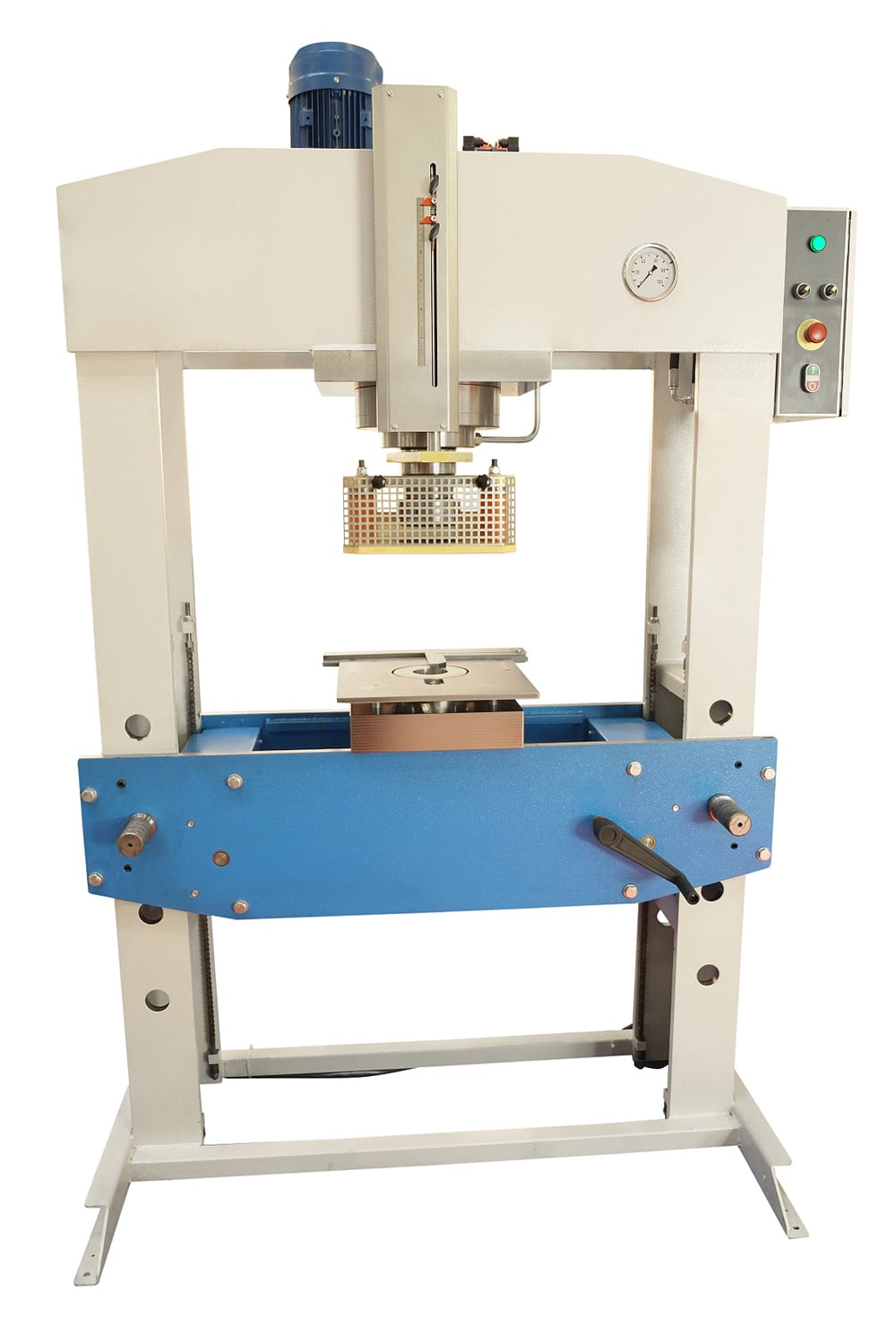
- H-Frame Press: Often used for heavy-duty straightening and assembly. The robust frame minimizes deflection under high loads, making it the preferred choice for straightening long shafts or thick plates.
Technical Specifications to Consider
| Feature | Forging Requirement | Bending Requirement | Straightening Requirement |
|---|---|---|---|
| Tonnage Range | High (500T – 5000T+) | Medium (50T – 1000T) | Low to Medium (20T – 500T) |
| Stroke Control | Dwell time at bottom | High precision depth control | Incremental micro-adjustments |
| Speed | Fast approach, slow press | Variable speed control | Very slow, controlled descent |
| Control System | PLC with thermal monitoring | CNC with springback calc | Manual override or Laser-guided |
Detailed Workflow for Metal Processing
The Forging Workflow
- Billet Preparation: The raw material is cut to size and, if hot forging, heated in an induction furnace to the required temperature.
- Die Lubrication: The forging dies are coated with lubricant to prevent the metal from sticking and to reduce wear on the die surfaces.
- Positioning: The heated billet is placed precisely in the lower die.
- Pressing Cycle: The hydraulic ram descends. In many HARSLE models, this is a multi-stage process: rapid approach, slow pressing to allow material flow, and a dwell period at maximum pressure.
- Ejection and Cooling: The part is ejected from the die and cooled under controlled conditions to manage the grain structure.
The Bending Workflow
- Tooling Setup: The appropriate V-die and punch are installed based on the desired bend radius and material thickness.
- Program Input: The operator enters the material type, thickness, and desired angle into the CNC controller.
- Positioning: The metal sheet or plate is positioned against backgauges for accuracy.
- Execution: The press performs the bend. Advanced systems use real-time angle sensors to adjust the stroke on the fly.
The Straightening Workflow
- Deflection Analysis: The part (e.g., a welded beam) is measured to find the location and magnitude of the warp.
- Support Placement: The part is placed on two support blocks on the press bed, with the warp facing upward.
- Pressure Application: The ram applies pressure to the peak of the warp. The operator monitors the pressure gauge closely.
- Verification: The pressure is released, and the part is re-measured. This cycle repeats until the part meets the required flatness or straightness tolerance.
Productivity Benefits of Hydraulic Systems
The shift toward hydraulic systems in Forging, Bending, and Straightening Metal Parts is driven by several key productivity benefits. First is Force Consistency. Unlike mechanical presses, which only deliver maximum force at the bottom of the stroke, a hydraulic press can deliver full tonnage at any point in the stroke. This is crucial for deep drawing and complex bending where the material needs consistent pressure throughout the deformation process.
Second is Adjustability and Versatility. A single HARSLE hydraulic press can be used for multiple different jobs simply by changing the tooling and adjusting the pressure settings. This reduces the need for multiple specialized machines, saving floor space and capital investment. Furthermore, the integration of Energy-Efficient Servo Motors in modern hydraulic systems has drastically reduced power consumption, as the motor only runs when the press is actually moving or holding pressure.
Finally, Safety and Maintenance. Hydraulic presses have built-in overload protection. If the pressure exceeds the set limit, the relief valves open, preventing damage to the machine or the dies. Maintenance is also simplified; with fewer moving parts than mechanical linkages, the primary focus is on oil quality and seal integrity, which can be easily managed through routine inspections.
Case Example: Straightening Heavy-Duty Structural Brackets
A mid-sized fabrication shop specializing in construction equipment faced a challenge with their 50mm thick steel mounting brackets. After the welding process, the heat caused a 5mm deviation across the length of the bracket, making it impossible to bolt onto the main chassis. Using a HARSLE 300-ton H-frame hydraulic press, the shop implemented a dedicated straightening station.
By using a laser-leveling tool in conjunction with the press’s incremental stroke control, the operator was able to reduce the deviation to less than 0.5mm in under three minutes per part. Previously, the shop had attempted to use heat-straightening (using torches), which took 20 minutes per part and often compromised the material’s temper. The switch to the hydraulic press increased their throughput by 600% and ensured a much higher level of consistency across production batches.
Frequently Asked Questions (FAQ)
1. What is the main advantage of using a hydraulic press over a mechanical press for forging?
The main advantage is the ability to control the speed of the press and the dwell time at the bottom of the stroke. This allows for better material flow and a more refined grain structure, which is essential for high-strength forged parts. Additionally, hydraulic presses provide full tonnage throughout the entire stroke.
2. Can a hydraulic press be used for both bending and straightening?
Yes, absolutely. Many HARSLE hydraulic presses are designed as multi-purpose machines. By changing the tooling (e.g., using a straightening ram vs. a bending punch and die) and adjusting the CNC settings, you can switch between these operations easily.
3. How do I determine the tonnage required for bending a specific metal part?
Tonnage is determined by the material’s tensile strength, thickness, the length of the bend, and the V-opening of the die. HARSLE provides tonnage charts and CNC software that automatically calculates these requirements to prevent machine overload.
4. Is maintenance difficult for high-tonnage hydraulic presses?
Not necessarily. Modern hydraulic presses are designed for easy maintenance. Key tasks include monitoring hydraulic oil levels and cleanliness, checking for seal leaks, and ensuring the lubrication of the guide rails. HARSLE machines often include self-diagnostic tools to alert operators to maintenance needs.
5. How does a hydraulic press handle springback during bending?
Springback is handled through precision stroke control. The press is programmed to bend the material slightly past the desired angle. Advanced CNC systems use material databases to predict springback or use sensors to measure the angle in real-time and adjust the stroke accordingly.
Conclusion: Elevate Your Production with HARSLE
Understanding the diverse Hydraulic Press Uses In Forging, Bending, and Straightening Metal Parts is the first step toward industrial excellence. These machines offer the power, precision, and flexibility required to stay competitive in a demanding market. Whether you are working with delicate aerospace components or massive construction beams, the right hydraulic press configuration will significantly enhance your productivity and part quality.
HARSLE is committed to providing top-tier hydraulic machinery and expert support to help you achieve your manufacturing goals. Our range of four-column, C-frame, and H-frame presses are engineered for durability and high performance. Contact HARSLE today to discuss your specific application requirements and find the perfect hydraulic solution for your facility. Let us help you transform your metal fabrication capabilities with the latest in hydraulic technology.