How Hydraulic Presses Improve Efficiency In Industrial Production Lines


Introduction to Hydraulic Press Efficiency in Modern Manufacturing
In the rapidly evolving landscape of global manufacturing, the demand for precision, speed, and cost-effectiveness has never been higher. As industries strive to meet these demands, the role of heavy machinery becomes pivotal. Among the most critical tools in the metalworking sector is the hydraulic press. Understanding how hydraulic presses improve efficiency in industrial production lines is essential for any facility looking to optimize its output and maintain a competitive edge. These machines leverage Pascal’s Law to generate immense force, allowing for the shaping, molding, and assembly of complex components with unparalleled consistency.
Unlike their mechanical counterparts, modern hydraulic presses offer a level of flexibility that is vital for high-mix, low-volume production as well as massive high-volume runs. By integrating advanced control systems, energy-efficient motors, and robust structural designs, manufacturers like HARSLE are redefining what is possible on the factory floor. This article provides an in-depth analysis of the mechanisms, applications, and strategic advantages that demonstrate exactly how hydraulic presses improve efficiency in industrial production lines.
Application Scenarios: Where Efficiency Meets Versatility
The versatility of hydraulic presses allows them to be integrated into a wide array of industrial sectors. One of the primary ways hydraulic presses improve efficiency in industrial production lines is through their adaptability to different tasks. In the automotive industry, these machines are used for stamping body panels, forming chassis components, and even assembling delicate engine parts. The ability to control pressure precisely ensures that high-strength steel and aluminum alloys are formed without cracking or thinning, reducing scrap rates significantly.
In the aerospace sector, the requirements for precision are even more stringent. Hydraulic presses are utilized to form titanium and other exotic alloys into complex aerodynamic shapes. Because these presses can maintain a constant pressure throughout the entire stroke, they are ideal for the slow-forming processes required by aerospace materials. This consistency eliminates the need for secondary corrective processes, thereby streamlining the entire production workflow.
The appliance manufacturing industry also benefits greatly. From the outer shells of washing machines to the intricate internal components of refrigerators, hydraulic presses provide the deep-drawing capabilities necessary for large-scale production. By using multi-die setups, a single hydraulic press can perform multiple operations in one cycle, which is a hallmark of how hydraulic presses improve efficiency in industrial production lines. Furthermore, the electronics industry utilizes smaller, high-speed hydraulic presses for precision molding and assembly of circuit board housings and connectors.
Beyond metal, hydraulic presses are essential in the composites and plastics industry. Compression molding of carbon fiber or glass-reinforced plastics requires precise temperature and pressure control over extended dwell times. Hydraulic systems are uniquely suited for this, providing the steady force needed to ensure uniform resin distribution and structural integrity. This cross-industry utility makes the hydraulic press a cornerstone of modern industrial efficiency.
Material and Process Requirements
To understand how hydraulic presses improve efficiency in industrial production lines, one must look at the specific material and process requirements they fulfill. Different materials react differently under stress. For instance, stainless steel requires high tonnage and controlled speeds to prevent work hardening, while aluminum requires a more delicate touch to avoid tearing. Hydraulic presses allow operators to program specific pressure profiles that match the material’s metallurgical properties.
Deep Drawing and Complex Forming
Deep drawing is a process where a sheet metal blank is radially drawn into a forming die by the mechanical action of a punch. It is a shape-transformation process with material retention. Hydraulic presses are superior for this because they offer full tonnage throughout the entire stroke. This allows for deeper draws in a single pass compared to mechanical presses, which only reach peak tonnage at the bottom of the stroke. By reducing the number of draws required, the production cycle time is slashed.
Forging and Powder Metallurgy
In forging applications, the ability to deliver a massive, controlled squeeze rather than a sudden impact (as seen in hammers) allows for better grain flow and superior mechanical properties in the finished part. Similarly, in powder metallurgy, hydraulic presses provide the uniform compaction density required to create high-quality sintered parts. This uniformity reduces the likelihood of internal defects, which in turn reduces the cost of quality control and waste management.
Material Compatibility
- High-Strength Steel (HSS): Requires consistent pressure to manage springback.
- Aluminum Alloys: Needs variable speed control to prevent fracturing during high-speed deformation.
- Composites: Requires precise dwell times and heated platens for curing.
- Copper and Brass: Benefits from the smooth application of force to maintain surface finish.
Recommended Machine Configuration for Maximum Efficiency
The configuration of the machine is a decisive factor in how hydraulic presses improve efficiency in industrial production lines. A “one size fits all” approach rarely works in high-output environments. Manufacturers must choose configurations that align with their specific production goals. HARSLE offers several configurations designed to maximize throughput and minimize downtime.
Frame Design: H-Frame vs. Four-Column
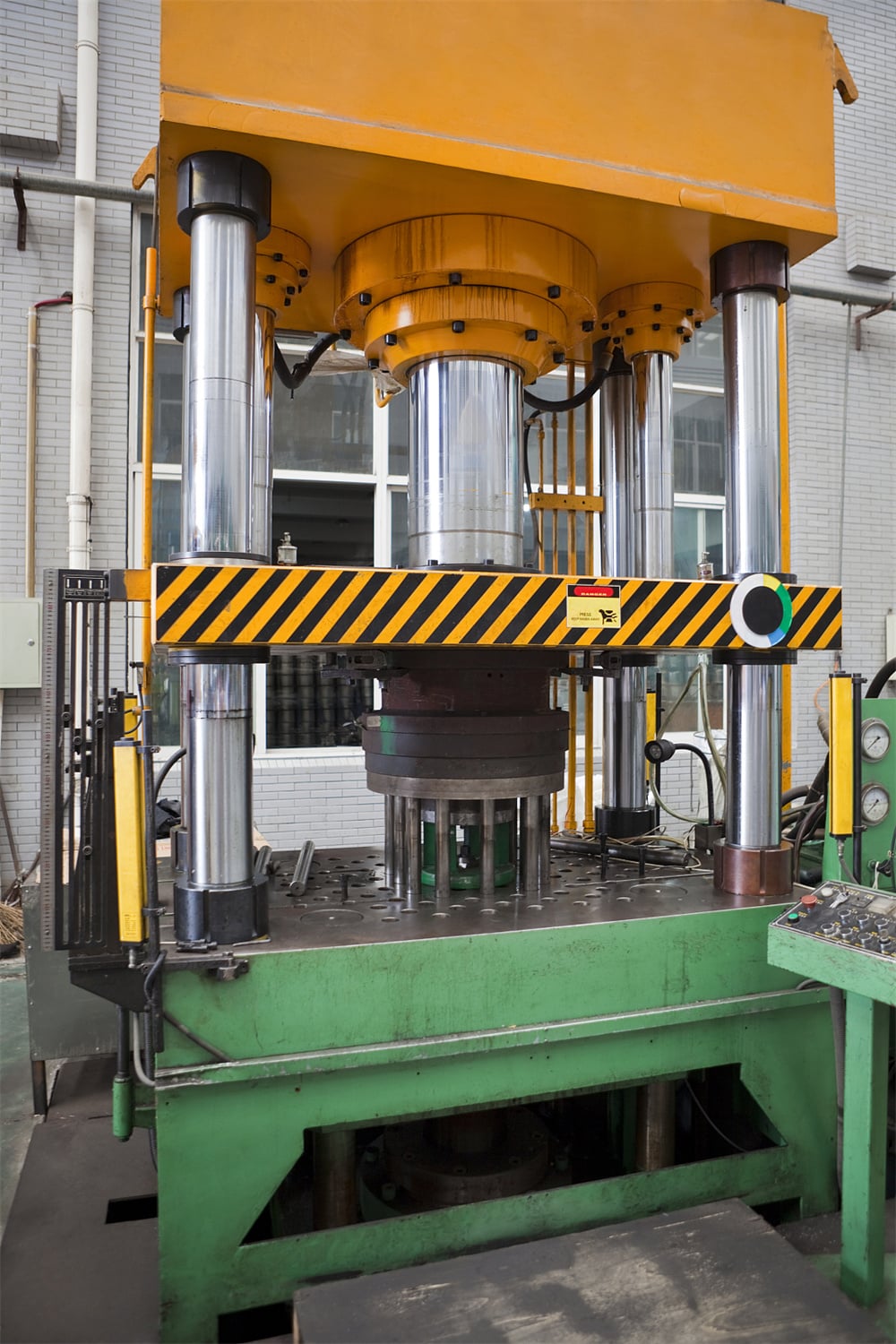
The H-frame (or side-column) press offers exceptional rigidity, which is crucial for high-tonnage applications where frame deflection could lead to part inaccuracy. This rigidity ensures that the dies remain perfectly aligned, extending tool life and ensuring part consistency. On the other hand, four-column hydraulic presses provide 360-degree access to the work area, making them ideal for integration with robotic arms and automated loading systems. This accessibility is a key component of how hydraulic presses improve efficiency in industrial production lines by facilitating faster die changes and easier maintenance.
Servo-Hydraulic Systems
One of the most significant advancements in recent years is the servo-driven hydraulic system. Traditional hydraulic presses use constant-speed motors that run even when the press is idle. Servo-hydraulic presses use motors that only run when movement or pressure is required. This can lead to energy savings of up to 70%. Additionally, servo systems provide much higher precision in terms of ram position and pressure control, allowing for faster approach and return speeds without sacrificing the delicate touch required during the actual forming phase.
PLC and CNC Integration
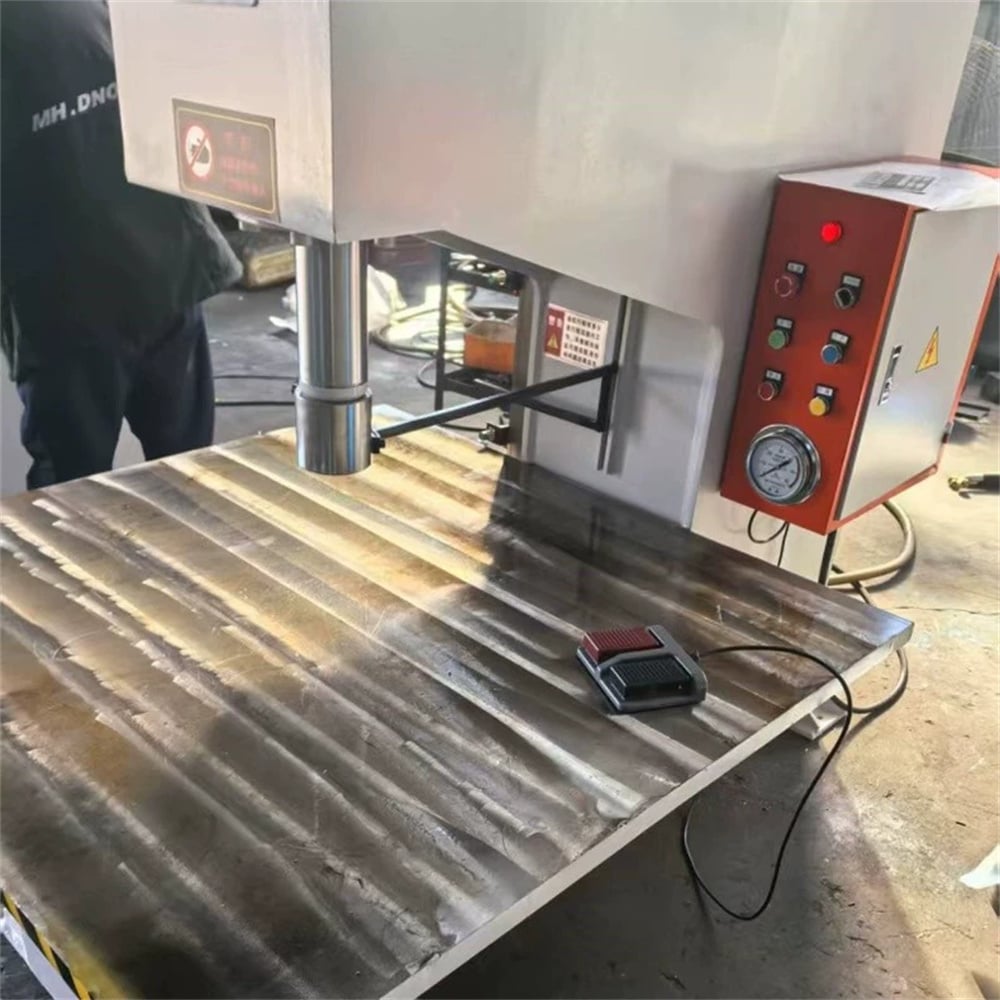
Modern efficiency is driven by data. Integrating Programmable Logic Controllers (PLC) and Computer Numerical Control (CNC) allows for the storage of hundreds of different “recipes” or job profiles. When a production line needs to switch from making Part A to Part B, the operator simply selects the profile on the touchscreen. The machine automatically adjusts the stroke length, pressure, speed, and dwell time. This reduces setup times from hours to minutes, illustrating a direct way how hydraulic presses improve efficiency in industrial production lines.
The Optimized Workflow: From Raw Material to Finished Product
An efficient production line is a choreographed sequence of events. The hydraulic press sits at the center of this sequence. To maximize efficiency, the workflow must be optimized to eliminate bottlenecks. A typical high-efficiency workflow involving a HARSLE hydraulic press follows these stages:
- Automated Loading: Sheet metal or blanks are fed into the press using vacuum lifters or robotic grippers. This ensures perfect placement every time and removes the safety risks associated with manual loading.
- Pre-Lubrication: Automated sprayers apply the exact amount of lubricant needed for the specific material, ensuring smooth forming and protecting the dies.
- The Pressing Cycle: The ram descends at high speed (rapid approach), slows down just before contact (pressing speed), applies the programmed force, and dwells if necessary to allow the material to set.
- Active Ejection: Hydraulic cushions or ejectors push the finished part out of the die immediately after the ram begins its ascent, preventing the part from sticking and slowing down the cycle.
- Automated Unloading and Inspection: A robot removes the part and places it on a conveyor. Integrated sensors or vision systems can inspect the part in real-time for dimensional accuracy.
By automating these steps, the “cycle time”—the time it takes to produce one part—is minimized. When multiplied by thousands of cycles per shift, these small time savings result in massive increases in total output. This seamless integration is the gold standard of how hydraulic presses improve efficiency in industrial production lines.
Productivity Benefits: The Bottom Line
The implementation of high-quality hydraulic presses yields several tangible productivity benefits that directly impact a company’s bottom line. These benefits go beyond just “making parts faster”; they encompass the entire lifecycle of production.
Reduced Scrap and Rework
Because hydraulic presses provide consistent pressure and are not subject to the mechanical “snap-through” of crank presses, the quality of the parts is much higher. Consistent quality means fewer rejected parts. In industries where raw materials like titanium or high-grade stainless steel are expensive, reducing scrap by even 2-3% can save hundreds of thousands of dollars annually.
Extended Tooling Life
Tooling is a significant investment. The smooth, controlled application of force in a hydraulic press reduces the shock and vibration that dies are subjected to. Furthermore, built-in overload protection ensures that if a double-blank is accidentally loaded, the press will stop before it smashes the expensive die. This protection is a vital aspect of how hydraulic presses improve efficiency in industrial production lines by preventing catastrophic downtime.
Energy Efficiency and Sustainability
With the rise of green manufacturing initiatives, energy consumption has become a key performance indicator (KPI). As mentioned, servo-hydraulic technology drastically reduces electricity usage. Additionally, modern hydraulic systems are designed to be leak-free and use biodegradable oils, reducing the environmental footprint of the factory while also lowering utility costs.
Versatility and Future-Proofing
A hydraulic press is not a single-purpose machine. A 500-ton press can be used for a 100-ton job with no loss in efficiency, simply by adjusting the settings. This versatility means that as market demands change and product designs evolve, the same machinery can be repurposed with new dies and software profiles, providing a much better return on investment (ROI) than specialized, rigid machinery.
Case Example: Automotive Component Manufacturing
Consider a Tier-1 automotive supplier that was struggling with the production of reinforced door pillars. Their old mechanical presses were causing a 15% failure rate due to micro-cracking in the high-strength steel. By switching to a HARSLE H-frame hydraulic press with servo-control, they were able to implement a “pulsed” pressing profile. This allowed the material to flow into the die more naturally, reducing the failure rate to less than 0.5%.
Furthermore, by integrating the press with a robotic loading arm, they increased their parts-per-hour from 120 to 200. The energy savings from the servo motor paid for the machine’s upgrade within 18 months. This real-world scenario perfectly illustrates how hydraulic presses improve efficiency in industrial production lines by solving technical material challenges while simultaneously boosting throughput.
Frequently Asked Questions (FAQ)
1. How do hydraulic presses compare to mechanical presses in terms of speed?
While mechanical presses are traditionally faster for simple, shallow-stamping tasks, hydraulic presses have closed the gap significantly. Modern high-speed valves and servo-hydraulics allow for rapid cycle times. More importantly, for complex parts, the hydraulic press is more efficient because it can complete the part in fewer steps.
2. Can hydraulic presses be integrated into Industry 4.0 environments?
Absolutely. Modern hydraulic presses are equipped with sensors that monitor pressure, temperature, oil quality, and cycle times. This data can be fed into a centralized ERP system for predictive maintenance and real-time production tracking, which is a core component of how hydraulic presses improve efficiency in industrial production lines today.
3. What maintenance is required to keep a hydraulic press efficient?
Regular maintenance involves monitoring oil cleanliness, checking for seal wear, and ensuring the cooling system is functioning. HARSLE machines are designed with accessible components to make these tasks quick and easy, minimizing scheduled downtime.
4. Is a four-column or H-frame press better for my production line?
It depends on your priorities. If you need maximum rigidity for high-precision stamping, the H-frame is usually better. If you need maximum flexibility for automated loading from multiple sides, the four-column design is often preferred.
5. How does the stroke control in a hydraulic press improve efficiency?
Unlike mechanical presses, where the stroke is fixed by the crankshaft, a hydraulic press allows you to set the exact start and stop points of the ram. This means the ram doesn’t have to travel its full distance if the part only requires a short stroke, significantly reducing cycle time.
Conclusion: Partnering with HARSLE for Industrial Excellence
The evidence is clear: the strategic implementation of hydraulic pressing technology is a primary driver of modern manufacturing success. By understanding how hydraulic presses improve efficiency in industrial production lines, businesses can make informed investment decisions that lead to higher quality, lower costs, and increased capacity. HARSLE remains at the forefront of this industry, providing the robust, intelligent, and energy-efficient machinery required to power the factories of tomorrow.
Whether you are looking to upgrade a single station or design a fully automated production cell, HARSLE’s team of experts is ready to provide a solution tailored to your specific needs. Don’t let outdated machinery be the bottleneck in your growth. Embrace the power, precision, and efficiency of HARSLE hydraulic presses today.
Contact HARSLE today to consult with our engineers and discover the perfect hydraulic press configuration for your production line!