Comprehensive Guide to Hydraulic Press Applications for Powder Compacting and Forming Processes


Introduction to Hydraulic Press Applications for Powder Compacting and Forming Processes
In the modern industrial landscape, the demand for high-precision, high-density components has led to the widespread adoption of powder metallurgy and advanced forming techniques. At the heart of these processes lies the hydraulic press, a versatile powerhouse capable of exerting immense, controlled force to transform loose powders into solid, functional parts. Hydraulic press applications for powder compacting and forming processes have revolutionized sectors ranging from automotive manufacturing to aerospace engineering, offering a level of material efficiency and geometric complexity that traditional casting or machining often cannot match.
HARSLE, a leader in metal fabrication machinery, understands that the success of powder compacting depends on the synergy between mechanical precision and hydraulic control. Whether it is creating intricate gears, high-performance ceramic insulators, or composite friction materials, the hydraulic press provides the necessary dwell time, pressure consistency, and ejection force required for superior product integrity. This guide explores the depth of these applications, the technical requirements of the machinery, and how modern innovations like servo-hydraulic systems are setting new standards for productivity.
Application Scenarios for Powder Compacting and Forming
The versatility of hydraulic presses allows them to serve a diverse array of industries. One of the primary application scenarios is the Automotive Industry. Here, hydraulic presses are used to manufacture engine components, transmission gears, and brake pads. Powder metallurgy allows for the creation of parts with specific porosities for self-lubrication or high-density parts for structural strength. By using a hydraulic press, manufacturers can achieve near-net-shape production, significantly reducing the need for secondary machining and minimizing material waste.
In the Aerospace and Defense sectors, the requirements for material performance are even more stringent. Hydraulic presses are utilized to compact superalloys and refractory metals that are difficult to process through melting. These materials are often formed into turbine blades or heat shields. The ability of the hydraulic press to maintain a constant pressure over a specific duration (dwell time) ensures that the powder particles are bonded uniformly, eliminating internal voids that could lead to structural failure under extreme conditions.
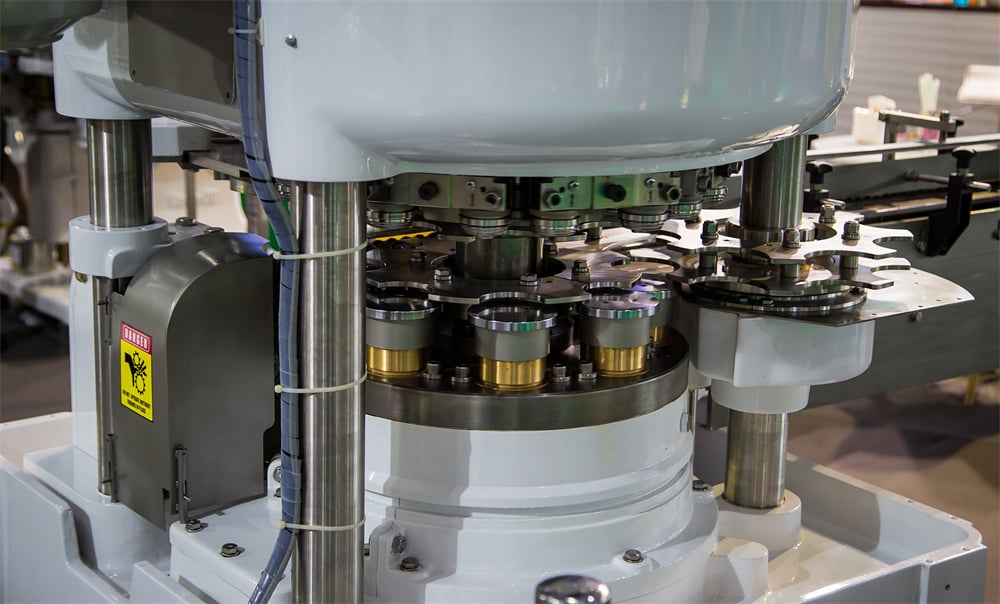
The Electronics and Energy sectors also rely heavily on these processes. For instance, the production of permanent magnets, ferrite cores, and battery electrodes involves the compaction of fine powders. In the renewable energy sector, hydraulic presses are used to form ceramic components for fuel cells and solar panels. The precision of the hydraulic stroke allows for the production of very thin, fragile components that require delicate handling during the ejection phase to prevent cracking.
Finally, Industrial Ceramics and Refractories represent a massive market for powder compacting. From high-temperature furnace bricks to specialized ceramic cutting tools, the hydraulic press provides the high tonnage necessary to overcome the natural resistance of ceramic particles. These applications often require multi-action presses where pressure is applied from both the top and bottom to ensure uniform density throughout the height of the part.
Material and Process Requirements
Successful powder compacting is not merely about applying force; it is about understanding the physical properties of the material. Different powders—whether metallic, ceramic, or composite—behave differently under pressure. The primary goal is to achieve a specific “green density” (the density of the part after compacting but before sintering). To reach this, the hydraulic press must meet several critical process requirements.
- Pressure Uniformity: Powder particles do not flow like liquids. Friction between the powder and the die walls can lead to density gradients. To counteract this, hydraulic presses often utilize a “floating die” or double-action pressing, where both the upper and lower punches move to compress the powder from both ends.
- Controlled Compression Speed: If the air trapped between powder particles is not allowed to escape, it can cause internal laminations or “capping” (cracks at the edges). Modern hydraulic presses allow for multi-stage compression speeds, starting fast to close the gap and slowing down during the final compaction phase to allow for de-aeration.
- Dwell Time Management: Some materials require a specific amount of time at peak pressure to allow for plastic deformation of the particles. Hydraulic systems are uniquely suited for this, as they can maintain a constant pressure without the mechanical limitations of a flywheel-driven press.
- Ejection Force and Control: Once the part is formed, it must be removed from the die. Because the part expands slightly when pressure is released (elastic recovery), the ejection process must be smooth and perfectly aligned to avoid damaging the “green” part, which is still relatively fragile.
Material selection also dictates the choice of die lubricants and the type of hydraulic fluid used in the machine. For example, when compacting abrasive ceramic powders, the press must be equipped with hardened liners and dust-proof seals to prevent premature wear of the hydraulic rams and guiding systems.
Recommended Machine Configuration
Choosing the right machine configuration is vital for optimizing hydraulic press applications for powder compacting and forming processes. HARSLE recommends several key features for high-performance compacting lines:
1. Frame Structure: 4-Column vs. H-Frame
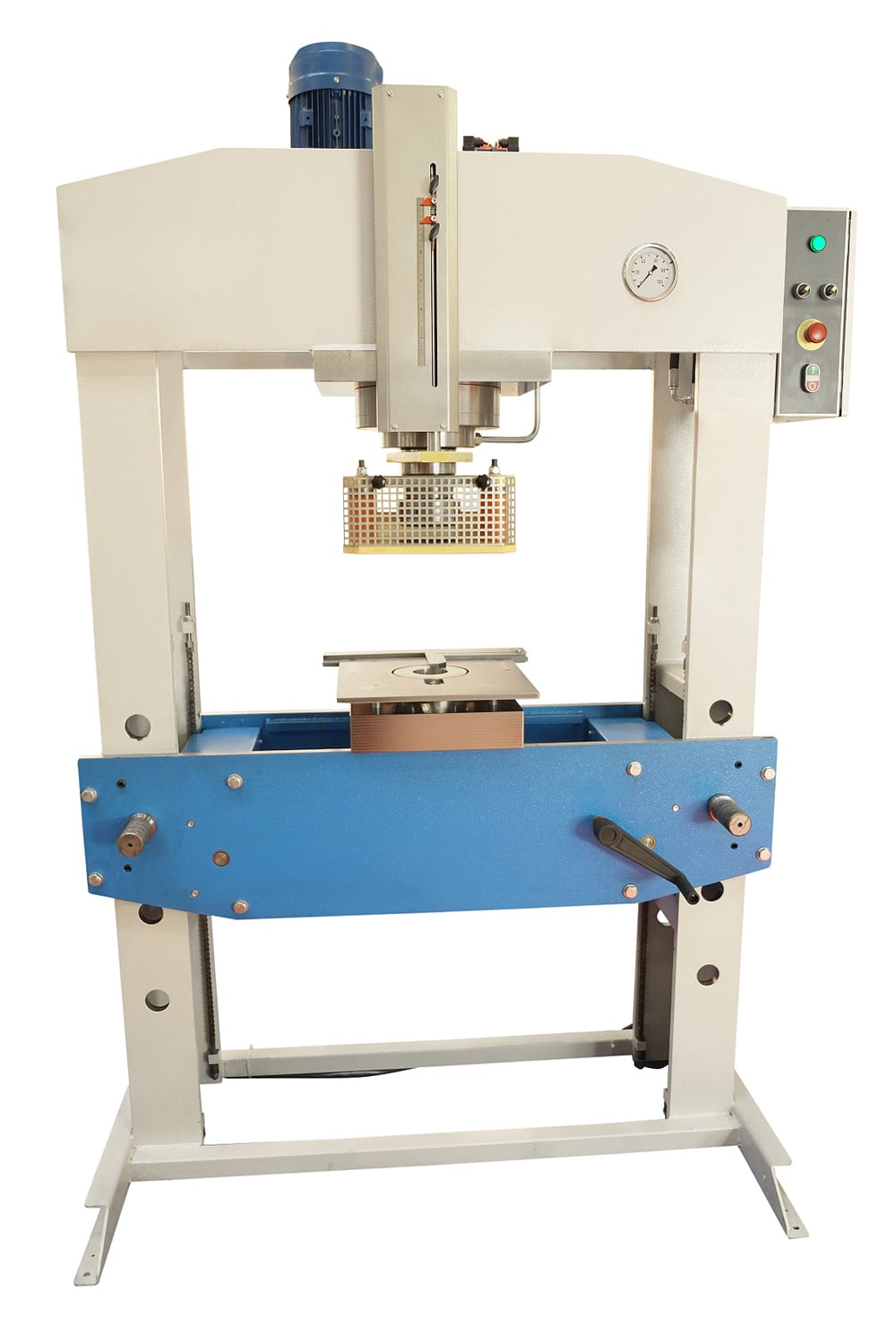
For powder compacting, the 4-Column Hydraulic Press is often preferred due to its excellent accessibility for die changes and the installation of powder feeding systems. However, for extremely high-tonnage applications where frame deflection must be minimized to ensure part parallelism, a Heavy-Duty H-Frame (Gantry) Press is recommended. The H-frame provides superior rigidity, which is crucial for maintaining the tight tolerances required in powder metallurgy.
2. Servo-Hydraulic Drive Systems
Modern powder compacting demands energy efficiency and precision. A servo-driven hydraulic system replaces traditional induction motors with servo motors that only run when the machine is in motion. This not only reduces energy consumption by up to 50% but also allows for closed-loop control of the ram position and pressure. This level of control is essential for achieving repeatable density in every part produced.
3. Multi-Action Cylinders
To handle complex geometries, the press should be configured with multiple cylinders. This includes the main ram, a lower cushion or ejector cylinder, and sometimes lateral cylinders for side-action compacting. A PLC-controlled synchronization system ensures that these cylinders move in perfect harmony, allowing for the production of multi-level parts without density variations.
4. Advanced PLC and HMI
The control system should allow the operator to program complex pressing cycles. This includes setting multiple stages of pressure, varying speeds, and precise dwell times. Data logging is also a critical feature, allowing manufacturers to track the “pressure vs. displacement” curve for every part, which serves as a vital quality control tool in industries like medical and aerospace.
Workflow of the Powder Compacting Process
The workflow in a hydraulic press powder compacting line is a highly orchestrated sequence of events. Understanding this workflow is key to maximizing throughput and quality.
- Powder Feeding: The process begins with the delivery of a precise volume of powder into the die cavity. This is usually handled by a “shoe” feeder that slides over the die. Consistency in the fill weight is the first step toward consistency in part density.
- Initial Compression: The upper punch descends. In many HARSLE configurations, this is a rapid approach followed by a slower transition to the pressing speed.
- Final Compaction and Dwell: The press reaches its target tonnage. The system holds this pressure for a programmed dwell time, ensuring the powder particles are fully interlocked.
- Decompression: The pressure is released in a controlled manner. Sudden decompression can cause the part to crack due to the sudden release of stored elastic energy.
- Ejection: The lower punch rises, or the die table drops (in a floating die setup), to push the green part out of the cavity.
- Part Removal and Sintering: An automated arm or the next movement of the powder shoe pushes the part onto a conveyor. From here, the parts are moved to a sintering furnace where they are heated to just below their melting point to fuse the particles together permanently.
Productivity Benefits of Hydraulic Presses
Integrating a hydraulic press into your powder compacting workflow offers several transformative benefits for productivity and the bottom line:
- Material Savings: Unlike machining, where up to 40% of the raw material can end up as scrap shavings, powder compacting is a “zero-waste” process. Almost 100% of the powder fed into the die becomes part of the finished product.
- Energy Efficiency: With the advent of servo-hydraulic technology, the power draw of the press is significantly reduced during idle times and the dwell phase, leading to lower operational costs.
- Reduced Secondary Operations: Because hydraulic presses can achieve high dimensional accuracy and excellent surface finishes, many parts are ready for use immediately after sintering, eliminating the need for grinding or milling.
- Flexibility: A single hydraulic press can be used for a wide variety of parts simply by changing the die set and the PLC program. This makes it ideal for both high-volume production and small-batch specialized runs.
- Enhanced Part Quality: The ability to control the pressure profile precisely means that parts have uniform mechanical properties, reducing the failure rate during the sintering process or in final field use.
Case Example: High-Density Gear Production
A leading automotive component manufacturer approached HARSLE to upgrade their production line for transmission gears. Their existing mechanical presses were struggling with density variations, leading to a 5% rejection rate after sintering. They required a solution that could provide consistent pressure and handle a complex multi-level gear design.
The Solution: HARSLE provided a 500-ton 4-Column Servo Hydraulic Press equipped with a multi-action hydraulic cushion. The system featured a high-precision linear encoder to monitor ram position within 0.01mm and a closed-loop pressure control system.
The Result: By switching to the HARSLE hydraulic press, the client was able to implement a double-action pressing cycle. This eliminated the density gradients that were causing cracks. The rejection rate dropped from 5% to less than 0.2%. Furthermore, the servo-hydraulic drive reduced the factory’s energy consumption for that line by 35%, and the programmable dwell time allowed them to use a cheaper powder grade while still achieving the required final strength.
Frequently Asked Questions (FAQ)
1. How do I determine the required tonnage for my powder compacting application?
The required tonnage is calculated based on the surface area of the part and the specific compaction pressure required by the material. For example, most iron-based powders require 400-700 MPa (approx. 30-50 tons per square inch). Always consult with your material supplier and the press manufacturer to ensure the machine has sufficient capacity with a safety margin.
2. What is the difference between a single-action and a double-action press?
In a single-action press, only the top punch moves to compress the powder. This often results in higher density at the top and lower density at the bottom. A double-action press (or a press with a floating die) compresses the powder from both the top and bottom, resulting in a much more uniform density distribution, which is critical for structural parts.
3. Can hydraulic presses handle abrasive powders like ceramics?
Yes, but the press must be specifically configured for it. This includes using chrome-plated rams, specialized dust seals to protect the hydraulics, and hardened tool steel or carbide dies. HARSLE offers specialized “dust-proof” configurations for ceramic and refractory applications.
4. How often does a hydraulic press require maintenance in a high-volume compacting environment?
In a high-volume environment, daily checks of oil levels and filter indicators are essential. A full inspection of seals, valves, and electrical connections should be performed every 2,000 operating hours. Using high-quality hydraulic oil and maintaining a clean environment are the best ways to extend the life of the machine.
5. Is it possible to automate the powder compacting process?
Absolutely. Most modern hydraulic presses are designed to be integrated into fully automated cells. This includes robotic part removal, automated powder weighing and feeding, and integration with sintering furnace conveyors. Automation significantly increases throughput and reduces labor costs.
Conclusion: Partnering with HARSLE for Your Forming Needs
Hydraulic press applications for powder compacting and forming processes are at the cutting edge of manufacturing technology. By choosing the right equipment, manufacturers can unlock new levels of precision, efficiency, and material innovation. HARSLE remains committed to providing high-quality, reliable, and technologically advanced hydraulic presses tailored to the unique needs of the powder metallurgy and forming industries.
Whether you are looking to start a new production line or optimize an existing one, our team of experts is ready to assist you in selecting the perfect machine configuration. Explore our range of 4-column and H-frame hydraulic presses today and take the first step toward superior manufacturing performance.
Contact HARSLE today for a consultation and discover how our hydraulic press solutions can transform your powder compacting and forming operations!