Hydraulic Press Vibration Problems: How to Identify the Root Cause


Introduction to Hydraulic Press Vibration Challenges
In the world of heavy-duty metal fabrication, the hydraulic press stands as a cornerstone of productivity. However, even the most robust machines, including those engineered by industry leaders like HARSLE, can encounter operational hurdles. One of the most persistent and potentially damaging issues is excessive vibration. Understanding Hydraulic Press Vibration Problems: Identify Root Cause is not merely a matter of maintenance; it is essential for ensuring the longevity of the machine, the safety of the operators, and the precision of the finished components.
Vibration in a hydraulic press is rarely a standalone issue. It is typically a symptom of an underlying mechanical, hydraulic, or structural discrepancy. When a press vibrates excessively, it sends shockwaves through the entire system, leading to premature wear on seals, loosening of critical fasteners, and even structural cracking in the frame. For manufacturers, this translates to unplanned downtime, increased repair costs, and a significant drop in product quality. By systematically identifying the root cause, facilities can transition from reactive repairs to proactive optimization.
This comprehensive guide delves deep into the technical nuances of hydraulic press vibrations. We will explore the physics behind hydraulic shock, the mechanical failures that lead to instability, and the diagnostic steps required to restore your equipment to peak performance. Whether you are operating a high-speed stamping press or a heavy-duty forging machine, mastering the identification of vibration sources is a critical skill for any industrial professional.
Key Considerations: Why Vibration Cannot Be Ignored
Ignoring vibration in a hydraulic press is a recipe for catastrophic failure. The first consideration is the impact on the hydraulic circuit itself. Hydraulic systems rely on tight tolerances and smooth fluid flow. Excessive vibration can cause “chatter” in valves, leading to erratic pressure spikes that blow out seals and O-rings. Over time, these micro-shocks degrade the internal components of the pump, which is often the most expensive part of the system to replace.
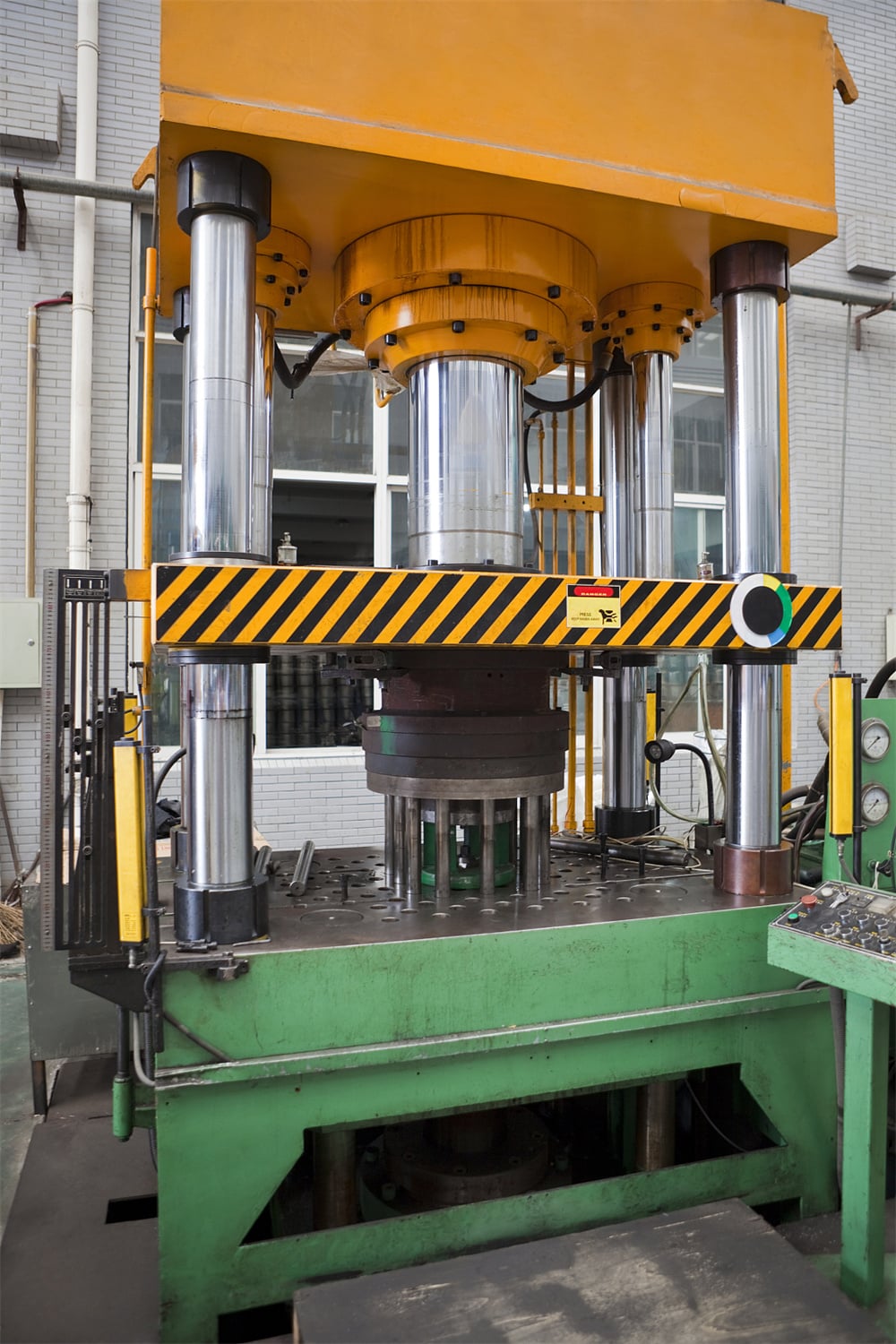
Secondly, consider the structural integrity of the machine. Hydraulic presses are designed to handle immense compressive forces, but they are less resilient against the lateral and resonant forces generated by vibration. Constant shaking can lead to metal fatigue in the welds of the H-frame or C-frame. Once a frame begins to lose its rigidity, the alignment of the ram and the bolster plate is compromised, making it impossible to achieve the tight tolerances required in modern metalworking.
Furthermore, the quality of the workpiece is directly tied to the stability of the press. In applications like deep drawing or precision blanking, even a fraction of a millimeter of lateral movement caused by vibration can result in wall thinning, tearing, or uneven edges. For companies striving for ISO-level quality standards, vibration control is a non-negotiable aspect of production management. Finally, operator safety is paramount. A vibrating machine is a loud machine, contributing to noise pollution in the factory, and in extreme cases, it can cause components to loosen and become projectiles.
Technical Details: Identifying the Root Causes
1. Hydraulic Shock and Decompression Issues
Perhaps the most common cause of vibration in hydraulic presses is hydraulic shock, often referred to as “water hammer.” This occurs when the stored energy in the compressed hydraulic oil and the stretched machine frame is released instantaneously. When the press finishes a cutting or blanking operation, the resistance of the material suddenly vanishes. If the system is not equipped with proper decompression valves, the oil rushes back into the reservoir at high velocity, creating a massive pressure spike and a violent shake.
To identify this as the root cause, observe the machine during the transition from the pressing stroke to the return stroke. If the vibration is localized to this specific moment, the decompression cycle is likely too fast. Modern HARSLE presses utilize advanced logic valves to bleed off pressure gradually before the main directional valve shifts, significantly reducing this shock.
2. Pump Cavitation and Aeration
The hydraulic pump is the heart of the system, and its health is vital. Cavitation occurs when the pump cannot get enough oil, creating low-pressure bubbles that collapse violently when they reach the high-pressure side of the pump. This creates a high-frequency vibration and a distinct “marbles in a blender” sound. Aeration, on the other hand, is when air enters the system through a leak in the suction line or a low oil level in the tank. Air is compressible, whereas oil is not; this leads to spongy operation and erratic vibrations throughout the cycle.
3. Mechanical Misalignment and Wear
Mechanical issues are often the culprit when vibration is rhythmic or constant. Check the gibs (the guides that ensure the ram moves vertically). If the gibs are worn or improperly lubricated, the ram may tilt or “cock” during the stroke, causing it to rub against the guides and create vibration. Similarly, if the press is not perfectly level or if the foundation is insufficient, the machine will develop harmonic resonances that amplify even minor internal movements.
4. Resonance in Piping and Valving
Sometimes the vibration isn’t in the press frame but in the hydraulic lines. Long runs of unsupported piping can act like guitar strings, vibrating at specific frequencies. If the pump’s piston frequency matches the natural frequency of the piping, resonance occurs. This can lead to pipe fatigue and catastrophic leaks. Identifying this requires a visual inspection of the lines during operation; if you see the pipes “dancing,” they need better clamping or the addition of flexible hoses to dampen the energy.
Selection Advice: Choosing a Press to Minimize Vibration
When purchasing a new hydraulic press, preventing vibration starts with the selection process. Not all presses are built equal, and choosing a machine with the right features can save thousands in future maintenance. Here are key factors to consider:
- Frame Rigidity: Look for heavy-duty welded steel constructions. An H-frame press is inherently more stable than a C-frame press because the load is distributed across four columns rather than a single “throat.” For high-tonnage applications, the mass of the frame acts as a natural dampener.
- Damping Systems: High-end models often include hydraulic shock absorbers or “blanking dampers.” These are specialized cylinders that catch the ram’s energy at the moment of breakthrough, preventing the sudden release of energy that causes shock.
- Variable Frequency Drives (VFD): Presses equipped with VFDs on the pump motors can ramp speeds up and down smoothly, avoiding the sudden jolts associated with traditional across-the-line starters.
- Quality of Hydraulics: Ensure the press uses reputable valve brands (like Rexroth or Vickers). High-quality valves have better response times and more precise spool control, which is essential for smooth decompression.
At HARSLE, we emphasize the importance of matching the press to the specific application. If you are performing heavy blanking, we recommend a press with a higher safety factor and integrated shock suppression. If your work involves slow, steady forming, the focus shifts to pump efficiency and thermal stability. Always consult with the manufacturer about the specific dynamics of your intended production cycle.
Maintenance Strategies for Vibration Control
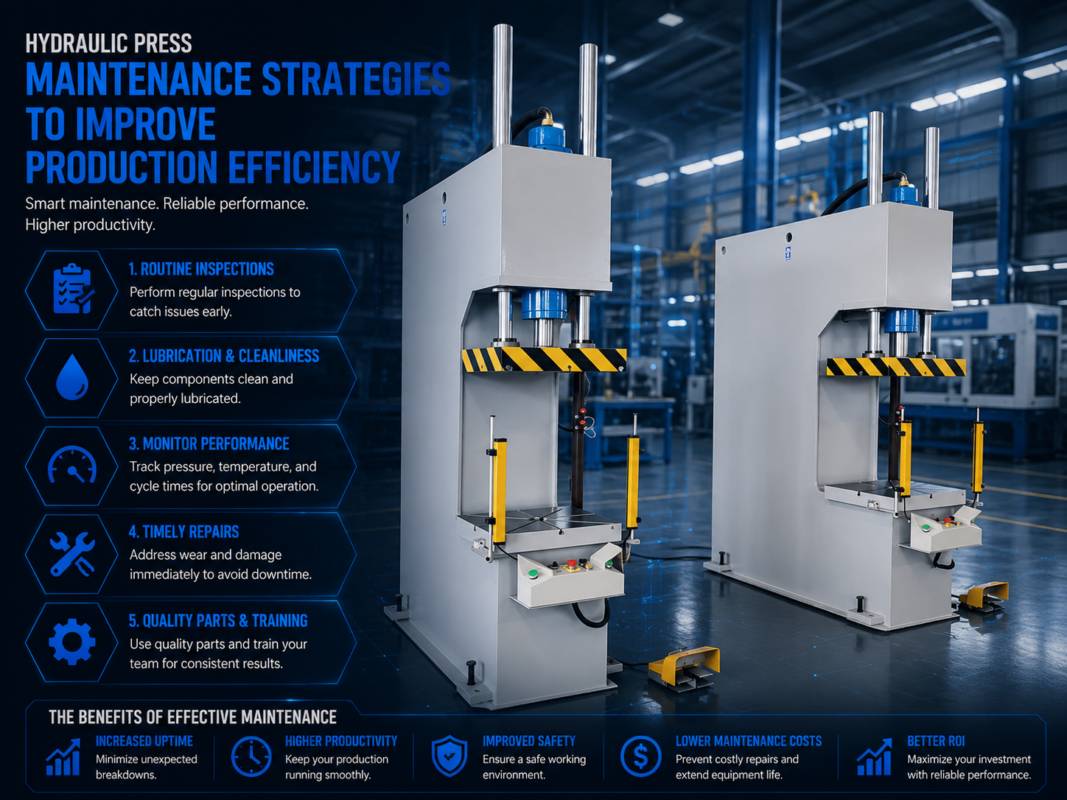
Once the root cause is identified, a consistent maintenance schedule is the best defense against the return of vibration problems. Use the following checklist to keep your hydraulic press running smoothly:
| Component | Action Required | Frequency |
|---|---|---|
| Hydraulic Oil | Check for foaming (aeration) and maintain proper viscosity. | Weekly |
| Gibs and Guides | Lubricate and check for clearance/wear. | Monthly |
| Foundation Bolts | Verify torque settings to ensure the press is anchored. | Quarterly |
| Accumulators | Check pre-charge pressure (if equipped). | Bi-Annually |
| Hose Clamps | Inspect for tightness and signs of wear from rubbing. | Monthly |
Advanced facilities may also employ vibration analysis tools. By placing sensors on the pump and frame, technicians can create a “baseline” profile of a healthy machine. When vibration levels deviate from this baseline, the software can often pinpoint whether the issue is a bearing failure, a pump vane problem, or a loose mounting bolt before the operator even notices a change in performance.
FAQ: Common Questions on Hydraulic Press Vibration
Why does my press vibrate only during the blanking phase?
This is almost certainly due to “breakthrough shock.” When the punch shears through the metal, the resistance drops to zero instantly. The energy stored in the compressed oil and the stretched frame snaps back, causing a violent vibration. Installing hydraulic dampers or adjusting the decompression timing can solve this.
Can the wrong type of hydraulic oil cause vibration?
Yes. If the oil viscosity is too high, the pump may struggle to pull fluid, leading to cavitation. If it is too low, internal leakage in the valves can cause erratic pressure fluctuations. Always use the oil grade recommended by the manufacturer, such as ISO 46 or 68, depending on your climate and duty cycle.
Is a little bit of vibration normal?
All industrial machinery has some level of operational vibration. However, if the vibration is loud enough to interfere with conversation, causes visible movement in the piping, or leaves “chatter marks” on the workpiece, it is excessive and needs to be addressed immediately.
How do I know if my pump is cavitating?
Listen for a high-pitched, metallic crackling sound. You should also check the hydraulic tank for foam. If the oil looks milky or has bubbles, air is being pulled into the system, which often leads to cavitation-like symptoms.
Conclusion
Successfully addressing Hydraulic Press Vibration Problems: Identify Root Cause requires a blend of mechanical intuition and technical knowledge. By understanding that vibration is a symptom of energy being released or redirected incorrectly, operators and maintenance teams can look beyond the surface and find the true culprit—be it hydraulic shock, pump issues, or mechanical wear.
Investing time in diagnostic procedures and choosing high-quality equipment from manufacturers like HARSLE ensures that your production line remains efficient and safe. Remember, a smooth-running press is not just a sign of a well-maintained machine; it is the foundation of a profitable and high-quality manufacturing operation. Keep your sensors sharp, your oil clean, and your bolts tight, and your hydraulic press will provide decades of reliable service.