
Hydraulic Press Control Systems Explained: Manual, Semi-Automatic, and CNC Options


Technical Overview of Hydraulic Press Control Systems
In the realm of metal fabrication, the control system is the ‘brain’ of the hydraulic press. It dictates how the machine interacts with the operator, how it manages pressure, and how it ensures precision in every stroke. At HARSLE, we recognize that the choice of a control system—whether manual, semi-automatic, or CNC—can significantly impact production efficiency, part quality, and overall operational costs. Understanding the nuances of these systems is essential for any facility looking to optimize its manufacturing floor.
Manual control systems are the most traditional form of hydraulic press operation. These systems rely heavily on the operator’s physical input and visual judgment. Typically, they utilize hand levers or foot pedals connected directly to directional control valves. When the operator moves the lever, fluid is directed to the cylinder, causing the ram to move. The speed and force are often modulated by how far the lever is pushed. While these systems offer a high degree of ‘feel’ for the operator, they lack the repeatability required for high-volume industrial production. They are most commonly found in repair shops, small-scale fabrication units, and laboratories where custom, one-off tasks are the norm.
Semi-automatic control systems represent a significant leap forward by introducing Programmable Logic Controllers (PLCs) and electrical interfaces. In a semi-automatic setup, the operator initiates a cycle—usually via a two-hand safety start button—and the machine completes a pre-defined sequence of movements. This might include a rapid approach, a slow pressing phase at a specific pressure, a dwell time, and an automatic return. These systems use limit switches or basic proximity sensors to determine the ram’s position. Semi-automatic presses are the workhorses of the mid-sized manufacturing sector, offering a balance between cost-effectiveness and consistent output.
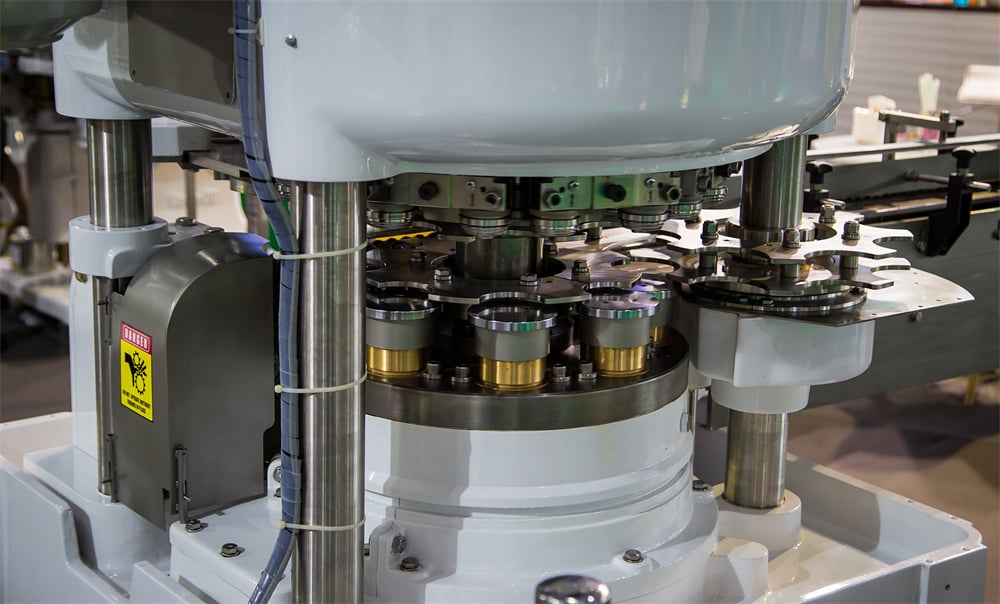
CNC (Computer Numerical Control) systems are the pinnacle of hydraulic press technology. These systems integrate high-resolution linear encoders, proportional valves, and sophisticated software to provide total control over every millisecond of the pressing cycle. A CNC hydraulic press can vary its pressure and speed dynamically throughout a single stroke, allowing for complex forming operations that would be impossible on simpler machines. Furthermore, CNC systems allow for the storage of thousands of ‘recipes’ or programs, enabling rapid changeovers between different parts. This level of automation is essential for Industry 4.0 environments where data logging, remote monitoring, and extreme precision are required.
Core Parameters of Control Systems
When evaluating hydraulic press control systems, several core parameters define their performance and suitability for specific applications. The first is Positioning Accuracy. In manual systems, accuracy is limited by the operator’s eye and the physical stops installed on the machine. In contrast, CNC systems can achieve positioning accuracies within ±0.01mm, thanks to closed-loop feedback from linear scales. This is critical for applications like deep drawing or precision stamping where even a slight deviation can result in a rejected part.
The second parameter is Pressure Regulation. Manual systems often use a simple relief valve that the operator adjusts by hand. Semi-automatic systems might use an electrical pressure switch to stop the ram once a certain tonnage is reached. CNC systems, however, utilize proportional pressure valves that can adjust the force in real-time based on the feedback from pressure transducers. This allows for ‘pressure profiling,’ where the force is increased or decreased at specific points in the stroke to prevent material cracking or wrinkling.
Speed Control is another vital parameter. A modern hydraulic press typically has three speed phases: Rapid Approach, Pressing Speed, and Return Speed. Control systems manage the transitions between these phases. In CNC systems, these transitions are seamless and can be programmed to occur at precise millimetric positions. This not only improves part quality but also reduces cycle times by minimizing the ‘air-cutting’ time when the ram is moving but not yet in contact with the workpiece.
Finally, Safety Integration is a core parameter that cannot be overlooked. Modern control systems must interface with light curtains, emergency stop circuits, and safety interlocks. In a CNC or semi-automatic system, the control logic ensures that if a safety light curtain is tripped, the hydraulic valves immediately shift to a neutral or ‘dump’ position, stopping the ram instantly. This level of integrated safety is much harder to achieve and verify in purely manual hydraulic circuits.
Calculation Method for System Requirements
To select the right control system, engineers must first calculate the physical requirements of the pressing operation. The most fundamental calculation is the Required Tonnage (F). This is determined by the material properties and the geometry of the part. The formula is generally: F = L × t × τ, where L is the length of the cut or bend, t is the material thickness, and τ is the shear strength of the material. Once the tonnage is known, the control system must be rated to handle the corresponding hydraulic pressure (P), calculated as P = F / A, where A is the effective area of the hydraulic cylinder piston.
Another critical calculation involves Cycle Time and Flow Rate. To achieve a specific production rate, you must calculate the required flow rate (Q) of the hydraulic pump, which the control system will manage. The formula is Q = A × v, where A is the cylinder area and v is the desired ram speed. If a CNC system is required to perform high-speed transitions, the control valves must have a response time (measured in milliseconds) that is faster than the required speed change. This ensures that the system does not ‘overshoot’ its target position or pressure.
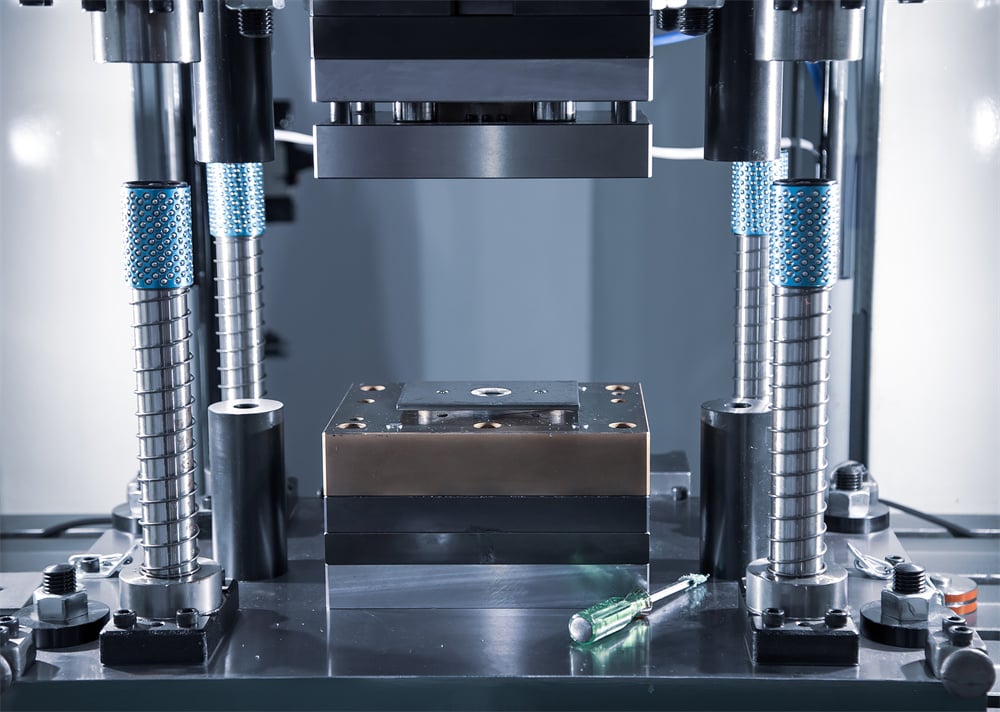
Energy efficiency calculations are also becoming increasingly important. For CNC systems, engineers often calculate the Power Consumption (W) using W = (P × Q) / η, where η is the total efficiency of the system. Advanced CNC systems often use variable frequency drives (VFDs) or servo-motors to drive the hydraulic pumps. By calculating the duty cycle of the press, engineers can determine the potential energy savings of a CNC system compared to a manual system where the pump might run at full speed even when the machine is idling.
Parameter Comparison Table
| Feature | Manual Control | Semi-Automatic (PLC) | CNC Control |
|---|---|---|---|
| Operator Skill Level | High (Requires experience) | Medium | Low (After setup) |
| Positioning Accuracy | ±1.0 mm to 5.0 mm | ±0.1 mm to 0.5 mm | ±0.01 mm to 0.05 mm |
| Repeatability | Low | Medium/High | Very High |
| Setup Time | Fast (Physical stops) | Medium (Inputting values) | Fast (Program loading) |
| Data Logging | None | Limited (Cycle counts) | Full (Pressure/Position/Time) |
| Cost | Low | Moderate | High |
| Best For | Prototyping, Repairs | Batch Production | Complex, High-Precision |
Common Engineering Mistakes in Control Selection
One of the most frequent mistakes in selecting a hydraulic press control system is Over-Specifying. Many facilities invest in a full CNC system for simple tasks like basic hole punching or straightforward 90-degree bends that could be handled more cost-effectively by a semi-automatic machine. While CNC offers great features, the added complexity requires specialized maintenance and higher initial capital. Engineers should perform a strict ROI analysis to ensure the precision of CNC is actually required for the end product.
Conversely, Under-Specifying is equally problematic. Attempting to use a manual or basic semi-automatic press for high-precision deep drawing often leads to high scrap rates. Without the ability to control the ‘blank holder pressure’ dynamically—a feature typically found in CNC systems—the material is prone to wrinkling or tearing. Trying to ‘save money’ on the control system often results in much higher costs in wasted material and lost production time.
Another common error is Ignoring Thermal Management. Advanced control systems, especially those using proportional valves and high-speed electronics, generate heat. If the hydraulic cooling system is not properly integrated into the control logic, the oil viscosity will change as the machine warms up. This change in viscosity affects the response time of the valves, leading to ‘drift’ in positioning and pressure. A well-engineered system must include temperature sensors that provide feedback to the controller to compensate for these thermal variations.
Finally, many engineers neglect EMI (Electromagnetic Interference) Shielding when installing CNC systems. Hydraulic presses are often located near other heavy machinery like welding stations or large motors. Without proper shielding of the encoder cables and the controller itself, electrical noise can cause ‘ghost’ signals, leading to erratic ram behavior or emergency stops. Ensuring that the control cabinet is properly grounded and that high-voltage lines are separated from signal lines is a critical step that is often overlooked during the installation phase.
Selection Checklist for Hydraulic Press Controls
- Define Part Complexity: Does the part require variable pressure or speed during the stroke? If yes, CNC is mandatory.
- Assess Production Volume: For high-volume runs, the speed and repeatability of semi-auto or CNC systems will pay for themselves quickly.
- Evaluate Operator Expertise: Do you have skilled operators who can ‘feel’ a manual press, or do you need a system that minimizes human error?
- Check Integration Requirements: Does the press need to communicate with a robot arm or a central factory ERP system? This requires CNC/PLC capabilities.
- Review Safety Standards: Ensure the control system meets local regulations (CE, OSHA). CNC systems often have the most robust safety integrations.
- Consider Future-Proofing: If your product line might become more complex in 2-3 years, investing in a CNC system now may be cheaper than replacing the machine later.
- Maintenance Capacity: Does your maintenance team have the tools and knowledge to troubleshoot PLC or CNC electronics?
- Budget vs. ROI: Calculate the total cost of ownership, including energy savings and reduced scrap rates, not just the initial purchase price.
Frequently Asked Questions (FAQ)
Can I upgrade a manual hydraulic press to a CNC system?
Technically, yes, but it is often not cost-effective. Upgrading requires replacing the manual valves with proportional valves, adding linear encoders, installing a new electrical cabinet with a controller, and often replacing the hydraulic pump. In most cases, the cost of parts and labor approaches the price of a new CNC machine. However, upgrading from manual to a basic semi-automatic (PLC) system is much more common and affordable.
What is the main advantage of a CNC hydraulic press over a mechanical press?
The primary advantage is flexibility. A mechanical press has a fixed stroke determined by the crankshaft. A CNC hydraulic press allows you to control the full pressure at any point in the stroke, change the stroke length instantly via software, and dwell at the bottom of the stroke under pressure. This makes hydraulic CNC presses far superior for deep drawing and complex forming operations.
How often does a CNC control system need calibration?
For high-precision environments, we recommend checking the calibration of the linear encoders and pressure transducers every six months. Environmental factors like vibration and temperature fluctuations can cause minor shifts over time. Most modern HARSLE CNC systems include self-diagnostic tools that can alert the operator if the system detects a discrepancy between the commanded position and the actual feedback.
Are semi-automatic systems safer than manual ones?
Generally, yes. Semi-automatic systems usually incorporate ‘two-hand control’ logic, which ensures the operator’s hands are away from the die area during the downward stroke. They also interface more easily with light curtains. Manual systems rely entirely on the operator following safety protocols and keeping their hands clear, which increases the risk of accidents due to fatigue or distraction.
Does a CNC system require a special environment?
While CNC systems are designed for industrial use, they are more sensitive to extreme heat and dust than manual systems. It is important to keep the electrical cabinet clean and ensure the cooling fans are functional. In very dusty environments, an air-conditioned or pressurized control cabinet is recommended to protect the sensitive electronic components from metallic dust and debris.












