Energy Efficiency in Hydraulic Presses: Technical Methods to Reduce Operating Costs


Technical Overview of Energy Efficiency in Hydraulic Presses
In the modern industrial landscape, the drive toward sustainability and cost reduction has placed energy efficiency at the forefront of metal fabrication. Hydraulic presses, traditionally known for their high power density but also for significant energy consumption, are undergoing a technological revolution. Achieving Energy Efficiency In Hydraulic Presses: Technical Methods Reduce Operating Costs is no longer just an environmental goal; it is a critical economic necessity for competitive manufacturing. Traditional hydraulic systems often operate with constant-speed induction motors that drive fixed-displacement pumps. These systems waste immense amounts of energy because the motor runs at full speed even when the press is idling or during the low-pressure phases of the cycle.
Modern energy-efficient hydraulic presses utilize advanced drive technologies to match power supply with actual demand. The most significant advancement is the integration of servo-driven pump systems. Unlike traditional motors, a servo motor only rotates at the speed required to provide the necessary flow and pressure for a specific part of the stroke. When the press is holding pressure or in a standby state, the servo motor can slow down to near-zero RPM, virtually eliminating idle energy consumption. This shift from ‘always-on’ to ‘power-on-demand’ can reduce energy usage by 30% to 70%, depending on the application and cycle complexity.
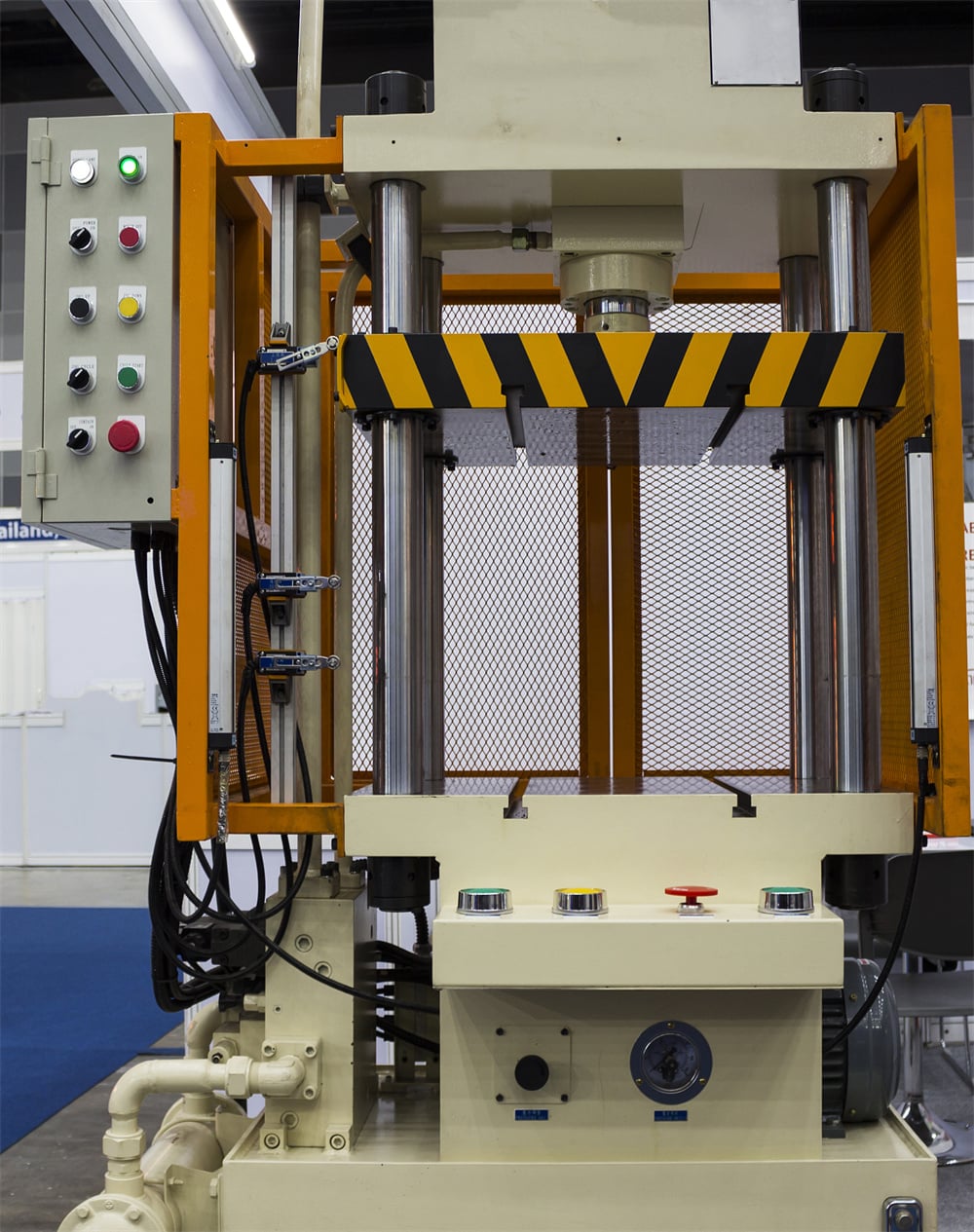
Beyond the drive system, energy efficiency is also achieved through optimized hydraulic circuit designs. This includes the use of regenerative circuits, which redirect oil from the rod side of the cylinder back to the piston side during rapid advance phases, reducing the volume of oil the pump needs to move. Furthermore, the implementation of high-efficiency proportional valves and manifold blocks reduces pressure drops and internal friction. By minimizing the resistance the fluid encounters as it moves through the system, less heat is generated, which in turn reduces the energy required for cooling systems—a secondary but significant source of energy waste in large-scale hydraulic operations.
HARSLE has been at the leading edge of integrating these technologies into their press designs. By focusing on the synergy between mechanical precision and electronic control, HARSLE machines ensure that every kilowatt-hour of electricity is converted into productive force. This technical overview sets the stage for understanding the specific parameters and calculation methods that engineers use to quantify and improve the efficiency of these powerful machines.
Core Parameters Influencing Energy Consumption
To effectively implement Energy Efficiency In Hydraulic Presses: Technical Methods Reduce Operating Costs, one must first understand the core parameters that dictate how much energy a press consumes. The primary factor is the System Pressure (P), measured in Bar or PSI. The pressure required is determined by the material properties and the geometry of the part being formed. Operating at pressures higher than necessary leads to exponential increases in energy waste and component wear. Precision control systems allow for ‘pressure profiling,’ where the press only applies the peak force required at the exact moment of impact.
The second critical parameter is the Flow Rate (Q), typically measured in Liters per Minute (L/min). Flow rate determines the speed of the ram. In traditional systems, excess flow is often diverted back to the tank through a relief valve, which converts hydraulic energy directly into heat. Energy-efficient designs use variable displacement pumps or servo-motors to adjust the flow rate dynamically. By controlling the flow at the source rather than throttling it through valves, the system avoids the ‘heat-and-cool’ cycle that plagues older machinery.
Cycle Time and Duty Cycle are also vital parameters. The duty cycle refers to the ratio of time the press is actively working versus the time it is idling or being loaded. In high-volume production, even small inefficiencies in the rapid approach or return strokes can accumulate into massive energy losses over a year. Optimizing the transition between high-speed approach and high-pressure pressing is essential. Modern CNC controllers manage these transitions with millisecond precision, ensuring that the motor ramps up and down only as needed, thereby smoothing out the energy demand curve.
Lastly, Hydraulic Fluid Viscosity and Temperature play a subtle but significant role. Oil that is too thick increases internal friction (viscous drag), while oil that is too thin can lead to internal leakage across seals and valves. Maintaining an optimal temperature range (typically 40°C to 50°C) ensures that the fluid performs efficiently. Energy-efficient presses often feature intelligent cooling systems that only activate when the oil temperature exceeds a specific threshold, rather than running a cooling pump continuously.
Calculation Method for Energy Savings
Quantifying the benefits of energy-efficient upgrades requires a systematic calculation method. The basic formula for hydraulic power is: P (kW) = (p × Q) / (600 × η), where p is the pressure in bar, Q is the flow in L/min, and η is the total efficiency of the pump and motor. To calculate the energy consumed over a specific cycle, engineers integrate this power over time. For a standard press, the power consumption during idle periods must also be added, which is often 20-30% of the rated motor power.
To calculate potential savings when switching to a servo-hydraulic system, use the following steps:
- Step 1: Establish the Baseline. Measure the current draw (Amps) of your existing press during a full cycle, including loading and unloading time. Convert this to kWh.
- Step 2: Define the Cycle Segments. Break the cycle into Rapid Down, Pressing, Dwell, and Rapid Up. Assign the required pressure and flow to each segment.
- Step 3: Calculate Servo Demand. For a servo system, the power during ‘Dwell’ and ‘Loading’ is nearly zero. Calculate the power for the active segments using the formula above, but use a higher efficiency rating (η ≈ 0.85 to 0.90 for servo systems vs. 0.70 for traditional systems).
- Step 4: Annualize the Data. Multiply the kWh per cycle by the number of cycles per hour, hours per shift, and shifts per year.
For example, if a 100-ton press runs 2,000 hours a year and saves an average of 15 kW per hour through servo technology, the annual savings would be 30,000 kWh. At an average industrial electricity rate of $0.12/kWh, this results in a direct cost reduction of $3,600 per year, per machine. When multiplied across a factory floor of ten machines, the impact on the bottom line is substantial.
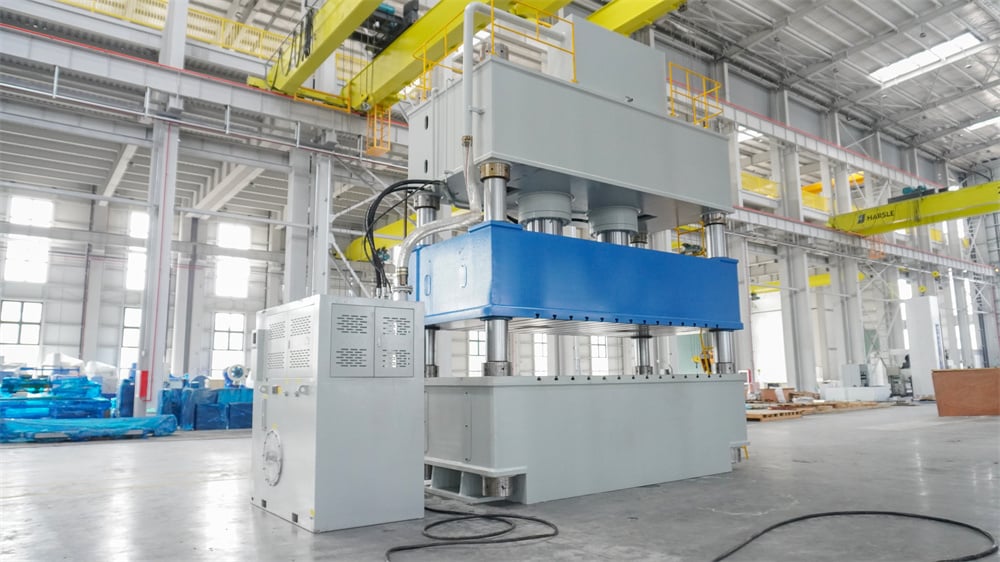
Comparison Table: Standard vs. Energy-Efficient Hydraulic Press
The following table illustrates the technical differences between a conventional hydraulic press and a modern energy-efficient model (Servo-Hydraulic) of the same tonnage (e.g., 200 Tons).
| Feature / Parameter | Standard Hydraulic Press | Servo-Hydraulic Press (HARSLE) | Efficiency Impact |
|---|---|---|---|
| Drive Motor | Constant Speed Induction Motor | Permanent Magnet Servo Motor | High: Eliminates idle power waste. |
| Pump Type | Fixed or Variable Displacement | Internal Gear Pump (Servo-driven) | Medium: Higher volumetric efficiency. |
| Idle Power Consumption | 25% – 35% of Rated Power | < 1% of Rated Power | Very High: Major cost saver. |
| Oil Temperature Rise | High (Requires large coolers) | Low (Minimal cooling needed) | Medium: Reduces secondary energy use. |
| Noise Level | 80 – 85 dB | 65 – 70 dB | Low: Improves workplace environment. |
| Response Speed | Moderate (Valve dependent) | Ultra-Fast (Motor dependent) | Medium: Reduces cycle times. |
| Pressure Accuracy | ± 3-5 Bar | ± 0.5 – 1 Bar | High: Reduces scrap and rework. |
Common Engineering Mistakes in Hydraulic Press Operation
Despite the availability of advanced technology, many facilities fail to achieve Energy Efficiency In Hydraulic Presses: Technical Methods Reduce Operating Costs due to common engineering and operational mistakes. One of the most prevalent errors is Oversizing the Machine. Engineers often specify a press with much higher tonnage than required for the daily tasks “just in case.” Running a 500-ton press for a job that requires only 100 tons is inherently inefficient, as the larger motors and pumps have higher baseline energy requirements and internal friction losses.
Another frequent mistake is Neglecting Internal Leakage. As seals and valves wear down, hydraulic fluid can bypass the intended path. This doesn’t always result in a visible puddle on the floor; internal leakage often manifests as heat. The pump must work harder to maintain pressure, consuming more electricity, while the cooling system works harder to remove the generated heat. Regular ultrasonic leak detection and proactive seal replacement are essential for maintaining efficiency over the machine’s lifespan.
Improper Relief Valve Settings also contribute to significant waste. If a relief valve is set too close to the operating pressure, it may crack open prematurely, allowing pressurized oil to bleed back to the tank. This is essentially throwing away energy that has already been paid for. Similarly, using outdated, inefficient hydraulic fluids can increase drag. Modern high-viscosity-index (HVI) fluids maintain their properties across a wider temperature range, reducing the energy lost to fluid friction during cold starts and high-temperature operations.
Finally, many operators ignore the Accumulator Maintenance. Hydraulic accumulators store energy in the form of pressurized nitrogen to assist during high-flow demands. If the nitrogen pre-charge is lost, the pump must handle the entire load alone, leading to higher peak power demands and increased wear. Ensuring that accumulators are properly charged allows for the use of smaller, more efficient motors that handle average loads rather than peak loads.
Selection Checklist for Energy-Efficient Hydraulic Presses
When purchasing new equipment, use this checklist to ensure the machine is optimized for Energy Efficiency In Hydraulic Presses: Technical Methods Reduce Operating Costs:
- Drive System: Does the press use a servo-motor driven pump system? This is the single most effective energy-saving feature.
- Pump Technology: Is the pump a high-efficiency internal gear pump or a high-performance piston pump?
- Control Software: Does the CNC controller include energy-monitoring features and the ability to program variable speeds for different stroke phases?
- Regenerative Circuitry: Is the hydraulic manifold designed with a regenerative circuit for rapid advance?
- Cooling System: Is the cooling system ‘on-demand’ (thermostatically controlled) or does it run continuously?
- Sealing Technology: Does the manufacturer use low-friction, high-durability seals (e.g., Merkel or SKF) to prevent internal bypass?
- Standby Modes: Does the system have an automatic ‘sleep’ mode that shuts down non-essential components during long periods of inactivity?
- Manufacturer Reputation: Does the brand (like HARSLE) have a proven track record of integrating energy-saving electronics with robust mechanical frames?
Frequently Asked Questions (FAQ)
1. What is the typical ROI for a servo-hydraulic press compared to a standard one?
The Return on Investment (ROI) typically ranges from 12 to 24 months. While the initial purchase price of a servo-hydraulic press is higher, the savings in electricity, reduced oil cooling costs, and lower maintenance requirements (due to less heat stress on components) quickly offset the premium. In high-production environments with multiple shifts, the ROI can be even faster.
2. Can I retrofit my old hydraulic press to be more energy-efficient?
Yes, retrofitting is possible. The most common method is installing a Variable Frequency Drive (VFD) on the existing induction motor or replacing the motor/pump assembly with a servo-drive system. However, the success of a retrofit depends on the condition of the existing mechanical structure and the compatibility of the old hydraulic manifold with modern high-speed controls.
3. Does energy efficiency affect the speed or power of the press?
Actually, energy-efficient presses, especially servo-driven ones, often perform better than traditional models. Servo motors provide full torque at low speeds and can accelerate/decelerate much faster than traditional systems. This often results in shorter cycle times and higher precision in pressure control, improving both productivity and part quality.
4. How does heat reduction contribute to cost savings?
Heat is the enemy of hydraulic systems. For every 10°C increase in operating temperature above the recommended limit, the life of the hydraulic oil and the seals is roughly halved. By reducing heat generation through efficient design, you extend the intervals between oil changes and seal replacements, significantly lowering long-term maintenance costs.
5. Are energy-efficient presses harder to maintain?
While the electronics (servo drives and sensors) are more complex, the hydraulic side is often simpler because there are fewer valves needed to control flow and pressure. Modern systems also come with advanced diagnostics that can identify issues before they lead to failure. Overall, the maintenance burden is usually lower because the machine runs cooler and with less vibration.
6. What role does the hydraulic fluid play in energy efficiency?
The fluid is the medium of power transmission. Using high-quality, shear-stable hydraulic oil with a high viscosity index reduces internal friction and leakage. This ensures that the energy put into the pump is efficiently transferred to the cylinder with minimal loss, contributing to the overall goal of Energy Efficiency In Hydraulic Presses: Technical Methods Reduce Operating Costs.