
Best Applications Of Laser Cutting Machines In Furniture Manufacturing


Introduction to Laser Technology in Modern Furniture Design
The furniture manufacturing industry has undergone a radical transformation over the last decade, moving away from labor-intensive manual processes toward high-precision automated solutions. At the heart of this revolution is the laser cutting machine. Whether it is the sleek lines of a minimalist office chair or the intricate geometric patterns of a luxury room divider, laser technology provides the versatility and speed required to meet modern consumer demands. For manufacturers like HARSLE, providing high-quality fiber laser cutting machines means empowering designers to push the boundaries of what is possible with metal and wood.
In the past, furniture production relied heavily on mechanical stamping, sawing, and manual drilling. These methods, while functional, often resulted in significant material waste and limited design flexibility. The introduction of the Best Applications Of Laser Cutting Machines In Furniture Manufacturing has changed the landscape by offering a non-contact cutting process that ensures clean edges, zero tool wear, and the ability to execute complex designs with a single click of a button. This article explores the diverse applications, technical requirements, and productivity benefits of integrating laser cutting into furniture production lines.
Application Scenarios in the Furniture Industry
1. Metal Frame Fabrication for Seating and Tables
One of the most prominent applications of laser cutting is in the creation of metal frames for chairs, sofas, and dining tables. Modern furniture often utilizes thin-walled steel or aluminum tubing. Traditional cutting methods like band saws often leave burrs and require secondary finishing. Fiber laser cutting machines, especially those equipped with professional tube-cutting attachments, can cut, notch, and drill holes in square, round, or oval tubes with extreme precision. This allows for seamless interlocking joints that improve the structural integrity of the furniture while reducing assembly time.
2. High-End Office Furniture and Storage Solutions
Office furniture requires a balance of durability and aesthetic appeal. Laser cutting is used to manufacture filing cabinets, desk legs, and cable management trays. The ability to cut thin sheet metal (0.5mm to 3mm) with high speed makes it ideal for mass-producing components for modular office systems. Furthermore, laser machines can easily incorporate ventilation slots or decorative perforations into metal cabinets, which would be difficult and costly to achieve with traditional punching dies.
3. Decorative Screens and Room Dividers
Interior design trends have seen a surge in the use of laser-cut metal screens. These panels serve as functional room dividers or purely decorative wall art. The Best Applications Of Laser Cutting Machines In Furniture Manufacturing shine here because they can handle incredibly intricate CAD designs. From floral motifs to complex mathematical fractals, the laser follows the programmed path with a precision of ±0.03mm. This level of detail is impossible to achieve with mechanical routers or plasma cutters without damaging the material or leaving rough edges.
4. Outdoor and Garden Furniture
Outdoor furniture must withstand the elements, leading manufacturers to use materials like stainless steel and galvanized sheets. Laser cutting is the preferred method for these materials because it does not compromise the protective coatings as much as mechanical shearing might. By using nitrogen as a shielding gas, manufacturers can achieve a bright, oxide-free cut edge that is ready for powder coating or painting immediately after cutting, ensuring long-term corrosion resistance for garden benches and patio sets.
Material and Process Requirements
To achieve the best results in furniture manufacturing, understanding the material properties and the laser’s interaction with them is crucial. Most modern furniture designs utilize a mix of carbon steel, stainless steel, and aluminum alloys. Each requires specific laser settings to ensure the highest quality finish.
Material Thickness and Type
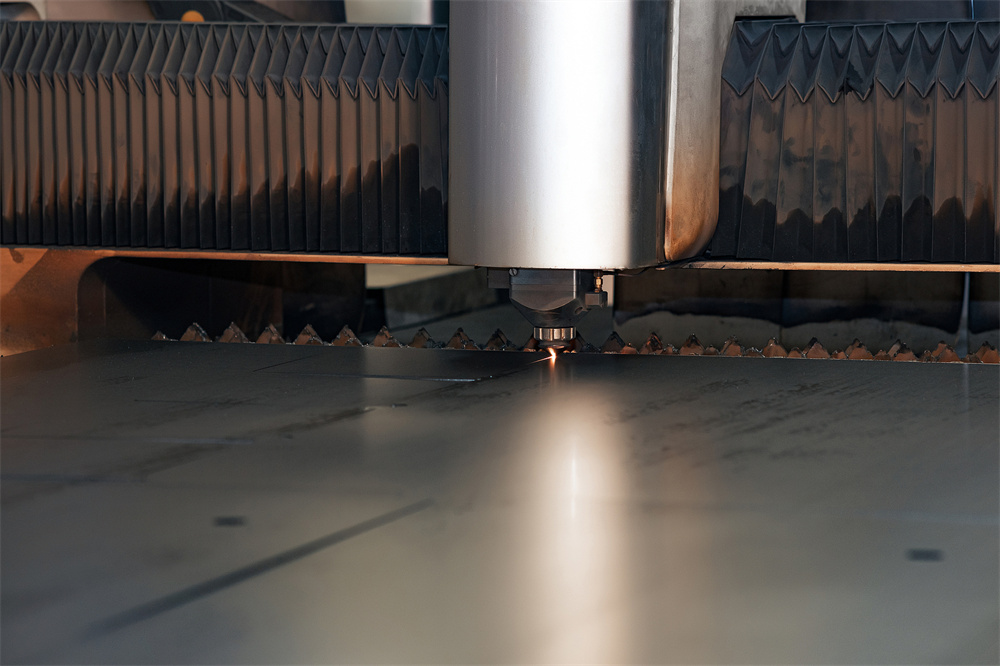
For furniture, sheet metal thickness typically ranges from 0.8mm to 6mm. Fiber lasers are exceptionally efficient in this range. Carbon steel is often cut using oxygen, which facilitates a faster cut through an exothermic reaction, though it leaves a slight oxide layer. Stainless steel and aluminum are typically cut with nitrogen to maintain a clean, weld-ready edge. The choice of material often dictates the power of the laser required; for instance, a 1500W to 3000W fiber laser is usually the “sweet spot” for most furniture applications.
Edge Quality and Heat Affected Zone (HAZ)
In furniture, the visual quality of the cut is just as important as the dimensional accuracy. A high-quality laser cutting machine minimizes the Heat Affected Zone (HAZ), preventing the material from warping or discoloring. This is particularly important for thin-gauge stainless steel used in luxury furniture, where any distortion would be visible after polishing. The precision of the laser ensures that the kerf (the width of the cut) is extremely narrow, allowing for tight tolerances in interlocking parts.
Recommended Machine Configuration for Furniture Makers
When selecting a machine for the Best Applications Of Laser Cutting Machines In Furniture Manufacturing, several key components must be considered to ensure long-term ROI and production efficiency.
- Laser Source: For metal furniture, a Fiber Laser source (such as Raycus or IPG) is recommended. Fiber lasers have a higher absorption rate in metals compared to CO2 lasers, leading to faster cutting speeds and lower operating costs.
- Cutting Head: An autofocus cutting head (like Raytools) is essential. It automatically adjusts the focal length based on the material thickness, which is vital for shops that switch between different furniture components throughout the day.
- Bed Size: A standard 3000x1500mm (10×5 ft) bed is usually sufficient for most furniture panels. However, for large-scale office partitions, a 4000x2000mm bed might be necessary.
- Dual-Use Capability: Many furniture manufacturers benefit from a “plate and tube” integrated machine. This allows the factory to cut flat sheets for cabinets and tubes for chair frames on the same machine, saving floor space and capital investment.
- Control System: A user-friendly system like CypCut is preferred. It supports advanced nesting features that are critical for reducing material waste in high-volume production.
The Workflow: From Concept to Finished Product
The integration of laser cutting into the furniture workflow is seamless, thanks to modern software and automation. The process generally follows these steps:
- Design (CAD): The designer creates a 2D or 3D model of the furniture piece. This design is then exported as a DXF or DWG file.
- Nesting (CAM): The file is imported into nesting software. The software optimizes the layout of the parts on the metal sheet to minimize scrap. For furniture manufacturers, this step is where significant cost savings are realized.
- Material Loading: The metal sheet or tube is loaded onto the machine bed. Many HARSLE machines feature exchange tables, allowing one sheet to be loaded while another is being cut, maximizing uptime.
- Laser Cutting: The machine executes the program. High-speed motors (Servo motors) move the cutting head with extreme agility, following the intricate patterns of the furniture design.
- Post-Processing: Because the laser leaves a clean edge, post-processing is minimal. Parts may move directly to bending (using a press brake) or welding.

Productivity Benefits of Laser Cutting
Why is laser cutting considered the gold standard for furniture? The benefits extend beyond just “making a cut.”
1. Unmatched Design Freedom
Traditional tools are limited by their physical shape (e.g., a circular saw can only cut straight lines or wide curves). A laser beam has no such limitations. Designers can incorporate logos, intricate lace-like patterns, and complex joints into furniture without increasing the cost of production significantly. This allows for “mass customization,” where each piece of furniture can be slightly different without needing new molds or dies.
2. Significant Material Savings
With nesting software, the gap between parts (the bridge) can be as small as 1-2mm. This allows manufacturers to squeeze more parts out of every sheet of steel or aluminum. In an industry where raw material costs can fluctuate, reducing waste by 15-20% compared to traditional methods provides a massive competitive advantage.
3. Reduction in Labor and Secondary Processing
A laser-cut edge is often smooth enough that it doesn’t require grinding or deburring. Additionally, the laser can “mark” the metal, indicating where a bend should occur or where a screw should be placed. This simplifies the assembly process for workers further down the line, reducing the likelihood of human error and speeding up the total manufacturing cycle.
Case Example: Transforming a Mexican Furniture Factory
A mid-sized furniture manufacturer in Mexico recently transitioned from manual plasma cutting and mechanical drilling to a HARSLE Fiber Laser Cutting Machine. Their primary product line consisted of industrial-style office desks and shelving units. Before the upgrade, they struggled with inconsistent hole alignments and rough edges that required hours of manual sanding.
After implementing the laser system, they reported a 40% increase in production capacity within the first three months. The precision of the laser allowed them to design “snap-fit” joints for their shelving units, which eliminated the need for several welding points. This not only made the furniture look cleaner but also reduced their reliance on highly skilled welders, who were difficult to find in their region. The ability to record and analyze the cutting process (as seen in the industry trends) helped them further optimize their gas consumption and cutting speeds.
Frequently Asked Questions (FAQ)
What is the best laser power for furniture manufacturing?
For most furniture applications involving sheet metal between 1mm and 4mm, a 1500W to 2000W fiber laser is ideal. If you are cutting thicker frames or heavy-duty industrial shelving (6mm+), a 3000W or 4000W machine would be more efficient.
Can one machine cut both metal and wood for furniture?
Generally, Fiber lasers are designed for metal, while CO2 lasers are used for wood, acrylic, and fabric. However, some hybrid machines exist. For a dedicated furniture factory, it is usually more efficient to have a Fiber laser for metal components and a CO2 laser for upholstery or wooden accents.
How long does a fiber laser source last?
A high-quality fiber laser source, like those used in HARSLE machines, has a lifespan of approximately 100,000 hours. This equates to over 10 years of operation in a typical 2-shift manufacturing environment, with very low maintenance requirements compared to CO2 lasers.
Is laser cutting cost-effective for small furniture shops?
Yes. While the initial investment is higher than manual tools, the reduction in waste, labor, and the ability to take on complex custom projects often results in the machine paying for itself within 18 to 24 months.
Conclusion: The Future of Furniture is Laser-Sharp
The Best Applications Of Laser Cutting Machines In Furniture Manufacturing are limited only by the imagination of the designer. From the structural skeletons of ergonomic chairs to the delicate patterns of decorative screens, laser technology provides the precision, speed, and flexibility that the modern market demands. By reducing waste and eliminating the need for secondary finishing, manufacturers can produce higher-quality products at a lower cost.
As the industry moves toward more sustainable and customized production models, the role of the fiber laser will only grow. For manufacturers looking to stay ahead of the curve, investing in a high-performance laser cutting system is no longer an option—it is a necessity.
Ready to Upgrade Your Furniture Production?
HARSLE is a global leader in metal fabrication machinery, providing cutting-edge fiber laser solutions tailored to the furniture industry. Whether you need to cut intricate sheet metal panels or high-strength tubular frames, our experts are here to help you find the perfect machine configuration. Contact HARSLE today for a consultation and see how our technology can sharpen your competitive edge.












