Laser Cutting Machine Power Loss Troubleshooting: Common Causes and Solutions


Introduction to Laser Cutting Machine Power Loss
In the high-precision world of metal fabrication, the laser cutting machine stands as a cornerstone of productivity. However, one of the most frustrating challenges operators face is a gradual or sudden decrease in cutting power. When a laser cutting machine loses power, it doesn’t just slow down production; it compromises edge quality, increases dross, and can lead to expensive material waste. Understanding Laser Cutting Machine Power Loss Troubleshooting: Common Causes Solutions is essential for any facility aiming to maintain peak operational efficiency.
Power loss in fiber or CO2 lasers is rarely the result of a single catastrophic failure. Instead, it is often a cumulative effect of environmental factors, component wear, and maintenance oversights. For brands like HARSLE, providing robust machinery is only half the battle; empowering users with the knowledge to diagnose and fix power issues is equally important. This guide will delve deep into the technical nuances of why lasers lose their ‘punch’ and how you can restore them to factory specifications.
Whether you are working with thin stainless steel or thick carbon steel plates, the consistency of the laser beam is paramount. A drop in power means the laser can no longer vaporize the metal efficiently, leading to incomplete cuts or ‘welding’ of the part back to the skeleton. By the end of this article, you will have a comprehensive checklist and a technical understanding of the systems that govern laser power, from the resonator to the nozzle.
Key Considerations for Power Stability
Before diving into the mechanical components, it is vital to consider the external and operational factors that influence power stability. Laser cutting is a delicate balance of physics, and even minor changes in the environment can manifest as power loss. One of the primary considerations is the quality of the electrical supply. Industrial machinery requires stable voltage; fluctuations can affect the laser source’s ability to maintain a consistent discharge or pump light, leading to perceived power drops.
Ambient temperature and humidity also play a significant role. Most high-power fiber lasers are sensitive to the dew point. If the operating environment is too humid, condensation can form on the internal optical components or the laser source itself, leading to permanent damage or immediate power attenuation. Maintaining a climate-controlled environment for the laser power supply and the cutting head is not a luxury—it is a technical necessity for long-term reliability.
Another key consideration is the age and usage profile of the machine. All laser sources, whether fiber, disk, or CO2, have a natural degradation curve. Fiber laser diodes, for instance, are rated for thousands of hours, but their efficiency will slowly decline over years of heavy use. Distinguishing between natural aging and a fixable technical fault is the first step in effective troubleshooting. Operators must keep detailed logs of cutting parameters to identify when a ‘power creep’ begins to occur.
Technical Details: Identifying the Root Causes of Power Loss
1. Optical Path Contamination and Damage
The optical path is the most common culprit in power loss scenarios. In a fiber laser, this includes the protective window (cover glass), the focusing lens, and the collimating lens. Even a microscopic speck of dust on the protective window can absorb laser energy, heating up and creating a ‘thermal lens’ effect. This distorts the beam and reduces the effective power reaching the workpiece.
If the protective window is not cleaned or replaced regularly, the heat generated by the absorbed energy can cause the lens to crack or ‘burn.’ This not only blocks the laser but can also allow debris to enter the more expensive internal optics of the cutting head. Operators should inspect the protective window daily using a high-intensity light or a microscope to check for pits, scratches, or carbon deposits.
2. Laser Source and Fiber Cable Issues
The laser source is the heart of the machine. In fiber lasers, power loss can occur if the individual diode modules begin to fail. Most modern fiber lasers are modular; if one module fails, the machine may still run but at a reduced total wattage. Monitoring the internal software diagnostics of the laser source can reveal if the modules are drawing the correct current and outputting the expected power.
Furthermore, the fiber delivery cable itself must be handled with extreme care. Any tight bends or physical stress on the fiber can cause ‘leakage’ of light or damage to the cladding, leading to significant power loss and potential fire hazards. Ensuring the fiber cable is routed correctly and protected from mechanical vibration is a critical part of Laser Cutting Machine Power Loss Troubleshooting: Common Causes Solutions.
3. Cooling System Inefficiency
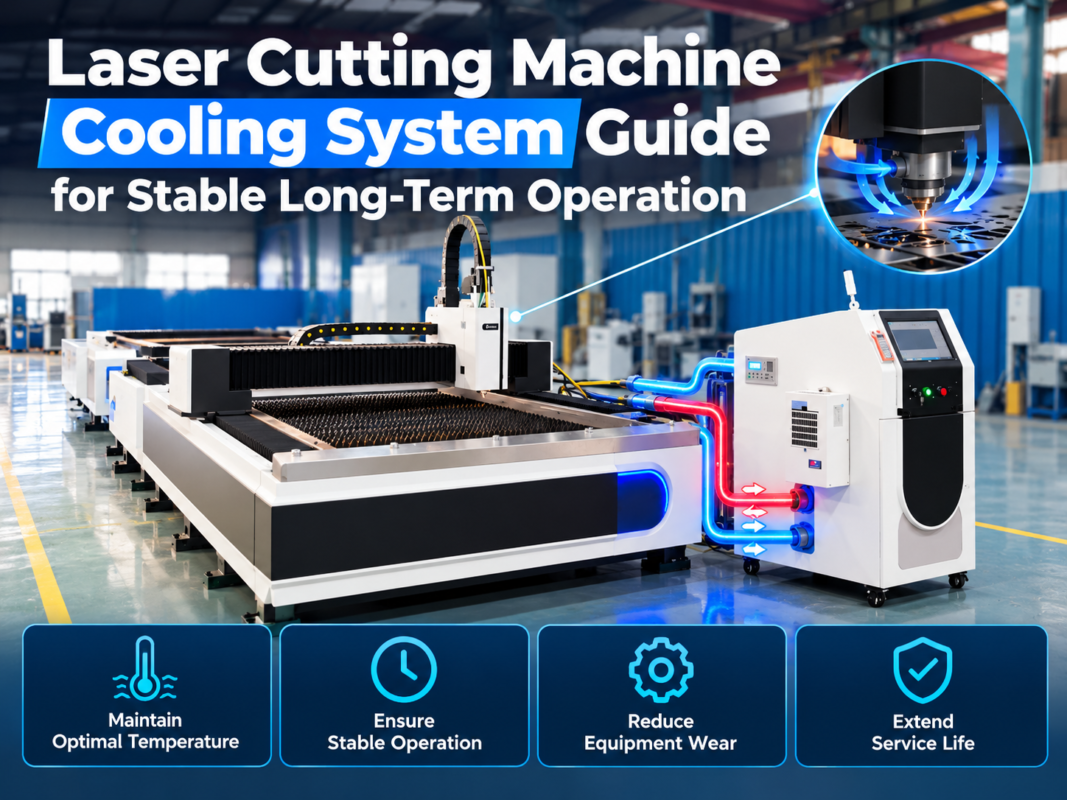
Laser cutting machines generate immense amounts of heat. The water chiller is responsible for maintaining the laser source and the cutting head at a constant temperature. If the chiller’s performance drops—due to low refrigerant, clogged filters, or scaled-up heat exchangers—the laser source will automatically throttle its power to prevent overheating. This is a safety feature, but to the operator, it looks like unexplained power loss.
Water quality is equally important. Using tap water instead of distilled or deionized water can lead to mineral buildup inside the cooling channels of the laser source. This buildup acts as an insulator, preventing efficient heat transfer. Regularly testing the conductivity of the coolant and replacing filters is a non-negotiable maintenance task for preventing power-related downtime.
4. Assist Gas Quality and Pressure
While not a direct loss of ‘laser’ power, poor assist gas management can simulate the effects of power loss. If the oxygen or nitrogen purity is low, the exothermic reaction (with O2) or the mechanical blowing of molten metal (with N2) becomes less efficient. This requires the operator to slow down the machine, which is often misdiagnosed as a loss of laser wattage. Additionally, if the gas pressure at the nozzle is inconsistent due to a faulty regulator or a leak in the lines, the cutting performance will suffer significantly.
Selection Advice: Choosing Reliable Laser Equipment
When purchasing a laser cutting machine, selecting a manufacturer that prioritizes component quality and system integration is the best way to avoid future power loss issues. HARSLE machines are engineered with high-grade components that are specifically matched to ensure long-term power stability. Here are some factors to consider during the selection process:
- Laser Source Brand: Opt for reputable brands like Raycus, IPG, or nLight. These manufacturers provide detailed power-over-time data and have robust support networks for diode replacement.
- Cutting Head Technology: Look for cutting heads with advanced sealing and cooling features. Heads that offer automated focus adjustment and internal temperature monitoring can help detect power loss before it affects production.
- Chiller Integration: Ensure the chiller is oversized for the laser’s wattage. A chiller running at 90% capacity will fail much sooner than one running at 60%. Dual-circuit cooling (one for the source, one for the optics) is a must.
- Frame Stability: A heavy, heat-treated frame reduces vibrations that can misalign the optical path over time. Even in fiber lasers, where the path is mostly enclosed, vibration can affect the connection points and the cutting head’s internal components.
Investing in a machine with a comprehensive software suite is also beneficial. Modern CNC systems can track ‘on-time’ vs. ‘cutting-time’ and provide alerts for maintenance intervals, ensuring that the optics are cleaned and the filters are changed before power loss becomes an issue.
Maintenance Checklist to Prevent Power Loss
To ensure your HARSLE laser cutting machine operates at 100% power, follow this structured maintenance schedule:
| Frequency | Component | Action Required |
|---|---|---|
| Daily | Protective Window | Inspect for dust/burns; clean with high-purity alcohol. |
| Daily | Nozzle | Check for centering and cleanliness; replace if deformed. |
| Weekly | Water Chiller | Check water levels and temperature stability. |
| Monthly | Optical Path | Check for beam alignment and focus consistency. |
| Quarterly | Coolant | Replace deionized water and clean/replace filters. |
| Bi-Annually | Electrical System | Tighten connections and check voltage stability. |
FAQ: Troubleshooting Laser Power Issues
Q1: Why does my laser cut well at the start of the day but loses power after an hour?
This is a classic symptom of thermal lensing or cooling issues. As the machine runs, a contaminated lens or a struggling chiller heats up. The heat causes the lens to expand slightly, shifting the focus point and distorting the beam. Check your cooling water temperature and inspect the internal optics for cleanliness.
Q2: Can a dirty nozzle cause power loss?
A dirty or damaged nozzle doesn’t reduce the laser’s raw power, but it disrupts the assist gas flow and can clip the laser beam. This results in a ‘weak’ cut. Always ensure the nozzle is perfectly centered with the laser beam using the ‘tape test’ method.
Q3: How do I know if my fiber laser source is failing?
Most fiber laser sources have a monitoring interface. Look for ‘Power Monitor’ or ‘Diode Current’ readings. If the current required to reach a certain power level has increased significantly over time, the diodes may be degrading. Consult with HARSLE technical support for a remote diagnostic check.
Q4: Does the type of material affect perceived power loss?
Highly reflective materials like copper and brass can reflect laser energy back into the cutting head. If the machine is not equipped with back-reflection protection, this can damage the fiber or the optics, leading to an immediate and permanent loss of power. Always use the correct parameters for reflective metals.
Q5: Is it possible to ‘re-gas’ a fiber laser?
No. Unlike CO2 lasers, which use a gas mixture to generate the beam, fiber lasers use solid-state diodes and a doped fiber. There is no gas to refill. If a fiber laser loses power due to the source, it usually requires module replacement or factory repair.
Conclusion
Mastering Laser Cutting Machine Power Loss Troubleshooting: Common Causes Solutions is an ongoing process of observation and preventative care. By understanding that power loss is often a symptom of optical contamination, cooling inefficiency, or environmental factors, operators can take proactive steps to keep their machinery running at peak performance. HARSLE continues to lead the industry by providing not only high-quality metal fabrication equipment but also the technical resources necessary for our clients to succeed.
Regular maintenance, a clean working environment, and a deep understanding of your machine’s diagnostics are the best defenses against power degradation. When you treat your laser cutting machine as a high-precision instrument, it will reward you with years of consistent, high-quality output. If you are experiencing persistent power issues that cannot be resolved through standard troubleshooting, always reach out to certified technicians to ensure the longevity of your investment.