How Laser Power Impacts Cut Quality On A Laser Cutting Machine


Technical Overview of Laser Power in Metal Fabrication
In the realm of modern metal fabrication, the fiber laser cutting machine has emerged as the gold standard for precision and efficiency. At the heart of this technology lies the laser source, which generates a concentrated beam of light. Understanding how laser power impacts cut quality on a laser cutting machine is fundamental for any operator or engineer looking to achieve the perfect balance between speed and edge finish. Laser power, measured in Watts (W) or Kilowatts (kW), represents the rate of energy delivery to the material surface. This energy is responsible for melting, vaporizing, and blowing away the metal to create a kerf.
The interaction between the laser beam and the material is a complex thermodynamic process. When the beam hits the metal, a portion of the energy is absorbed, while the rest is reflected. The absorption rate depends on the material type, surface condition, and the wavelength of the laser. Fiber lasers, with a wavelength of approximately 1.06 microns, are highly absorbed by most metals, making them exceptionally efficient. However, the sheer amount of power applied dictates the temperature of the melt pool and the speed at which the material can be processed. If the power is too low, the material will not melt completely; if it is too high, excessive burning and thermal distortion occur.
Modern industrial machines, such as those manufactured by HARSLE, range from 1kW to over 30kW. Each power level offers a specific “sweet spot” for different material thicknesses. For instance, a 3kW laser might be ideal for 3mm stainless steel but would struggle with 25mm carbon steel. Conversely, a 12kW laser can slice through thick plates like butter but requires precise modulation to avoid vaporizing thin sheets. The relationship between power and quality is not linear; it is a multi-variable equation involving speed, gas pressure, and focal position.
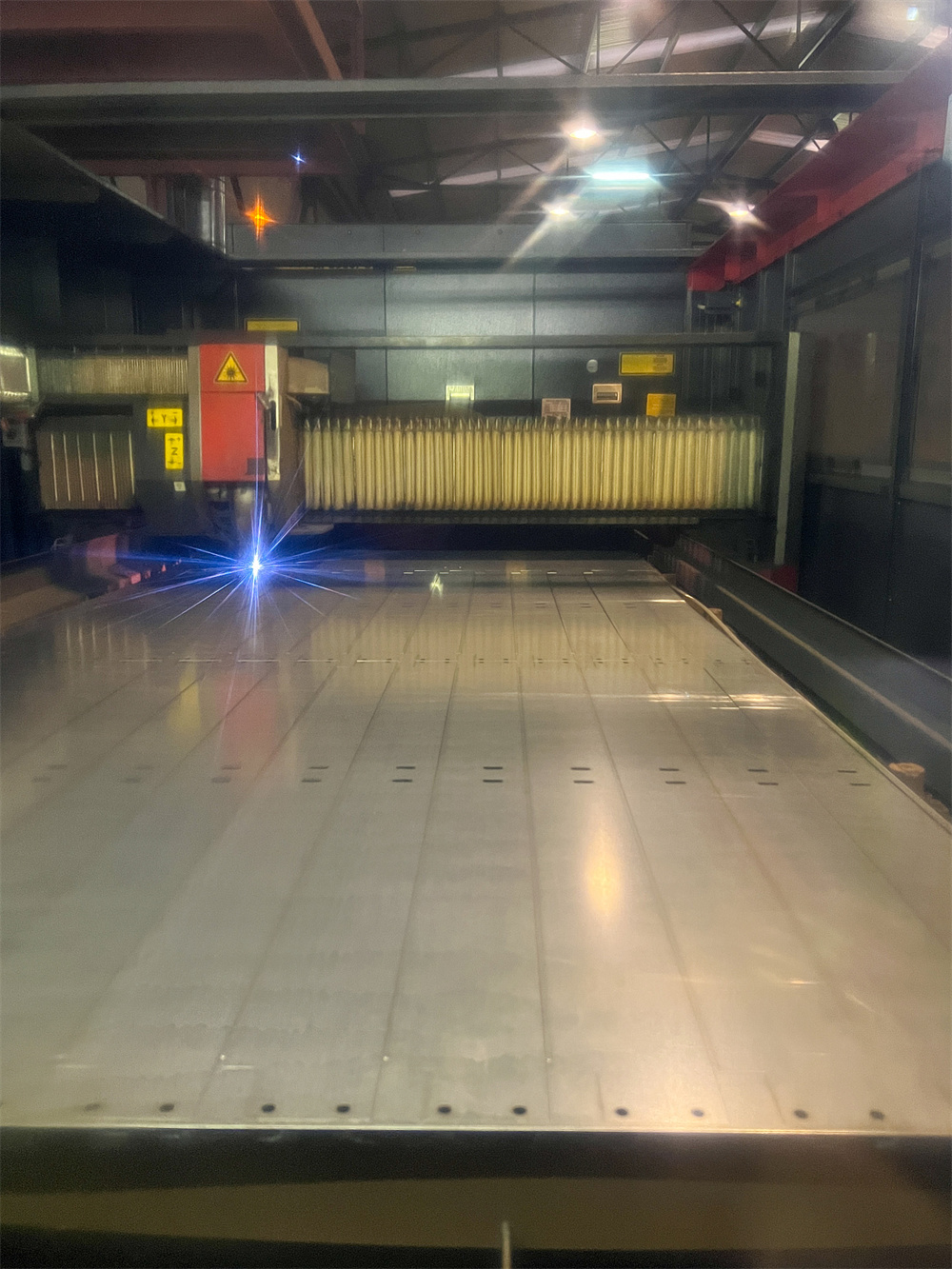
Furthermore, the stability of the laser power is just as important as the peak output. Fluctuations in power can lead to inconsistent cut edges, known as striations. High-quality laser sources ensure a stable beam profile (usually Gaussian or Flat-top), which is critical for maintaining a uniform heat-affected zone (HAZ). As we delve deeper into this guide, we will explore how these technical nuances dictate the final aesthetic and structural integrity of the cut part.
Core Parameters Influencing Cut Quality
To master how laser power impacts cut quality on a laser cutting machine, one must understand the core parameters that interact with power. The first is Power Density. This is the amount of laser power concentrated into a specific area (the focal spot). A higher power density allows for faster melting and a narrower kerf. Even a low-wattage laser can achieve high power density if the beam is focused into a very small spot, but higher total power is necessary to maintain that density across thicker materials.
The second parameter is the Duty Cycle and Frequency. In pulse cutting mode, the laser is not on continuously. Instead, it pulses at a specific frequency. The duty cycle represents the percentage of time the laser is actually “on” during a pulse cycle. By adjusting these, operators can control the average heat input. This is particularly useful when cutting intricate geometries or sharp corners where heat buildup can cause the metal to melt away (over-burning).
Thirdly, Cutting Speed is the primary counter-balance to laser power. There is a direct correlation: as power increases, the maximum possible cutting speed also increases. However, the “optimal” speed is usually slightly below the maximum speed to ensure a smooth edge. If the speed is too slow for the given power, the kerf becomes too wide, and the heat-affected zone expands. If the speed is too fast, the laser cannot penetrate the material fully, leading to incomplete cuts and heavy dross at the bottom.
Finally, the Assist Gas plays a crucial role. Whether using Oxygen (O2), Nitrogen (N2), or Air, the gas works in tandem with the laser power. Oxygen creates an exothermic reaction with carbon steel, adding thermal energy to the process, which allows for lower laser power usage. Nitrogen, on the other hand, is an inert cooling gas used for stainless steel and aluminum to prevent oxidation, requiring much higher laser power to achieve a clean melt-and-blow action.
Calculation Method: Determining Optimal Power Density
Calculating the required power for a specific job involves understanding the energy required to reach the melting point of the material. A common engineering formula used to estimate the power density (I) is:
I = P / A
Where P is the laser power in Watts and A is the area of the focal spot (πr²). For a standard fiber laser with a 100-micron spot size, a 3000W laser produces a power density of approximately 38 MW/cm². This intensity is what allows the laser to vaporize metal almost instantaneously.
Another critical calculation is the Specific Energy Input (E), which helps in determining the relationship between power and speed:
E = P / (v * d)
Where v is the cutting speed and d is the material thickness. This value helps engineers understand how much energy is being deposited per unit volume of material. If E is too high, the part will overheat. If E is too low, the cut will fail. In practice, operators use manufacturer-provided parameter charts as a baseline and then fine-tune based on the visual quality of the cut edge.
When transitioning between different power levels, such as upgrading from a 6kW to a 12kW machine, the calculation isn’t just about doubling the speed. Higher power often requires a larger nozzle diameter and higher gas pressure to clear the increased volume of molten metal. Therefore, the calculation must also account for the fluid dynamics of the assist gas within the kerf.
Parameter Table: Laser Power vs. Material Thickness
The following table provides a generalized reference for how laser power impacts cut quality on a laser cutting machine across different materials. Note: These values are estimates for Fiber Laser sources using Nitrogen for Stainless/Aluminum and Oxygen for Carbon Steel.
| Material | Thickness (mm) | Laser Power (kW) | Speed (m/min) | Assist Gas | Edge Quality |
|---|---|---|---|---|---|
| Carbon Steel | 3mm | 1.5kW | 4.0 – 5.0 | Oxygen | Smooth, No Dross |
| Carbon Steel | 12mm | 4kW | 1.2 – 1.8 | Oxygen | Slight Striations |
| Carbon Steel | 25mm | 12kW | 0.8 – 1.2 | Oxygen | Vertical Striations |
| Stainless Steel | 2mm | 2kW | 15.0 – 20.0 | Nitrogen | Mirror Finish |
| Stainless Steel | 10mm | 6kW | 1.5 – 2.5 | Nitrogen | Clean, White Edge |
| Aluminum | 5mm | 3kW | 4.0 – 6.0 | Nitrogen | Slight Roughness |
| Aluminum | 16mm | 15kW | 2.0 – 3.5 | Nitrogen | Consistent Finish |
Common Engineering Mistakes in Power Selection
One of the most frequent mistakes in metal fabrication is the “More Power is Always Better” fallacy. While a 20kW laser can cut thin materials at incredible speeds, the mechanical components of the machine (the gantry and motors) may not be able to keep up with the required acceleration. This leads to “corner burning,” where the laser dwells too long at a pivot point because the machine cannot decelerate and accelerate fast enough, resulting in a melted, deformed corner. In such cases, using a lower power or a pulsed power setting is actually superior for quality.
Another common error is neglecting the Focal Position in relation to power. As power increases, the “thermal lens effect” can occur, where the laser optics slightly deform due to heat, shifting the focal point. If an operator does not account for this shift, the cut quality will degrade over a long production run, even if the power setting remains constant. High-power machines require sophisticated cooling systems for the cutting head to mitigate this issue.
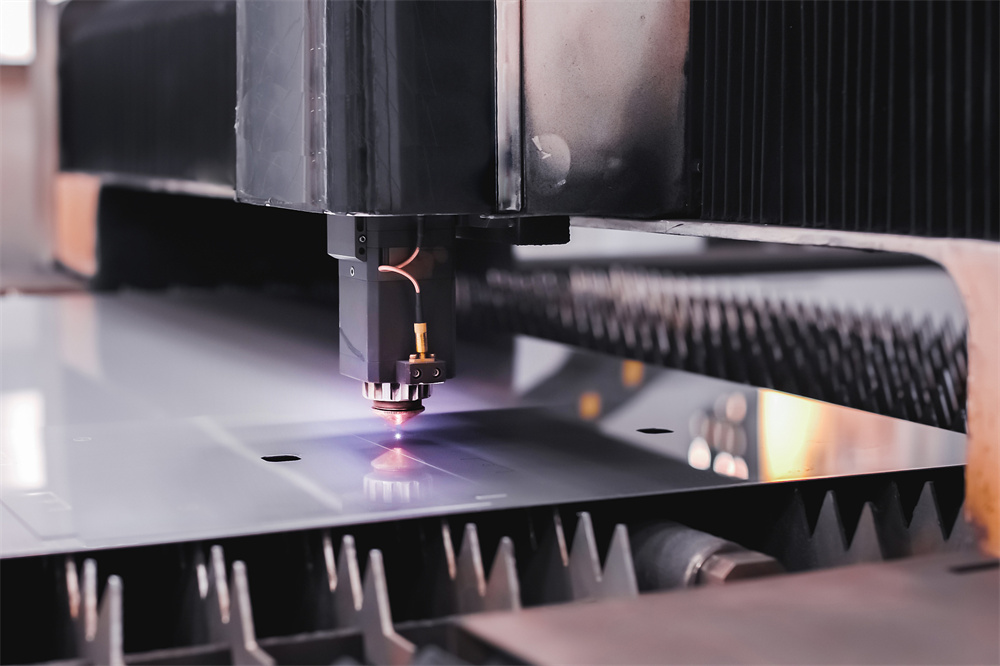
Inconsistent material quality is also a major pitfall. Laser power interacts differently with “laser-grade” steel versus standard hot-rolled steel. Standard steel often has a heavy scale or high silicon content, which reacts unpredictably to high laser power, causing “blowouts” or excessive dross. Engineers often blame the machine’s power stability when the culprit is actually the material’s chemical composition. Using a “Power Ramping” technique—where power is reduced during lead-ins and corners—can help alleviate some of these material-based issues.
Lastly, many operators fail to adjust their Assist Gas Pressure when increasing power. High power creates a larger volume of molten metal. If the gas pressure is not increased proportionally to blow that metal out of the kerf, the metal will re-weld to the bottom of the plate, creating “hard dross” that is difficult to remove. This is a classic example of how laser power impacts cut quality on a laser cutting machine through secondary mechanical factors.
Selection Checklist for Laser Power
Choosing the right laser power for your HARSLE machine involves more than just looking at the maximum thickness. Use this checklist to ensure you select the power level that optimizes both quality and ROI:
- Primary Material Thickness: Identify the thickness you cut 80% of the time. Choose a power level where that thickness is in the “high-speed, high-quality” range, not the “maximum capacity” range.
- Material Type: Are you cutting reflective metals like Copper or Brass? These require higher power and specific beam characteristics to prevent back-reflection damage.
- Edge Quality Requirements: Does the part require a weld-ready edge or a decorative mirror finish? Higher power with Nitrogen is needed for oxide-free edges on stainless steel.
- Production Volume: High-wattage lasers (12kW+) significantly reduce cycle times for thick plates. If you are running 24/7, the time saved justifies the higher initial investment.
- Assist Gas Costs: Remember that higher power often leads to higher Nitrogen consumption. Factor this into your operational cost-per-part.
- Future-Proofing: If you anticipate moving into thicker plate fabrication, opting for a modular laser source that can be upgraded or a higher initial wattage is a wise strategic move.
- Machine Dynamics: Ensure the machine frame and drive system are rated for the speeds that high-power lasers enable. A 20kW source on a lightweight frame will result in poor accuracy due to vibration.
Frequently Asked Questions (FAQ)
1. How does laser power affect the Heat Affected Zone (HAZ)?
The Heat Affected Zone is the area of metal whose microstructure has been altered by heat but not melted. Generally, higher cutting speeds (enabled by higher power) reduce the HAZ because the heat has less time to conduct into the surrounding material. However, if the power is excessive and the speed is slow, the HAZ will widen, potentially weakening the part’s structural integrity.
2. Why does my 6kW laser produce more dross than my 3kW laser on thin sheets?
This is likely due to an imbalance in power density. On thin sheets, 6kW may be vaporizing too much material, creating a turbulent melt pool. To fix this, you should either increase the cutting speed significantly or reduce the power (or use pulse mode) to match the material’s ability to dissipate heat.
3. Can I cut thick carbon steel with low power?
Yes, but you must use Oxygen as an assist gas. The Oxygen reacts with the iron (exothermic reaction), providing much of the heat needed for the cut. However, the speed will be very slow, and the edge will have a heavy oxide layer and more pronounced striations compared to a high-power Nitrogen cut.
4. What is the “striation” pattern on the cut edge?
Striations are the vertical lines seen on the cut surface. They are caused by the oscillation of the melt pool as the laser moves. Laser power impacts this because higher power allows for a more stable, fluid melt pool at higher speeds, which can smooth out these lines. Proper focal adjustment is also key to minimizing striations.
5. Does higher power always mean a wider kerf?
Not necessarily. While higher power can melt more material, the kerf width is primarily determined by the focal spot size and the focal position. If a high-power beam is focused very tightly, the kerf can remain narrow. However, in thick plate cutting, a wider kerf is often intentionally created using a different focal setting to allow the assist gas to remove the molten metal more effectively.
6. How does HARSLE ensure power stability?
HARSLE utilizes industry-leading fiber laser sources and high-precision CNC controllers that monitor power output in real-time. Our machines feature advanced cooling systems and high-quality optics to prevent thermal drifting, ensuring that the power you set is the power delivered to the workpiece throughout the entire shift.