Laser Cutting Machine Maintenance Checklist for Stable Industrial Production


Technical Overview: The Foundation of Stable Industrial Production
In the modern metal fabrication landscape, the laser cutting machine stands as the centerpiece of high-speed, high-precision manufacturing. Achieving a Laser Cutting Machine Maintenance Checklist for Stable Industrial Production is not merely about keeping the machine running; it is about ensuring that every micron of accuracy is preserved over years of heavy-duty operation. Fiber laser technology has revolutionized the industry by offering higher efficiency and lower maintenance compared to older CO2 systems, yet the complexity of its optical and mechanical components requires a disciplined approach to upkeep.
The core of a fiber laser system involves a laser source generating a high-energy beam, which is then delivered through a flexible fiber optic cable to the cutting head. Within the head, sensitive collimating and focusing lenses concentrate the energy onto the workpiece. Any deviation in the alignment, cleanliness, or cooling of these components results in immediate quality degradation. Stable industrial production relies on the synergy between the CNC control system, the high-precision rack and pinion motion system, and the auxiliary gas delivery. When one element falters, the entire production line faces downtime, leading to significant financial losses.
To maintain this stability, operators must understand that a laser cutting machine is a high-precision instrument operating in a harsh industrial environment. Dust, metal fumes, and temperature fluctuations are constant threats. A structured maintenance checklist acts as a preventative shield, identifying potential failures before they manifest as scrap parts or catastrophic machine breakdowns. By adhering to a rigorous schedule, manufacturers can extend the lifespan of their HARSLE equipment and maintain a competitive edge in the market.
Core Parameters Influencing Machine Longevity
Understanding the core parameters of your laser cutting machine is the first step in effective maintenance. The most critical parameter is Laser Power (W/kW). Operating a machine constantly at 100% power can accelerate the aging of the laser source and optical components. For stable production, it is often recommended to operate within 80-90% of the rated power for standard tasks, reserving the maximum output for thicker materials. This practice reduces thermal stress on the delivery fiber and the cutting head optics.
Another vital parameter is the Beam Quality (M²). While this is largely determined by the laser source manufacturer, maintenance of the external optical path (in CO2) or the protective windows (in Fiber) ensures the beam quality remains consistent at the point of contact. A degraded beam quality leads to wider kerf widths and increased dross, forcing the machine to work harder and slower. Monitoring the Focal Position is equally important; even a 0.5mm shift due to thermal expansion or loose mechanical components can ruin a production run.
Lastly, Auxiliary Gas Pressure and Purity play a significant role. Whether using Oxygen (O2) for carbon steel or Nitrogen (N2) for stainless steel, the gas must be free of moisture and oil. Contaminated gas will quickly foul the protective lens, leading to ‘thermal lensing’ where the lens absorbs laser energy, heats up, and shifts the focal point. Maintaining the gas filtration system is a non-negotiable part of any Laser Cutting Machine Maintenance Checklist for Stable Industrial Production.
Calculation Methods for Maintenance Intervals and Performance
Determining when to perform maintenance can be optimized through specific calculations rather than guesswork. One common calculation is the Duty Cycle Assessment. If a machine operates 20 hours a day at high power, the maintenance intervals for the chiller and dust collector should be compressed by 30% compared to standard single-shift operations. The formula for adjusted maintenance interval (T_adj) can be expressed as: T_adj = T_std * (H_std / H_actual), where T_std is the standard interval and H is the hours of operation.
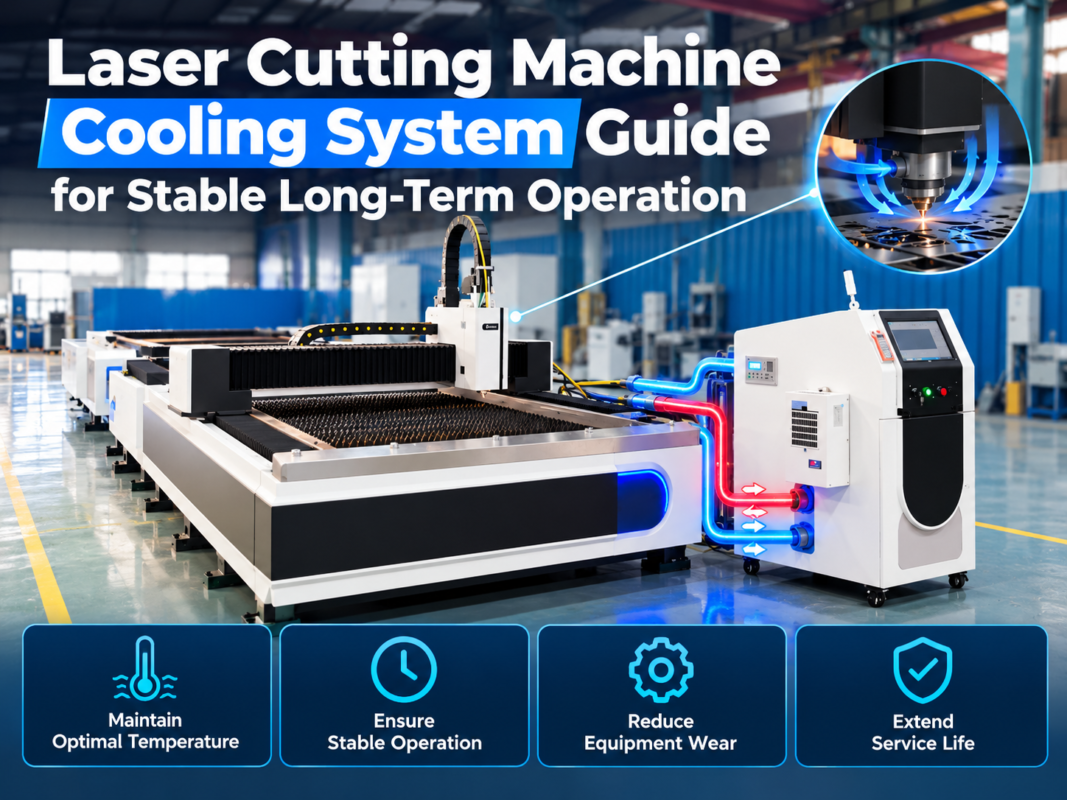
Another critical calculation involves Cooling Capacity vs. Heat Load. The water chiller must dissipate the heat generated by both the laser source and the cutting head. A general rule of thumb is that for every 1kW of laser power, the chiller should provide at least 1.5kW to 2kW of cooling capacity, depending on the ambient temperature. If the ambient temperature exceeds 35°C, the efficiency of the chiller drops, necessitating more frequent filter cleanings and coolant checks to prevent the laser source from overheating and triggering an emergency shutdown.
Operators should also calculate the Gas Consumption Rate to detect leaks in the system. By comparing the theoretical gas usage (based on nozzle size and pressure) with actual tank depletion, maintenance teams can identify micro-leaks in the piping or solenoid valves. A 10% discrepancy often indicates a seal failure that, if left unaddressed, increases operational costs and introduces atmospheric contaminants into the cutting process.
Comprehensive Maintenance Parameter Table
The following table outlines the essential tasks for a Laser Cutting Machine Maintenance Checklist for Stable Industrial Production. Adhering to these intervals ensures the machine remains in peak condition.
| Component | Maintenance Task | Frequency | Impact on Production |
|---|---|---|---|
| Protective Lens | Inspect for dust, burns, or pits; clean with IPA | Daily (Every Shift) | Prevents beam distortion and head damage |
| Water Chiller | Check water level, temperature, and pressure | Daily | Prevents laser source overheating |
| X/Y/Z Axis Rails | Clean debris and apply specialized lubricant | Weekly | Ensures motion accuracy and prevents vibration |
| Nozzle & Ceramic Ring | Check for concentricity and physical damage | Daily | Maintains cutting quality and sensor accuracy |
| Dust Collector | Empty dust bin and check filter differential pressure | Weekly | Ensures clean working environment and safety |
| Laser Source | Check status lights and internal humidity/temp | Monthly | Extends the life of the resonator |
| Electrical Cabinet | Vacuum dust and check cooling fans | Quarterly | Prevents PLC/Driver failure due to overheating |
| Chiller Coolant | Drain, flush, and replace with deionized water | Every 3-6 Months | Prevents algae growth and internal corrosion |
Common Engineering Mistakes in Laser Maintenance
One of the most frequent mistakes in industrial environments is the improper cleaning of optical components. Operators often use standard shop wipes or low-grade alcohol, which can leave streaks or lint. Even a microscopic residue can absorb laser energy, causing the lens to crack under high power. Always use reagent-grade isopropyl alcohol and lint-free optical swabs. Furthermore, cleaning should only be done when absolutely necessary; over-cleaning can lead to accidental scratches.
Another common error is neglecting the water chiller’s chemistry. Using tap water instead of deionized or distilled water leads to mineral buildup (scaling) inside the laser source’s cooling channels. This scaling acts as an insulator, reducing cooling efficiency and eventually causing the laser modules to burn out. Additionally, failing to change the water filters can lead to pump failure. A stable production environment requires a strict water management protocol, including the use of approved algaecides.
Finally, many engineers overlook the mechanical alignment of the machine frame. Over months of high-speed acceleration and deceleration, the bolts on the rack and pinion or the leveling feet can loosen. This leads to ‘ghosting’ or jagged edges on the cut parts. A Laser Cutting Machine Maintenance Checklist for Stable Industrial Production must include a semi-annual check of the machine’s squareness and level. Ignoring the mechanical foundation while focusing solely on the laser beam is a recipe for long-term inaccuracy.
Selection Checklist for Stable Industrial Laser Equipment
When selecting a new laser cutting machine for high-volume production, use this checklist to ensure the hardware supports long-term stability:
- Frame Construction: Look for a heavy-duty, heat-treated steel plate welded frame. Cast iron beds are also excellent for vibration dampening.
- Laser Source Brand: Ensure the machine uses reputable sources like IPG, Raycus, or nLIGHT, which have proven stability and global support.
- Motion System: High-precision helical racks and pinions (e.g., Atlanta or YYC) and Alpha/Yaskawa servo motors are essential for maintaining speed and accuracy.
- Cutting Head Features: Opt for a head with autofocus capabilities and integrated sensors for temperature and pressure monitoring.
- Software Integration: The CNC system (like CypCut or HypCut) should offer robust diagnostic tools and maintenance reminders.
- Chiller Specifications: Ensure the chiller is dual-circuit (cooling both the source and the head) and has a heating function for cold winter startups.
- After-Sales Support: Verify the manufacturer’s ability to provide remote diagnostics and fast spare parts delivery.
Frequently Asked Questions (FAQ)
1. How often should I replace the protective lens?
The lifespan of a protective lens depends on the material being cut and the cleanliness of the auxiliary gas. In a clean environment with high-purity gas, a lens can last 100-200 hours. However, if you are cutting oily or rusty plate, you may need to clean or replace it every shift. Always replace it immediately if you see any permanent ‘burn spots’.
2. Why is my laser cutting quality suddenly decreasing?
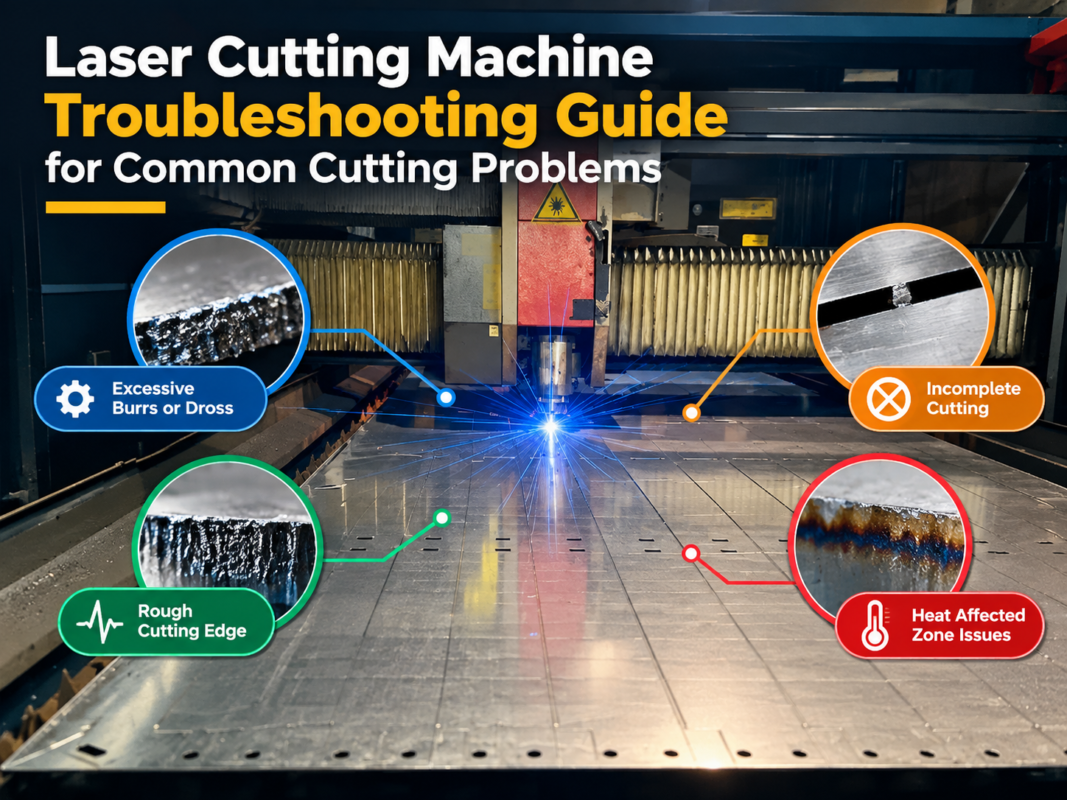
Sudden quality loss is usually attributed to one of three things: a dirty protective lens, a damaged nozzle, or an incorrect focal shift. Check the lens first, then ensure the nozzle is centered with the beam. If those are fine, check your gas pressure and the purity of your gas supply.
3. Can I use regular grease for the guide rails?
No. Laser cutting machines require specific high-speed lubricants that do not attract excessive dust. Using heavy automotive grease can create a ‘grinding paste’ when mixed with metal dust, which will quickly destroy your rails and bearings. Consult your HARSLE manual for the specific lubricant grade.
4. What is the ideal temperature for the laser chiller?
Most fiber lasers require the cooling water to be between 20°C and 25°C. The most important factor is consistency. Large fluctuations in water temperature can cause the laser wavelength to shift slightly or cause condensation inside the laser source, which is extremely dangerous for the electronics.
5. How does dust affect the electrical cabinet?
Metal dust is conductive. If it accumulates on the circuit boards of the servo drivers or the PLC, it can cause short circuits and permanent hardware failure. Ensure the cabinet filters are cleaned weekly and that the cabinet door remains sealed during operation.
6. Is it necessary to warm up the machine in the morning?
Yes, especially in colder climates. A 5-10 minute warm-up period allows the mechanical components to reach a stable operating temperature and ensures the lubricant is flowing correctly. It also allows the chiller to stabilize the laser source temperature before high-power cutting begins.