How Press Brakes Support Aerospace Sheet Metal Forming Requirements


Introduction to Aerospace Sheet Metal Forming
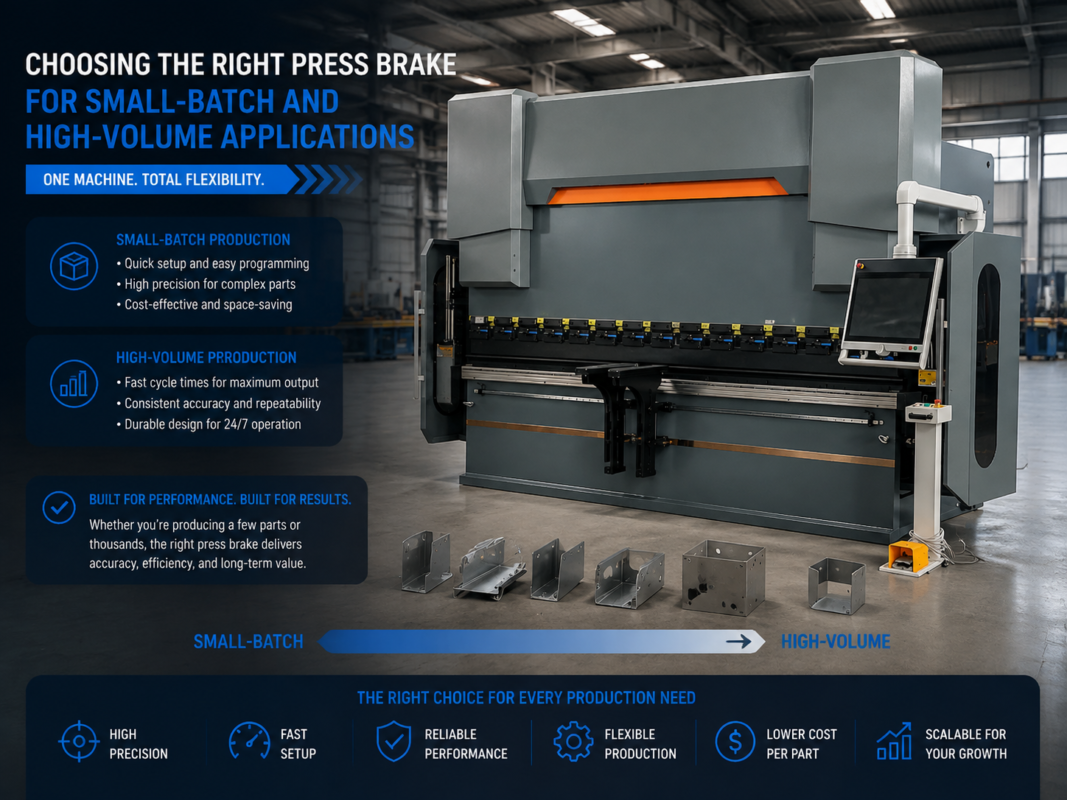
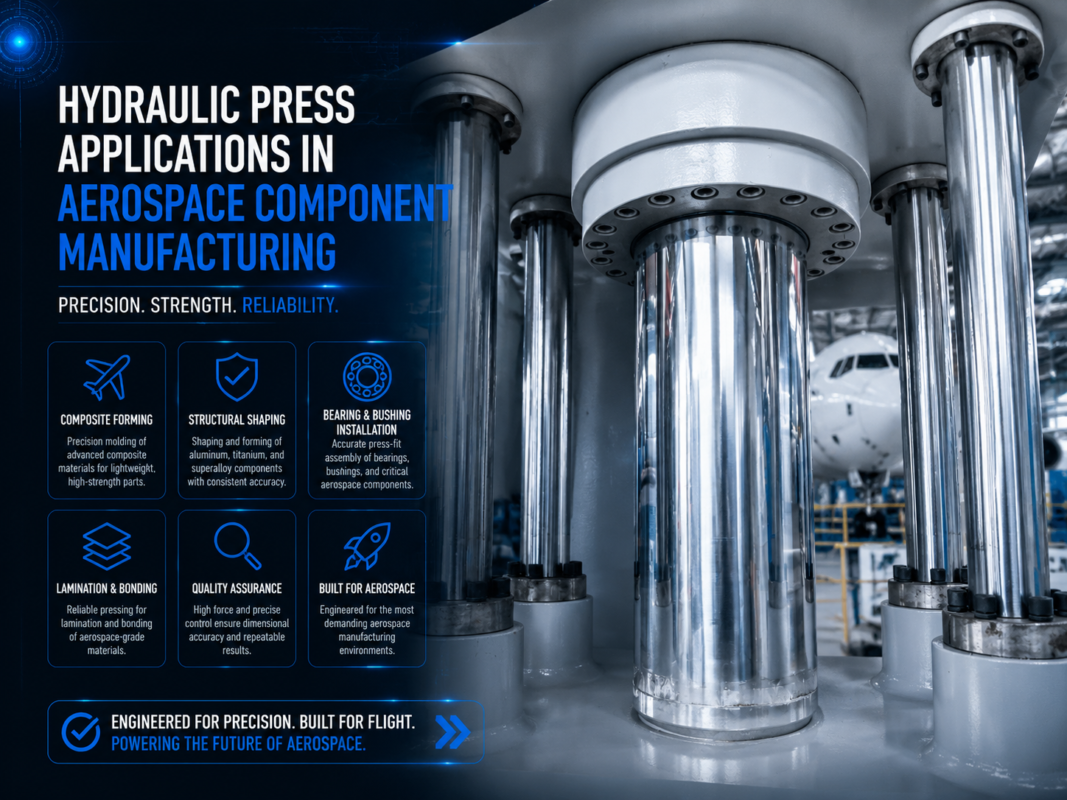
The aerospace industry represents the pinnacle of engineering precision and material science. In this sector, the margin for error is virtually non-existent, as every component—from fuselage skins to internal structural ribs—must withstand extreme pressures, temperature fluctuations, and mechanical stresses. Central to the production of these critical components is the process of sheet metal forming, and more specifically, the role of the industrial press brake. Understanding how press brakes support aerospace sheet metal forming requirements is essential for manufacturers looking to enter or excel in this high-stakes market.
Aerospace components often involve complex geometries and the use of advanced alloys that are difficult to manipulate. Unlike general fabrication, where a slight deviation might be acceptable, aerospace standards demand absolute repeatability and traceability. Modern CNC press brakes have evolved to meet these needs, integrating sophisticated software, high-precision hydraulics, and real-time monitoring systems. These machines are no longer just bending tools; they are integrated manufacturing hubs capable of handling the most demanding specifications.
HARSLE, a leader in metal fabrication machinery, recognizes that the aerospace sector requires more than just raw power. It requires a synergy of force and finesse. In this comprehensive guide, we will explore the technical nuances of how press brakes facilitate the production of aerospace-grade parts, the specific challenges posed by exotic materials, and the technological innovations that ensure every bend meets the rigorous standards of flight safety.
Key Considerations in Aerospace Bending
Material Complexity and Exotic Alloys
One of the primary ways press brakes support aerospace sheet metal forming requirements is through their ability to handle specialized materials. Aerospace design frequently utilizes Titanium, Inconel, high-strength Aluminum alloys (like 7075 or 2024), and Stainless Steel. These materials are chosen for their high strength-to-weight ratios and heat resistance, but they present significant challenges during the bending process. For instance, Titanium has a high yield strength and a low modulus of elasticity, leading to significant springback—the tendency of the metal to return to its original shape after the bending force is removed.
Advanced press brakes address this through sophisticated CNC controllers that calculate the exact amount of over-bending required to achieve the final desired angle. This calculation takes into account the material thickness, grain direction, and tensile strength. Without this level of control, achieving the tight tolerances required for aerospace components would be impossible, leading to high scrap rates and increased production costs.
Precision and Tight Tolerances
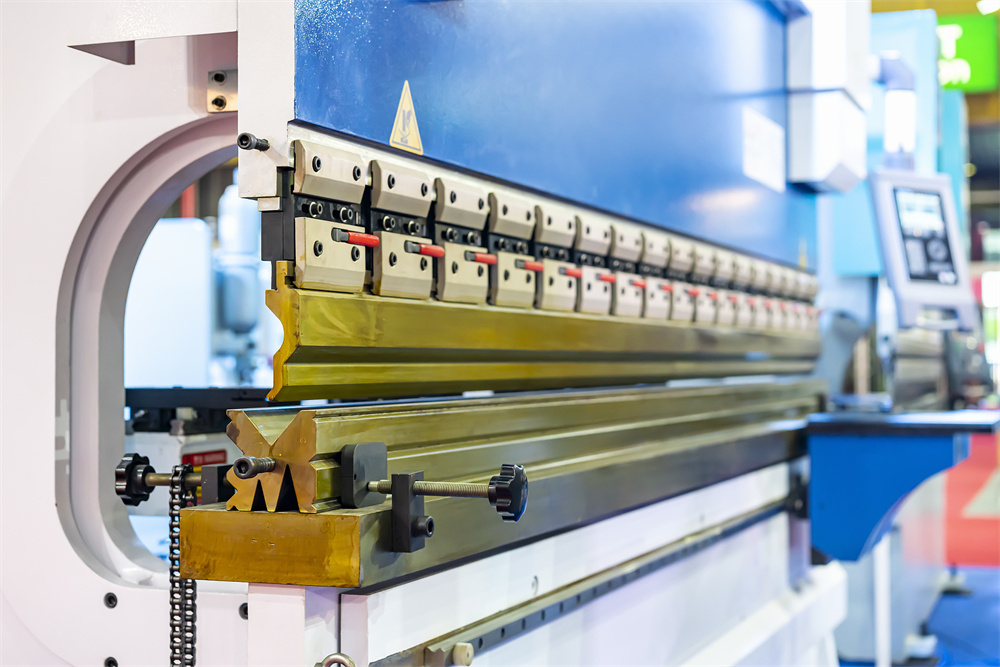
In aerospace manufacturing, tolerances are often measured in microns. A wing spar or a bracket must fit perfectly within a larger assembly to ensure structural integrity. Press brakes support these requirements by utilizing high-resolution encoders and synchronized Y1 and Y2 axes. This synchronization ensures that the ram remains perfectly level throughout the stroke, or can be intentionally tilted for specific tapered bends, with an accuracy of +/- 0.01mm.
Furthermore, the repeatability of the backgauge system is critical. Aerospace parts often require multiple bends in a single sequence. A 6-axis backgauge (X1, X2, R1, R2, Z1, Z2) allows for the precise positioning of complex parts, ensuring that each subsequent bend is perfectly aligned with the previous one. This level of automation reduces human error and ensures that the thousandth part is identical to the first.
Surface Integrity and Tooling Marks
Aerospace components are subject to intense fatigue testing. Any surface imperfection, such as a scratch or a tool mark, can become a stress concentrator, potentially leading to structural failure over time. Therefore, press brakes used in this industry must utilize specialized tooling and techniques to protect the material surface. This includes the use of urethane inserts, large-radius punches, and polished dies. The ability of the press brake to control the speed and pressure of the descent (the “pressing speed”) is also vital to prevent material galling or cracking during the forming process.
Technical Details of Aerospace-Grade Press Brakes
Advanced CNC Control Systems
The brain of the press brake is its CNC system. For aerospace applications, these systems do more than just move the ram. They integrate 3D visualization, allowing operators to simulate the bending process before the tool even touches the metal. This simulation detects potential collisions with the machine frame or tooling, which is crucial when working with expensive aerospace alloys. The software also manages “Bend Allowance” and “K-Factor” calculations automatically, ensuring that the flat pattern dimensions result in a perfect finished part.
Modern controllers also support Industry 4.0 integration. This means every bend can be logged, providing the traceability required by aerospace certification bodies like the FAA or EASA. If a part fails in the field, manufacturers can look back at the digital twin of the production process to verify that the bending parameters were within the specified range.
Crowning Systems for Uniformity
When a press brake applies force to a long piece of sheet metal, the bed and the ram naturally deflect or “bow” in the center. This results in a “canoe effect,” where the angle in the middle of the part is wider than at the ends. In aerospace, where a long fuselage panel must be perfectly uniform, this is unacceptable. Press brakes support aerospace requirements through integrated crowning systems—either hydraulic or mechanical.
A hydraulic crowning system uses cylinders in the lower bed to push upward, counteracting the deflection of the ram. A mechanical crowning system uses a series of wedges. The CNC controller calculates the required crowning based on the material’s resistance and the length of the bend, adjusting in real-time to ensure a perfectly straight bend across the entire length of the workpiece.
Angle Measurement and Correction
Even with the best calculations, variations in material thickness or hardness can affect the final angle. Aerospace manufacturers often utilize real-time angle measurement systems, such as laser or contact sensors. These systems measure the angle during the bending process and feed the data back to the CNC. If the angle is not correct, the machine automatically adjusts the depth of the stroke to compensate. This “closed-loop” system is a cornerstone of modern aerospace fabrication, ensuring that every part meets the specification without manual intervention.
| Feature | Aerospace Requirement | Press Brake Solution |
|---|---|---|
| Material Handling | High-strength, low-ductility alloys | High-tonnage capacity with precision speed control |
| Angle Accuracy | +/- 0.5 degrees or less | Laser angle measurement & CNC compensation |
| Part Complexity | Multi-stage, multi-angle bends | 6-axis CNC backgauges & 3D simulation |
| Surface Quality | Zero scratches or stress marks | Specialized non-marking tooling & urethane dies |
| Traceability | AS9100 compliance data | Digital logging of every bend cycle |
Selection Advice for Aerospace Manufacturers
Determining Tonnage and Length
When selecting a press brake for aerospace work, the first step is calculating the required tonnage. Because aerospace materials like Titanium are much stronger than mild steel, they require significantly more force to bend. Manufacturers should not only look at the maximum thickness they intend to bend but also the minimum internal radius required. Smaller radii require higher pressure. It is often advisable to select a machine with 20-30% more capacity than the theoretical maximum to ensure the machine operates within its “comfort zone,” which prolongs tool and machine life.
Evaluating Backgauge Versatility
Aerospace parts are rarely simple rectangles. They often feature tapered edges, notches, and complex flanges. A standard 2-axis backgauge is usually insufficient. A 4-axis (X, R, Z1, Z2) or 6-axis (X1, X2, R1, R2, Z1, Z2) backgauge is highly recommended. This allows the fingers to move independently, supporting asymmetrical parts and ensuring that the material is always perfectly squared against the tooling. This versatility is a key way press brakes support aerospace sheet metal forming requirements for complex geometries.
Software and Integration
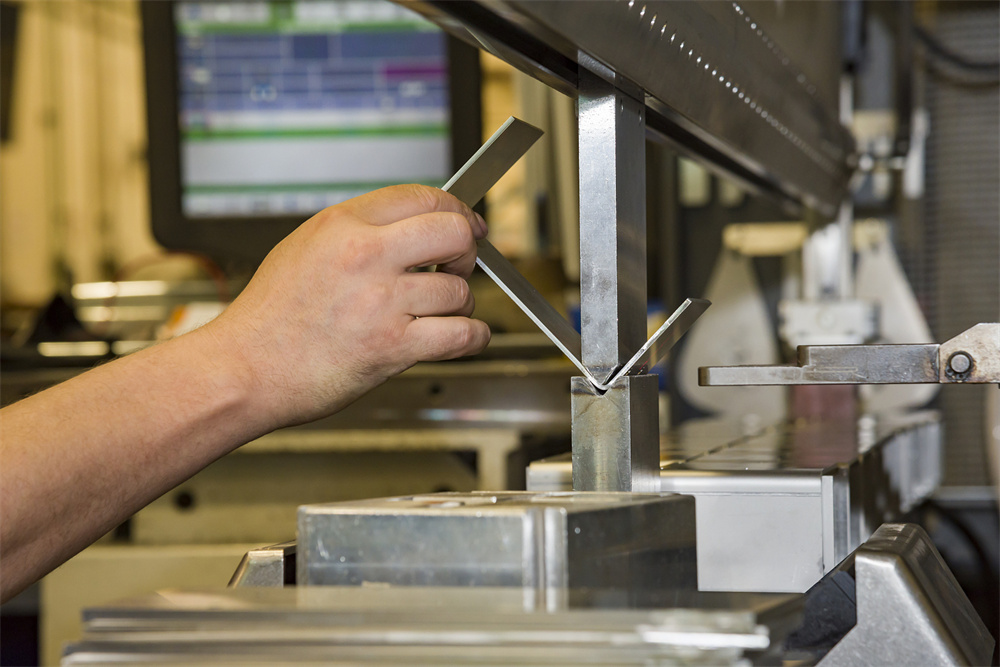
In the aerospace industry, the transition from CAD design to finished part must be seamless. Look for press brakes that offer offline programming software. This allows engineers to program the bending sequence in the office, verify it against the 3D model, and then transfer the program to the machine via a network. This reduces setup time on the shop floor and ensures that the operator is following the exact engineering intent. Furthermore, compatibility with ERP systems for job tracking and material management is a significant advantage for maintaining aerospace certification.
Maintenance and Calibration
Precision is a perishable commodity. For a press brake to continue supporting aerospace requirements, it must be maintained meticulously. This includes regular calibration of the backgauge axes, checking the hydraulic oil for contaminants, and inspecting the tooling for wear. Even a small chip in a punch can lead to a stress fracture in an aerospace part. Choosing a manufacturer like HARSLE, which provides robust after-sales support and clear maintenance protocols, is essential for long-term success.
Frequently Asked Questions (FAQ)
How does springback affect aerospace bending?
Springback is the tendency of a metal to return toward its original shape after the bending force is released. In aerospace, materials like Titanium have very high springback. Press brakes compensate for this by using CNC algorithms that over-bend the part to a specific degree, ensuring that the final, relaxed state of the metal matches the required angle.
Why is crowning important for aerospace parts?
Crowning compensates for the natural deflection of the press brake’s frame under load. Without crowning, a long aerospace part (like a wing skin) would have a different angle in the middle than at the ends. Crowning ensures the angle is consistent across the entire length of the bend, which is critical for aerodynamic and structural integrity.
Can press brakes handle Titanium and Inconel?
Yes, but they require high tonnage and precise control. Because these materials are prone to work-hardening and cracking, the press brake must be able to control the descent speed very accurately. Specialized tooling with larger radii is also often required to prevent the material from fracturing during the bend.
What is the role of 6-axis backgauges in aerospace?
A 6-axis backgauge allows for the independent movement of the gauge fingers in three dimensions (X, R, and Z). This is crucial for aerospace parts that are asymmetrical or have complex shapes, as it allows the part to be positioned accurately for every bend in a sequence without manual repositioning by the operator.
How do press brakes ensure traceability for AS9100?
Modern CNC press brakes log every action, including the pressure applied, the final depth of the stroke, the operator ID, and the timestamp. This data can be exported and stored as part of the quality assurance record for each specific part number, satisfying the strict traceability requirements of aerospace standards.
Conclusion: The Future of Aerospace Forming
As aerospace designs continue to push the boundaries of what is possible, the machinery used to create them must keep pace. The integration of artificial intelligence, more sensitive real-time feedback loops, and even more powerful simulation software will further enhance how press brakes support aerospace sheet metal forming requirements. The goal remains the same: to produce parts that are lighter, stronger, and more precise than ever before.
For manufacturers, investing in high-quality CNC press brakes is not just about buying a machine; it is about acquiring the capability to meet the world’s most stringent engineering standards. HARSLE remains at the forefront of this evolution, providing the tools and technology necessary to turn advanced aerospace concepts into reality. By focusing on precision, material versatility, and digital integration, modern press brakes ensure that the aerospace industry can continue to soar to new heights.
Whether you are forming simple brackets or complex structural components, understanding the technical capabilities of your press brake is the first step toward excellence. With the right equipment and expertise, the challenges of aerospace sheet metal forming become opportunities for innovation and growth in one of the world’s most dynamic industrial sectors.