Best Practices for Buying a Laser Cutting Machine for Long-Term Productivity


Introduction to Strategic Laser Machine Procurement
In the rapidly evolving landscape of metal fabrication, the acquisition of a laser cutting machine represents one of the most significant capital investments a business can make. However, the difference between a machine that merely functions and one that drives sustained profitability lies in the strategic approach taken during the purchasing phase. Adopting Best Practices Buying A Laser Cutting Machine Long-Term Productivity ensures that your shop floor remains competitive, efficient, and capable of handling the increasing demands of modern manufacturing. At HARSLE, we understand that a laser cutter is not just a tool; it is the heartbeat of your production line.
The shift from traditional mechanical cutting or older CO2 technology to high-efficiency fiber lasers has revolutionized the industry. Fiber lasers offer unparalleled speed, precision, and lower operating costs. Yet, with a market flooded with various brands, power ratings, and configurations, making the right choice requires a deep dive into technical specifications and long-term operational goals. This guide is designed to navigate the complexities of laser machine procurement, focusing on maximizing your Return on Investment (ROI) and ensuring your equipment remains a productive asset for a decade or more.
Price Range Overview: Understanding the Investment Tiers
When evaluating the market, it is essential to categorize laser cutting machines into price tiers based on their capabilities. The entry-level tier typically ranges from $30,000 to $60,000. These machines usually feature laser sources between 1kW and 3kW. They are ideal for small workshops or businesses transitioning from outsourcing to in-house production. While they offer excellent precision for thin materials, they may lack the heavy-duty frame construction required for 24/7 high-speed industrial operations.
The mid-range tier, priced between $70,000 and $180,000, is where most professional fabrication shops find their sweet spot. These machines often boast 4kW to 12kW fiber laser sources and are equipped with more robust motion control systems, exchange tables, and advanced CNC software. This tier provides the best balance between speed, thickness capacity, and price, making it the primary focus for those seeking Best Practices Buying A Laser Cutting Machine Long-Term Productivity.
High-end industrial systems can exceed $250,000 and reach well over $500,000. These are ultra-high-power machines (20kW to 60kW+) designed for heavy plate processing and massive throughput. They often include full automation, such as sheet loading and unloading systems. While the initial cost is high, the cost-per-part on these machines is significantly lower when running at high volumes, provided the business has the order flow to keep the machine busy.
Main Cost Drivers in Laser Cutting Technology
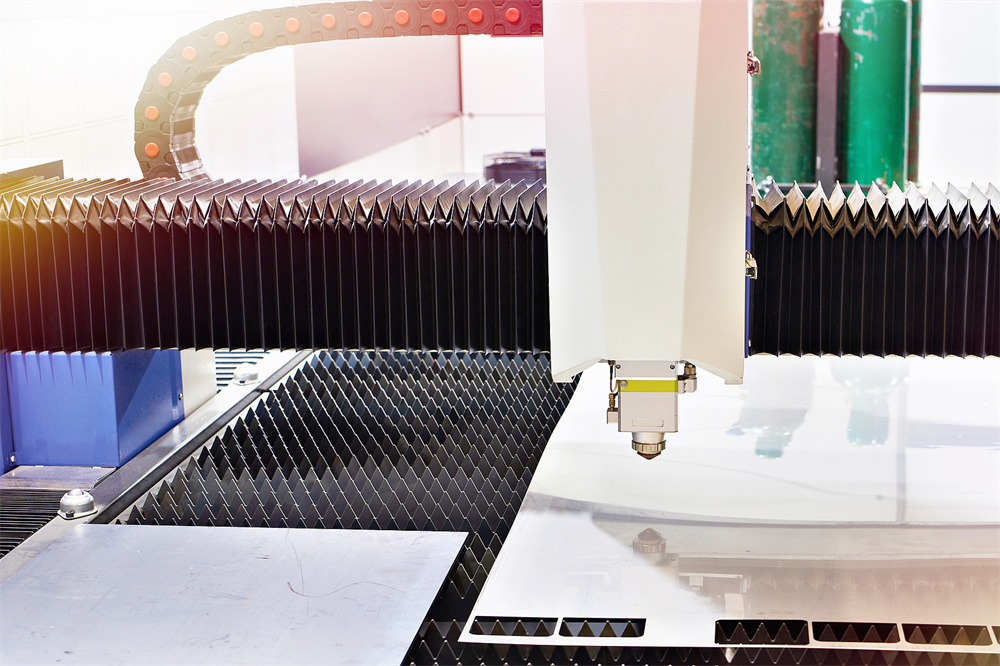
The price of a laser cutting machine is driven by several critical components. Understanding these drivers allows buyers to allocate their budget where it matters most. The most significant cost driver is the Laser Source. Brands like IPG, Raycus, and Max Photonics dominate the market. An IPG source is often more expensive due to its global reputation for stability and service network, whereas Raycus offers a highly competitive price-to-performance ratio. The wattage of the source directly correlates with the price; doubling the power can sometimes nearly double the cost of the source component itself.
The second major driver is the Machine Bed and Frame. A high-quality laser machine requires a heavy, stress-relieved frame to maintain accuracy at high acceleration rates. Cast iron beds are superior for dampening vibrations compared to welded steel frames, though they are more expensive to manufacture. If the frame flexes even slightly during high-speed maneuvers, the cutting precision will suffer, leading to wasted material and secondary finishing costs.
Thirdly, the Motion Control System—including the CNC controller, servo motors, and rack-and-pinion systems—plays a vital role. High-end Japanese or European servos (like Yaskawa or Schneider) and precision gearboxes ensure that the machine can move at speeds of 100m/min or more with micron-level repeatability. Cutting corners on these components might save money upfront but will lead to increased maintenance and downtime in the long run.
Configuration Impact on Long-Term Productivity
Choosing the right configuration is the cornerstone of Best Practices Buying A Laser Cutting Machine Long-Term Productivity. One of the most critical decisions is the choice of the Cutting Head. Modern machines should ideally feature an autofocus cutting head. This technology automatically adjusts the focal point based on the material type and thickness, significantly reducing setup times and eliminating human error. For long-term productivity, a cutting head with integrated sensors for pierce detection and plasma monitoring can prevent nozzle damage and optimize cutting speeds.
Another configuration factor is the Exchange Table (Shuttle Table). For any shop looking to maximize throughput, an exchange table is mandatory. It allows the operator to load a new sheet and unload finished parts while the machine is still cutting on the other table. This can increase productivity by 30% to 50% compared to a single-table machine. Without an exchange table, the laser—the most expensive part of the system—sits idle for a significant portion of the day.
The Role of Assist Gases
The configuration of your gas system also impacts productivity. Most machines use Oxygen (for carbon steel), Nitrogen (for stainless steel and aluminum), or Compressed Air. High-pressure air cutting has become a popular “best practice” for thin to medium-gauge materials because it is significantly cheaper than bottled Nitrogen. Ensuring your machine is configured with a high-quality air compressor and filtration system can slash your hourly operating costs, contributing to a faster ROI.
Hidden Costs: What to Budget For Beyond the Sticker Price
Many first-time buyers fail to account for the “hidden” costs associated with owning a laser cutting machine. These costs can quickly erode the projected profitability if not managed correctly. Installation and Training are the first hurdles. While some manufacturers include this in the price, others charge separately. Proper training is essential; an unskilled operator can cause thousands of dollars in damage to a laser head or lens in a matter of seconds.
Consumables represent a recurring expense. This includes copper nozzles, protective windows (lenses), and ceramic rings. While individually cheap, they add up over a year of multi-shift operation. Furthermore, the Electricity Consumption of the entire system—including the laser source, the chiller, and the dust extractor—must be considered. A 12kW laser system can draw significant power, potentially requiring upgrades to your facility’s electrical infrastructure.
Maintenance is another critical area. While fiber lasers require much less maintenance than CO2 lasers, they are not maintenance-free. The water chiller needs regular fluid changes and filter cleanings to prevent the laser source from overheating. The dust extraction system requires filter replacements to maintain a safe working environment and protect the machine’s optical components from contamination. Budgeting approximately 1-3% of the machine’s value annually for preventative maintenance is a wise practice.
ROI Calculation: Measuring Success
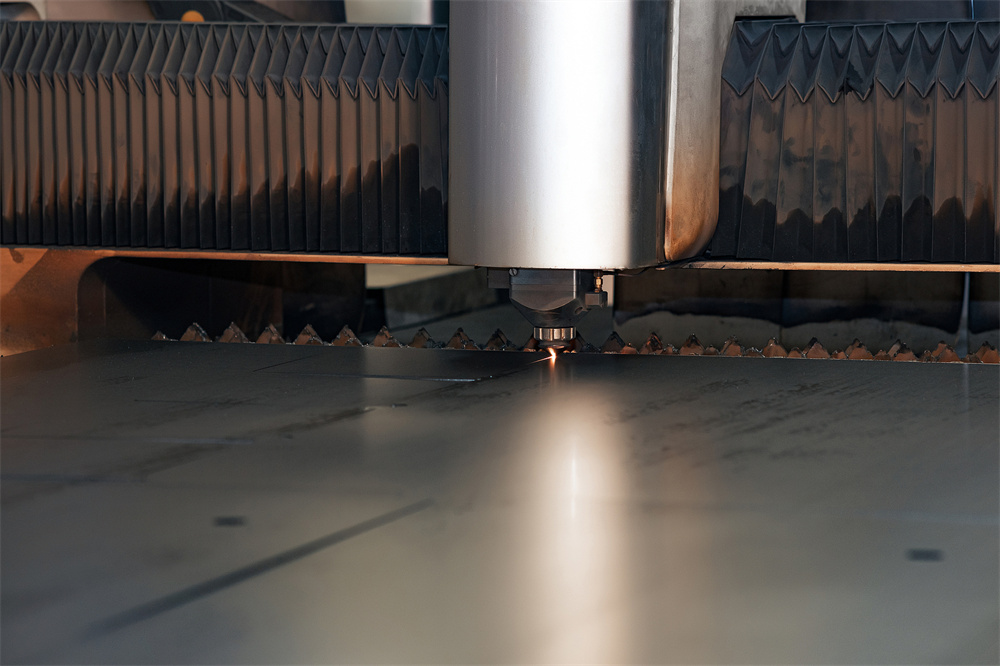
To justify the investment, a clear ROI calculation is necessary. The formula for ROI is (Net Profit / Cost of Investment) x 100. However, in metal fabrication, we look at the Payback Period. To calculate this, determine your current cost of outsourcing laser-cut parts versus the cost of producing them in-house. Include labor, gas, electricity, and material costs in your in-house estimate.
For example, if you spend $10,000 a month on outsourced laser cutting and your new machine costs $120,000, but only costs $3,000 a month to run (including the operator’s salary), your monthly savings are $7,000. In this scenario, the machine pays for itself in roughly 17 months. Beyond the direct financial savings, consider the Intangible Benefits: shorter lead times, better quality control, and the ability to prototype parts instantly. These factors often lead to winning more contracts, which further accelerates the ROI.
Buying Advice: A Step-by-Step Checklist
When you are ready to move forward, follow these best practices to ensure a successful purchase:
- Define Your Material Mix: Don’t buy a 20kW machine if 90% of your work is 3mm stainless steel. Match the power to your most common material thickness, with a 20% buffer for future growth.
- Verify the Software: The CNC software (like CypCut or Lantek) should be user-friendly and support efficient nesting. Good nesting software saves thousands of dollars in material waste over the machine’s life.
- Check Local Support: A machine is only productive when it’s running. Ensure the manufacturer or distributor has technicians in your region and a ready stock of spare parts.
- Request a Live Demo: Never buy a machine based on a brochure. Send your most complex CAD files to the vendor and watch them cut the parts. Check for edge quality, dross, and dimensional accuracy.
- Inspect the Build Quality: Look at the cable management, the quality of the welds on the frame, and the brand of the pneumatic components. These small details indicate the overall manufacturing standards of the vendor.
Conclusion: Long-Term Vision with HARSLE
Investing in a laser cutting machine is a transformative step for any fabrication business. By focusing on Best Practices Buying A Laser Cutting Machine Long-Term Productivity, you move beyond the initial price tag and focus on the total cost of ownership and the value the machine adds to your workflow. From selecting the right laser source to ensuring robust local support, every decision should be geared toward minimizing downtime and maximizing throughput.
HARSLE remains committed to providing high-quality, reliable laser solutions that empower manufacturers to reach new heights of efficiency. Whether you are a small shop looking for your first fiber laser or a large enterprise expanding your capacity, our team is here to guide you through the technical nuances and help you select a machine that will remain a cornerstone of your production for years to come. Remember, the best machine isn’t just the one that cuts the fastest today; it’s the one that continues to deliver precision and profit for the next decade.
Frequently Asked Questions (FAQ)
1. What is the lifespan of a fiber laser source?
Most leading fiber laser sources (like IPG or Raycus) are rated for approximately 100,000 hours of operation. In a typical single-shift environment, this can equate to over 20 years of use. However, the actual lifespan depends heavily on maintaining a clean environment and a well-functioning cooling system.
2. Should I choose a Fiber laser or a CO2 laser?
For almost all metal fabrication applications today, Fiber laser is the superior choice. It is faster, more energy-efficient, and has significantly lower maintenance costs. CO2 lasers are now mostly reserved for specialized applications involving non-metals like wood, acrylic, or certain plastics that fiber lasers cannot cut efficiently.
3. How much power (wattage) do I really need?
This depends on your maximum material thickness. A 3kW laser can comfortably cut up to 20mm carbon steel, but it will be slow. If you frequently cut 12mm to 16mm plates, a 6kW or 12kW machine will provide much higher production speeds and better edge quality. Always choose a power level that handles your “daily” thickness at high speed, rather than just your “maximum” thickness at a crawl.
4. Can I cut reflective materials like brass and copper?
Yes, modern fiber lasers are designed to handle reflective materials. Unlike older CO2 lasers, which could be damaged by back-reflection, fiber lasers use optical isolators and different wavelengths that allow for the safe and efficient cutting of copper, brass, and aluminum.
5. What is the importance of nesting software?
Nesting software arranges parts on a metal sheet to minimize waste. High-quality nesting software can improve material utilization by 10% or more. Over the course of a year, this can save tens of thousands of dollars in raw material costs, making it a vital component of long-term productivity.