C Frame Punching Machine vs H Frame Punching Machine: How to Select the Right Structure


Introduction to Punching Machine Frame Structures
In the world of metal fabrication, the structural integrity of a punching machine is the foundation of its performance. When investing in new machinery, one of the most critical decisions a production manager or business owner must make is choosing between a C Frame (Gap Frame) and an H Frame (Straight Side) punching machine. This choice influences everything from the precision of the finished parts to the longevity of the tooling and the overall footprint of the workshop. At HARSLE, we understand that selecting the right structure is not just about the initial cost; it is about matching the machine’s mechanical characteristics to your specific production requirements.
The frame of a punching machine must withstand immense forces during the punching cycle. As the ram descends and strikes the material, the frame experiences equal and opposite reaction forces. How the frame handles these forces—whether it flexes slightly or remains perfectly rigid—determines the quality of the punch and the wear on the die. This article provides a comprehensive deep dive into the C Frame Punching Machine Vs H Frame Punching Machine: Select Structure dilemma, helping you navigate the technical nuances of each design to optimize your manufacturing process.
Comparison Summary: C Frame vs. H Frame
Before diving into the technical specifics, it is helpful to understand the fundamental philosophy behind each design. The C Frame machine is designed for accessibility and versatility. Its open-front design allows operators to feed material from three sides, making it ideal for large or irregularly shaped sheets. However, because the frame is open, it is susceptible to a phenomenon known as “yawning” or angular deflection under high loads. This means the top and bottom of the “C” can spread apart slightly, potentially affecting the alignment of the punch and die.
Conversely, the H Frame punching machine is built for maximum rigidity and precision. By enclosing the working area within four solid columns or two massive side plates, the H Frame eliminates the risk of angular deflection. The force is distributed vertically and symmetrically, ensuring that the ram remains perfectly centered throughout the stroke. While this provides superior accuracy and longer tool life, it limits accessibility, as material can typically only be fed through the front or back of the machine. Choosing between them requires a balance of material size, required tonnage, and precision tolerances.
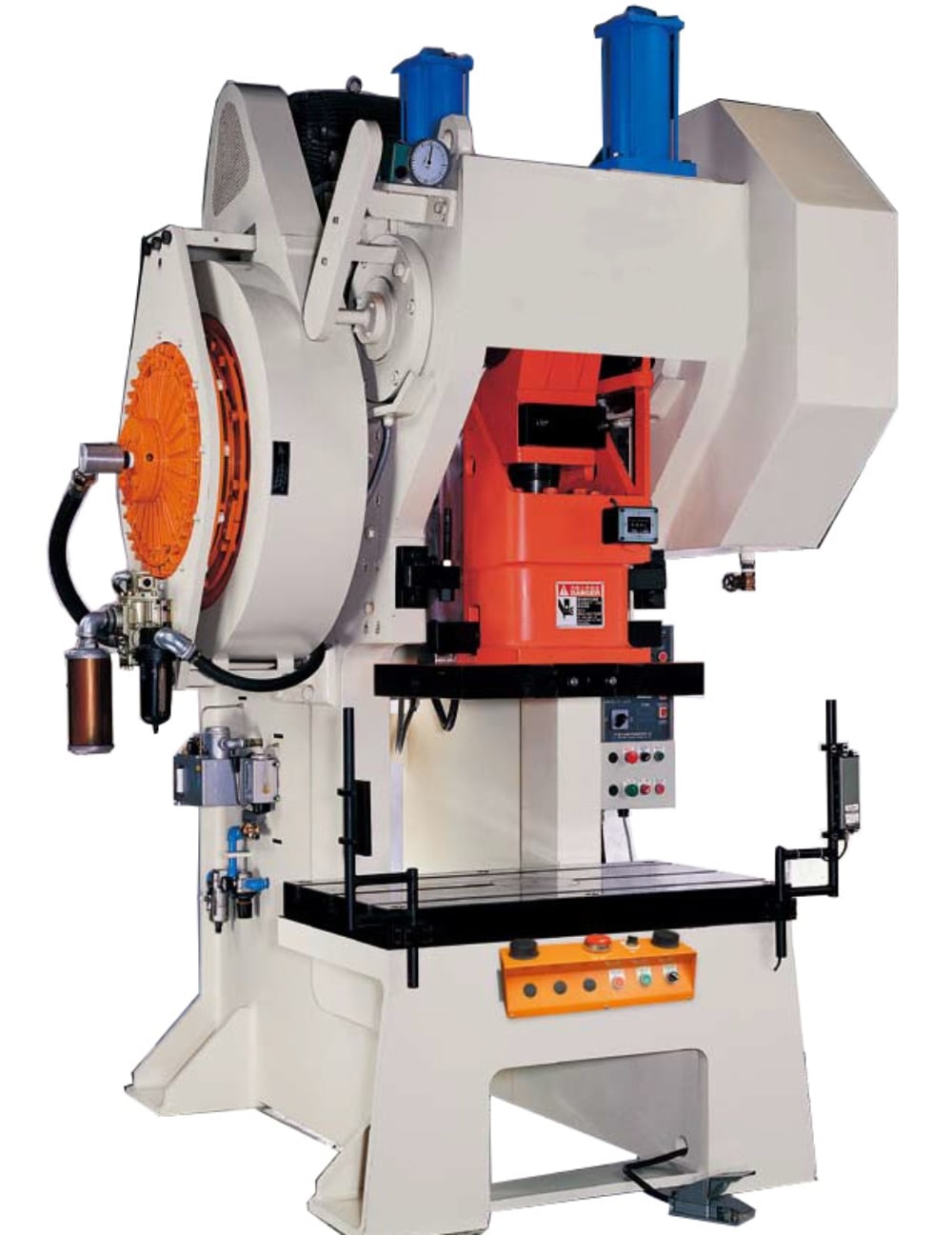
C Frame Punching Machine Overview
Design and Structural Characteristics
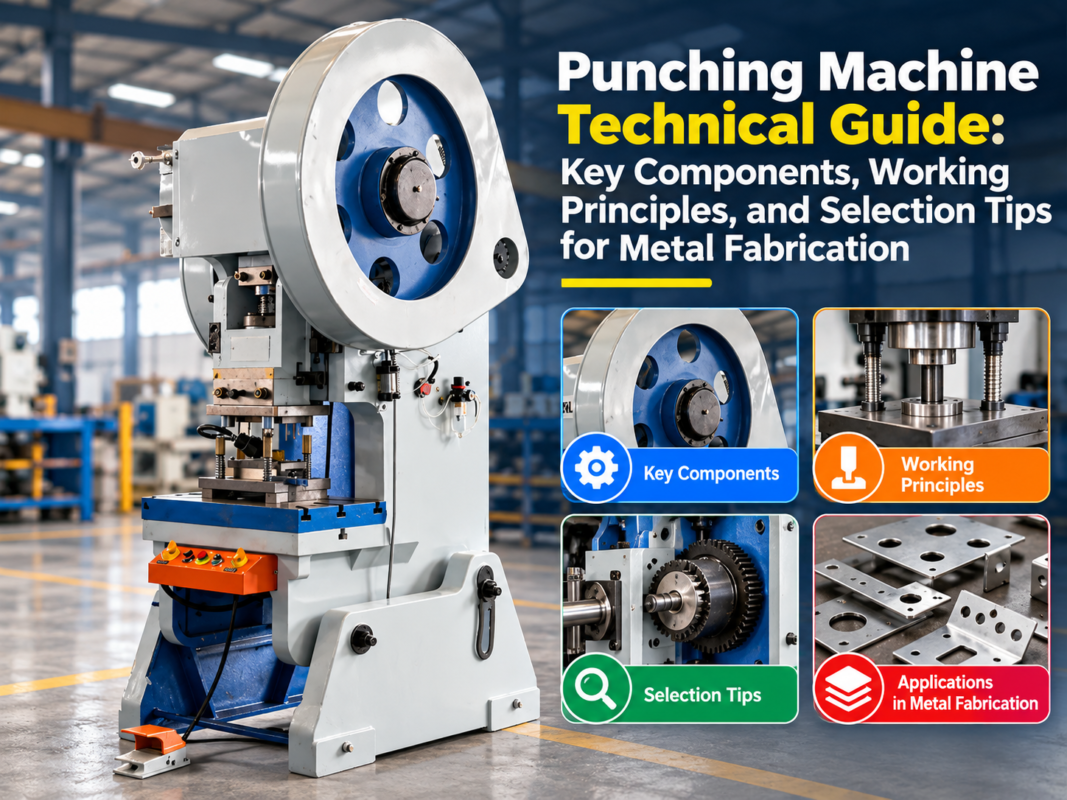
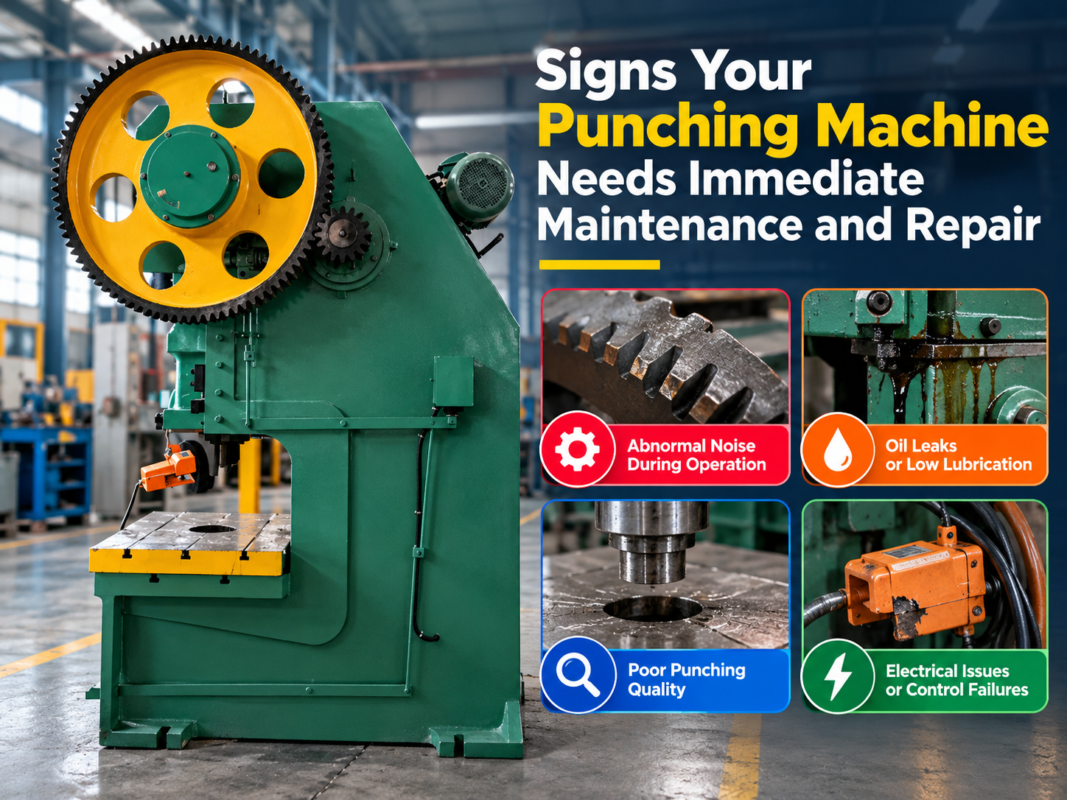
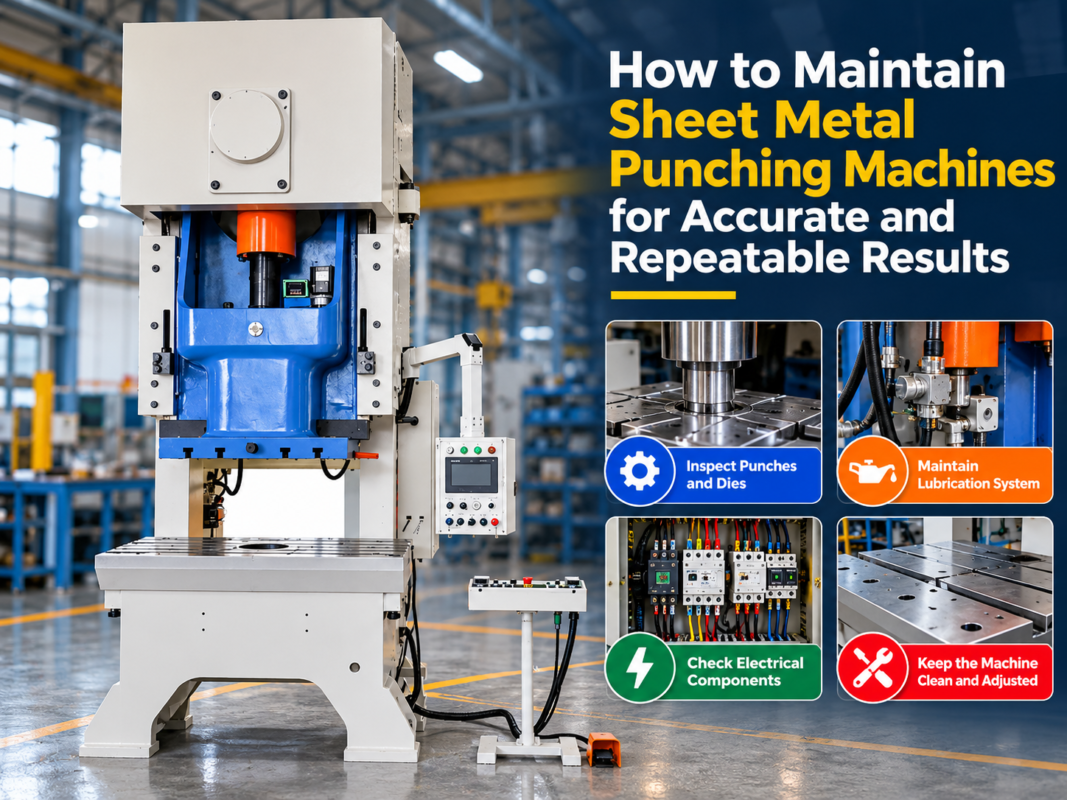
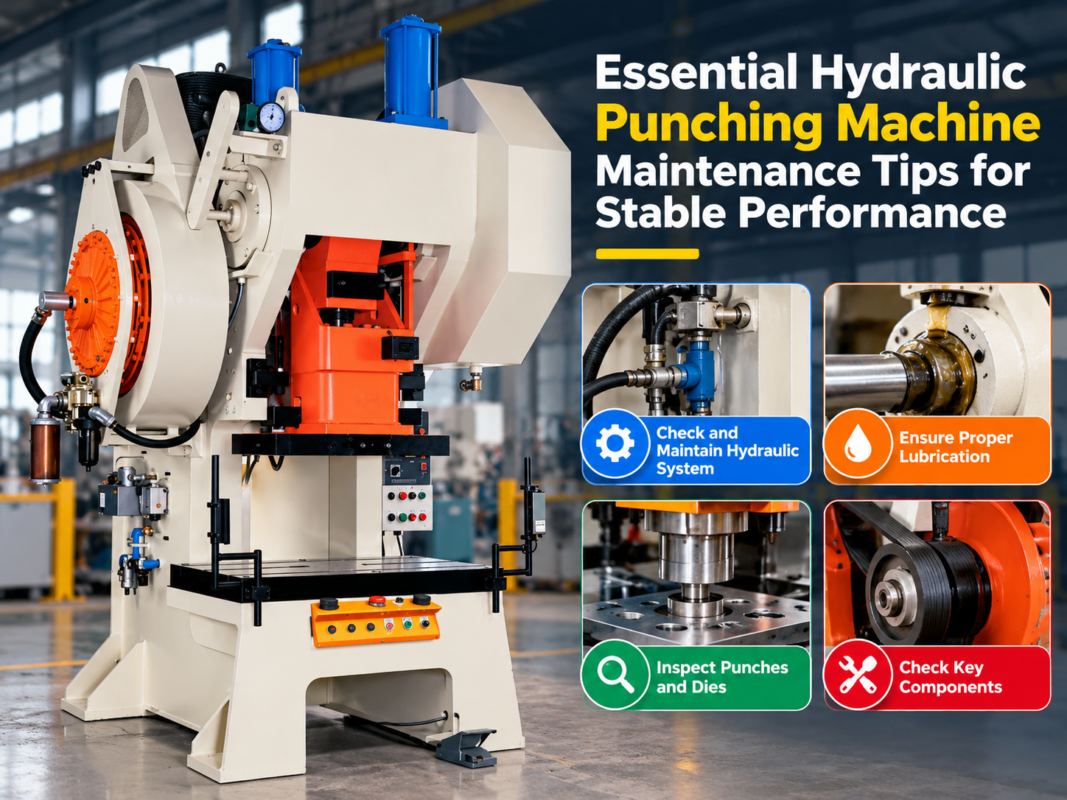
The C Frame punching machine, often referred to as a gap frame press, is characterized by its “C” shaped profile when viewed from the side. This design consists of a heavy-duty steel or cast iron frame that supports the bed at the bottom and the ram mechanism at the top. The “throat depth” is the distance from the center of the ram to the back of the frame, and this dimension is crucial as it determines the maximum width of the sheet metal that can be processed.
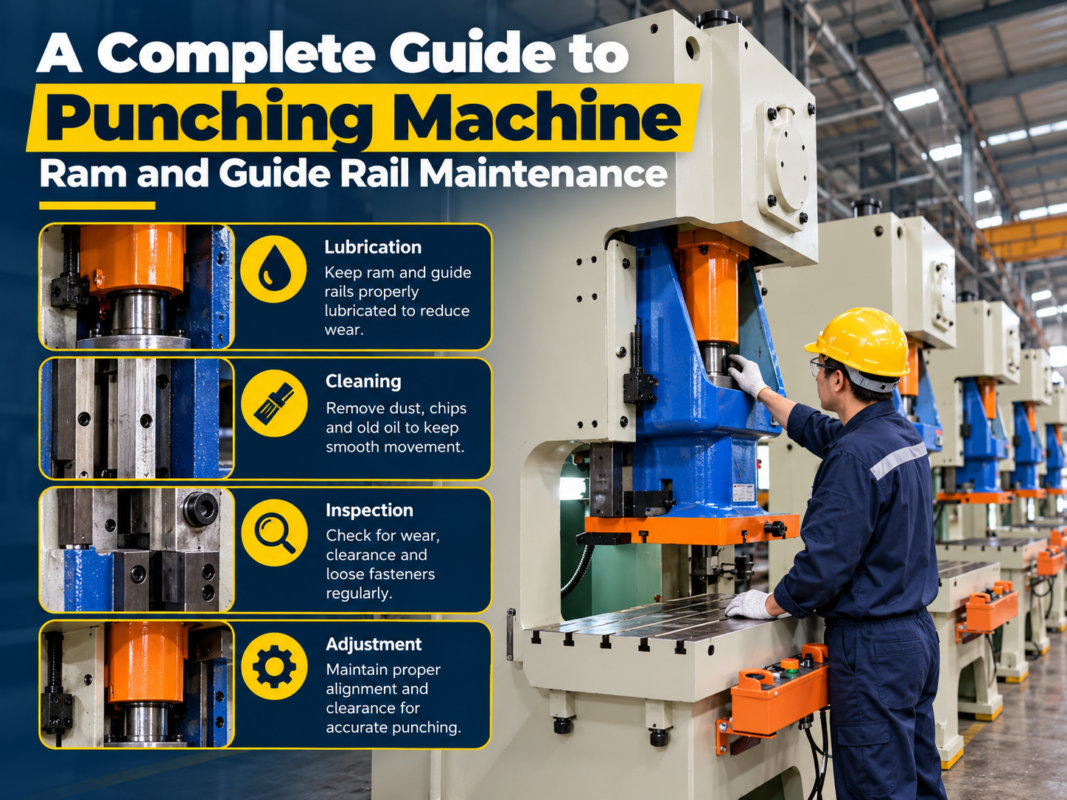
Modern C Frame machines from HARSLE are engineered using Finite Element Analysis (FEA) to minimize the inherent deflection of the open-front design. By reinforcing the “neck” of the C, manufacturers can create a machine that handles significant tonnage while maintaining a relatively small footprint. These machines are often preferred for light to medium-duty applications where the operator needs to move the workpiece frequently or where the parts are larger than the machine’s bed size.
Advantages of the C Frame Structure
The primary advantage of the C Frame is its unmatched accessibility. Because there are no front pillars, an operator can easily load and unload parts, and the machine can accommodate oversized sheets that extend beyond the sides of the press. This makes it a staple in job shops where the variety of work is high and the production runs are often short to medium in length.
Furthermore, C Frame machines generally have a smaller footprint compared to H Frame machines of the same tonnage. This is a significant factor for smaller facilities where floor space is at a premium. They are also typically more cost-effective, both in terms of initial purchase price and the complexity of the foundation required for installation. For many standard punching, blanking, and forming operations, the C Frame provides the best return on investment.
Limitations to Consider
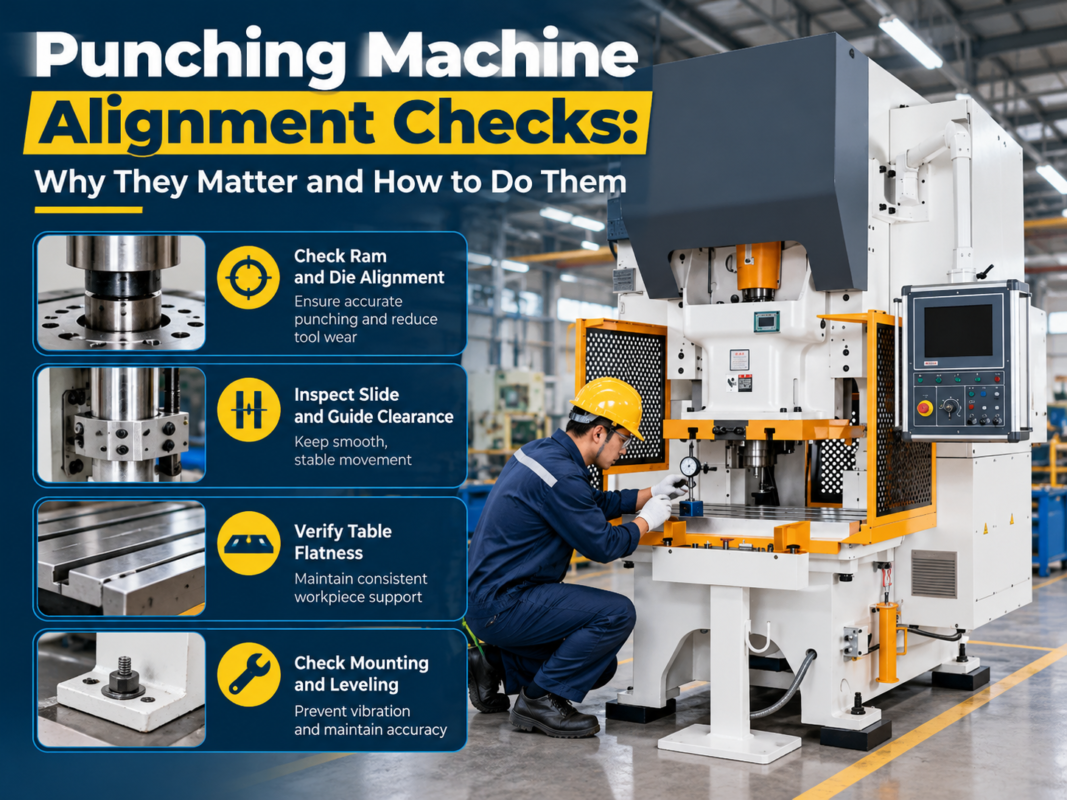
The main drawback of the C Frame is angular deflection. When the machine reaches its maximum tonnage capacity, the frame tends to open up slightly. This can cause the punch to enter the die at a very slight angle rather than perfectly vertically. Over time, this misalignment leads to uneven tool wear, burrs on the finished parts, and a potential reduction in the life of the machine’s bearings and bushings. While high-quality C Frame machines are built to keep this deflection within strict limits, it is a factor that cannot be entirely eliminated by design.
H Frame Punching Machine Overview
Design and Structural Characteristics
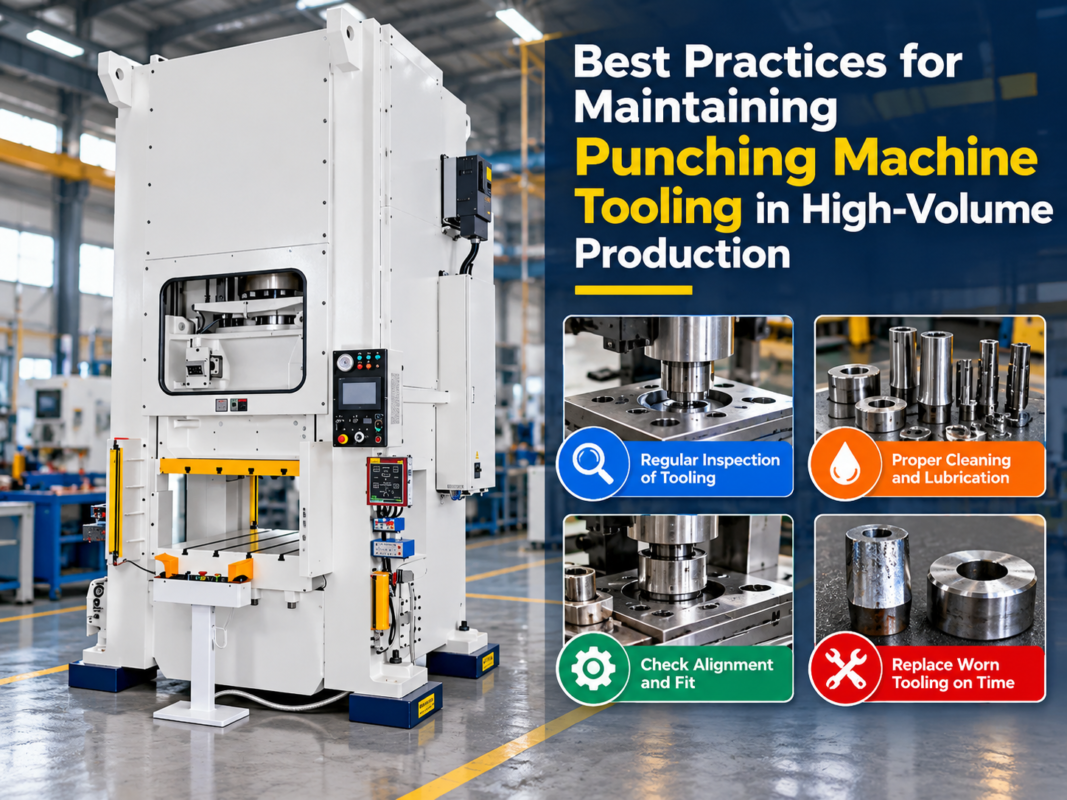
The H Frame punching machine, also known as a straight-side press, features a closed-loop frame. The structure consists of a crown, a bed, and two uprights (side frames) that are tied together, usually with pre-stressed tie rods. This creates a box-like structure that is incredibly stiff. The ram moves within the uprights, guided by long, precision gibs that ensure the punch stays perfectly aligned with the die, even under off-center loading conditions.
This structure is the gold standard for high-tonnage and high-precision work. Because the frame is symmetrical, the forces are contained within the vertical members of the machine. There is no “yawning” effect, only a very slight vertical elongation of the columns, which does not affect the alignment of the tooling. H Frame machines are typically larger, heavier, and more robust than their C Frame counterparts.
Advantages of the H Frame Structure
The standout benefit of the H Frame is extreme rigidity. This rigidity translates directly into superior part accuracy and significantly extended tool life. Because the punch and die remain perfectly aligned, the clearance between them is maintained consistently across the entire stroke. This is essential for high-speed stamping, progressive die applications, and working with thick or high-strength materials where even a tiny misalignment can cause catastrophic tool failure.
Additionally, H Frame machines are better suited for off-center loading. In complex progressive dies, the center of the load may not always be directly under the center of the ram. The four-point or two-point suspension systems common in H Frame designs can handle these unbalanced forces much better than a C Frame, which would experience twisting or increased deflection. This makes the H Frame the preferred choice for automated, high-volume production lines.
Limitations to Consider
The most obvious limitation is restricted access. The side columns prevent material from being fed from the sides, meaning all workpieces must enter and exit through the front or back “windows.” This can make it difficult to process very wide sheets unless the machine is specifically designed with large side openings. Additionally, H Frame machines are more expensive and require a more substantial foundation due to their weight and the dynamic forces they generate during high-speed operation.
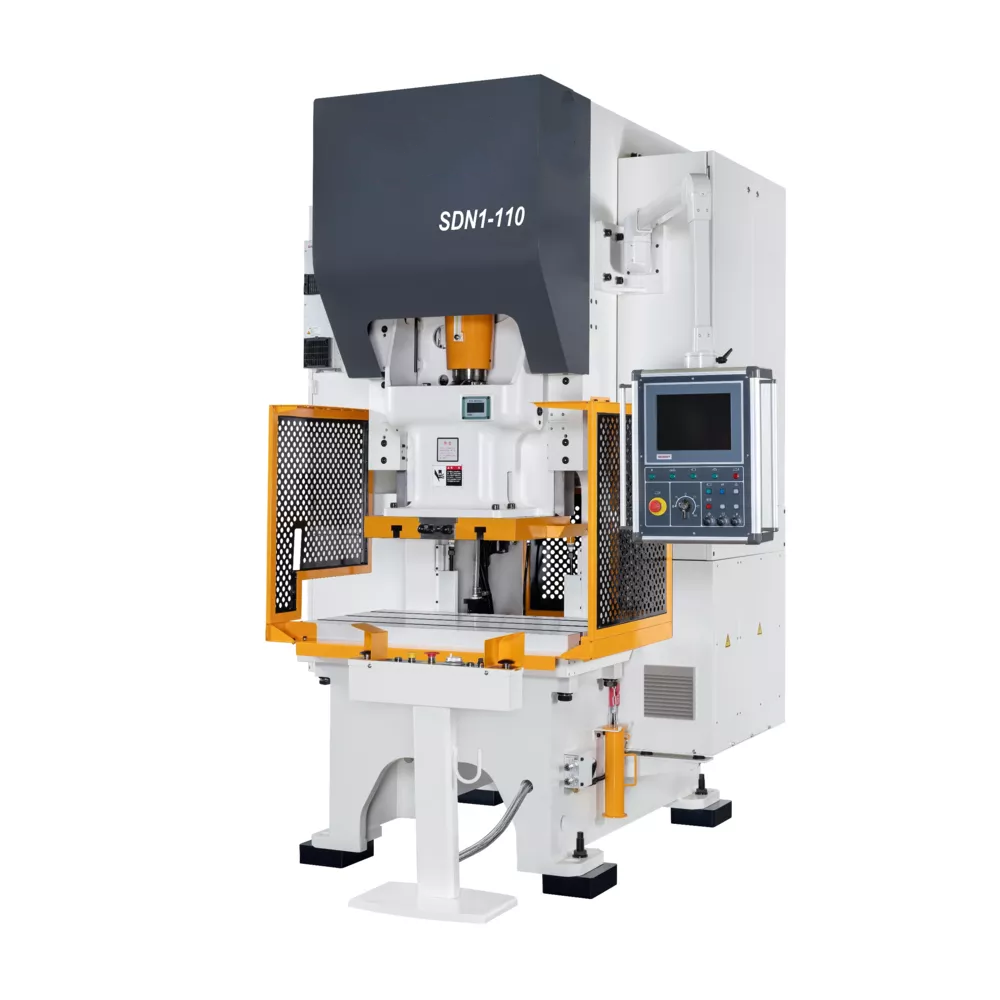
Specification Comparison Table
To help you visualize the differences, the following table compares the typical specifications and performance metrics of C Frame vs. H Frame punching machines.
| Feature | C Frame (Gap Frame) | H Frame (Straight Side) |
|---|---|---|
| Frame Rigidity | Moderate (Subject to deflection) | High (Minimal deflection) |
| Material Access | 3-Sided (Front and Sides) | 2-Sided (Front and Back) |
| Tool Life | Standard | Extended (due to alignment) |
| Tonnage Range | Typically 5 to 300 Tons | Typically 100 to 2500+ Tons |
| Precision | Good for standard tolerances | Excellent for tight tolerances |
| Footprint | Compact | Large and Heavy |
| Initial Cost | Lower | Higher |
| Best For | Job shops, large sheets, versatility | High volume, progressive dies, heavy duty |
Best-fit Applications for Each Structure
When to Choose a C Frame Machine
C Frame punching machines are the workhorses of general metal fabrication. They are best suited for applications where flexibility is more important than extreme precision. If your shop handles a wide variety of parts, including large panels for cabinets, ventilation ducting, or simple brackets, the C Frame is likely the right choice. It is also the preferred structure for manual operations where an operator needs to hold and position the workpiece by hand.
Specific industries that favor C Frame machines include:
- HVAC Manufacturing: For punching holes in large sheet metal ducts.
- Electrical Enclosures: Where large sheets need to be notched and punched.
- Small Job Shops: Where one machine must perform a variety of tasks.
- Prototyping: Where quick setup and accessibility are key.
When to Choose an H Frame Machine
H Frame machines are designed for the rigors of industrial mass production. If your process involves progressive dies where a single strip of metal undergoes multiple operations (punching, forming, drawing) in one press, the H Frame is mandatory. The rigidity ensures that the complex die sets remain aligned over millions of cycles. It is also the correct choice for heavy-plate punching and high-speed stamping where the vibration and force would quickly degrade a C Frame machine.
Specific industries that favor H Frame machines include:
- Automotive Industry: For high-volume stamping of structural components.
- Appliance Manufacturing: For consistent, high-speed production of panels.
- Aerospace: Where material thickness and precision requirements are high.
- Heavy Machinery: For punching thick steel plates used in construction equipment.
Cost and Maintenance Comparison
Initial Investment and Operating Costs
The initial purchase price of a C Frame machine is generally 20% to 40% lower than an H Frame machine of equivalent tonnage. This makes it an attractive option for startups or businesses looking to expand their capacity without a massive capital outlay. However, it is important to consider the total cost of ownership. Because C Frame machines can cause faster tool wear due to deflection, you may spend more on sharpening and replacing dies over the life of the machine.
H Frame machines require a higher upfront investment, not just for the machine itself, but also for the installation. They often require specialized reinforced concrete foundations to handle the weight and vibration. However, for high-volume users, the savings in tool maintenance and the reduction in scrap parts often pay for the price difference within a few years of operation.
Maintenance Requirements
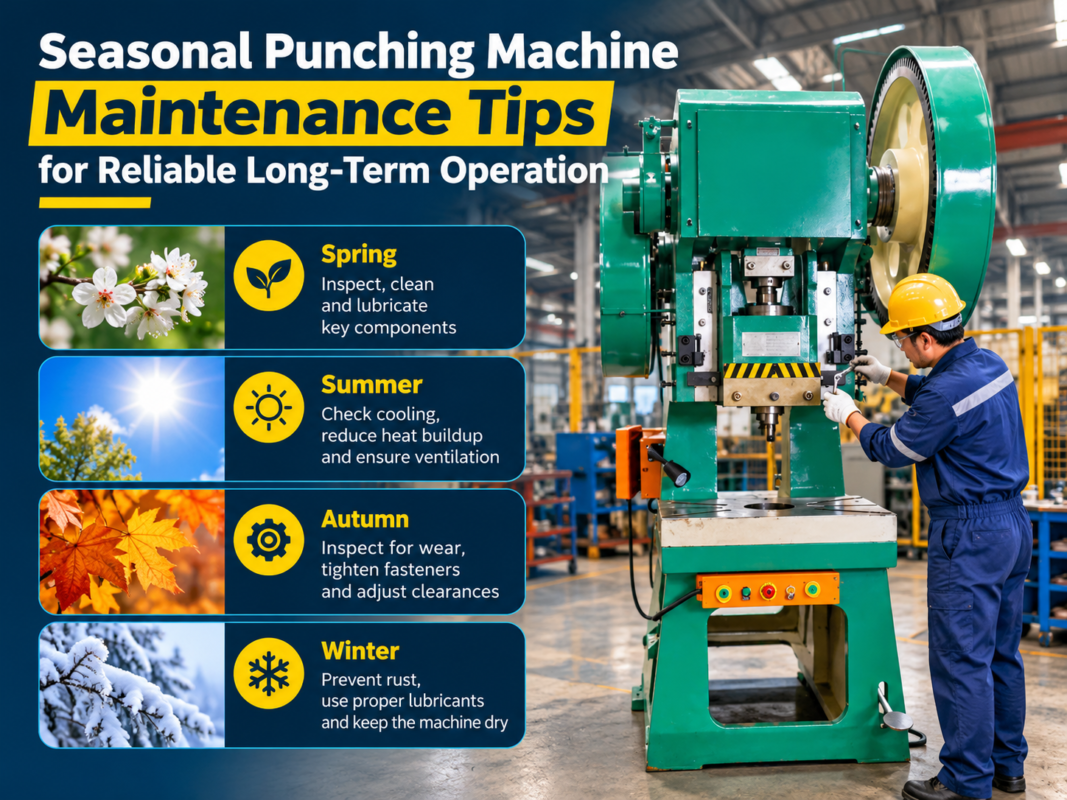
Maintenance for a C Frame machine focuses heavily on monitoring the frame for signs of excessive yawning and ensuring the gibs are adjusted to compensate for any wear. Because the frame is open, it is easier to access the internal components for lubrication and repair. However, the bearings and slides may experience uneven loads if the machine is frequently used at its maximum capacity.
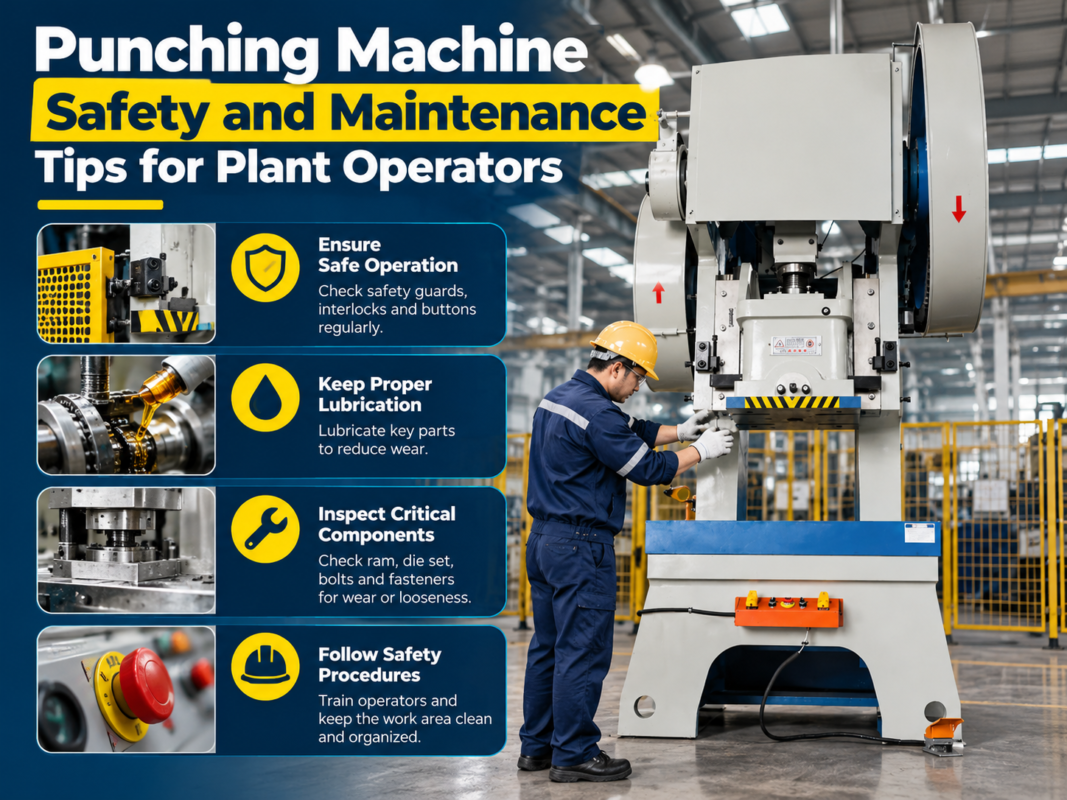
H Frame maintenance is more complex due to the enclosed nature of the machine. Lubrication systems are usually automated and must be monitored closely. The primary maintenance task for an H Frame is ensuring the tie rods remain properly tensioned and the massive slide guides are perfectly aligned. While they require more specialized knowledge to maintain, H Frame machines are built for 24/7 operation and generally have a longer overall service life in demanding environments.
Recommendation: How to Select the Right Structure
Selecting the right structure comes down to a few key questions. Use this checklist to guide your decision-making process:
- What is your maximum material size? If you need to process sheets wider than the distance between the columns of an H Frame, a C Frame is your only practical choice.
- What are your precision requirements? If you are working with very tight tolerances or thin materials where punch-to-die clearance is critical, the H Frame is superior.
- What is your production volume? For high-speed, continuous production, the H Frame’s rigidity will save you money on tooling in the long run. For intermittent or low-volume work, a C Frame is more economical.
- What is your budget? If capital is limited and your applications are standard, a high-quality HARSLE C Frame machine offers excellent value.
- Do you use progressive dies? If yes, an H Frame is strongly recommended to handle off-center loads and maintain die alignment.
At HARSLE, we recommend that buyers look not just at their current needs, but at their five-year growth plan. If you anticipate moving into higher-volume automotive or electronics work, investing in an H Frame now may prevent the need for a costly upgrade later. Conversely, if your business thrives on the flexibility of custom fabrication, the C Frame remains the most versatile tool in your arsenal.
Frequently Asked Questions (FAQ)
1. Does a C Frame machine always have more deflection than an H Frame?
Generally, yes. By physical design, an open-front C Frame will always have more angular deflection than a closed-loop H Frame. However, high-end C Frame machines are built with significantly more steel in the frame to keep this deflection to a level that is negligible for most standard applications.
2. Can I use an H Frame machine for manual feeding?
Yes, you can, but it is less convenient. The front pillars can obstruct the operator’s view and movement compared to a C Frame. H Frame machines are most efficient when paired with automated coil feeders or robotic loading systems.
3. Which machine is better for thick plate punching?
For very thick plates (e.g., over 12mm), an H Frame is usually better. The high forces required to shear thick metal can cause significant stress on a C Frame, whereas an H Frame absorbs these forces vertically, protecting the machine and the tools.
4. Is tool life significantly different between the two?
In high-volume applications, yes. Studies have shown that tools used in H Frame presses can last up to 2-3 times longer between sharpenings compared to those used in C Frame presses, simply because the alignment is more consistent.
5. What is the “throat depth” in a C Frame machine?
The throat depth is the distance from the center of the punch to the back of the frame opening. It determines how far into a sheet of metal you can punch a hole. This is a specification unique to C Frame machines.
6. Are H Frame machines harder to install?
Yes. Due to their weight and the way they distribute force, they often require a deep, reinforced concrete pit or foundation. C Frame machines can often be bolted directly to a standard industrial concrete floor.