
Comprehensive Guide: How to Choose a Press Brake for Stainless Steel, Mild Steel, and Aluminum


Introduction to Material-Specific Press Brake Selection
Selecting the right press brake is one of the most critical decisions for any metal fabrication shop. The choice is not merely about the machine’s physical size; it is about understanding the intricate relationship between the machine’s capabilities and the physical properties of the materials you intend to process. Whether you are working with the rugged reliability of mild steel, the high-strength demands of stainless steel, or the delicate, crack-prone nature of aluminum, each material imposes unique requirements on the press brake’s tonnage, precision, and control systems.
At HARSLE, we recognize that a ‘one-size-fits-all’ approach often leads to inefficiencies or machine damage. To choose a press brake for stainless steel, mild steel, and aluminum effectively, one must evaluate the yield strength, springback characteristics, and surface sensitivity of each metal. This guide provides a deep dive into the technical specifications and configuration choices necessary to optimize your production line for these three primary materials.
Price Range Overview: Investing in Quality
The price of a press brake varies significantly based on its technology level, tonnage, and automation features. For small to medium enterprises, understanding the market tiers is essential for budgeting. Entry-level hydraulic press brakes, often featuring simple NC (Numerical Control) systems like the E21, typically range from $12,000 to $25,000. these machines are suitable for simple mild steel bending where high precision and complex multi-step programs are not required.
Mid-range CNC press brakes, equipped with sophisticated controllers like the Delem DA-53T or Cybelec CybTouch series, generally fall between $30,000 and $65,000. These machines offer synchronized hydraulic systems (Y1 and Y2 axes) and automatic crowning, which are vital when you need to choose a press brake for stainless steel or long workpieces. The precision offered at this price point ensures that the higher springback of stainless steel is managed effectively through angle sensors and advanced software calculations.
High-end, high-precision CNC machines or electric press brakes can exceed $100,000. These units are designed for high-speed production, extreme accuracy, and energy efficiency. They often feature 6-axis to 8-axis backgauges, robotic integration, and specialized tooling systems. While the initial investment is higher, the reduction in setup time and scrap material—especially when working with expensive alloys—provides a much faster return on investment in high-volume environments.
Main Cost Drivers in Press Brake Selection
The primary driver of cost in any press brake is its tonnage capacity. Tonnage is the amount of pressure the machine can apply to the workpiece. Because stainless steel has a much higher yield strength than mild steel, it requires significantly more force to bend. If your primary material is 6mm stainless steel, you cannot simply buy a machine rated for 6mm mild steel; you will likely need a machine with 50% more tonnage to avoid overloading the hydraulic system.
The length of the bending beam is the second major cost driver. A 4-meter machine is substantially more expensive than a 2.5-meter machine, not just because of the steel used in the frame, but because of the increased complexity in maintaining parallelism over a longer distance. Longer machines require more sophisticated crowning systems to prevent ‘canoeing’—where the center of the bend is not as deep as the ends.
CNC Controller complexity also dictates price. A basic controller might only manage the depth (Y-axis) and the backgauge position (X-axis). However, to choose a press brake for aluminum or complex stainless parts, you may need R-axis (height adjustment), Z1/Z2 axes (lateral movement of fingers), and even Delta-X axes for tapered bends. Each additional axis increases the machine’s versatility but adds to the final invoice.
Configuration Impact: Tailoring the Machine to the Metal
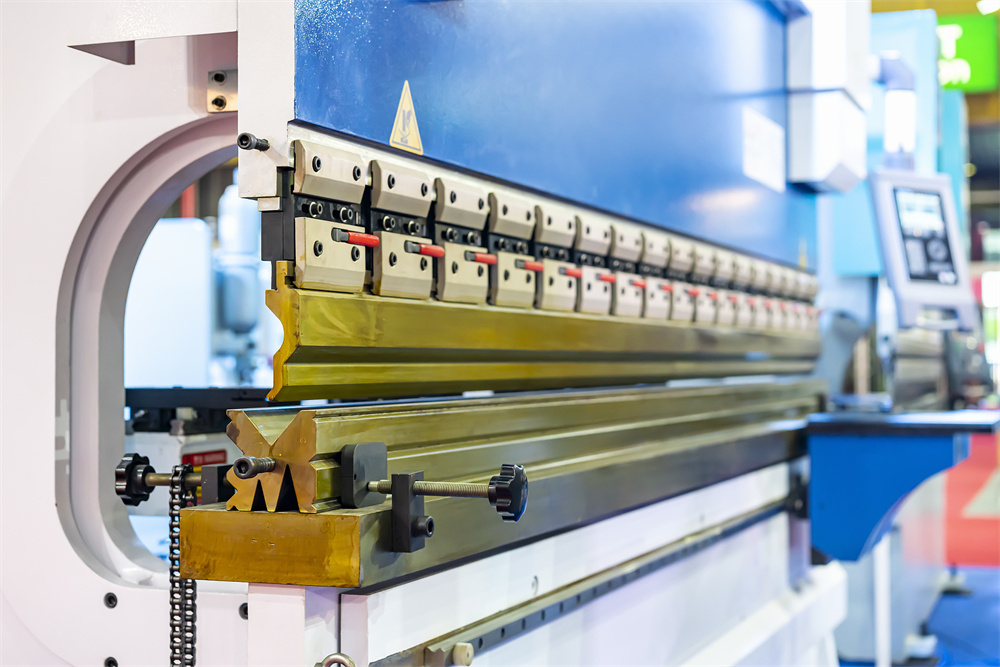
When configuring a press brake, the choice of crowning system is paramount. Mechanical crowning, integrated into the lower table, uses a series of wedges to compensate for the deflection of the machine frame under load. This is often preferred for high-tonnage applications involving stainless steel because it provides a more rigid and consistent compensation across the entire bed length compared to some hydraulic crowning systems.
The backgauge system is another area where configuration impacts performance. For aluminum fabrication, where parts are often smaller and require multiple rapid bends, a high-speed backgauge with AC servo motors is essential. Aluminum’s light weight allows for fast positioning, and a responsive backgauge can significantly decrease cycle times. Conversely, for heavy mild steel plates, a heavy-duty backgauge with reinforced fingers is necessary to withstand the impact of large sheets being loaded.
Tooling compatibility is often overlooked. Stainless steel is prone to marking, so the configuration should include hardened, polished tooling or the use of protective films. Aluminum, being softer, can ‘gall’ or stick to the tools, requiring specific die radii to prevent cracking. A press brake configured with a quick-change clamping system (like the Amada-Promecam style) allows operators to switch between material-specific tools in seconds, maximizing machine uptime.
Material Specifics: Stainless Steel, Mild Steel, and Aluminum
Bending Mild Steel
Mild steel is the industry standard for bending calculations. Most tonnage charts are based on mild steel with a tensile strength of approximately 450 MPa. When you choose a press brake for mild steel, the standard rule of thumb is that the V-opening of the die should be 8 times the material thickness (V=8t). This provides a balance between the force required and the quality of the bend radius. Mild steel has predictable springback, usually around 1 to 2 degrees, which is easily compensated for by even basic NC controllers.
Bending Stainless Steel
Stainless steel (such as Grade 304 or 316) is significantly tougher. It typically requires 50% to 60% more tonnage than mild steel of the same thickness. Furthermore, stainless steel exhibits much higher springback—often between 3 to 5 degrees. This requires a press brake with a high-precision CNC system that can ‘over-bend’ accurately. Because stainless is often used in aesthetic applications (like kitchen equipment or architectural panels), using a larger V-opening (V=10t or V=12t) can help reduce marking, though it increases the minimum flange length.
Bending Aluminum
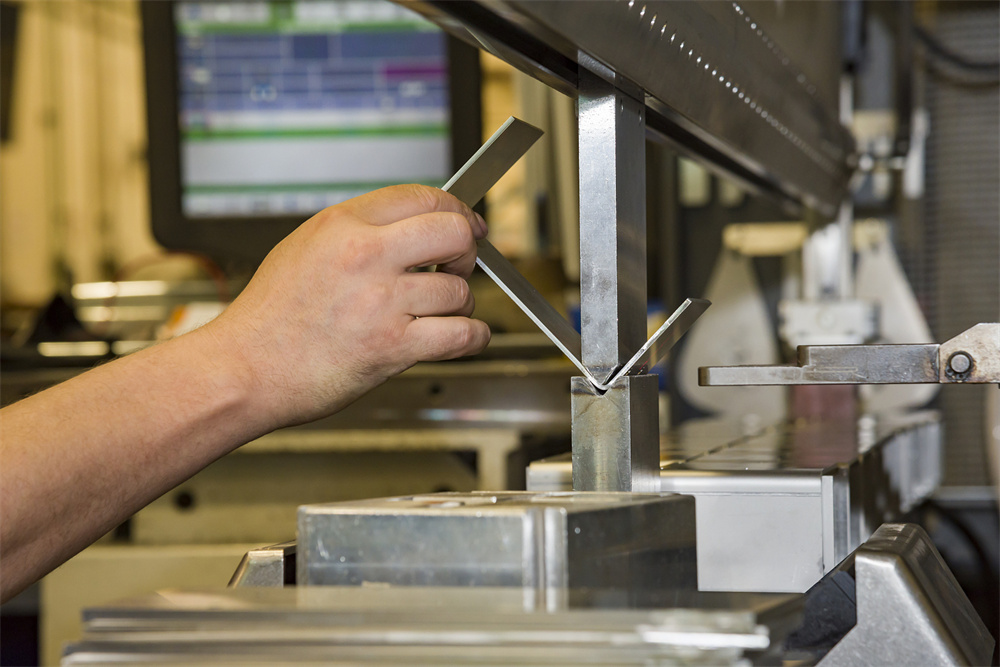
Aluminum presents a different set of challenges. While it requires less tonnage than mild steel, it is much more susceptible to cracking at the bend line. To choose a press brake for aluminum, you must ensure the machine can accommodate larger radius punches. The K-factor (the ratio of the neutral axis to the material thickness) varies significantly between aluminum grades (e.g., 3003 vs. 6061). 6061-T6 aluminum, for instance, is very brittle and requires a bend radius at least 2 to 3 times the material thickness to prevent structural failure.
Hidden Costs of Press Brake Ownership
The purchase price is only the beginning. One of the most significant hidden costs is tooling. High-quality, precision-ground tooling is expensive but necessary for stainless steel and aluminum to prevent surface damage and ensure accuracy. Cheap tooling wears down quickly, especially when subjected to the high pressures required for stainless steel, leading to inconsistent angles and increased scrap rates.
Energy consumption is another factor. Traditional hydraulic press brakes run the pump motor constantly, even when the machine is idling. This leads to high electricity bills and heat generation, which can degrade hydraulic oil over time. Modern ‘Hybrid’ or ‘Servo-Hydraulic’ systems, like those offered by HARSLE, only run the motor during the bending cycle, potentially saving up to 60% in energy costs. While these systems have a higher upfront cost, the long-term savings are substantial.
Maintenance and training should also be budgeted. A CNC press brake is a sophisticated piece of equipment. Regular calibration of the Y1/Y2 axes and the backgauge is required to maintain tolerances. Furthermore, training your operators to use the full capabilities of a Delem or ESA controller is vital. An untrained operator might not know how to properly use the springback compensation features, leading to wasted material and time.
ROI Calculation: When Does a New Press Brake Pay Off?
Calculating the Return on Investment (ROI) involves looking at productivity gains and waste reduction. If a new CNC press brake reduces setup time from 20 minutes to 2 minutes per job, and you run 10 jobs a day, you save over 150 hours of labor per year. At a shop rate of $75/hour, that is $11,250 in labor savings alone.
Furthermore, consider the cost of scrap. When working with stainless steel, a single ruined sheet can cost hundreds of dollars. A machine with high-precision angle sensors and automatic crowning can virtually eliminate ‘test bends,’ ensuring the first part is a good part. If you reduce your scrap rate by even 5%, the machine can often pay for itself within 18 to 24 months. For shops moving from manual bending to CNC, the ROI is often even faster due to the ability to take on more complex, higher-margin work.
Buying Advice: A Checklist for HARSLE Customers
When you are ready to choose a press brake for stainless steel, mild steel, and aluminum, follow this checklist to ensure you get the right machine for your needs:
- Assess Your Maximums: Identify the thickest and longest piece of stainless steel you will bend. Use this as your baseline for tonnage and length, adding a 20% safety margin.
- Select the Right Controller: If you do complex multi-bend parts, invest in a 2D or 3D graphical controller. It allows operators to visualize the bend sequence and avoid collisions.
- Prioritize Crowning: For any machine over 2.5 meters, automatic crowning is a must. It ensures consistency that manual adjustment simply cannot match.
- Evaluate the Backgauge: Ensure the backgauge has enough range (X-axis) and height adjustment (R-axis) for your specific part geometries.
- Check Tooling Compatibility: Ensure the machine uses a standard clamping system so you can easily source specialized tools for aluminum or non-marking dies for stainless.
- Consider the Manufacturer’s Support: Choose a partner like HARSLE that provides comprehensive technical support, clear manuals, and readily available spare parts.
Frequently Asked Questions (FAQ)
Can I bend aluminum on a press brake designed for steel?
Yes, you can bend aluminum on a standard press brake, but you must change the tooling. Aluminum requires a larger punch radius to prevent cracking and often benefits from wider V-dies to reduce surface marking. You must also adjust the CNC settings for aluminum’s specific K-factor and springback.
Why does stainless steel require more tonnage?
Stainless steel has a higher carbon and chromium content, which increases its yield strength and work-hardening properties. It resists deformation more than mild steel, requiring approximately 50-60% more pressure to achieve the same bend angle.
What is the benefit of a servo-electric press brake?
Servo-electric press brakes offer extreme precision, faster cycle times, and lower energy consumption. They are excellent for thin-gauge aluminum and stainless steel parts where accuracy is paramount. However, they are generally limited in maximum tonnage compared to hydraulic models.
How do I prevent marking on polished stainless steel?
To prevent marking, use ‘no-mark’ die inserts, urethane pads, or specialized cloth over the die. Additionally, ensure your dies are polished and free of debris. Using a larger V-opening can also reduce the pressure at the contact points, minimizing the risk of indentation.
Is a 4-axis backgauge enough?
For most general fabrication, a 4-axis backgauge (X, R, Z1, Z2) is sufficient. It allows for different flange lengths, varying heights, and different part widths. If you are doing very complex, tapered, or asymmetrical bends, you might consider a 6-axis system.












