
Common Hydraulic Press Applications In Heavy Equipment Manufacturing: A Comprehensive Guide


Introduction to Hydraulic Press Utility in Heavy Industry
In the demanding world of heavy equipment manufacturing, the ability to shape, form, and assemble massive metal components with precision is paramount. Hydraulic presses serve as the backbone of this industry, providing the immense force required to manipulate high-strength steel, alloys, and thick plate materials. As global infrastructure projects grow in complexity, the reliance on robust metal fabrication equipment has never been higher.
HARSLE has long been at the forefront of providing advanced hydraulic solutions tailored for the rigorous demands of the construction, mining, and agricultural machinery sectors. Understanding the common hydraulic press applications in heavy equipment manufacturing is essential for engineers and procurement managers looking to optimize their production lines. These machines are not merely tools; they are the engines of industrial progress, enabling the creation of everything from excavator arms to heavy-duty chassis components.
The versatility of a hydraulic press lies in its ability to deliver constant pressure throughout the entire stroke, a feature that mechanical presses often struggle to replicate. This consistency is vital when dealing with the deep drawing or heavy-duty stamping required for large-scale equipment parts. By leveraging fluid power, manufacturers can achieve superior structural integrity in finished components, ensuring that the heavy machinery produced can withstand the harshest operating environments.
This article serves as a comprehensive guide to the role of hydraulic presses in heavy equipment manufacturing. We will explore the technical nuances, critical selection criteria, and the specific processes that define modern fabrication. Whether you are upgrading your facility or researching new manufacturing capabilities, this guide provides the technical depth required to make informed decisions regarding your industrial machinery investments.
Key Considerations for Heavy Equipment Fabrication
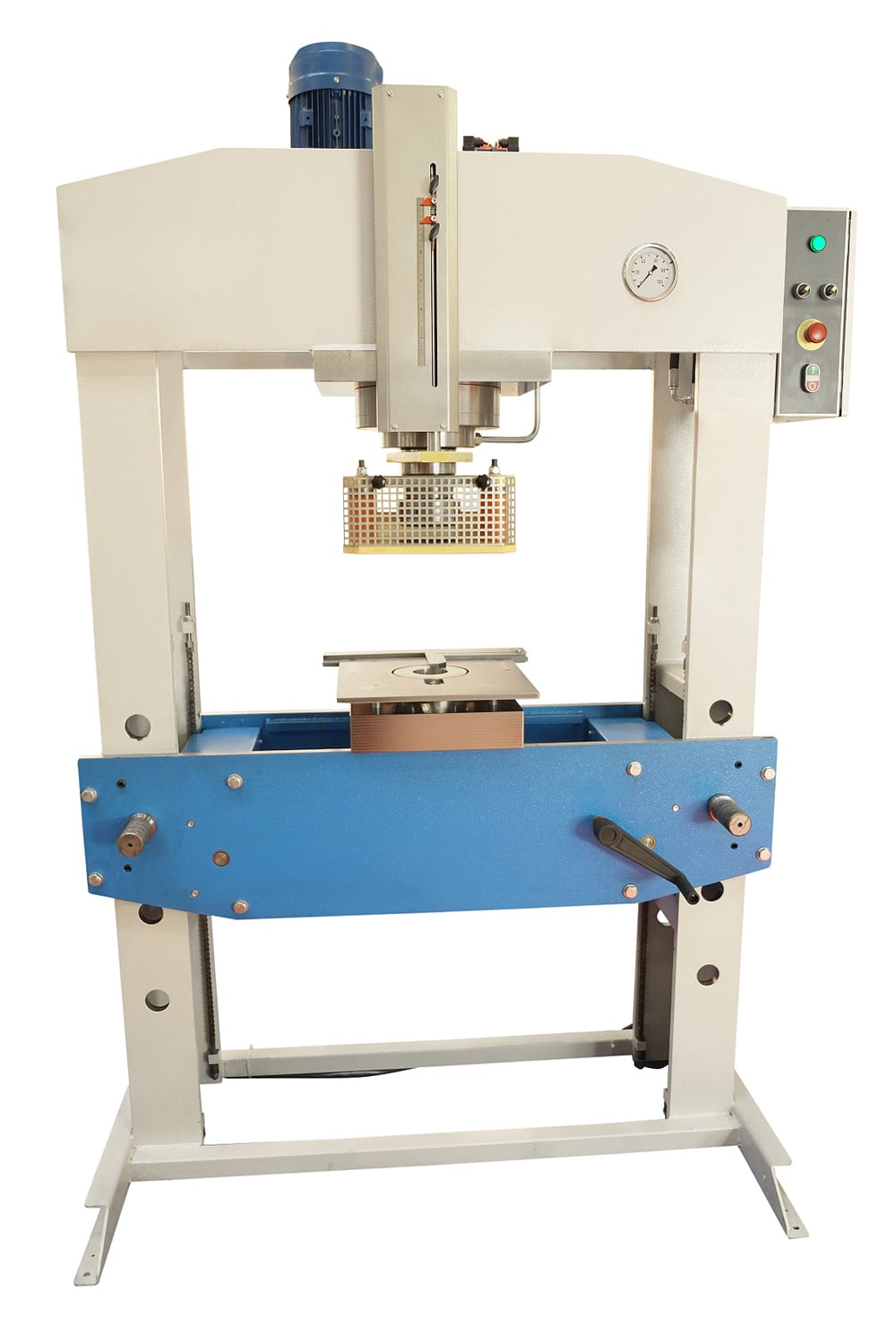
When integrating a hydraulic press into a heavy equipment manufacturing workflow, the first consideration is the tonnage capacity. Heavy equipment parts, such as bulldozer blades or crane structural beams, require significant force to deform. Selecting a press that lacks the necessary tonnage can lead to incomplete forming, material spring-back, or premature machine failure. HARSLE recommends conducting a thorough analysis of the material thickness and yield strength before finalizing your machine specifications.
Another critical factor is the bed size and daylight opening. Heavy equipment components are often oversized and require large work envelopes. The press must accommodate the physical dimensions of the workpiece while providing enough vertical clearance for tooling, dies, and the movement of the ram. A press with an insufficient daylight opening will severely limit the types of parts you can produce, effectively bottlenecking your production capacity.
Precision and control systems are equally important. Modern heavy equipment manufacturing demands tight tolerances, even on massive components. CNC-controlled hydraulic presses allow for precise pressure regulation, stroke control, and speed adjustment. These features ensure that the material is formed consistently, reducing scrap rates and minimizing the need for secondary finishing processes. Advanced control interfaces also allow for the storage of job recipes, which is invaluable for high-mix, low-volume production environments.
Finally, safety and maintenance must be prioritized. Operating high-tonnage machinery involves significant risks, and modern presses must be equipped with light curtains, dual-hand controls, and emergency stop systems that comply with international safety standards. Furthermore, the maintenance schedule for these machines is rigorous. Hydraulic fluid management, seal integrity, and structural inspections are non-negotiable aspects of long-term machine reliability. Choosing a manufacturer that provides robust technical support and readily available spare parts is a strategic decision that impacts the total cost of ownership.
Technical Details of Hydraulic Press Operations
The core of a hydraulic press is its hydraulic circuit, which converts fluid pressure into mechanical force. In heavy equipment manufacturing, this system is typically designed for high-pressure, high-volume output. The pump system, often utilizing variable displacement axial piston pumps, provides the necessary flow to move the ram efficiently. Understanding the relationship between pressure, flow rate, and cycle time is crucial for optimizing throughput in a factory setting.
Deep drawing is one of the most common hydraulic press applications in heavy equipment manufacturing. This process involves stretching metal sheets into complex, three-dimensional shapes, such as fuel tanks or protective housings for engines. Unlike mechanical presses, hydraulic presses allow for adjustable blank holder pressure, which is critical for preventing tearing or wrinkling in thick, high-strength steel plates. This level of control is what makes hydraulic technology superior for complex forming tasks.
Another technical aspect is the use of cushions and ejectors. Many heavy-duty presses are equipped with die cushions that provide upward force during the forming process. This is essential for maintaining material tension and ensuring that the final part geometry matches the die design. Ejectors are then used to safely remove the finished part from the die, which is a significant safety and efficiency consideration when dealing with parts weighing hundreds of kilograms.
Thermal management is also a technical detail that is often overlooked. The high-force operations required for heavy equipment manufacturing generate substantial heat within the hydraulic fluid. High-performance presses must include advanced cooling systems, such as oil-to-air or oil-to-water heat exchangers, to maintain optimal operating temperatures. If the oil temperature rises too high, the viscosity drops, leading to internal leakage, reduced force output, and accelerated wear on hydraulic components.
Selection Advice for Industrial Machinery
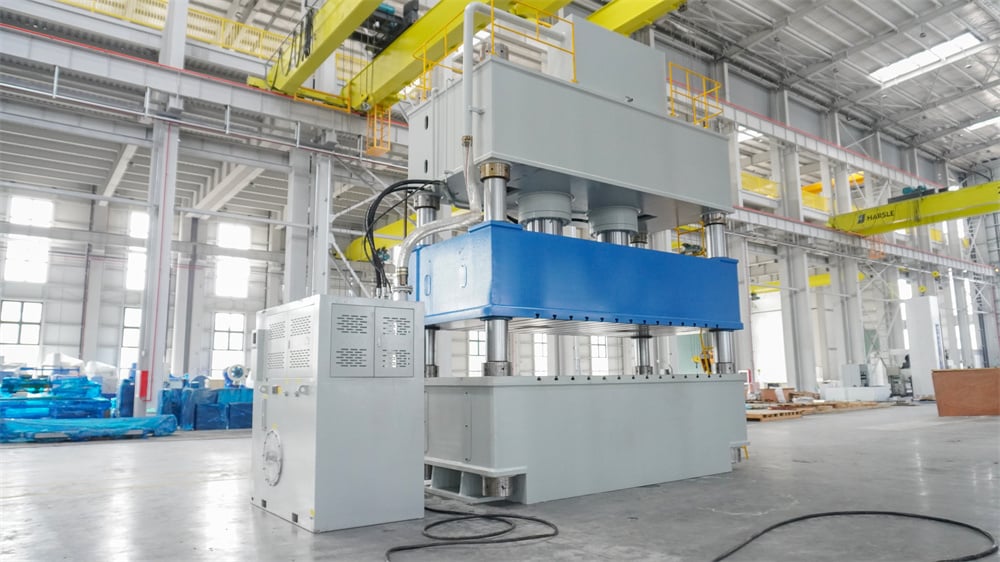
Selecting the right hydraulic press requires a balance between current production needs and future scalability. Start by defining your maximum and minimum part requirements. If you primarily produce small brackets but occasionally need to form large chassis plates, you might consider a modular press design or a multi-station setup. However, for most heavy equipment manufacturers, a dedicated, high-tonnage press is the most reliable path to consistent quality.
Consider the frame construction. For heavy-duty applications, a four-column or H-frame design is typically preferred due to its superior rigidity and resistance to deflection under load. Deflection is the enemy of precision; if the press frame flexes during the stroke, the resulting part will not meet tolerance specifications. HARSLE’s heavy-duty series are engineered with finite element analysis (FEA) to ensure maximum structural stiffness, even under maximum rated tonnage.
Evaluate the automation capabilities. In today’s competitive market, manual loading and unloading are becoming less viable for high-volume production. Look for presses that offer integration with robotic arms, conveyor systems, and automated die-changing mechanisms. While these features increase the initial investment, they significantly reduce labor costs and improve operator safety, leading to a faster return on investment (ROI).
Lastly, do not underestimate the importance of after-sales service and training. A hydraulic press is a complex piece of equipment that requires skilled operators and maintenance technicians. Choose a partner that offers comprehensive training programs, remote diagnostic capabilities, and a global service network. Having a local technician who understands your specific machine configuration can mean the difference between a few hours of downtime and several days of lost production.
Comparison Table: Hydraulic Press Types for Heavy Industry
| Press Type | Best For | Key Advantage |
|---|---|---|
| Four-Column Press | Deep drawing, large parts | High rigidity, uniform pressure |
| C-Frame Press | Small to medium parts | Easy access, compact footprint |
| Straight-Side Press | High-precision stamping | Minimal deflection, high speed |
| Forging Press | Heavy-duty metal shaping | Extreme tonnage, durability |
Frequently Asked Questions (FAQ)
What is the primary advantage of a hydraulic press over a mechanical press?
The primary advantage is the ability to exert full tonnage throughout the entire stroke length. This makes hydraulic presses ideal for deep drawing and forming operations where constant pressure is required to prevent material failure.
How often should hydraulic fluid be changed in a heavy-duty press?
Fluid change intervals depend on usage intensity and environmental conditions. Generally, oil analysis should be performed every 1,000 to 2,000 operating hours to check for contamination, oxidation, and viscosity changes.
Can a hydraulic press be used for both bending and punching?
Yes, with the correct tooling and control settings, a hydraulic press is highly versatile and can perform bending, punching, blanking, and deep drawing, making it a multi-purpose asset in a fabrication shop.
What safety features are mandatory for industrial hydraulic presses?
Mandatory features include light curtains, safety interlocks on access doors, emergency stop buttons, and pressure relief valves to prevent system over-pressurization.
How do I determine the required tonnage for my application?
Tonnage is calculated based on the material’s shear strength, the length of the cut or bend, and the thickness of the material. It is recommended to consult with HARSLE engineers to perform a precise force calculation for your specific project.
Conclusion
The role of hydraulic presses in heavy equipment manufacturing is foundational. From the initial forming of structural components to the final assembly of heavy-duty parts, these machines provide the force and precision necessary to build the infrastructure of the modern world. By understanding the common hydraulic press applications in heavy equipment manufacturing, companies can better align their machinery investments with their production goals.
Success in this industry requires more than just buying a machine; it requires a partnership with a manufacturer that understands the technical challenges of heavy-duty fabrication. HARSLE remains committed to delivering high-performance, reliable, and safe hydraulic solutions that empower manufacturers to push the boundaries of what is possible. Whether you are looking to increase your tonnage capacity, improve your part precision, or automate your production line, the right hydraulic press is the key to unlocking new levels of efficiency and quality.
As you move forward with your equipment procurement, remember that the best investment is one that balances immediate operational needs with long-term durability and support. By focusing on structural rigidity, advanced control systems, and a robust maintenance strategy, you ensure that your facility remains competitive in an ever-evolving global market. Explore the HARSLE range of hydraulic presses today and discover how we can help you build the future of heavy equipment.












