How to Diagnose Uneven Bending on a Press Brake Before It Affects Production


Introduction to Precision Bending Challenges
In the world of metal fabrication, precision is the cornerstone of quality. When a press brake begins to produce uneven bends—where the angle at one end of the workpiece differs from the other, or the center is inconsistent with the edges—it signals a looming production crisis. To Diagnose Uneven Bending On A Press Brake Before It Affects Production is not just a maintenance task; it is a critical operational strategy that saves thousands of dollars in wasted material and labor hours. HARSLE, a leader in industrial machinery, understands that even the most robust machines require a keen eye for diagnostic indicators to maintain peak performance.
Uneven bending, often referred to as the ‘canoe effect’ or angular deviation, can stem from a variety of sources including hydraulic imbalances, mechanical wear, or even environmental factors. For high-volume shops, a deviation of even half a degree can lead to assembly failures downstream. This guide provides a deep dive into the technical nuances of identifying these issues early, ensuring your press brake remains a reliable asset in your production line.
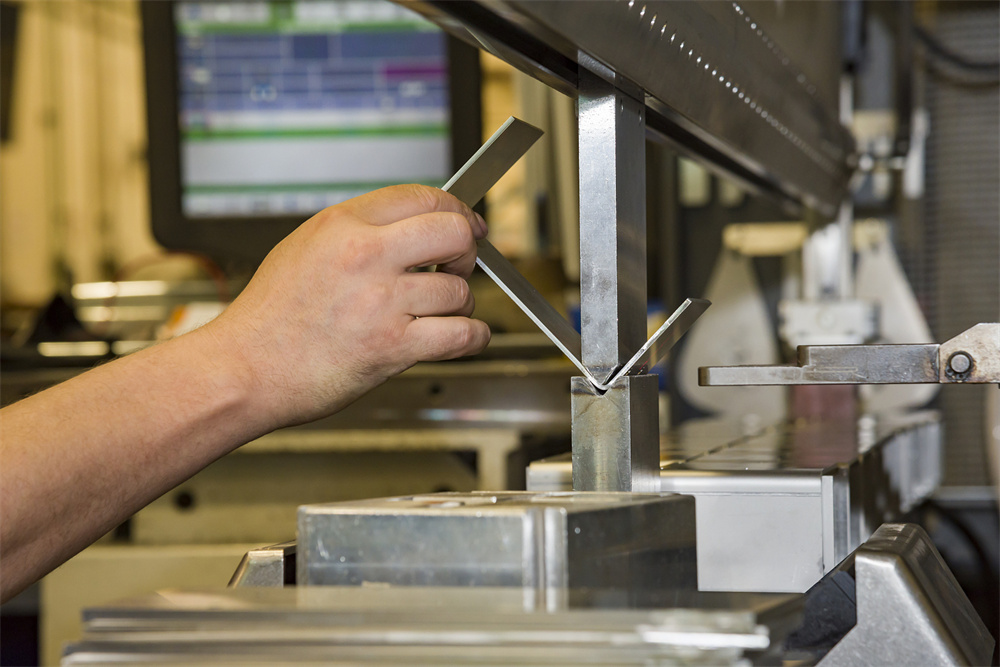
Understanding the physics of the press brake is essential. When the ram descends, it exerts tons of pressure onto the workpiece. If the machine’s frame, hydraulics, or tooling are not perfectly synchronized, the distribution of this force becomes uneven. By the time a part is visibly warped, the underlying issue has likely been present for several cycles. Therefore, a systematic approach to diagnosis is required to catch these subtle shifts before they escalate into significant defects.
Key Considerations for Accurate Bending
Before diving into the mechanical diagnostics, it is vital to consider the external variables that influence bending accuracy. The first consideration is material consistency. Not all sheets of metal are created equal. Variations in thickness, tensile strength, and grain direction across a single batch of material can mimic machine errors. If you notice uneven bending, always verify the material specs first. A sheet that is 0.1mm thicker on one side will naturally resist the punch differently, leading to an uneven angle.
Another critical factor is the tooling condition. Worn-out dies or punches are frequent culprits of uneven bends. Over time, the ‘V’ opening of the die can wear unevenly, especially if the operator consistently bends smaller parts in the center of the machine. This localized wear creates a ‘sweet spot’ that differs from the rest of the tool length. Regularly rotating tools and inspecting them for micro-pitting or deformation is a fundamental part of the diagnostic process.
The environmental conditions of the workshop also play a role. Hydraulic oil viscosity changes with temperature. If a press brake is started in a cold morning and immediately put to high-precision work, the hydraulic response might be sluggish or uneven until the oil reaches its optimal operating temperature. Modern CNC machines often have compensation for this, but older models require manual oversight. Ensuring a stable environment helps in isolating whether the problem is mechanical or environmental.
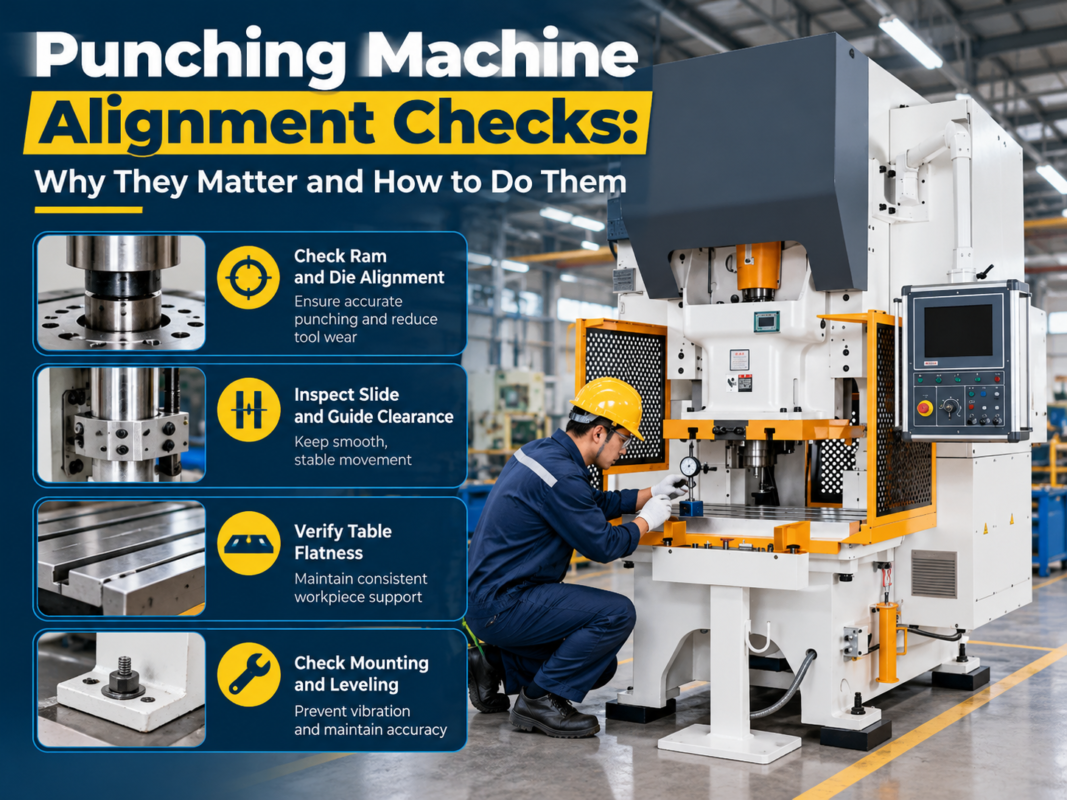
Finally, consider the machine’s foundation. A press brake exerts immense force that must be absorbed by the floor. If the foundation is not perfectly level or has settled over time, the machine frame can twist slightly. This ‘frame twist’ is a silent killer of precision, as it prevents the ram and the bed from remaining perfectly parallel during the stroke. Checking the level of the machine with precision instruments is a necessary step in any comprehensive diagnostic routine.
Technical Details: How to Diagnose Uneven Bending
1. Analyzing Hydraulic Synchronization (Y1 and Y2 Axes)
Most modern CNC press brakes utilize a dual-cylinder system, referred to as the Y1 and Y2 axes. These cylinders must move in perfect harmony to ensure the ram stays level. To Diagnose Uneven Bending On A Press Brake Before It Affects Production, you must monitor the feedback from the linear encoders. If one cylinder is lagging by even a few microns, the ram will tilt, causing one side of the bend to be sharper than the other.
To test this, perform a ‘dry run’ without material and use a dial indicator to measure the distance between the ram and the bed at both ends. If the readings differ, the issue likely lies in the proportional valves or the encoder feedback loop. Dirt in the hydraulic fluid is a common cause of valve sticking, which leads to these synchronization errors. Regular fluid analysis and filter changes are the best preventative measures for Y1/Y2 issues.
2. Evaluating the Crowning System
When a press brake bends a long piece of metal, the center of the machine naturally tends to deflect upwards (the bed) and downwards (the ram) due to the concentration of force. This results in a ‘canoe’ shape where the ends are bent correctly but the middle is under-bent. To counter this, machines use a crowning system—either hydraulic cylinders in the lower bed or a mechanical wedge system.
If you find that your bends are consistent at the ends but shallow in the middle, your crowning system is likely failing or miscalibrated. For mechanical crowning, check for debris between the wedges. For hydraulic crowning, inspect the pressure transducers and the seals of the crowning cylinders. A quick diagnostic test involves bending a long, narrow strip of material and measuring the angle at five points along its length to map the deflection curve.
3. Inspecting Frame Deflection and ‘C’ Gap
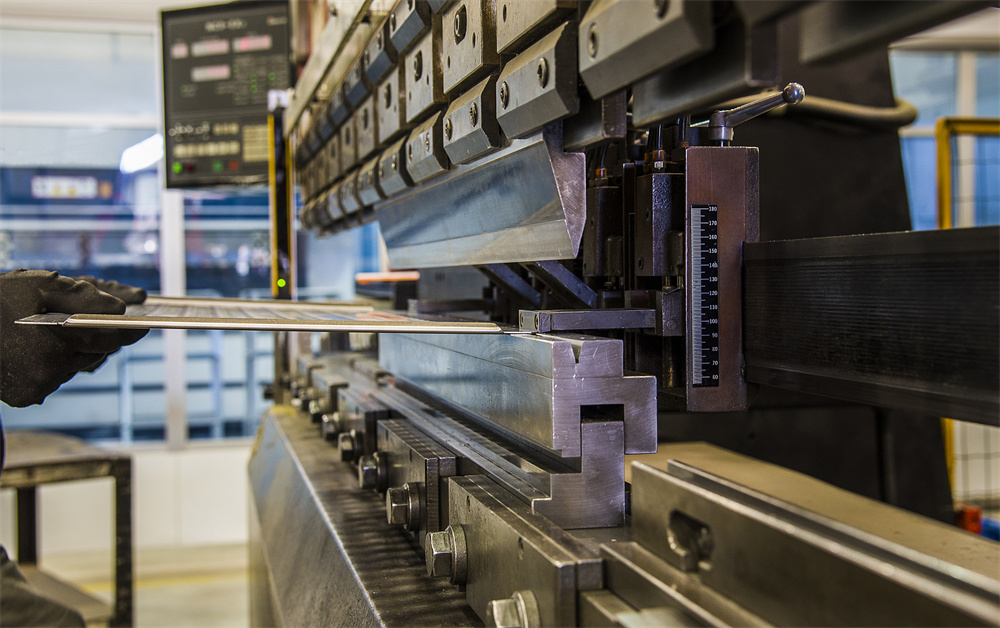
The side frames of a press brake are designed to flex slightly under load. However, if the ‘C’ gap (the throat of the machine) deflects unevenly, it will cause the ram to move out of alignment. This is often caused by loose mounting bolts or structural fatigue in older machines. To diagnose this, you can attach strain gauges to the frame during a high-tonnage bend. If the deflection is asymmetrical, it indicates that the frame is no longer distributing the load evenly, necessitating a structural inspection or recalibration of the CNC compensation software.
4. Backgauge Alignment and Parallelism
Sometimes, the bend angle is correct, but the bend line is not parallel to the edge of the sheet. This is often mistaken for uneven bending. If the backgauge fingers are not perfectly aligned with the center of the V-die, the sheet will be fed at a slight angle. Use a precision square to check the perpendicularity of the backgauge bars and ensure that the R-axis (height) is consistent across all fingers. A misaligned backgauge is one of the easiest issues to fix but also one of the most frequently overlooked during initial diagnosis.
Selection Advice for High-Precision Press Brakes
When the time comes to upgrade or replace equipment to avoid these diagnostic headaches, selecting the right machine is paramount. For shops requiring extreme precision, a Full CNC Synchro Press Brake is the gold standard. These machines, like those offered by HARSLE, feature real-time monitoring of the Y1 and Y2 axes, automatically adjusting for frame deflection and material variations through advanced sensors.
Consider the type of crowning system that best fits your workflow. Mechanical crowning is often preferred for its stability and lack of hydraulic seals that can leak, while hydraulic crowning offers faster, automated adjustments for varying material thicknesses. If your production involves frequent changes in material type, an automated crowning system integrated into the CNC controller is a must-have feature to prevent uneven bending before it starts.
Furthermore, look for machines with high-quality linear encoders. Encoders with a high resolution (down to 0.001mm) provide the CNC controller with the data needed to make micro-adjustments during the bending cycle. This level of technology significantly reduces the need for manual diagnosis, as the machine can often detect and compensate for irregularities in real-time. Finally, ensure the machine has a robust frame design with a deep throat if you plan on bending large, complex parts, as this reduces the risk of asymmetrical frame deflection.
Frequently Asked Questions (FAQ)
Why is my press brake bending more on the left side than the right?
This is typically a synchronization issue between the Y1 and Y2 hydraulic cylinders. It could be caused by a faulty proportional valve, a dirty linear encoder, or air trapped in the hydraulic lines. It can also occur if the tooling is not centered or if the workpiece is not positioned correctly relative to the machine’s center of gravity.
How often should I calibrate my press brake’s crowning system?
For high-precision shops, a quick check should be performed weekly, with a full calibration every six months. If you notice the ‘canoe effect’ appearing in your parts, you should immediately perform a diagnostic test using a full-length test piece to recalibrate the crowning values in your CNC controller.
Can worn tooling cause uneven bending?
Yes, absolutely. If the ‘V’ die is worn more in one area than another, the material will sit deeper in the worn section, resulting in a sharper angle. Always inspect your tools for wear and ensure they are clean and free of scale or debris, which can also affect the bend angle.
Does the temperature of the hydraulic oil affect bending accuracy?
Yes. Hydraulic oil changes viscosity as it heats up. Most modern HARSLE press brakes include oil heaters or cooling systems to maintain a consistent temperature, but if your machine does not, you should allow it to run for 15-20 minutes to reach operating temperature before performing high-precision bends.
What is the best way to check if my backgauge is parallel?
The most effective method is to use a ‘master’ sheet of known dimensions. Perform a bend and measure the distance from the bend line to the edge of the sheet at both ends. If there is a discrepancy, adjust the backgauge fingers or the CNC offset for the X-axis until the measurements are identical.
Conclusion: Proactive Maintenance for Long-Term Success
To Diagnose Uneven Bending On A Press Brake Before It Affects Production requires a combination of technical knowledge, regular maintenance, and the right equipment. By understanding the roles of hydraulic synchronization, crowning systems, and tooling integrity, fabricators can identify the early warning signs of machine drift. Implementing a daily checklist—checking oil levels, cleaning scales, and inspecting tool surfaces—goes a long way in preventing the costly scrap associated with uneven bending.
Investing in high-quality machinery from HARSLE ensures that you have the technological foundation to maintain precision. Our machines are designed with the latest CNC features to minimize human error and provide the diagnostic data needed to keep your production line running smoothly. Remember, the goal is not just to fix a problem when it occurs, but to create a system of monitoring that prevents the problem from ever reaching your customer. Stay vigilant, keep your equipment calibrated, and your press brake will remain the most productive tool in your shop.