How a CNC Press Brake Improved Consistency in Large-Scale Fabrication: Case Study


How a CNC Press Brake Improved Consistency in Large-Scale Fabrication: Case Study
In the competitive landscape of modern metal fabrication, the transition from manual or conventional hydraulic machinery to advanced CNC (Computer Numerical Control) technology is no longer a luxury—it is a necessity. For large-scale fabricators, the challenge of maintaining tight tolerances across thousands of identical parts can be the difference between profitability and operational failure. This article explores the transformative impact of integrating high-performance CNC press brakes into a high-volume production environment.
Through this detailed analysis, we examine how a CNC press brake improved consistency in large-scale fabrication: case study findings reveal that automation, real-time compensation, and advanced software integration are the primary drivers of quality control. By moving away from operator-dependent variables, manufacturers can achieve a level of repeatability that was previously unattainable with traditional methods.
Key Considerations for Large-Scale Fabrication
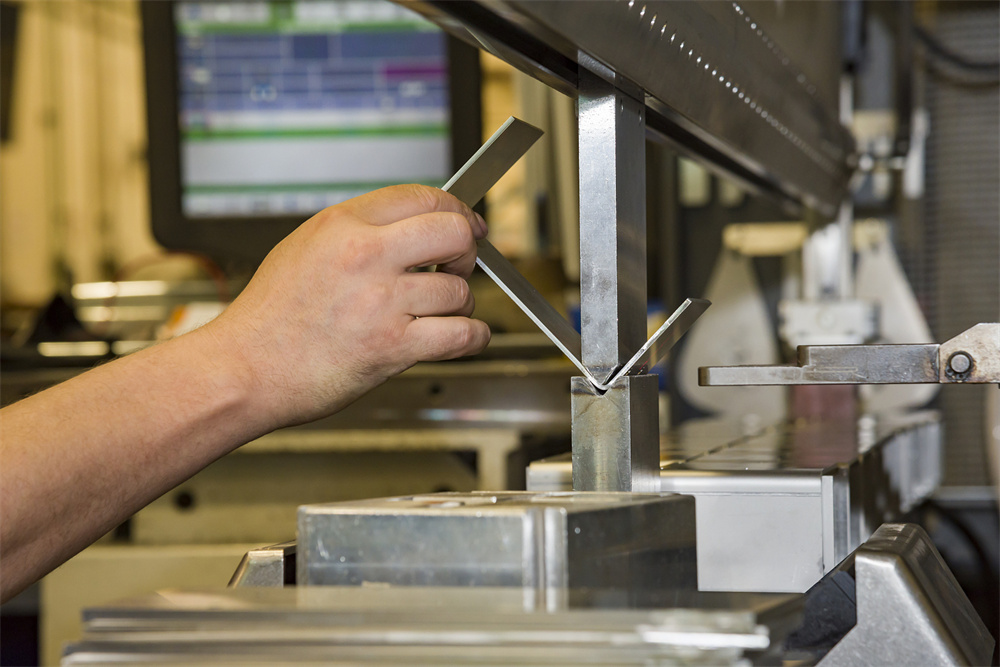
When scaling up production, the primary obstacle is the accumulation of errors. In manual bending, even a slight variation in material thickness, grain direction, or operator fatigue can lead to significant deviations in the final bend angle. Large-scale fabrication requires a system that can account for these variables automatically, ensuring that the first part is identical to the thousandth part.
Material variability is a constant concern in industrial fabrication. Even within the same batch of steel, tensile strength and thickness can fluctuate. A CNC press brake addresses this by utilizing sensors and feedback loops that adjust the ram position in real-time. This dynamic adjustment is critical for maintaining consistency across long production runs where material properties might shift slightly.
Another key consideration is the reduction of setup time. In large-scale operations, downtime is the enemy of efficiency. Conventional machines often require manual adjustments of the backgauge, stroke depth, and crowning systems. CNC systems allow for the storage of thousands of programs, enabling operators to switch between complex jobs in minutes rather than hours, significantly increasing the overall equipment effectiveness (OEE).
Labor costs and skill gaps also play a significant role. Finding experienced press brake operators who can consistently produce high-quality parts manually is increasingly difficult. CNC technology lowers the barrier to entry by automating the complex calculations and positioning, allowing less experienced operators to produce parts that meet rigorous quality standards with minimal supervision.
Finally, safety and ergonomics cannot be overlooked. Large-scale fabrication often involves handling heavy, oversized sheets. Modern CNC press brakes are designed with integrated safety light curtains, laser guarding, and ergonomic loading systems that protect the operator while maintaining high throughput. This holistic approach to the workspace ensures that consistency is not just a product of the machine, but a product of a safe and efficient environment.
Technical Details: The Mechanics of Precision
The core of why a CNC press brake improved consistency in large-scale fabrication lies in its technical architecture. Unlike mechanical press brakes, which rely on fixed stroke lengths, CNC hydraulic press brakes utilize high-precision proportional valves and linear encoders to monitor the ram position with micron-level accuracy. This closed-loop control system ensures that the ram stops at the exact programmed depth every single time.
Crowning systems are another vital technical component. As a press brake bends a long piece of metal, the machine frame and the bed tend to deflect under the immense pressure. Without compensation, the bend angle would be inconsistent along the length of the part. CNC press brakes utilize hydraulic or mechanical crowning systems that automatically adjust the bed geometry to counteract this deflection, ensuring a perfectly straight bend across the entire length of the workpiece.
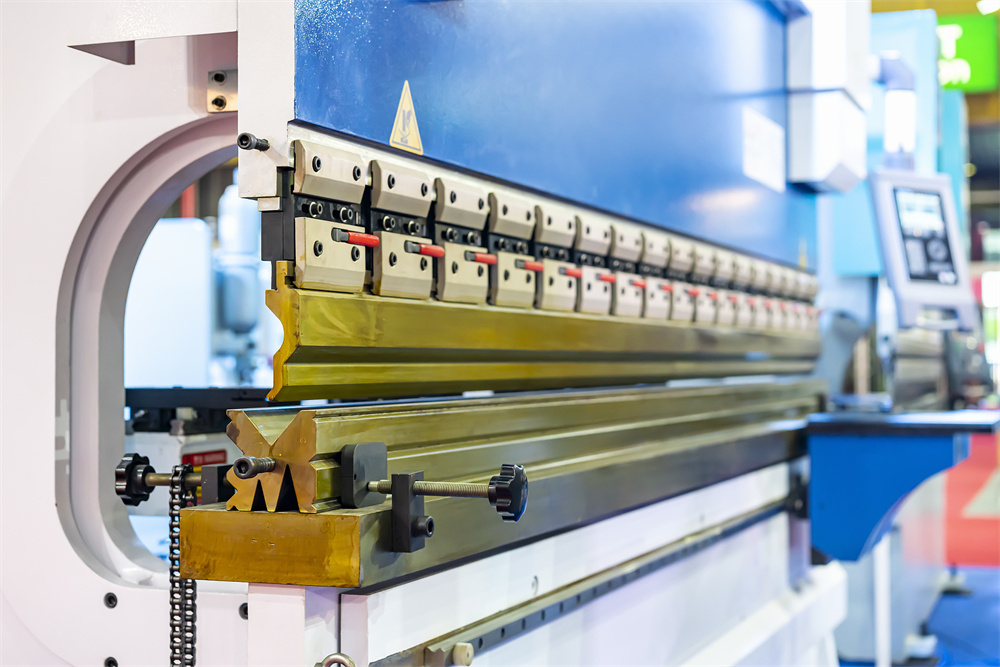
Backgauge technology has also seen massive advancements. Modern CNC press brakes feature multi-axis backgauges (X, R, Z1, Z2) that allow for complex, multi-stage bending sequences. These backgauges can move at high speeds and position themselves with extreme precision, allowing the machine to handle parts with varying flange lengths and complex geometries without requiring manual repositioning or secondary operations.
Software integration is the final piece of the puzzle. Modern CNC controllers allow for offline programming, where the bending sequence is simulated in a 3D environment before the material even touches the machine. This software can predict potential collisions, calculate the optimal bend sequence, and automatically generate the CNC code, eliminating the trial-and-error approach that often plagues traditional fabrication shops.
Furthermore, the integration of angle measurement systems—such as laser-based sensors—allows the machine to measure the bend angle in real-time during the bending process. If the material springs back more than expected, the controller automatically adjusts the ram depth to compensate, ensuring the final angle is perfect without the need for manual inspection and re-bending.
Selection Advice: Choosing the Right Equipment
Selecting the right CNC press brake for your fabrication facility requires a thorough analysis of your current and future production needs. Start by evaluating the maximum material thickness and length you intend to process. While it is tempting to buy the largest machine available, an oversized machine can be inefficient for smaller, high-volume parts. Focus on the tonnage-to-length ratio that best fits your most common applications.
Consider the controller interface. A user-friendly, intuitive controller is essential for reducing training time and minimizing operator errors. Look for systems that support 3D visualization and offer easy integration with CAD/CAM software. HARSLE provides a range of controllers that are designed for both ease of use and high-level technical capability, ensuring that your team can maximize the machine’s potential from day one.
Evaluate the machine’s construction and rigidity. A press brake is only as good as its frame. Look for stress-relieved steel construction that can withstand years of high-tonnage operation without warping. The quality of the hydraulic components and the precision of the linear guides are also indicators of the machine’s long-term reliability and accuracy.
Don’t forget about after-sales support and maintenance. A CNC press brake is a significant investment, and you need a partner who can provide technical support, spare parts, and training. HARSLE prides itself on providing comprehensive support to ensure that your equipment remains operational and accurate throughout its service life.
Finally, consider the potential for future upgrades. Can the machine be retrofitted with robotic loading/unloading systems? As your business grows, the ability to automate the entire bending cell will be the next logical step in improving consistency and throughput. Choosing a machine with modular capabilities will save you significant capital in the long run.
Frequently Asked Questions (FAQ)
1. How does a CNC press brake differ from a conventional hydraulic press brake?
A CNC press brake uses a computer-controlled system to manage the ram position, backgauge, and crowning, whereas a conventional machine relies on manual settings and mechanical stops. The CNC system provides significantly higher repeatability, faster setup times, and the ability to perform complex, multi-stage bends.
2. Can a CNC press brake handle different types of materials?
Yes, modern CNC press brakes are highly versatile. By adjusting the bending parameters in the controller, you can easily switch between different materials such as mild steel, stainless steel, and aluminum, while compensating for their unique spring-back characteristics.
3. What is the role of crowning in press brake consistency?
Crowning compensates for the deflection of the machine bed and ram under load. By applying a counter-force, it ensures that the bend angle remains consistent across the entire length of the workpiece, preventing the “canoe” effect where the center of the bend is different from the ends.
4. How often should I perform maintenance on my CNC press brake?
Regular maintenance is crucial for accuracy. We recommend daily checks of the tooling and safety systems, monthly inspections of the hydraulic fluid and filters, and an annual professional calibration of the backgauge and ram positioning systems to ensure continued precision.
5. Is it difficult to train operators on CNC press brakes?
While there is a learning curve, modern CNC controllers are designed with intuitive interfaces that simplify the process. With proper training, operators can quickly learn to load programs, monitor the process, and perform basic troubleshooting, often finding the CNC system easier to manage than manual machines.
Conclusion
The evidence is clear: when a CNC press brake improved consistency in large-scale fabrication, the case study results demonstrated not only higher quality parts but also significant improvements in operational efficiency, reduced waste, and lower labor costs. By leveraging the power of precision hydraulics, advanced software, and automated compensation systems, fabricators can overcome the traditional limitations of manual metal forming.
HARSLE remains committed to providing the metal fabrication industry with the tools necessary to achieve this level of excellence. Whether you are looking to upgrade your current fleet or are planning a new facility, investing in high-quality CNC press brake technology is the most effective way to ensure your business remains competitive in an increasingly demanding market. Consistency is the foundation of quality, and with the right equipment, it is an achievable standard for every production run.
As you move forward with your fabrication goals, remember that the technology you choose today will define your capabilities tomorrow. By prioritizing precision, reliability, and ease of use, you can transform your production floor into a high-performance environment that consistently delivers superior results for your customers. Explore the HARSLE range of CNC press brakes to find the perfect solution for your large-scale fabrication needs.