
NC Press Brake vs CNC Press Brake: What’s the Difference in Real Production?


Introduction: The Evolution of Bending Technology
In the modern metal fabrication landscape, choosing the right equipment is the cornerstone of operational efficiency and profitability. Among the most debated topics for workshop owners and production managers is the choice between an NC (Numerical Control) press brake and a CNC (Computer Numerical Control) press brake. While both machines serve the fundamental purpose of bending sheet metal, the technical mechanisms, control systems, and real-world production outcomes differ significantly.
Understanding the Nc Press Brake Vs CNC Press Brake: ’s Difference In Real Production? requires a deep dive into how these machines handle synchronization, precision, and setup time. For a small job shop, an NC machine might be a cost-effective workhorse, whereas a high-volume precision facility might find a CNC machine indispensable. This guide explores these differences in detail to help you make an informed investment for your facility.
As we transition from manual mechanical presses to highly automated systems, the terminology can sometimes become blurred. However, in the context of HARSLE machinery, the distinction is clear: it is a balance between mechanical simplicity and electronic sophistication. Let’s break down the core components that define these two categories of industrial machinery.
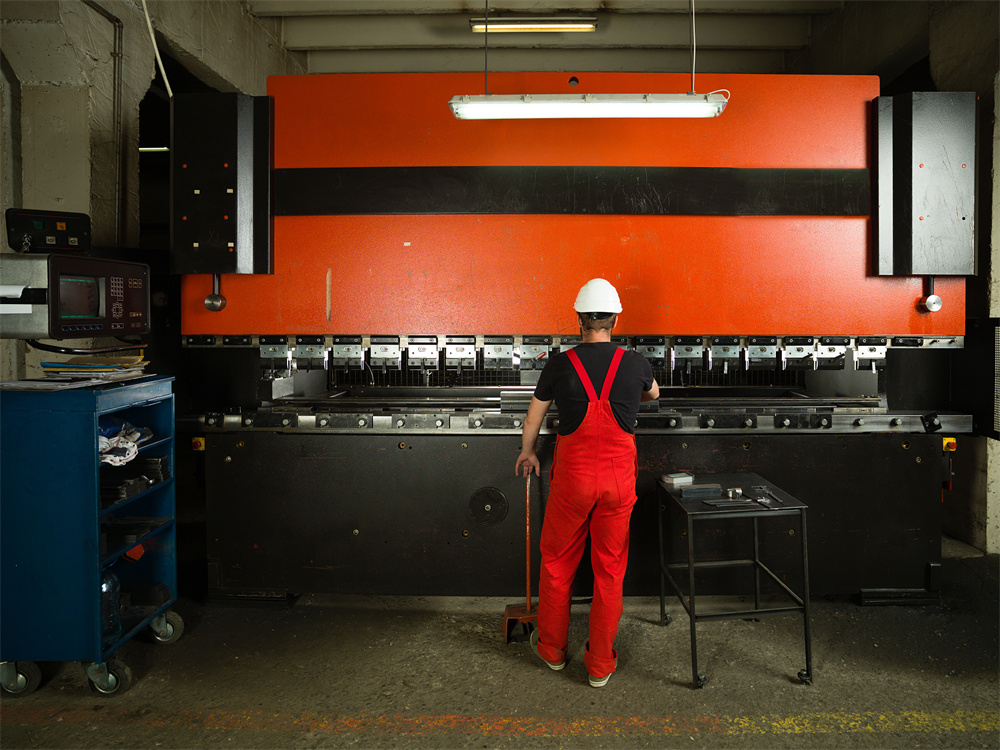
Comparison Summary: At a Glance
The primary difference between NC and CNC press brakes lies in the method of synchronization and the level of automation. An NC press brake typically utilizes a mechanical torsion bar to keep the two sides of the ram synchronized. In contrast, a CNC press brake uses an electro-hydraulic system where independent cylinders are monitored by linear encoders and controlled by a sophisticated computer system in real-time.
In real production, this translates to how the machine handles “deflection” and “angle accuracy.” An NC machine requires more manual intervention and trial-and-error, while a CNC machine can simulate the bend, calculate the required force, and adjust for material variations automatically. The choice often comes down to the complexity of the parts you intend to produce and the skill level of your operators.
NC Press Brake Overview: The Reliable Workhorse
The NC press brake, often referred to as a torsion bar press brake, is the traditional choice for straightforward bending tasks. It relies on a solid steel bar (the torsion bar) to connect the left and right cylinders, ensuring they move up and down together. While effective, this mechanical link has physical limitations, especially when performing off-center loading, which can put strain on the bar and affect the accuracy of the bend.
Most NC machines are equipped with a simple controller, such as the E21 or E300. These controllers allow the operator to program the position of the backgauge (X-axis) and the stroke depth (Y-axis). However, the “programming” is largely numerical; the operator must manually calculate the depth required to achieve a specific angle based on the material thickness and V-die opening.
In real production, the NC press brake excels in environments where the same bend is repeated thousands of times. Once the machine is set up, it is fast and consistent. However, the setup time for a new part is significantly longer than that of a CNC machine because the operator must perform test bends and manually adjust the mechanical stops to fine-tune the angle.
Maintenance for NC machines is generally simpler. Because they lack the complex proportional valves and high-resolution encoders of CNC systems, they are easier to repair by general industrial mechanics. This makes them a popular choice in regions where specialized CNC technicians might be hard to find or for shops operating on a tighter maintenance budget.
CNC Press Brake Overview: Precision and Automation
The CNC press brake represents the pinnacle of bending technology. Unlike the NC version, the CNC machine features independent control over the Y1 and Y2 cylinders. Each cylinder has its own proportional valve and linear encoder, which feeds data back to the controller hundreds of times per second. This allows the machine to correct its position mid-stroke, ensuring perfect parallelism even during off-center bending.
Modern CNC controllers, such as those from Delem, Cybelec, or ESA, offer full graphical interfaces. Operators can import 3D CAD files, and the software will automatically determine the best bend sequence, calculate the developed length of the flat sheet, and check for potential collisions with the tooling or the machine frame. This drastically reduces the “brain work” required from the operator and minimizes material waste.
One of the most critical features of a CNC press brake is the automatic crowning system. As the machine applies pressure, the bed and ram naturally deflect (bow). A CNC machine senses this and uses a hydraulic or mechanical crowning system to compensate, ensuring the angle is consistent across the entire length of the workpiece. This is a game-changer for long parts where “boating” (the center being a different angle than the ends) is a common problem in NC machines.
In real production, the CNC press brake is designed for high-mix, low-volume production. The ability to switch from one complex part to another in minutes—rather than hours—makes it highly efficient. While the initial investment is higher, the reduction in scrap and the increase in throughput often lead to a much faster return on investment (ROI) in professional fabrication environments.
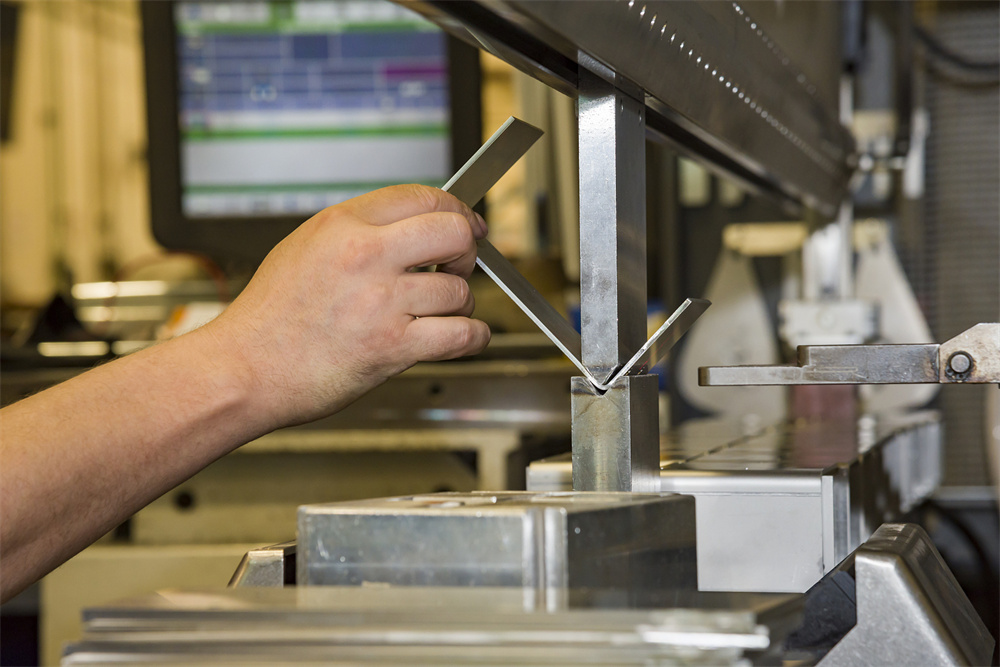
Specification Comparison Table
| Feature | NC Press Brake (Torsion Bar) | CNC Press Brake (Electro-Hydraulic) |
|---|---|---|
| Synchronization | Mechanical Torsion Bar | Independent Y1/Y2 Proportional Valves |
| Control Axes | Typically 2-axis (X, Y) | 3 to 8+ axes (Y1, Y2, X, R, Z1, Z2, etc.) |
| Angle Accuracy | ± 0.5 to 1.0 degrees | ± 0.1 to 0.3 degrees |
| Crowning System | Manual or None | Automatic Hydraulic or Mechanical |
| Programming | Numerical input, manual calculation | 3D Graphical, Auto-sequencing, CAD import |
| Setup Time | High (Requires test bends) | Low (Software-driven) |
| Price Point | Economical | Premium |
Best-fit Applications: Choosing the Right Tool
Determining the Nc Press Brake Vs CNC Press Brake: ’s Difference In Real Production? often comes down to the specific parts being manufactured. For example, if your shop produces simple brackets, roofing panels, or basic HVAC ducting, an NC press brake is often more than sufficient. These parts usually involve single or double bends where extreme precision is not the primary concern, and the material thickness is consistent.
However, for industries like aerospace, medical equipment, or high-end electronics, the CNC press brake is the only viable option. These sectors require tight tolerances and often use expensive materials where scrap is not an option. The CNC’s ability to handle complex multi-step bends—where the backgauge must move to different positions (X, R, and Z axes) for each step—allows for the creation of intricate geometries in a single handling of the part.
Another factor is the material type. If you are working with stainless steel or aluminum, which have significant springback variations, the CNC’s ability to integrate angle-measuring systems can save hours of manual adjustment. The machine can measure the angle during the bend and automatically over-bend to compensate for springback, ensuring the first part is a good part.
Cost and Maintenance Comparison
The financial aspect of the Nc Press Brake Vs CNC Press Brake: ’s Difference In Real Production? involves both CAPEX (Capital Expenditure) and OPEX (Operating Expenditure). An NC press brake is significantly cheaper to purchase—often 40% to 60% less than a CNC machine of the same tonnage and length. For a startup or a small workshop, this lower barrier to entry is a major advantage.
However, the hidden costs of an NC machine lie in labor and waste. Because it requires a more skilled operator to perform manual setups and adjustments, labor costs per part can be higher. Additionally, the trial-and-error nature of NC bending leads to more scrap material, which adds up over time, especially with expensive alloys.
CNC machines, while expensive to buy, offer lower operating costs in high-volume or high-complexity environments. The maintenance, however, is more demanding. The hydraulic oil must be kept extremely clean to prevent damage to the proportional valves, and the electronic components require a stable power supply and a clean environment. HARSLE recommends regular calibration of the linear encoders to maintain the high precision these machines are known for.
The Role of the Operator in Real Production
A common misconception is that a CNC machine replaces the operator. In reality, it changes the operator’s role. On an NC machine, the operator needs a “feel” for the metal. They must understand how to adjust the mechanical stops and how to compensate for material grain direction manually. It is a craft that takes years to master.
On a CNC machine, the operator becomes a process manager. They need to be comfortable with computer interfaces and software. While the machine does the heavy lifting in terms of calculations, the operator must still ensure the tooling is loaded correctly and that the material is positioned properly against the backgauge fingers. CNC machines allow less experienced operators to produce high-quality parts, which is a significant advantage in a market facing a shortage of skilled metalworkers.
Recommendation: Which One Should You Buy?
If your production involves high volumes of simple parts with loose tolerances, the NC Press Brake is your best investment. It is durable, easy to maintain, and provides a quick return on investment for basic fabrication tasks. It is the ideal “first machine” for many growing shops.
If your business model focuses on precision, complex geometries, or high-mix production where you change setups multiple times a day, the CNC Press Brake is essential. The time saved in setup and the reduction in scrap will quickly offset the higher initial cost. Furthermore, if you plan to scale your business and integrate with modern CAD/CAM workflows, the CNC machine is the only way to future-proof your workshop.
FAQ: Common Questions About NC and CNC Press Brakes
1. Can I upgrade an NC press brake to a CNC later?
While some basic retrofitting is possible (like adding a more advanced NC controller), you cannot truly convert a torsion-bar NC machine into an electro-hydraulic CNC machine. The fundamental hydraulic and mechanical structures are different. It is usually more cost-effective to sell the NC machine and purchase a dedicated CNC unit.
2. Is a CNC press brake harder to learn?
Actually, for a new operator, the CNC is often easier to learn because of the graphical interface and automated calculations. The NC machine requires more “tribal knowledge” and manual calculation skills that take longer to develop.
3. How much more accurate is a CNC press brake?
In real production, a CNC machine can maintain an angle accuracy of ±0.3 degrees or better, whereas an NC machine typically fluctuates between ±0.5 and ±1.0 degrees depending on the operator’s skill and the material consistency.
4. Does HARSLE provide training for CNC controllers?
Yes, HARSLE provides comprehensive technical support and training materials for all our CNC systems, including Delem and Cybelec controllers, to ensure your team can maximize the machine’s potential from day one.
5. Which machine is better for heavy-duty bending?
Both machines can be built for high tonnage. However, for very thick plates where deflection is a major issue, the CNC’s automatic crowning system provides a significant advantage in maintaining a straight bend across the entire length of the plate.












