
Comprehensive Press Brake Maintenance Schedule for Small and Large Fabrication Workshops


The Critical Importance of a Press Brake Maintenance Schedule
In the world of metal fabrication, the press brake is often the heartbeat of the production line. Whether you are operating a boutique custom shop or a massive industrial facility, the reliability of your bending equipment directly correlates to your bottom line. Implementing a rigorous Press Brake Maintenance Schedule for Small and Large Fabrication Workshops is not merely a suggestion; it is a fundamental requirement for ensuring operational safety, part accuracy, and machine longevity.
For small workshops, a single machine failure can halt 100% of production, leading to missed deadlines and damaged client relationships. In these environments, maintenance is often reactive rather than proactive due to limited staff. However, the cost of a major hydraulic overhaul far exceeds the cost of routine oil checks. Conversely, large fabrication workshops face the challenge of high-volume wear and tear. With machines running multiple shifts, the cumulative stress on mechanical components and hydraulic systems necessitates a synchronized maintenance strategy to prevent catastrophic systemic failures.
Modern CNC press brakes are sophisticated blends of high-pressure hydraulics, precision electronics, and heavy-duty mechanics. Neglecting any of these systems leads to a cascade of issues. For instance, contaminated hydraulic oil doesn’t just affect the pump; it erodes valve seals and scores cylinder walls, leading to pressure drops that ruin the precision of a bend. By following a structured maintenance plan, workshops can extend the life of their HARSLE equipment by decades, ensuring that the initial investment continues to yield high-quality output year after year.
Furthermore, safety is a paramount concern. A poorly maintained press brake is a hazard. Worn brake linings, leaking hydraulic lines, or malfunctioning light curtains can lead to severe workplace injuries. A documented maintenance schedule provides a paper trail of safety compliance, protecting both the operators and the business owners from liability while fostering a culture of excellence and care within the shop floor.
Daily Inspection: The First Line of Defense
The daily inspection is the most crucial element of any Press Brake Maintenance Schedule for Small and Large Fabrication Workshops. It should be performed at the start of every shift, taking no more than 15 to 20 minutes. This routine allows operators to catch minor issues before they escalate into expensive repairs. The first step is a visual sweep of the machine. Operators should look for any signs of oil leaks around the cylinders, hoses, and manifold blocks. Even a small puddle can indicate a failing seal that could lead to a sudden loss of pressure during a critical bend.
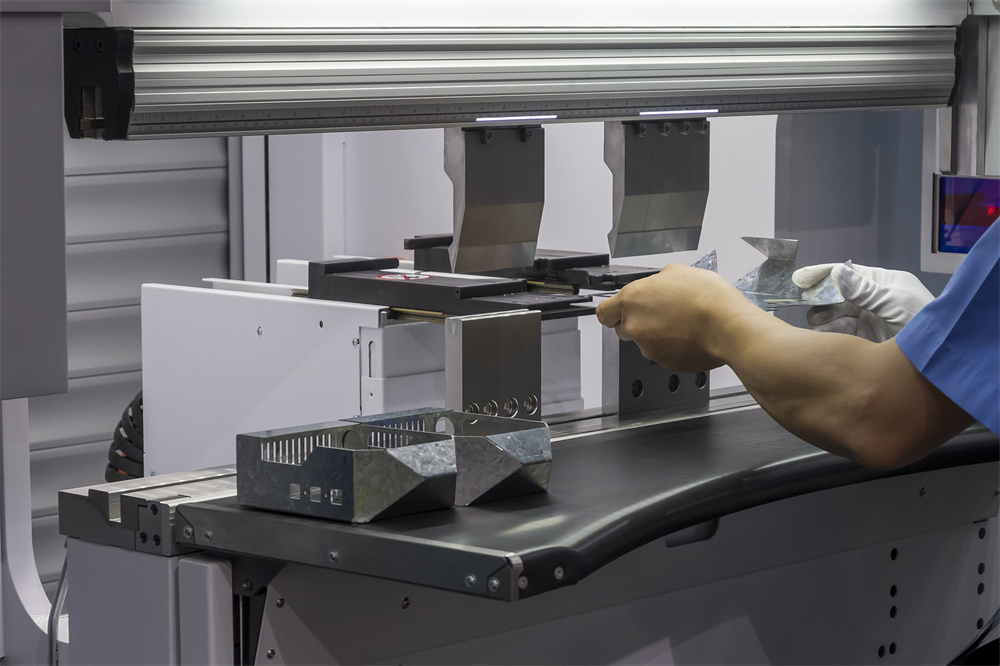
Next, the condition of the tooling must be assessed. Check the punches and dies for chips, cracks, or excessive wear. Using damaged tooling not only produces inaccurate parts but also puts uneven stress on the ram and the bed of the machine. The work area should be cleaned of all metal shavings and scale. Debris trapped between the die and the bed can cause “crowning” inaccuracies and permanent indentations in the machine’s bolster. Operators should also verify that the backgauge fingers move smoothly and are free of obstructions.
Safety systems require daily verification. Test the emergency stop buttons and ensure the light curtains or laser guards are functioning correctly. If the machine has a foot pedal, check that the shroud is intact and the cable is not frayed. Finally, check the oil level in the reservoir. Most HARSLE machines feature a sight glass; the oil should be clear and at the appropriate level. If the oil appears milky or dark, it indicates contamination or oxidation, requiring immediate attention.
Hydraulic, Electrical, and Mechanical System Checks
Hydraulic System Integrity
The hydraulic system is the lifeblood of the press brake. In a large workshop, the heat generated by constant cycling can degrade hydraulic fluid rapidly. Monthly checks should include monitoring the oil temperature; if it consistently exceeds 60°C (140°F), the cooling system may be failing or the oil viscosity may be incorrect. High temperatures lead to the breakdown of additives, resulting in poor lubrication and increased wear on the pump.
Filters must be replaced according to the manufacturer’s intervals, typically every 2,000 hours of operation or annually. However, in dusty environments common to small shops, more frequent changes may be necessary. When changing filters, inspect the old filter for metal particles. Finding “gold dust” (brass) or steel shavings is an early warning sign of pump or cylinder wear. Additionally, ensure that all hydraulic fittings are torqued to specification, as vibration can loosen connections over time.
Electrical and CNC Controller Maintenance
The electrical cabinet is often overlooked until a failure occurs. In large fabrication workshops, fine metal dust can be pulled into the cabinet by cooling fans, leading to short circuits on sensitive CNC boards. Every quarter, the power should be locked out, and the cabinet should be cleaned using a vacuum or low-pressure dry air. Check all wiring connections for tightness; thermal expansion and contraction can loosen screw terminals, leading to intermittent faults or “ghost” errors in the controller.
The CNC controller itself requires software updates and data backups. Small workshops often forget to back up their tool libraries and programs. A hard drive failure without a backup can result in weeks of lost programming time. Ensure the cooling fans on the motor drives are spinning freely and that the heat sinks are clear of dust. Overheating is the primary cause of premature failure in electronic components.
Mechanical Alignment and Wear
Mechanical precision is what separates a high-end HARSLE press brake from a generic machine. The backgauge system, including the lead screws and linear guides, must be inspected for play. Over time, the nuts on the lead screws can wear, leading to backlash that compromises the accuracy of the flange dimensions. Large workshops should use a dial indicator to check the repeatability of the backgauge at various points along its travel.
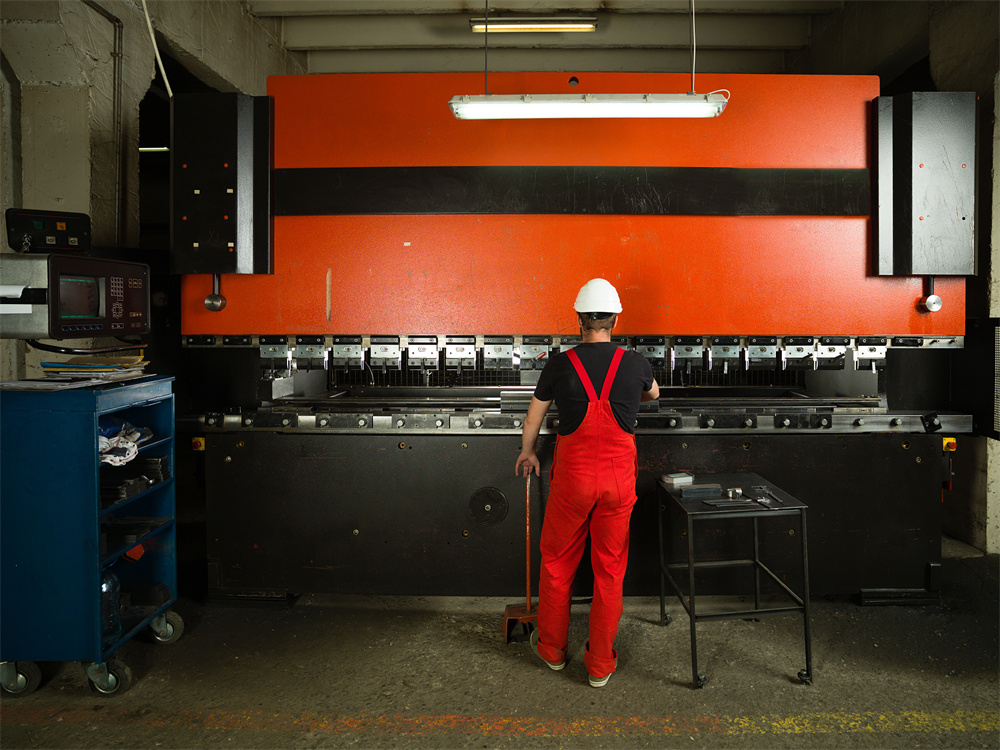
The ram-to-bed parallelism is another critical check. Using precision ground blocks, verify that the ram descends evenly across its entire length. If the ram is tilted, it indicates an issue with the proportional valves or the linear encoders. For mechanical press brakes, the gibs (the guides that hold the ram in place) must be adjusted to maintain the correct clearance. Too tight, and they will gall; too loose, and the ram will “chatter,” leading to poor surface finish on the bent parts.
Lubrication Plan: Manual vs. Automatic Systems
Lubrication is the most effective way to prevent mechanical wear. A Press Brake Maintenance Schedule for Small and Large Fabrication Workshops must specify the type of lubricant and the frequency of application. Most modern machines utilize a centralized lubrication system, which may be manual (a hand pump) or automatic (timed by the CNC). Even with an automatic system, the reservoir must be topped up with the correct grade of EP (Extreme Pressure) grease or way oil.
For small workshops with older equipment, manual lubrication points (grease nipples) are common. These are often hidden behind guards or under the bed. A “map” of all lubrication points should be posted on the machine. Key areas requiring lubrication include the backgauge linear rails, the ball screws, the ram guides (gibs), and the pivot points on the linkage (for mechanical-style brakes). Over-lubrication can be just as harmful as under-lubrication, as excess grease attracts abrasive metal dust, creating a grinding paste that accelerates wear.
In large workshops, the automatic lubrication system should be monitored to ensure it is actually delivering grease. A common failure point is a blocked distribution line; the pump may be running, but the grease isn’t reaching the bearing. Periodically disconnect a line at the furthest point to verify flow. Using the wrong type of grease—such as substituting general-purpose chassis grease for high-load molybdenum grease—can lead to catastrophic bearing failure under the high tonnages typical of heavy plate fabrication.
Troubleshooting Signals: When to Stop the Machine
Operators are the first to notice when a machine “feels” wrong. Recognizing troubleshooting signals is a vital part of the Press Brake Maintenance Schedule for Small and Large Fabrication Workshops. Unusual noises are the most common indicator of trouble. A high-pitched whine from the pump often suggests cavitation (air in the oil) or a clogged suction filter. A rhythmic knocking sound during the stroke may indicate a broken tooth in the backgauge drive or a loose gib bolt.
Heat is another major signal. If the hydraulic tank feels hot to the touch or the electrical cabinet smells of ozone or burning plastic, the machine should be shut down immediately. Inaccuracy in the parts is a subtle but dangerous signal. If the bend angle starts to drift over the course of a shift, it may indicate that the hydraulic oil is thinning out due to heat, or that the ram encoders are slipping. Small shops often try to “compensate” for these errors in the CNC, but this only masks the underlying mechanical or hydraulic failure.
Finally, watch for “spongy” operation. If the ram doesn’t respond instantly to the foot pedal or if it drifts downward when stopped, there is likely air in the hydraulic lines or a leaking check valve. Continuing to operate a machine in this state is a major safety risk. Establish a clear protocol: if an operator detects any of these signals, the machine is tagged out until a qualified maintenance technician can perform a diagnostic check.
Comprehensive Maintenance Schedule Table
Use the following table as a template for your workshop. Adjust frequencies based on shift patterns (e.g., a 3-shift large workshop should perform “Weekly” tasks every 2-3 days).
| Frequency | Component | Action Required | Responsibility |
|---|---|---|---|
| Daily | Safety Systems | Test light curtains, E-stops, and foot pedal functionality. | Operator |
| Daily | Tooling & Bed | Clean debris, inspect for cracks, and wipe down surfaces. | Operator |
| Daily | Hydraulic Oil | Check level via sight glass and look for external leaks. | Operator |
| Weekly | Backgauge Rails | Clean and apply a light coat of recommended lubricant. | Maintenance/Lead |
| Weekly | Air Filters | Clean or replace filters on the electrical cabinet. | Maintenance |
| Monthly | Ram Gibs | Check for proper clearance and lubrication flow. | Maintenance |
| Monthly | Bolt Torque | Inspect and tighten foundation bolts and cylinder mounts. | Maintenance |
| Quarterly | Electrical Cabinet | Vacuum dust, check wire tightness, and inspect cooling fans. | Electrician |
| Quarterly | Hydraulic Analysis | Sample oil for contamination and check operating temp. | Maintenance |
| Yearly | Hydraulic Fluid | Drain, flush tank, and replace with fresh ISO VG 46/68 oil. | Maintenance |
| Yearly | Calibration | Perform full laser alignment of ram and backgauge. | Service Tech |
Frequently Asked Questions (FAQ)
1. How often should I change the hydraulic oil in my press brake?
For most HARSLE press brakes, the hydraulic oil should be changed every 2,000 to 4,000 hours of operation, or at least once a year. However, in large fabrication workshops running 24/7, oil analysis should be performed every six months to determine if the oil is still chemically stable. Always use the specific grade recommended in your manual, typically ISO VG 46 or 68.
2. Why is my press brake losing accuracy during long shifts?
This is usually caused by thermal expansion. As the hydraulic oil heats up, its viscosity changes, which can affect the response time of the valves. In large workshops, ensure the oil cooler is functioning. In small workshops, you may need to allow the machine to warm up for 15 minutes before starting precision work to reach a stable operating temperature.
3. Can I use general-purpose grease for the backgauge?
It is not recommended. Backgauges use precision ball screws that require specific lubricants that won’t gum up or attract excessive dust. Using the wrong grease can increase friction, leading to motor overloads and positioning errors. Always refer to the Press Brake Maintenance Schedule for Small and Large Fabrication Workshops for the approved lubricant list.
4. What are the signs that my ram gibs need adjustment?
If you notice the ram “shaking” or vibrating during the high-pressure part of the bend, or if there is visible daylight between the ram and the guides, an adjustment is needed. Improper gib clearance leads to uneven wear on the cylinder seals and can eventually cause the ram to jam. This is a task that should be handled by a trained maintenance technician.
5. How do I protect the CNC controller in a dusty environment?
The best protection is maintaining a positive pressure inside the electrical cabinet. Ensure all seals are intact and that the cooling fans are equipped with clean filters. For very small workshops in extremely dusty conditions, consider an external air conditioning unit for the cabinet to keep it sealed from the ambient shop air.
6. Is it necessary to back up the machine software?
Yes, absolutely. You should back up your CNC parameters, tool library, and part programs at least once a month or whenever a significant number of new programs are added. Store these backups on a secure cloud drive or an external USB kept in a fireproof safe. This simple step can save a workshop thousands of dollars in recovery costs.












