Troubleshooting Press Brake Crowding, Deflection, and Workpiece Warping: A Comprehensive Guide


Introduction to Precision Bending Challenges
In the world of high-precision metal fabrication, the press brake stands as the cornerstone of production. However, achieving a perfect 90-degree bend across a long sheet of metal is rarely as simple as pressing a button. Operators and engineers frequently encounter physical phenomena that threaten the accuracy of the final product. Among the most prevalent issues are deflection, the need for effective crowning, and the frustration of workpiece warping. These challenges are not merely inconveniences; they are the result of fundamental physics acting upon industrial machinery and raw materials.
HARSLE, a leader in metal fabrication technology, understands that maintaining tight tolerances requires more than just a robust machine. It requires a deep understanding of how the machine reacts under load. When a press brake applies several hundred tons of force to a piece of steel, the machine itself undergoes minute structural changes. If these changes are not accounted for, the resulting part will suffer from the “banana effect”—where the center of the bend is wider than the ends. This guide aims to provide a technical deep dive into troubleshooting these issues, ensuring your production line remains efficient and your parts remain precise.
Troubleshooting press brake crowding, deflection, and workpiece warping involves a multi-faceted approach. It requires looking at the machine’s hydraulic synchronization, the mechanical integrity of the bed and ram, the quality of the tooling, and the metallurgical properties of the workpiece itself. By mastering these variables, fabricators can reduce scrap rates, minimize secondary operations, and extend the lifespan of their equipment. Whether you are operating a legacy manual machine or a state-of-the-art CNC synchronized hydraulic press brake, the principles of deflection management remain universal.
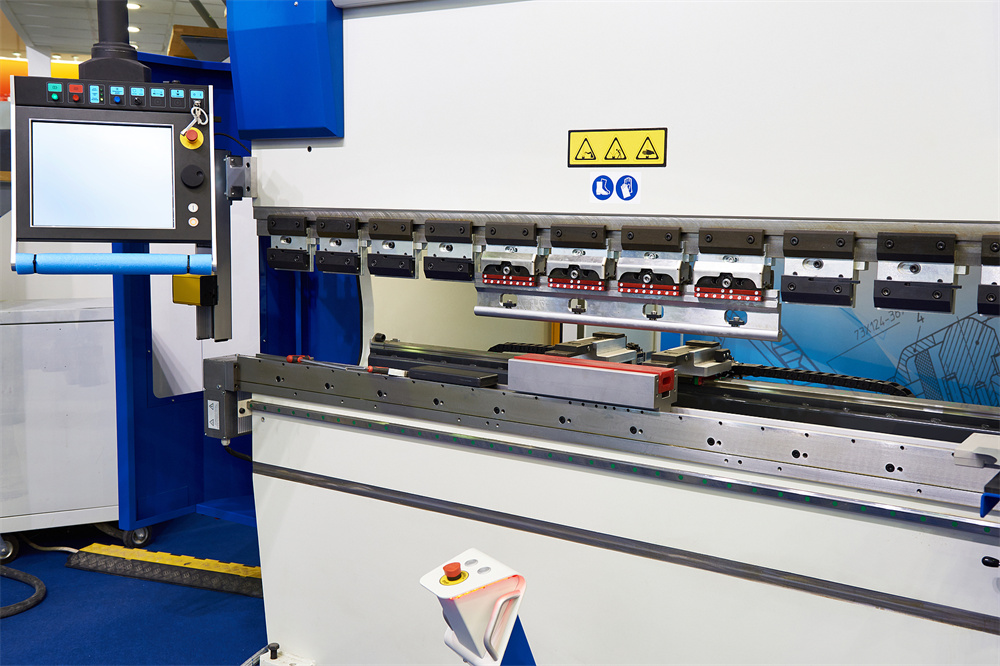
Key Considerations in Press Brake Accuracy
Before diving into specific troubleshooting steps, it is essential to understand the key factors that influence bending accuracy. The first consideration is the machine’s tonnage capacity relative to the material thickness and length. Every press brake has a deflection limit. When you push a machine to its maximum rated tonnage, the ram and the bed will naturally bow. This is not a sign of a broken machine, but rather a characteristic of steel elasticity. The goal is not to eliminate deflection entirely—which is physically impossible—but to compensate for it accurately.
Another critical factor is the material consistency. Sheet metal is not a perfectly uniform medium. Variations in yield strength, thickness, and grain direction can all lead to unpredictable results. For instance, a batch of cold-rolled steel may behave differently than hot-rolled steel, even if they share the same nominal gauge. Troubleshooting warping often starts with an analysis of the material’s internal stresses. If the material was not properly leveled or if it contains significant residual stress from the milling process, it will likely warp during or after the bending process.
Tooling selection also plays a pivotal role. Worn dies or mismatched punches can exacerbate deflection issues. If the V-opening is too narrow for the material thickness, the required tonnage increases exponentially, leading to greater machine deflection. Conversely, a V-opening that is too wide may reduce the required force but will result in a larger radius and less control over the bend angle. Proper maintenance of the clamping system and ensuring that the tools are perfectly centered are foundational steps in any troubleshooting protocol.
Finally, the operator’s role cannot be understated. Modern CNC systems offer advanced crowning compensation, but they rely on accurate data input. If the operator enters the wrong material type or thickness, the CNC will calculate the wrong compensation curve. Understanding the interface between the software and the hardware is vital. Monitoring the control panel for real-time feedback on Y1 and Y2 axis positions can provide early warnings of synchronization issues that lead to uneven bends.
Technical Details: Deflection and Crowding Systems
The Physics of Deflection
Deflection occurs because the press brake’s ram and bed are essentially large beams supported at their ends. When the hydraulic cylinders apply force, the center of these beams experiences the greatest amount of stress and, consequently, the greatest amount of displacement. In a standard setup, the ram bows upward in the center while the bed bows downward. This creates a gap in the middle of the machine that is larger than the gap at the ends. The result is an “under-bend” in the center of the workpiece, where the angle might be 92 degrees while the ends are a perfect 90 degrees.
To troubleshoot this, one must first measure the extent of the deflection. This is typically done by performing a test bend on a long strip of material and measuring the angle at multiple points along the length. If the deviation is consistent, the machine’s crowning system needs adjustment. If the deviation is erratic, it may point to issues with the hydraulic valves or the linear encoders that track the ram’s position.
Hydraulic vs. Mechanical Crowding
Crowding, or crowning, is the method used to compensate for this deflection. There are two primary types: hydraulic and mechanical. Hydraulic crowning involves auxiliary cylinders built into the lower bed. As the main cylinders push down, these auxiliary cylinders push up, creating a counter-curve in the bed that matches the deflection of the ram. Troubleshooting hydraulic crowning involves checking the proportional valves and ensuring there are no leaks in the compensation circuit. If the crowning doesn’t seem to respond to CNC commands, the issue is often electronic or related to a clogged valve.
Mechanical crowning, often referred to as a “wedge system,” uses a series of sliding wedges located beneath the lower die. By moving these wedges, the operator can manually or automatically raise the center of the die. Mechanical systems are often preferred for their stability and lack of reliance on hydraulic pressure consistency. However, they require regular lubrication and cleaning. Dust and metal shavings can migrate into the wedge mechanism, causing it to bind and leading to inaccurate compensation. Troubleshooting here involves a thorough cleaning and a check of the drive motor that positions the wedges.

Y1 and Y2 Axis Synchronization
Modern press brakes utilize a dual-axis system (Y1 and Y2) to control the left and right sides of the ram independently. This synchronization is critical for preventing “twisting” of the ram. If one side is slightly lower than the other, the workpiece will not only have deflection issues but will also be skewed. Troubleshooting synchronization involves checking the linear scales (encoders) mounted on the side frames. These scales provide real-time position data to the CNC. If a scale is dirty or misaligned, the CNC will receive incorrect data, leading to a tilted ram and inconsistent bending results.
Troubleshooting Workpiece Warping
Workpiece warping is a distinct issue from deflection, though they are often confused. Warping refers to the twisting or bowing of the metal sheet after the bend has been completed. This is frequently caused by internal stresses within the material. When metal is rolled at the mill, it develops a “grain.” Bending against the grain requires more force and is more likely to result in cracking, while bending with the grain can lead to excessive springback and warping.
To troubleshoot warping, first examine the grain direction of your material. If possible, orient your parts so that the bend line is perpendicular to the grain. Additionally, consider the “K-Factor” and the material’s yield strength. If you are working with high-strength alloys, the material will want to return to its original shape more aggressively. This springback can manifest as warping if the pressure is not held long enough (dwell time) or if the crowning is not perfectly dialed in.
Another cause of warping is uneven heating or cooling, though this is more common in laser cutting or welding prior to bending. If a part has been heavily processed with heat, the internal stresses will be uneven. When the press brake applies force, these stresses are released, causing the part to twist. In such cases, stress-relieving the material or using a leveler before bending can solve the problem. Furthermore, ensure that your backgauge is properly aligned. If the backgauge fingers are not parallel to the die, the part will be pushed into the machine at an angle, creating a warped appearance that is actually a geometry error.
Selection Advice for High-Precision Press Brakes
When selecting a press brake to minimize these issues, the first thing to look for is the frame construction. A heavy, solid-welded frame provides the rigidity necessary to resist deflection. HARSLE machines are engineered with high-tensile steel frames that undergo stress-relieving heat treatments to ensure long-term stability. A machine that is “overbuilt” for your typical application will always provide more consistent results than one running at its limit.
Secondly, prioritize the CNC controller. A high-end controller like a Delem or Cybelec offers sophisticated algorithms for calculating crowning. These systems take into account the material type, thickness, length, and die opening to automatically adjust the crowning system. This reduces the reliance on operator trial-and-error, which is the primary source of scrap in many shops. Look for a machine that offers “Real-time Deflection Compensation,” which uses sensors to measure actual deflection during the bend and adjusts the crowning on the fly.
Thirdly, consider the tooling system. Fast-change tooling systems like Wila or Promecam not only save time but are manufactured to much higher tolerances than standard tang tooling. High-precision tooling ensures that the center of the punch is perfectly aligned with the center of the V-die, which is essential for troubleshooting and eliminating side-loading forces that contribute to machine wear and part inaccuracy.
| Feature | Impact on Deflection | Benefit for Warping |
|---|---|---|
| CNC Crowding | Automatically compensates for ram/bed bow. | Ensures even pressure, reducing localized stress. |
| Linear Encoders | Ensures Y1/Y2 synchronization within microns. | Prevents twisting and skewed bends. |
| High-Tensile Frame | Reduces the base amount of physical deflection. | Provides a stable platform for consistent bending. |
| Proportional Valves | Allows for smooth, controlled pressure application. | Minimizes sudden shocks to the material. |
Frequently Asked Questions (FAQ)
1. Why is my press brake bending more in the middle than the ends?
This is the classic symptom of deflection. The ram and bed are bowing under the pressure of the bend. You need to adjust your crowning system (either hydraulic or mechanical) to push the center of the bed up to match the ram’s deflection.
2. How do I know if my crowning system is failing?
If you adjust the crowning settings on your CNC but see no change in the bend angle of the workpiece, the system may be failing. Check for hydraulic leaks in the crowning cylinders or mechanical obstructions in the wedge system. Also, verify that the CNC is actually sending the signal to the crowning motor or valve.
3. Can worn tooling cause workpiece warping?
Yes. If the V-die is worn unevenly, the material will not sit flat during the bend. This causes the pressure to be applied unevenly, which can lead to the part twisting or warping as it is released from the machine.
4. Does material thickness affect deflection?
Absolutely. Thicker material requires more tonnage to bend. Since deflection is a direct result of the force applied, thicker materials will cause more deflection. You must ensure your crowning compensation is increased accordingly when switching to heavier gauges.
5. What is the best way to prevent springback-related warping?
Using a “dwell time” at the bottom of the stroke allows the material to plastically deform more completely, reducing springback. Additionally, using a CNC with a built-in material database can help you pre-calculate the necessary over-bend to achieve the desired final angle.
Conclusion: Achieving Bending Excellence
Troubleshooting press brake crowding, deflection, and workpiece warping is an ongoing process of refinement. It requires a combination of high-quality machinery, precise calibration, and an understanding of material science. By identifying the root causes of deflection—whether they be structural, hydraulic, or material-based—fabricators can implement solutions that significantly improve part quality and production efficiency. HARSLE remains dedicated to providing the tools and knowledge necessary for shops to overcome these challenges.
Investing in a machine with advanced crowning capabilities and a rigid frame is the first step toward eliminating these common bending issues. However, the human element remains vital. Regular maintenance, proper tooling selection, and careful monitoring of the bending process are what separate a good fabrication shop from a great one. As you continue to push the boundaries of what is possible with sheet metal, remember that precision is not just a goal; it is a result of meticulous attention to the physics of the bend.