Hydraulic vs CNC Press Brake: Which One Is Best for Your Workshop?


Introduction: Navigating the Choice Between Hydraulic and CNC Press Brakes
In the world of metal fabrication, the press brake is the heart of the workshop. Whether you are a small custom shop or a high-volume industrial manufacturer, choosing the right bending technology is a decision that impacts your production speed, accuracy, and bottom line for years to come. The debate often centers on Hydraulic Vs CNC Press Brake: Which One Is Best Workshop? While technically most modern CNC press brakes are hydraulic, the industry typically uses these terms to distinguish between traditional NC (Numerical Control) torsion bar machines and advanced CNC (Computer Numerical Control) electro-hydraulic synchronous machines.
Understanding the nuances between these two categories is essential. A traditional hydraulic torsion bar press brake relies on a mechanical shaft to keep the ram level, whereas a CNC synchro press brake uses sophisticated electronics and hydraulic valves to monitor and adjust the ram’s position in real-time. This fundamental difference in architecture leads to significant variations in performance, ease of use, and, most importantly, the complexity of the parts you can produce. In this comprehensive guide, we will break down the costs, technical configurations, and long-term value of each to help you determine the best fit for your specific operational needs.
Price Range Overview: Initial Investment Costs
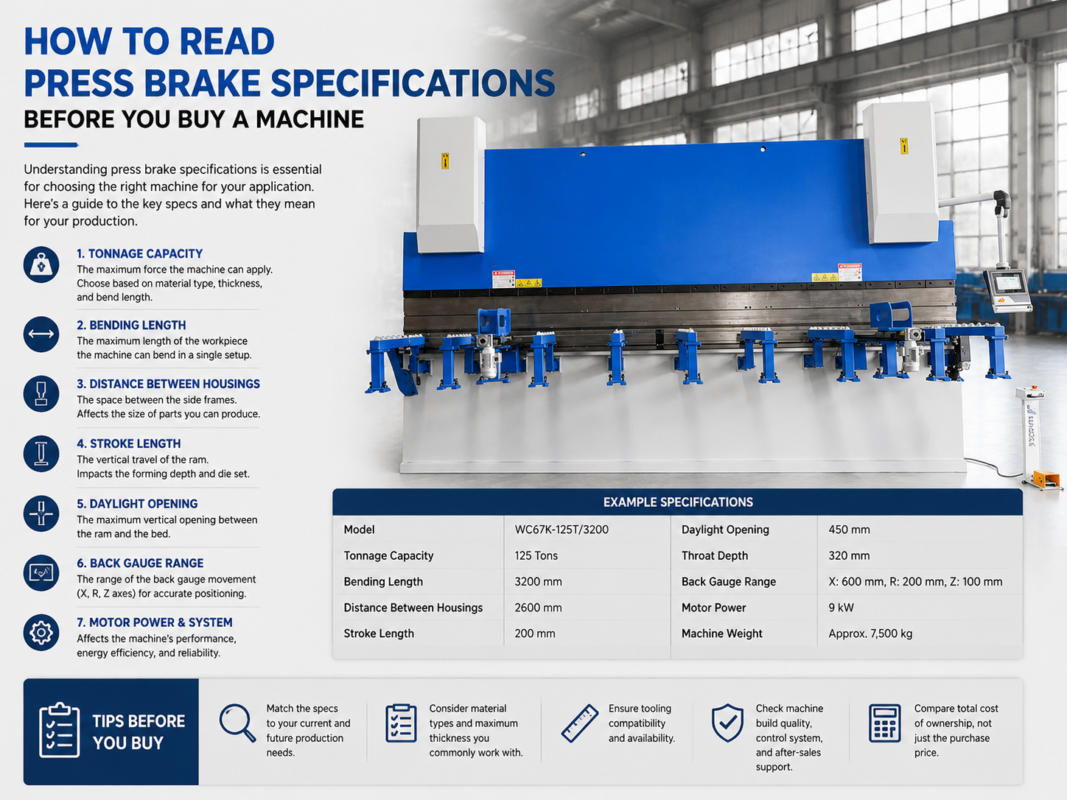
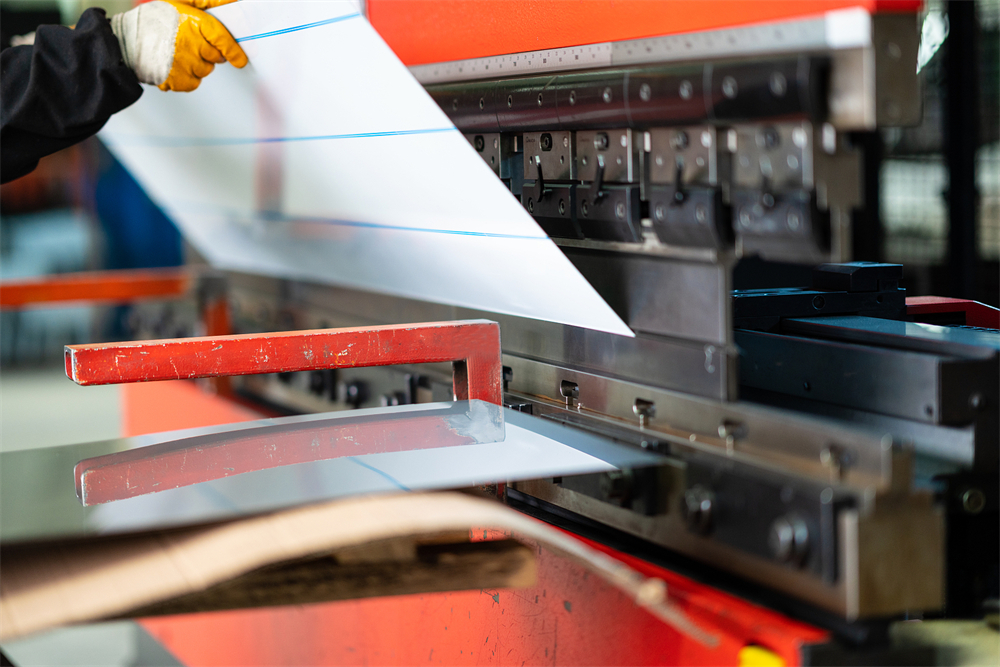
When evaluating the financial commitment required for a new machine, the price gap between a basic hydraulic (NC) press brake and a high-end CNC synchro model can be substantial. For many workshops, the initial purchase price is the primary hurdle. A standard NC hydraulic torsion bar press brake, such as the HARSLE WC67K series, typically ranges from $8,000 to $25,000 for entry-to-mid-level tonnages (30T to 125T). These machines are cost-effective solutions for businesses that perform repetitive, simple bends where extreme precision is not the absolute priority.
On the other hand, a CNC electro-hydraulic synchro press brake, like the HARSLE WE67K series, represents a higher tier of investment. These machines generally start at $25,000 and can exceed $150,000 for large-scale, multi-axis configurations. The higher price tag reflects the inclusion of advanced controllers (like Delem or Cybelec), high-precision linear encoders, and complex hydraulic manifolds. While the upfront cost is higher, the CNC machine offers capabilities that a traditional hydraulic machine simply cannot match, such as automatic crowning and multi-step bending sequences programmed in a 2D or 3D environment.
It is also important to consider the used market. Traditional hydraulic machines hold their value well because of their simplicity and ease of repair, making them attractive for startups. However, as industry standards shift toward higher precision and shorter lead times, the demand for CNC machines has surged, leading to better financing options and more competitive pricing from manufacturers like HARSLE. When asking “Hydraulic Vs CNC Press Brake: Which One Is Best Workshop?”, you must weigh this initial capital expenditure against your projected revenue and the complexity of your upcoming contracts.
Main Cost Drivers: What Are You Paying For?
The price difference between these machines isn’t arbitrary; it is driven by the components and technology integrated into the frame. The first major cost driver is the Control System. A basic hydraulic press brake usually features a simple E21 or TP10S controller that manages the X-axis (backgauge) and Y-axis (stroke depth) with limited memory. In contrast, a CNC machine utilizes high-performance controllers capable of calculating bend allowances, managing 4 to 8 axes of movement, and providing graphical simulations. These controllers alone can account for a significant portion of the machine’s total cost.
The second driver is the Hydraulic System and Feedback Loop. In a traditional torsion bar machine, the synchronization of the two cylinders is mechanical. This is cheaper to manufacture but less precise over long periods or under uneven loads. A CNC synchro machine uses proportional valves (often from brands like Bosch Rexroth or Hoerbiger) and linear encoders mounted on a “C” frame. These encoders track the exact position of the ram to within microns, and the CNC controller adjusts the hydraulic flow to each cylinder independently to ensure perfect parallelism. This level of technology requires higher-quality components and more rigorous assembly standards.
Finally, Backgauge Complexity plays a massive role in the cost. A standard hydraulic machine usually has a 2-axis backgauge (X and R). A CNC press brake can be configured with 4-axis (X, R, Z1, Z2), 5-axis, or even 6-axis (X1, X2, R1, R2, Z1, Z2) backgauges. Each additional axis requires its own servo motor, drive, and precision ball screw, adding to the manufacturing cost but drastically reducing the time required for complex part setups. When you invest in a CNC machine, you are essentially paying for the ability to eliminate manual adjustments and human error.
Configuration Impact: Precision and Versatility
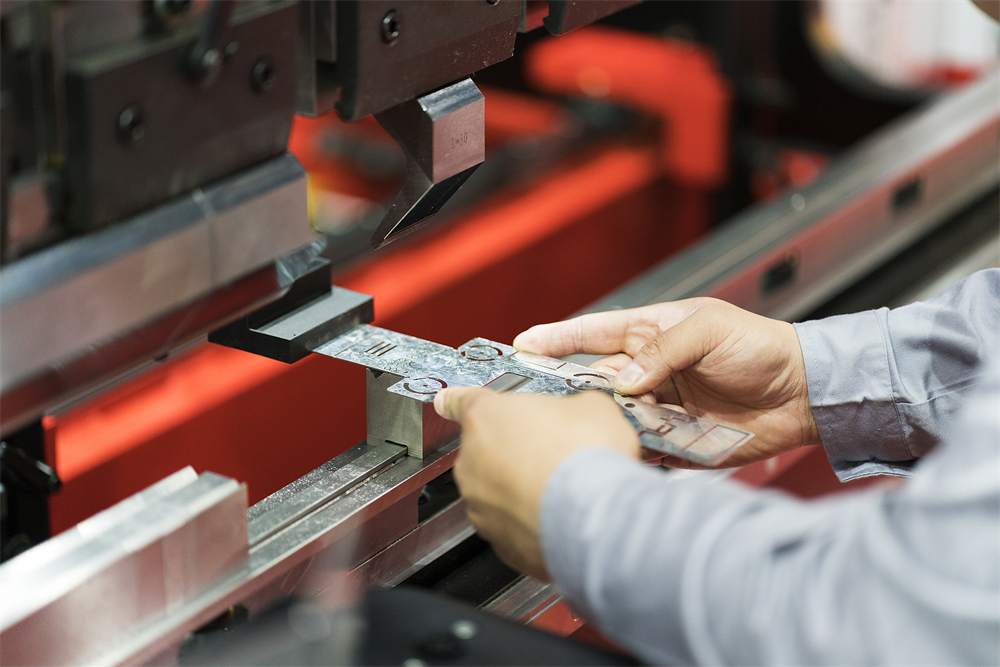
The configuration of your press brake determines the variety of work you can accept. For a workshop focused on simple brackets, roofing profiles, or basic enclosures, a hydraulic torsion bar machine is often more than sufficient. Its configuration is straightforward, making it easy for operators to learn. However, the lack of a sophisticated crowning system means that on longer bends, you might experience a “canoe effect,” where the angle in the middle of the plate is different from the ends. This requires manual shimming of the tools, which is time-consuming and requires a highly skilled operator.
CNC press brakes solve this through Automatic Crowning Systems. Whether hydraulic or mechanical (Wila-style), the CNC controller calculates the deflection of the bed and ram based on the material thickness, length, and tonnage, and automatically compensates for it. This ensures a consistent angle across the entire length of the workpiece. For workshops dealing with stainless steel, aluminum, or high-tensile materials, this feature is indispensable. It allows for “first-part, right-part” production, which is critical when working with expensive materials where scrap is not an option.
Furthermore, the versatility of a CNC configuration allows for Offline Programming. An engineer can design a part in the office, simulate the bending sequence to check for collisions, and then send the program to the machine via a network. This means the machine is never sitting idle while an operator tries to figure out the best way to bend a complex part. In the context of “Hydraulic Vs CNC Press Brake: Which One Is Best Workshop?”, the CNC machine wins on versatility and precision, while the hydraulic machine wins on simplicity for high-volume, low-complexity tasks.
Hidden Costs: Maintenance, Power, and Training
Beyond the sticker price, there are several hidden costs that can affect the total cost of ownership. Maintenance is a key factor. Traditional hydraulic machines are mechanically simpler, meaning repairs are often easier and parts are cheaper. However, the torsion bar and mechanical stops are subject to wear and tear that can eventually degrade accuracy. CNC machines, while more reliable in terms of precision, require specialized technicians for electronic or proportional valve issues. Regular calibration of the linear encoders is also necessary to maintain peak performance.
Power Consumption is another area where the two types differ. Traditional hydraulic machines often run the main motor at a constant speed, regardless of whether the machine is actively bending or idling. Modern CNC press brakes, especially those equipped with servo-hybrid drive systems, only consume significant power during the actual bending stroke. This can lead to energy savings of up to 50% or more, which, over the 10-15 year lifespan of a machine, can add up to thousands of dollars in utility savings.
Finally, consider Operator Training and Labor Costs. A traditional hydraulic machine requires a “master” operator who understands the quirks of the machine and can manually adjust for material variations. These operators are hard to find and expensive to employ. A CNC machine, with its intuitive interface and automated features, allows a less experienced operator to produce high-quality parts after a much shorter training period. However, you will need someone with the technical skill to program the CNC controller, which shifts the labor cost from the shop floor to the engineering department.
ROI Calculation: Speed vs. Accuracy
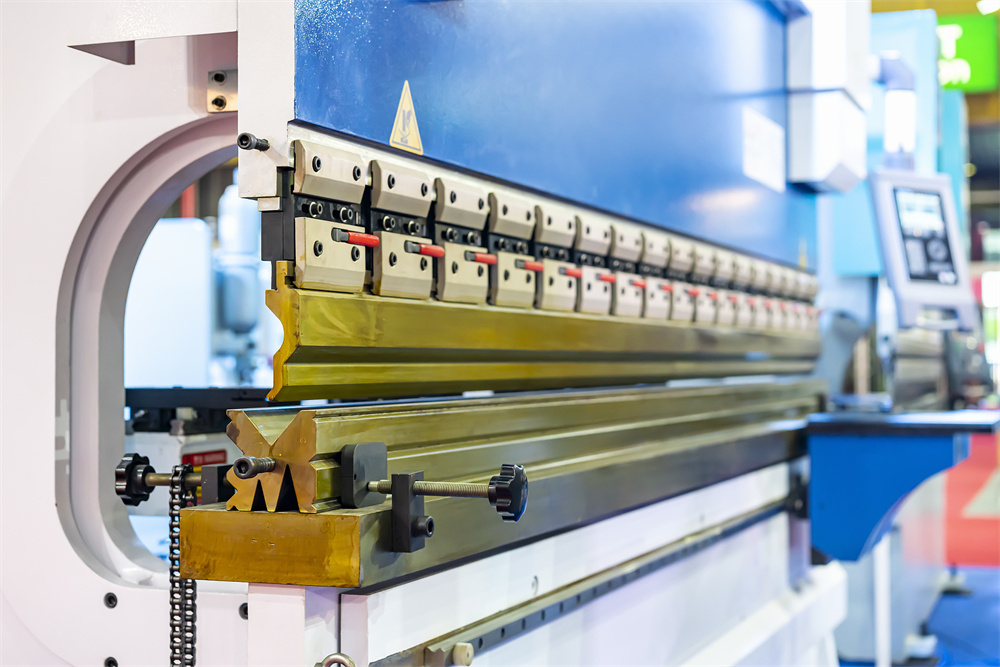
Calculating the Return on Investment (ROI) is the most objective way to answer “Hydraulic Vs CNC Press Brake: Which One Is Best Workshop?”. To do this, you must look at your cycle times. A CNC press brake typically has faster approach and return speeds, and the backgauge moves significantly faster between steps. If a part requires five different bends, a CNC machine can execute them in one handling, whereas a manual hydraulic machine might require the operator to reset the backgauge and stroke depth for each bend, or even move the part to different machines.
Let’s look at a hypothetical scenario: A workshop produces 100 complex cabinets per week. On a traditional hydraulic machine, setup and bending take 20 minutes per cabinet. On a CNC machine, this is reduced to 8 minutes due to offline programming and automated backgauge movement. That is a saving of 12 minutes per unit, or 20 hours per week. At a shop rate of $75/hour, the CNC machine saves $1,500 per week in labor alone. Over a year, that’s $78,000—potentially paying for the price difference between the two machines in less than 12 months.
Additionally, the reduction in scrap is a major factor in ROI. If a CNC machine reduces your scrap rate from 5% to 1% through better precision and crowning compensation, the material savings can be substantial, especially with expensive alloys. When you factor in the ability to take on higher-margin, high-precision work that a traditional machine couldn’t handle, the ROI for a CNC machine often outpaces the cheaper hydraulic alternative in any workshop that isn’t strictly doing low-level utility work.
Buying Advice: Which One Should You Choose?
The final decision depends on your current business model and your future growth plans. If you are a startup on a tight budget, or if your work consists primarily of simple 90-degree bends in thick plate where tolerances are generous (e.g., +/- 1 degree), a Hydraulic Torsion Bar Press Brake is a sensible and rugged choice. It will provide years of reliable service with minimal maintenance and a low barrier to entry. It is the “workhorse” of the industry for a reason.
However, if you are looking to compete in the modern manufacturing landscape, where customers demand tight tolerances, fast turnaround times, and complex geometries, the CNC Synchro Press Brake is the clear winner. The investment in technology pays for itself through labor efficiency, material savings, and the ability to automate your workflow. For workshops looking to scale, a CNC machine is not just a tool; it is a platform for growth that allows you to integrate with CAD/CAM software and Industry 4.0 standards.
Before purchasing, we recommend a thorough audit of your most common parts. If more than 30% of your work involves multiple bend angles, varying material thicknesses, or lengths over 2 meters, the CNC machine’s features like automatic crowning and multi-axis backgauges will be transformative for your productivity. At HARSLE, we offer both types of machines and can provide a detailed consultation to match a specific model to your workshop’s unique requirements.
Frequently Asked Questions (FAQ)
1. Can I upgrade a hydraulic press brake to a CNC later?
While you can add a more advanced NC controller or a motorized backgauge to a torsion bar machine, you cannot easily convert it into a true electro-hydraulic synchro CNC machine. The fundamental hydraulic architecture and the lack of linear encoders make a full conversion impractical and more expensive than buying a new CNC machine.
2. Is a CNC press brake harder to maintain?
It is not necessarily “harder,” but it is different. It requires keeping the electronics clean and ensuring the hydraulic oil is filtered to a higher standard to protect the proportional valves. Most modern CNC machines have self-diagnostic tools that actually make troubleshooting faster than on manual machines.
3. How much training does an operator need for a CNC press brake?
For basic operation, a worker can be trained in a few days. To master the 2D/3D programming and optimize the bending sequences, a week of dedicated training is usually sufficient. Many modern controllers are as intuitive as a tablet or smartphone.
4. Which machine is better for heavy-duty, thick plate bending?
Both can handle heavy-duty work, but for very thick plates where material consistency varies, a CNC machine is better because it can sense the resistance and adjust the stroke depth (if equipped with pressure sensing) or allow the operator to make quick on-the-fly adjustments to the program.
5. Does HARSLE provide support for both types of machines?
Yes, HARSLE provides comprehensive technical support, installation, and training for both our WC67K (Torsion Bar) and WE67K (Synchro CNC) series worldwide, ensuring your workshop stays productive regardless of the technology you choose.