Hydraulic Press Purchase Guide for Metalworking Shops: Avoid Costly Mistakes


Introduction: Navigating the Complexities of Hydraulic Press Procurement
For any metalworking shop, the acquisition of a hydraulic press represents a significant capital investment that can either propel the business to new heights of productivity or become a recurring source of operational frustration. The market is flooded with options ranging from budget-friendly imports to high-end, custom-engineered systems. However, the true cost of a machine is rarely reflected in the initial quote alone. To ensure a successful Hydraulic Press Purchase Metalworking Shops: Avoid Costly Mistakes, owners and procurement managers must look beyond the sticker price and evaluate the long-term technical and financial implications of their choice.
HARSLE has observed that many shops fall into the trap of over-specifying or under-specifying their needs. Over-specifying leads to wasted capital on features that are never utilized, while under-specifying results in premature machine wear, safety hazards, and the inability to meet client tolerances. This guide is designed to provide a roadmap for navigating these challenges, ensuring that your next hydraulic press is a perfect fit for your specific fabrication requirements.
Price Range Overview: Setting Realistic Budget Expectations
Understanding the price landscape is the first step in avoiding financial pitfalls. Hydraulic presses are generally categorized by their tonnage, frame style, and level of automation. A basic 20-ton shop press used for simple bearing removals might cost a few thousand dollars, but industrial-grade production presses are a different breed entirely. For a professional metalworking shop, the investment typically falls into three tiers.
Entry-level industrial presses, often in the 50 to 100-ton range with basic C-frame designs, generally start between $15,000 and $40,000. These machines are suitable for light stamping, bending, and assembly tasks. They offer reliability but may lack the high-speed cycling or advanced PLC controls required for high-volume production. Mid-range presses, spanning 100 to 500 tons, often feature H-frame or four-column designs and cost between $50,000 and $150,000. These are the workhorses of the industry, capable of deep drawing, heavy forming, and precision punching.
At the high end, custom-engineered presses exceeding 500 tons or those integrated with robotic cells and multi-axis CNC controls can easily exceed $250,000. These machines are designed for specific industrial applications like automotive body panel stamping or aerospace component forging. When budgeting, it is vital to remember that the machine price is only the beginning; shipping, rigging, and commissioning can add another 10-15% to the total project cost.
Main Cost Drivers: What Are You Actually Paying For?
When reviewing a quote, it is essential to understand the technical factors that drive the price. Tonnage is the most obvious driver, but it is not linear. As tonnage increases, the amount of steel required for the frame and the size of the hydraulic cylinders grow exponentially to manage the immense stresses involved. A 200-ton press requires significantly more structural reinforcement than two 100-ton presses combined.
The complexity of the hydraulic circuit is another major factor. Basic systems use simple gear pumps and manual valves, which are inexpensive but offer limited control over ram speed and pressure. High-performance presses utilize variable displacement piston pumps and proportional valves. These components allow for precise control over the ram’s approach, pressing, and return speeds, which is critical for delicate forming operations where material flow must be carefully managed to prevent cracking or thinning.
Control systems also play a pivotal role in pricing. A machine with a simple relay-based control system is cheaper but offers no data logging or recipe storage. Modern shops are increasingly opting for PLC-based systems with HMI touchscreens. These allow operators to save specific parameters for different dies, reducing setup times and ensuring consistency across shifts. While more expensive upfront, the reduction in setup errors and scrap rates often justifies the cost.

Configuration Impact: Choosing the Right Frame and Cylinder Setup
The physical configuration of the press—its frame and cylinder arrangement—dictates its versatility and precision. Choosing the wrong frame type is one of the most common and costly mistakes in the Hydraulic Press Purchase Metalworking Shops: Avoid Costly Mistakes process. Each design has inherent strengths and weaknesses regarding deflection and accessibility.
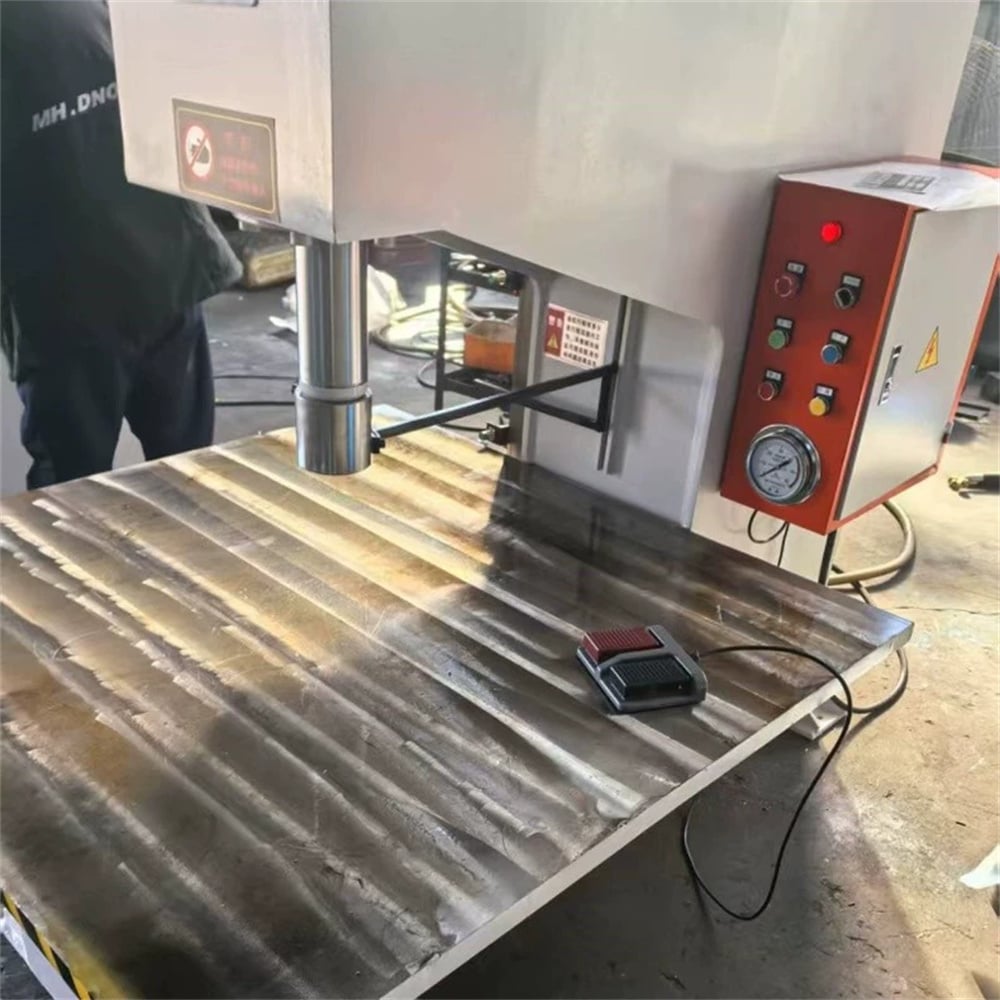
C-Frame (Gap Frame) Presses: These are characterized by their open design on three sides, providing excellent access for operators and the ability to handle long or wide workpieces. However, because the frame is open, it is prone to “yawing” or deflection under high pressure. If your application requires extreme precision or involves off-center loading, a C-frame might lead to uneven tool wear and part inaccuracies.
H-Frame (Side-Housing) Presses: These are much more rigid than C-frames. The four-sided construction minimizes deflection, making them ideal for heavy-duty applications and high-precision work. The trade-off is limited access from the sides, which can make die changes more cumbersome and limit the size of the workpiece that can be fed through the machine. For most heavy metalworking shops, the H-frame is the preferred choice for longevity and accuracy.
Four-Column Presses: These offer the best of both worlds in terms of access and rigidity. The four columns provide a very stable platform that resists deflection from all angles. They are particularly well-suited for applications involving large dies or eccentric loads. However, they are generally more expensive to manufacture and require more floor space. Understanding your specific part geometry and the forces involved is crucial before selecting a frame style.
Hidden Costs: Beyond the Initial Purchase Price
The “hidden” costs of a hydraulic press can quickly erode a shop’s profit margins if not accounted for during the planning phase. One of the most overlooked aspects is the facility’s infrastructure. A large hydraulic press requires a reinforced concrete foundation to prevent the floor from cracking under the concentrated load and to dampen vibrations. If your shop floor isn’t rated for the weight, you could be looking at thousands of dollars in excavation and concrete work.
Electrical requirements are another significant factor. Industrial presses often require high-voltage, three-phase power. If your current electrical service is at capacity, upgrading your transformers and panels can be a massive expense. Furthermore, the cost of hydraulic oil should not be ignored. A large press can require hundreds of gallons of high-quality hydraulic fluid, which must be filtered and eventually replaced. Cooling systems, whether air-cooled or water-cooled, also add to the ongoing utility costs and maintenance schedule.
Training and safety compliance represent the final tier of hidden costs. Operating a high-tonnage press is inherently dangerous. Investing in light curtains, two-hand touch controls, and comprehensive operator training is not just a legal requirement—it’s a financial safeguard against workplace accidents and insurance premium hikes. A cheap machine that lacks modern safety features can become a massive liability the moment an accident occurs.
ROI Calculation: Justifying the Investment
To determine if a Hydraulic Press Purchase Metalworking Shops: Avoid Costly Mistakes is a sound financial move, a thorough Return on Investment (ROI) calculation is necessary. This involves more than just calculating how many parts the machine can produce per hour. You must consider the “Total Cost of Ownership” (TCO) over the machine’s expected lifespan, which is typically 15 to 20 years for a well-maintained HARSLE press.
Start by calculating the productivity gains. If a new press with a faster cycle time and automated die clamping reduces setup time by 50% and increases output by 30%, how much additional revenue does that generate annually? Next, factor in the reduction in scrap. Precision controls and rigid frames lead to fewer rejected parts, which directly impacts the bottom line, especially when working with expensive materials like stainless steel or aerospace alloys.
Labor savings are also a major component of ROI. A modern press with an intuitive HMI allows a less experienced operator to achieve the same results as a veteran, or even allows one operator to manage multiple machines if integrated with conveyors or robots. When you subtract the annual maintenance and energy costs from these gains, you arrive at a realistic payback period. Most shops aim for a payback period of 2 to 4 years for a major equipment purchase.
Buying Advice: A Technical Checklist for Metalworking Shops
Before signing a purchase agreement, every shop owner should go through a rigorous vetting process. Here is a technical checklist to ensure you are making an informed decision:
- Verify Tonnage Requirements: Don’t guess. Use a tonnage calculator based on material thickness, shear strength, and bend length. Always add a 20% safety margin to avoid running the press at its absolute limit.
- Check the Ram Speeds: Look at the approach speed, pressing speed, and return speed. A slow return speed can kill your productivity in high-volume jobs.
- Inspect the Bolster Plate: Ensure the bolster plate is thick enough to resist deflection and has the correct T-slot pattern for your existing and future dies.
- Evaluate the Hydraulic Unit: Is the reservoir easily accessible for cleaning? Are the filters standard sizes that are easy to source? Does it have an efficient cooling system?
- Assess the Control System: Does the PLC offer remote diagnostics? Can it integrate with your shop’s ERP system for production tracking?
- Manufacturer Reputation: Choose a manufacturer like HARSLE that provides robust after-sales support, readily available spare parts, and clear technical documentation.
Finally, always request a “test press” or a video demonstration using your specific material and dies if possible. This confirms that the machine can actually perform the task it is being bought for before it arrives at your loading dock.
FAQ: Common Questions Regarding Hydraulic Press Procurement
1. How often does a hydraulic press require maintenance?
Routine maintenance, such as checking oil levels and lubricating moving parts, should be done daily or weekly. A comprehensive inspection of the hydraulic seals, valves, and electrical connections should be performed every six months. High-production environments may require more frequent intervals to prevent unplanned downtime.
2. Can I use a hydraulic press for both punching and bending?
Yes, hydraulic presses are highly versatile. However, punching creates a “shock load” when the material breaks, which can be hard on the hydraulic system. If you plan to do a lot of punching, ensure the press is equipped with shock absorbers or is specifically rated for punching applications.
3. What is the difference between a hydraulic press and a mechanical press?
Hydraulic presses provide full tonnage throughout the entire stroke and offer adjustable stroke lengths and speeds. Mechanical presses are generally faster but only deliver full tonnage at the bottom of the stroke and have a fixed stroke length. For most custom metalworking shops, the flexibility of a hydraulic press is more valuable than the raw speed of a mechanical one.
4. How do I ensure the safety of my operators?
Safety should be integrated into the machine’s design. This includes light curtains that stop the ram if a hand enters the work zone, two-hand start buttons that keep the operator’s hands away from the die, and mechanical safety blocks for use during maintenance. Regular safety training and strict adherence to OSHA or local safety standards are mandatory.
5. Is it better to buy a new or used hydraulic press?
While used presses are cheaper, they often come with hidden wear, outdated controls, and no warranty. A new press from a reputable manufacturer like HARSLE ensures you have the latest safety features, energy-efficient components, and a manufacturer’s guarantee, which usually provides a better long-term ROI.
6. What kind of hydraulic oil should I use?
Always follow the manufacturer’s specifications. Generally, high-quality anti-wear (AW) hydraulic oil with the correct viscosity index for your operating environment is required. Using the wrong oil can lead to pump cavitation, seal failure, and sluggish performance.
Conclusion: Making a Strategic Investment
A Hydraulic Press Purchase Metalworking Shops: Avoid Costly Mistakes is not just about buying a piece of machinery; it’s about investing in the future capability and efficiency of your business. By understanding the cost drivers, selecting the right configuration, and accounting for the total cost of ownership, you can transform a complex procurement process into a strategic advantage. HARSLE remains dedicated to providing the metalworking industry with high-quality, reliable, and technologically advanced hydraulic presses that stand the test of time. With the right preparation and the right partner, your new hydraulic press will be the cornerstone of your shop’s success for decades to come.