Press Brake Capacity Guide: How to Match Tonnage to Your Jobs


Introduction to Press Brake Capacity and Tonnage Matching
In the world of metal fabrication, precision is everything. However, precision cannot be achieved without the right power. Selecting a press brake is one of the most significant investments a fabrication shop will make, and the most critical factor in that selection is determining the correct tonnage. If you choose a machine with too little capacity, you risk damaging the frame, breaking tools, or failing to complete the bend. If you choose a machine with excessive capacity, you may overspend on initial costs and operational energy without gaining a functional advantage. This guide focuses on the core concept of Press Brake Capacity : Match Tonnage Jobs to ensure your shop operates at peak efficiency.
Understanding press brake capacity involves more than just looking at the maximum thickness a machine can handle. It requires a deep dive into material science, tooling geometry, and the physics of air bending versus bottoming. At HARSLE, we emphasize that matching tonnage to your specific jobs is the foundation of a high-ROI operation. Throughout this article, we will explore the financial implications, technical requirements, and strategic considerations for selecting the perfect press brake capacity for your production line.
Price Range Overview: Tonnage vs. Investment
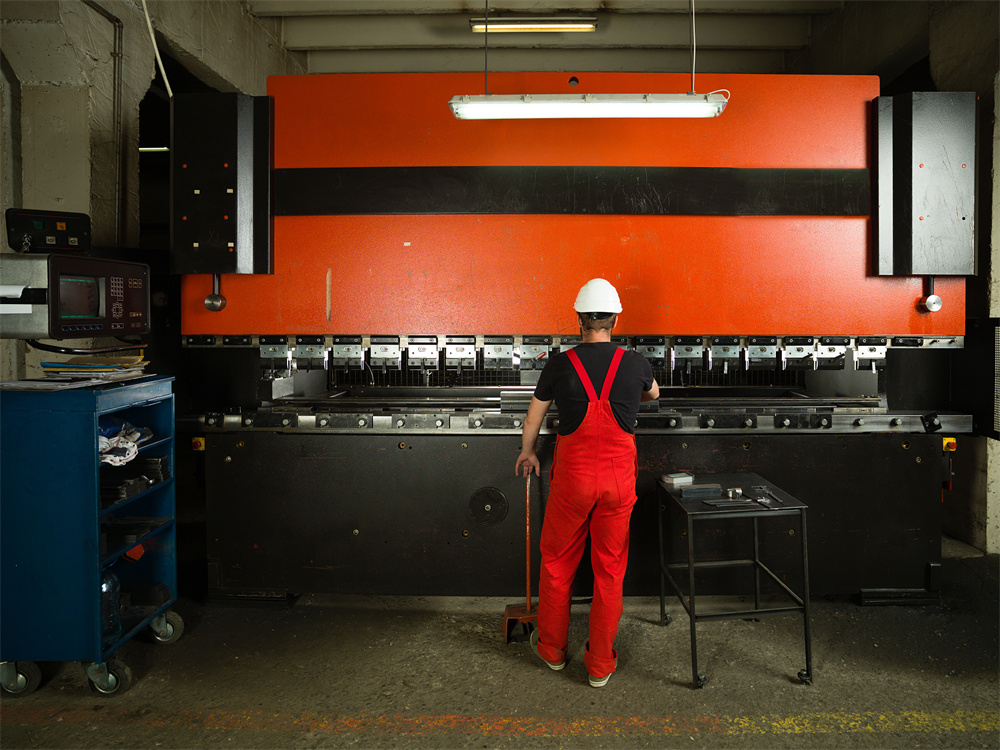
The price of a press brake is directly correlated with its tonnage and bending length. Generally, as the capacity increases, the structural integrity of the machine must be enhanced, requiring more steel, larger hydraulic cylinders, and more robust frames. For small-scale shops or those working primarily with thin-gauge electronics enclosures, a machine in the 30-ton to 50-ton range is often sufficient. These machines are typically priced at an entry-level point, making them accessible for startups, yet they offer high precision for delicate work.
Mid-range machines, typically between 100 and 250 tons, represent the ‘sweet spot’ for general job shops. These machines can handle a wide variety of materials, from thin sheet metal to 1/4-inch plate steel over significant lengths. The price for these units increases due to the inclusion of advanced CNC systems and hydraulic crowning features, which are essential for maintaining accuracy over longer bends. When you aim to Match Tonnage Jobs in this category, you are investing in versatility.
Heavy-duty press brakes, exceeding 400 tons, are specialized pieces of equipment designed for industries like shipbuilding, heavy construction, and large-scale infrastructure. These machines require significant capital investment, often reaching hundreds of thousands of dollars. The cost is driven not just by the raw power, but by the specialized engineering required to prevent frame deflection under massive loads. Understanding where your typical jobs fall on this spectrum is the first step in financial planning for your equipment purchase.
Main Cost Drivers in Press Brake Selection
When evaluating the cost of a press brake relative to its capacity, several factors beyond raw tonnage come into play. The first is the material type. Bending stainless steel requires significantly more tonnage (approximately 50% more) than bending mild steel of the same thickness. If your shop frequently switches between materials, your capacity planning must account for the ‘worst-case scenario’—the hardest material you intend to bend.
The second major cost driver is the length of the bend. A 100-ton machine with a 2-meter bed is structurally different from a 100-ton machine with a 4-meter bed. Longer beds are more susceptible to deflection, requiring more sophisticated crowning systems to ensure the bend angle remains consistent across the entire length. This mechanical compensation adds to the machine’s price but is non-negotiable for high-quality output.
Tooling compatibility also influences cost. High-tonnage applications require heavy-duty, precision-ground tooling that can withstand the pressure without deforming. Furthermore, the complexity of the CNC controller—ranging from simple 2-axis systems to 8-axis high-speed synchronized systems—can double the price of the machine. For many shops, the goal is to find the balance where the machine’s capacity meets the job requirements without paying for ‘ghost’ features that will never be utilized.
Configuration Impact: Hydraulic, Electric, and Axis Count
The configuration of the press brake significantly impacts how it handles its rated capacity. Traditional hydraulic press brakes are the industry standard for high-tonnage applications because hydraulics can generate massive force efficiently. However, the rise of servo-electric press brakes has changed the landscape for lower-tonnage jobs (typically under 100 tons). Electric machines offer higher speeds and better energy efficiency but struggle to match the raw power of hydraulics at the upper end of the capacity scale.
The number of axes (Y1, Y2, X, R, Z1, Z2, etc.) also dictates how effectively you can use the machine’s capacity. A machine with a sophisticated backgauge system allows for complex, multi-bend parts to be completed in a single setup, maximizing the utility of the tonnage. For example, if you are matching tonnage to jobs that involve complex geometries, a 6-axis backgauge is almost as important as the tonnage itself, as it reduces setup time and increases throughput.
Crowning systems are another critical configuration element. In any press brake, the bed and the ram will deflect slightly under load. To compensate for this and ensure a straight bend, a crowning system (either hydraulic or mechanical) applies a counter-curve. For high-capacity machines, an automated CNC crowning system is essential to ensure that the Press Brake Capacity : Match Tonnage Jobs equation results in a perfect part every time, rather than a ‘canoed’ or bowed workpiece.
Hidden Costs of Press Brake Ownership
While the purchase price is the most visible cost, several hidden expenses are tied to the machine’s capacity. Energy consumption is a major factor; a 300-ton hydraulic machine consumes significantly more power than a 50-ton machine, even when performing lighter bends. This is because the large hydraulic pumps must move a greater volume of oil. Choosing a machine with an inverter-driven motor or a ‘green’ hydraulic system can mitigate these costs over time.
Maintenance is another hidden cost. High-tonnage machines put more stress on seals, valves, and structural components. Regular oil changes, filter replacements, and calibration checks are more expensive for larger machines. Additionally, the floor space required for a high-capacity press brake—and the reinforced concrete foundation needed to support its weight—can add thousands of dollars to the installation cost.
Tooling wear is often overlooked. If you consistently run a machine at its maximum capacity, your dies and punches will wear out much faster. This is especially true if you are using narrow V-openings to achieve tight radii in thick materials. To truly Match Tonnage Jobs, you must factor in the recurring cost of high-quality tooling and the potential for downtime if a critical tool fails under high pressure.
ROI Calculation: Efficiency and Throughput
Calculating the Return on Investment (ROI) for a press brake requires looking at how the machine’s capacity affects your cost-per-part. A machine that is perfectly matched to your jobs will have the fastest cycle times. If a machine is underpowered, operators may have to perform multiple hits or use specialized, slower techniques to achieve a bend. Conversely, an oversized machine may have slower approach and return speeds, dragging down productivity on small parts.
Consider the following ROI factors:
- Scrap Reduction: A machine with accurate tonnage and crowning reduces the number of test pieces and ruined parts.
- Labor Savings: Advanced CNC controls and automated backgauges allow less-skilled operators to produce high-quality parts, or allow skilled operators to work faster.
- Secondary Operations: If your press brake can hold tight tolerances, you may eliminate the need for secondary grinding or straightening processes.
To calculate ROI, estimate the number of parts produced per shift and the profit margin per part. Compare this against the monthly financing and operational costs of the machine. Often, a slightly more expensive machine with better capacity matching and automation will pay for itself much faster than a ‘budget’ machine that creates bottlenecks in your production line.
Buying Advice: How to Calculate Tonnage for Your Jobs
Before purchasing, you must perform a tonnage calculation for your most common and most difficult jobs. The standard formula for air bending mild steel is: P = (650 x S² x L) / V, where P is tonnage, S is material thickness (mm), L is length (m), and V is the V-die opening (mm). As a rule of thumb, the V-opening should be 8 times the material thickness for mild steel.
| Material Thickness (mm) | V-Opening (mm) | Tonnage per Meter (Mild Steel) | Tonnage per Meter (Stainless Steel) |
|---|---|---|---|
| 1.0 | 8 | 8 | 12 |
| 2.0 | 16 | 17 | 25 |
| 3.0 | 24 | 25 | 38 |
| 6.0 | 50 | 48 | 72 |
| 10.0 | 80 | 82 | 123 |
When choosing a machine, HARSLE recommends adding a 20% safety margin to your highest calculated tonnage. This prevents the machine from constantly running at its limit, which extends the life of the hydraulics and the frame. Furthermore, consider the ‘tonnage per foot’ limit of your tooling. Even if the machine can provide 200 tons, your specific punch and die might only be rated for 50 tons per foot. Always verify that your machine, your tooling, and your job requirements are in perfect alignment.
Frequently Asked Questions (FAQ)
1. What happens if I exceed the press brake’s tonnage capacity?
Exceeding the rated tonnage can lead to ‘ram upset,’ where the ram permanently deforms, or it can cause the frame to crack. Most modern CNC press brakes have hydraulic relief valves and software limits to prevent this, but repeated attempts to bend over-capacity material will cause premature wear and potential catastrophic failure of the hydraulic seals.
2. Why does stainless steel require more tonnage than mild steel?
Stainless steel has a higher tensile strength and work-hardens more rapidly than mild steel. This means it offers more resistance to deformation. Generally, you should plan for 50% to 60% more tonnage when working with stainless steel compared to mild steel of the same thickness.
3. How does the V-die opening affect tonnage?
The V-die opening is inversely proportional to the tonnage required. A wider V-opening reduces the force needed to make the bend but increases the inside radius of the part. If you must produce a tight radius in thick material using a narrow V-die, the tonnage requirements will skyrocket.
4. Is it better to buy a larger machine than I currently need?
In most cases, yes. Buying a machine with slightly more capacity (tonnage and length) than your current jobs require provides ‘future-proofing.’ It allows you to take on larger contracts and ensures you aren’t straining the machine at its limits. However, avoid buying a machine that is vastly oversized, as it will be less efficient for small parts.
5. What is the difference between air bending and bottoming in terms of tonnage?
Air bending requires the least amount of tonnage because the material only touches the tooling at three points. Bottoming requires 3 to 5 times more tonnage because the punch forces the material to fully conform to the shape of the die. Coining requires even more—up to 10 times the tonnage of air bending—to permanently deform the metal grain.
6. Does the machine length affect the tonnage calculation?
The tonnage required is calculated per meter or per foot. Therefore, a 3-meter bend requires three times the total tonnage of a 1-meter bend of the same material and thickness. Always ensure your machine’s total tonnage is sufficient for the maximum length you intend to bend.