The Ultimate CNC Press Brake Buying Guide for Sheet Metal Fabrication Businesses


Introduction to CNC Press Brake Procurement
In the competitive landscape of modern manufacturing, the acquisition of a CNC press brake is often the most significant investment a sheet metal fabrication business will make. As the backbone of the bending department, a CNC (Computer Numerical Control) press brake determines the precision, speed, and complexity of the parts a shop can produce. Whether you are a startup looking for your first machine or an established enterprise upgrading to high-speed electric models, understanding the nuances of the market is critical. This guide, presented by HARSLE, aims to provide a comprehensive roadmap for navigating the complexities of CNC press brake buying for sheet metal fabrication businesses.
The shift from manual or NC (Numerical Control) machines to full CNC systems has revolutionized the industry. Modern CNC press brakes offer multi-axis control, automatic crowning, and sophisticated software integration that reduces setup times from hours to minutes. However, with prices ranging from tens of thousands to hundreds of thousands of dollars, making the wrong choice can lead to bottlenecks or financial strain. This article breaks down every factor you need to consider to ensure your investment yields the highest possible return.
Price Range Overview: What to Expect
When beginning the journey of CNC press brake buying for sheet metal fabrication businesses, the first question is always about the budget. The price of a press brake is primarily determined by its tonnage (clamping force), bending length, and the level of automation. Generally, the market can be divided into three tiers.
Entry-Level CNC Press Brakes ($25,000 – $55,000)
Entry-level machines are typically 40-ton to 100-ton models with a bending length of 1.5 to 2.5 meters. These machines usually feature 3 or 4 axes (Y1, Y2, X, and sometimes R). They are ideal for small job shops or businesses that primarily work with thinner gauges of mild steel or aluminum. While they lack the high-speed hydraulics of premium models, they offer a massive leap in accuracy over manual machines. HARSLE’s entry-level series focuses on providing reliable Delem or Cybelec controllers even at this price point to ensure user-friendliness.
Mid-Range Production Machines ($60,000 – $130,000)
This is the most common category for established sheet metal fabrication businesses. These machines range from 100 to 250 tons and offer 4 to 8 axes of control. At this level, you begin to see advanced features like hydraulic or mechanical crowning, high-speed servo-driven backgauges, and 3D graphical controllers. These machines are designed for multi-shift operations where consistency and quick changeovers are paramount. They can handle a wider variety of materials, including stainless steel and high-strength alloys.
High-End and Specialized Systems ($150,000+)
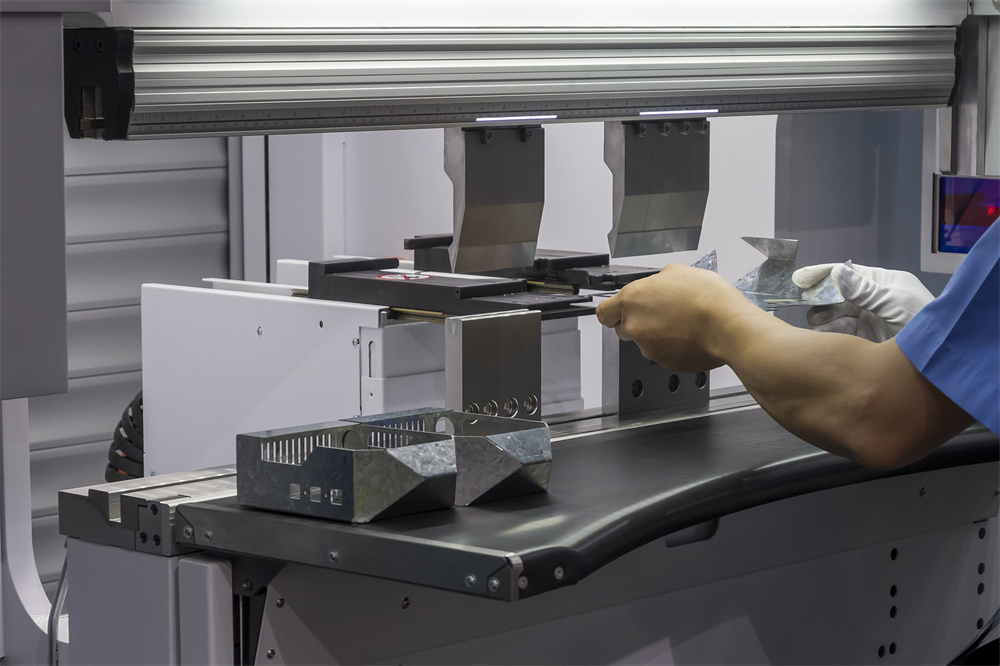
High-end systems include large-tonnage machines (400+ tons), tandem press brakes for extra-long parts, or fully electric/hybrid models. These machines often feature robotic integration, automatic tool changers, and laser angle measurement systems that correct bends in real-time. For businesses specializing in heavy infrastructure, aerospace, or high-volume automotive parts, these machines are necessary to meet stringent tolerances and production quotas.
Main Cost Drivers in CNC Press Brake Selection
Understanding what drives the price of a machine helps in prioritizing features that actually matter to your production line. In the context of CNC press brake buying for sheet metal fabrication businesses, four main factors dictate the final invoice.
1. Tonnage and Bending Length
The physical size of the machine is the most obvious cost driver. Tonnage is the pressure the machine can exert. If you frequently bend 10mm mild steel over a 3-meter length, you will need significantly more tonnage than a shop bending 2mm aluminum. It is a common mistake to buy a machine that is “just enough.” Industry experts recommend a 20% safety margin in tonnage to prevent frame deflection and premature wear on the hydraulic system.
2. The Number of Controlled Axes
A basic CNC press brake controls the Y1 and Y2 axes (the vertical movement of the ram). However, the complexity of your parts determines how many backgauge axes you need. An X-axis (depth) is standard, but adding an R-axis (height) and Z1/Z2 axes (lateral movement) allows for the bending of complex, multi-stage parts without manual adjustment. Each additional axis adds several thousand dollars to the cost but significantly reduces labor time.
3. The CNC Controller (The Brain)
The controller is where the operator interacts with the machine. High-end controllers like the Delem DA-66T or DA-69T offer 3D visualization, which allows the operator to see the part being bent in real-time, preventing collisions and errors. Cheaper 2D controllers are functional but require more skilled operators to interpret the bending sequence. Investing in a better controller often pays for itself by allowing less experienced operators to produce perfect parts.
4. Hydraulic vs. Servo-Electric Systems
Traditional hydraulic systems are powerful and cost-effective for high-tonnage applications. However, servo-electric press brakes are gaining popularity in the “CNC press brake buying for sheet metal fabrication businesses” market. They are faster, quieter, and use up to 50% less energy. While the upfront cost is higher, the reduction in maintenance (no oil changes) and increased cycle speeds make them attractive for high-precision, high-volume shops.
Configuration Impact: Tailoring the Machine to Your Work
The configuration of your press brake should be a direct reflection of your most common work orders. A machine configured for a cabinet maker will look very different from one configured for a structural steel fabricator.
Crowning Systems: Mechanical vs. Hydraulic
When a press brake applies pressure, the bed and the ram naturally deflect or “bow.” Without compensation, the angle in the middle of your part will be different from the ends. Crowning systems counteract this. Hydraulic crowning uses cylinders in the lower bed to push up, while mechanical crowning uses a series of wedges. Mechanical crowning is often preferred for its precision and consistency across different temperatures, though it typically adds more to the initial cost.
Tooling Compatibility
The type of tool clamping system you choose—Amada/Promecam, Wila/Trumpf, or American Standard—impacts your long-term operational costs. If your shop already has $20,000 worth of Amada-style tooling, it makes sense to buy a machine compatible with that system. However, if you are starting fresh, investing in a hydraulic clamping system (like Wila) can reduce tool changeover times from 15 minutes to 2 minutes.
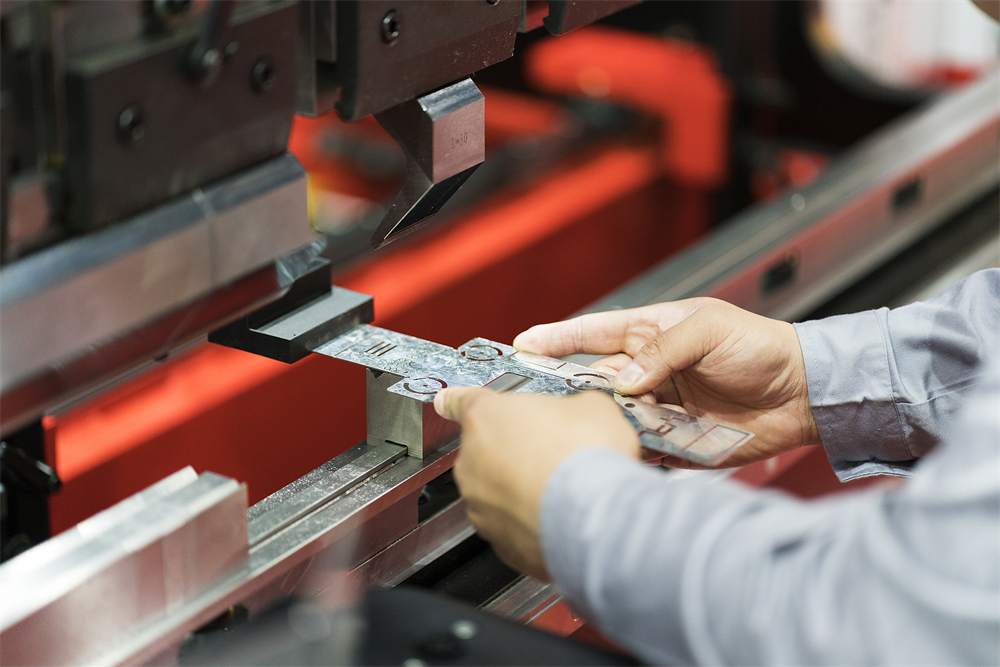
Safety Systems
Safety is not just a legal requirement; it’s a productivity factor. Modern laser-based safety guards (like DSP or LazerSafe) allow the ram to approach the material at high speed and only slow down just before contact. Older light curtain systems require the machine to run at a slower “safe speed” throughout the entire stroke, which can decrease productivity by 20-30%.
Hidden Costs of CNC Press Brake Ownership
The purchase price is only one part of the equation. When planning for CNC press brake buying for sheet metal fabrication businesses, you must account for the “landed and operational” cost.
- Shipping and Rigging: Press brakes are incredibly heavy. Shipping a 10-ton machine across the country requires specialized flatbeds, and rigging it into your facility might require a 20-ton crane or heavy-duty forklifts. Budget $2,000 to $10,000 for this depending on location.
- Foundation Requirements: Large machines (usually over 200 tons) require a reinforced concrete pit or foundation to prevent the floor from cracking and to maintain machine leveling.
- Tooling Packages: A machine without tools is just a heavy paperweight. A versatile starter set of punches and dies can easily cost $5,000 to $15,000.
- Software and Training: Offline programming software allows your engineers to program parts in the office and send them to the machine. This keeps the ram moving instead of waiting for the operator to program at the console. Training for your staff is also essential to maximize the machine’s features.
- Electrical Upgrades: Ensure your facility has the correct voltage and amperage. Some high-tonnage machines require significant power draws that might necessitate a transformer or panel upgrade.
ROI Calculation: Making the Business Case
To justify the investment in CNC press brake buying for sheet metal fabrication businesses, you need to calculate the Return on Investment (ROI). Consider a scenario where a shop moves from a manual machine to a 4-axis CNC HARSLE press brake.
Labor Savings: If a manual setup takes 30 minutes and a CNC setup takes 5 minutes, and you perform 10 setups a day, you save over 4 hours of labor daily. At $30/hour, that’s $120 a day, or roughly $30,000 a year in labor efficiency alone.
Scrap Reduction: CNC machines with automatic crowning and precision backgauges produce a “first-part-correct” result. If you reduce scrap by just 5%, the savings in material costs (especially with expensive metals like stainless steel or copper) can amount to thousands of dollars annually.
Increased Capability: A CNC machine allows you to take on complex jobs that were previously impossible. This allows for higher profit margins on specialized work, which can pay off the machine’s monthly finance payment with just a few high-value projects.
Buying Advice: A Checklist for Fabricators
Before signing the purchase order, use this checklist to ensure the machine fits your long-term strategy:
- Analyze Your Material Mix: What is the thickest and longest material you bend? What is the most common? Buy for the common, but ensure you can handle the maximum.
- Evaluate Operator Skill: If you have highly skilled veterans, a simpler interface might work. If you struggle to find experienced labor, invest in the most advanced 3D controller and offline software available.
- Check Service and Support: A machine is only an asset when it’s running. Does the manufacturer (like HARSLE) offer remote diagnostics, local technicians, or a robust spare parts inventory?
- Test Bend Your Parts: Any reputable supplier should be willing to perform a test bend on your most difficult part. This proves the machine’s accuracy and the controller’s ease of use.
- Future-Proofing: Don’t just buy for today’s jobs. If you plan to expand into heavier fabrication in two years, consider buying a machine with slightly higher tonnage or a longer bed than you currently need.
Frequently Asked Questions (FAQ)
How long does a CNC press brake typically last?
With proper maintenance, a high-quality CNC press brake can last 15 to 25 years. The mechanical frame often outlives the electronic controller. Many businesses choose to retrofit new controllers onto older frames after 15 years to extend the machine’s life.
What is the difference between a 3-axis and a 6-axis backgauge?
A 3-axis backgauge typically moves in X (depth), R (height), and Z (lateral, but often as a pair). A 6-axis backgauge (X1, X2, R1, R2, Z1, Z2) allows each finger to move independently. This is essential for bending asymmetrical parts or parts with tapered flanges.
Is an electric press brake better than a hydraulic one?
“Better” depends on the application. Electric press brakes are superior for small, high-precision parts and offer lower energy costs. However, they are currently limited in maximum tonnage. For heavy-duty bending (above 200 tons), hydraulic systems remain the industry standard for power and cost-efficiency.
Do I need offline programming software?
While not strictly required, it is highly recommended for any shop with more than one CNC machine. It allows the machine to stay in production while the next job is being programmed, and it helps identify potential bending collisions before they happen on the shop floor.
How often should I change the hydraulic oil?
For most hydraulic press brakes, the oil should be checked every six months and replaced every 2,000 to 4,000 hours of operation. Keeping the oil clean and cool is the single most important factor in preserving the life of the valves and pumps.
Conclusion
The process of CNC press brake buying for sheet metal fabrication businesses is a journey of balancing technical requirements with financial reality. By focusing on the right tonnage, a capable controller, and understanding the total cost of ownership, you can transform your production capabilities. HARSLE remains committed to providing high-performance, reliable bending solutions that empower fabricators to reach new levels of precision and efficiency. Whether you are bending simple brackets or complex architectural panels, the right CNC press brake is the foundation of your success.