
Industry-Specific Press Brake Applications for Modern Sheet Metal Workshops


Introduction to Industry-Specific Press Brake Applications Modern Sheet Metal Workshops
In the rapidly evolving landscape of industrial manufacturing, the versatility and precision of metal forming equipment have become the cornerstone of success. Among these, the press brake stands out as an indispensable tool. Understanding the Industry-Specific Press Brake Applications Modern Sheet Metal Workshops require is essential for any business looking to optimize its production line, reduce waste, and meet the stringent quality standards of today’s global market. From the heavy-duty structural components used in construction to the microscopic precision required in electronics, the press brake’s role is both varied and vital.
Modern sheet metal workshops are no longer just about bending metal; they are about integrated digital workflows, high-speed automation, and extreme repeatability. As industries like aerospace, automotive, and renewable energy demand more complex geometries and tougher materials, the technology behind press brakes has advanced to include sophisticated CNC controllers, multi-axis backgauges, and real-time angle monitoring systems. This article explores how different sectors leverage these advancements to achieve peak performance.
Diverse Application Scenarios Across Key Industries
The versatility of a press brake allows it to serve a wide array of sectors, each with its own unique set of challenges and requirements. In the automotive industry, press brakes are used to create everything from structural chassis components to intricate interior brackets. The focus here is on high-volume production and absolute consistency to ensure that every part fits perfectly within the assembly line’s tight tolerances.
In the aerospace sector, the requirements shift toward high-strength, lightweight materials like titanium and specialized aluminum alloys. Here, Industry-Specific Press Brake Applications Modern Sheet Metal Workshops must handle complex, multi-stage bends where the margin for error is virtually zero. Precision is paramount, as even a fraction of a degree in deviation can compromise the aerodynamic integrity or structural safety of an aircraft component.
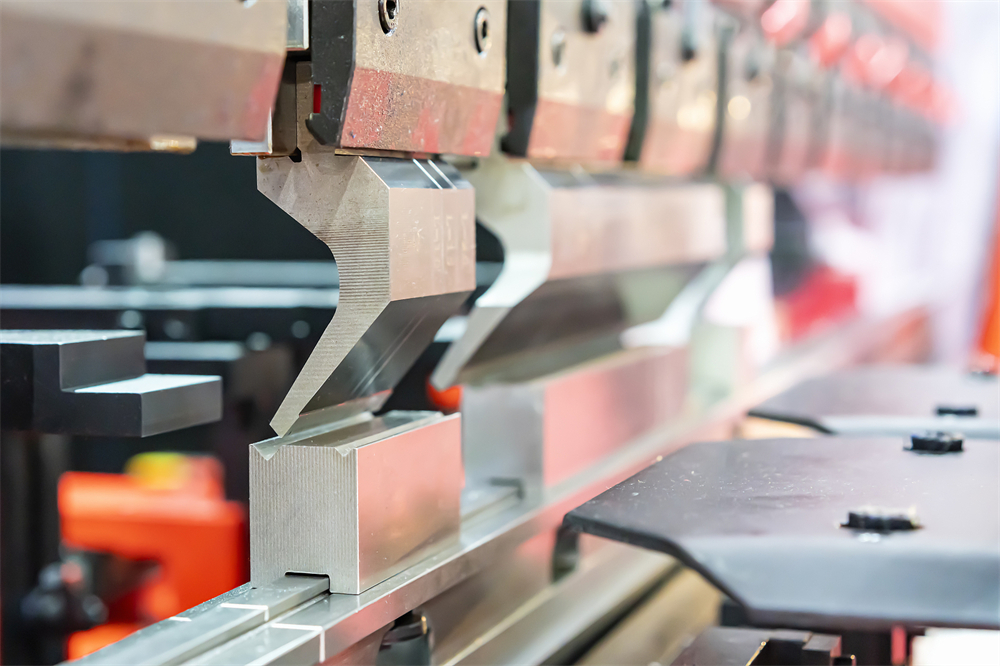
The construction and infrastructure industry utilizes press brakes for large-scale components such as structural beams, roofing panels, and facade cladding. These applications often require long-bed machines capable of handling heavy-gauge steel. Conversely, the electronics and telecommunications industry requires small, high-speed electric press brakes to manufacture server racks, enclosures, and shielding components with high aesthetic quality and no surface marking.
Material and Process Requirements
Successful bending is not just about the machine; it is about understanding the interaction between the tool and the material. Different materials exhibit different behaviors under pressure, such as springback—the tendency of the metal to return to its original shape after the bending force is removed. Modern workshops must account for this using sophisticated CNC algorithms that calculate the necessary over-bend based on material thickness, tensile strength, and grain direction.
- Stainless Steel: Requires higher tonnage due to its high yield strength and is prone to surface scratching, necessitating the use of specialized non-marking dies or protective films.
- Aluminum: Known for its lower elasticity, aluminum requires careful radius selection to prevent cracking at the bend line, especially in harder tempers.
- High-Tensile Steel: Often used in heavy machinery and transport, these materials require robust hydraulic systems and heavy-duty tooling to achieve precise angles without damaging the machine.
Furthermore, the process requirements often dictate the choice of bending method. Air bending is the most common in modern workshops due to its flexibility, allowing a single set of tools to produce various angles. However, bottoming or coining may be required for applications demanding extreme precision or very small internal radii, despite the significantly higher tonnages involved.
Recommended Machine Configuration for Modern Workshops
To meet the demands of Industry-Specific Press Brake Applications Modern Sheet Metal Workshops, selecting the right machine configuration is critical. A standard entry-level machine may suffice for simple tasks, but high-end fabrication requires a more robust setup. We recommend the following configurations for maximum versatility:
| Feature | Recommended Specification | Benefit |
|---|---|---|
| CNC Controller | Delem DA-66T or DA-69T | 3D visualization, offline programming, and intuitive touch interface. |
| Backgauge Axes | 4-axis (X, R, Z1, Z2) or 6-axis | Allows for complex part positioning and asymmetrical bending. |
| Crowning System | CNC Motorized Mechanical Crowning | Compensates for bed deflection to ensure angle consistency over long parts. |
| Safety System | Laser Guarding (e.g., DSP or Lazersafe) | Ensures operator safety without compromising production speed. |
| Clamping | Hydraulic or Pneumatic Quick Clamping | Reduces setup times significantly during tool changes. |
For workshops focusing on thin-gauge precision parts, an Electric Press Brake is often the superior choice. These machines offer higher speeds, lower energy consumption, and less maintenance than hydraulic counterparts. However, for heavy-duty industrial applications, a Synchronized Hydraulic Press Brake remains the industry standard due to its sheer power and reliability under high-load conditions.
Optimized Workflow in a Modern Fabrication Environment
The workflow in a modern sheet metal workshop has transitioned from manual trial-and-error to a streamlined digital process. It begins with CAD/CAM Integration, where the part is designed in 3D software. This design is then processed through offline programming software, which simulates the bending sequence, checks for collisions, and selects the appropriate tooling before the job even reaches the shop floor.
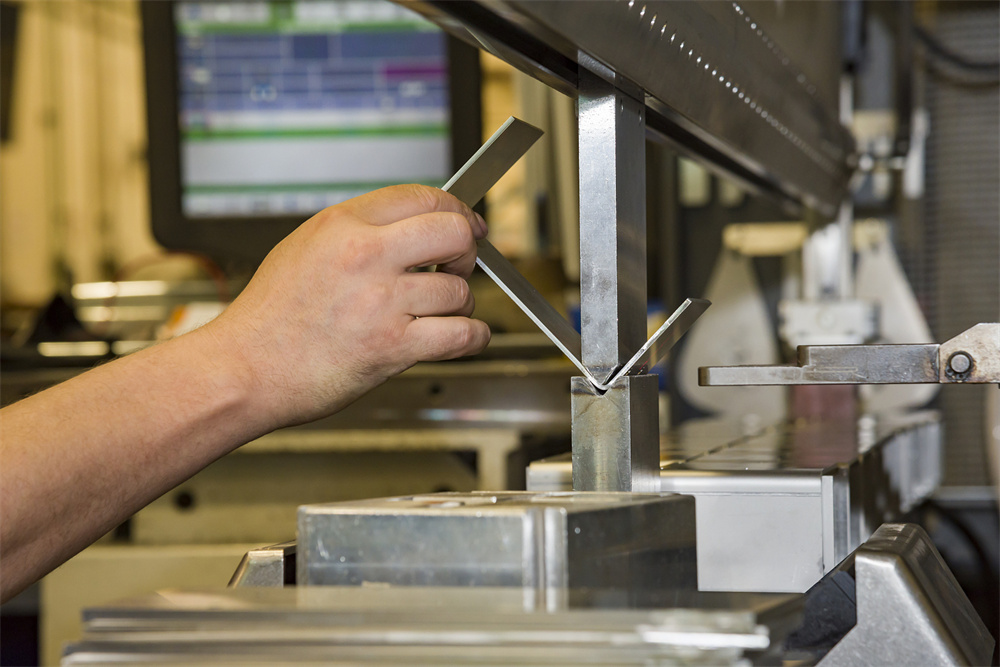
Once the program is loaded into the press brake’s CNC controller, the operator follows a guided setup. Modern machines often feature LED tool indicators that show exactly where to place the punches and dies. During the bending process, Real-time Angle Measurement Systems use lasers to monitor the bend as it happens, adjusting the depth of the ram on the fly to compensate for material variations. This “first-part, right-part” capability is essential for reducing scrap and increasing throughput.
Productivity Benefits of Advanced Press Brake Technology
Investing in high-quality press brake technology yields significant productivity benefits. The most immediate is the reduction in setup time. With CNC-controlled backgauges and quick-change tooling, a workshop can switch between different jobs in minutes rather than hours. This is particularly beneficial for high-mix, low-volume production environments common in modern manufacturing.
Another major benefit is waste reduction. Traditional bending often requires several test pieces to dial in the correct angle. Advanced CNC systems with material databases and angle sensors virtually eliminate this need, saving expensive raw materials. Furthermore, the energy efficiency of modern hydraulic systems—using variable speed drives—can reduce electricity costs by up to 30% compared to older, fixed-speed machines.
Case Example: Elevator Component Manufacturing
A leading manufacturer of elevator cabins and doors faced challenges with inconsistent bend angles across long stainless steel panels, leading to difficulties in the final assembly. By implementing a HARSLE high-precision CNC press brake equipped with a 6-axis backgauge and motorized mechanical crowning, they were able to transform their production.
The motorized crowning system ensured that the 3-meter long bends were perfectly uniform from end to end, eliminating the need for manual shimming. Additionally, the use of offline programming allowed their engineering team to identify potential flange collisions during the design phase, reducing prototype waste by 40%. The result was a 25% increase in overall production capacity and a significant improvement in the aesthetic finish of their stainless steel products.
Frequently Asked Questions (FAQ)
1. What is the difference between a 4-axis and a 6-axis backgauge?
A 4-axis backgauge typically controls the X (depth), R (height), and Z1/Z2 (lateral) positions. A 6-axis backgauge adds independent control for each finger (X1, X2, R1, R2, Z1, Z2), which is crucial for bending complex, asymmetrical parts where the bend line is not parallel to the back of the part.
2. How does CNC crowning improve bending accuracy?
When a press brake applies pressure, the bed and the ram naturally deflect or “bow” slightly. Crowning introduces a counter-curve in the bed to compensate for this deflection, ensuring that the punch enters the die at the same depth along the entire length of the machine, resulting in a consistent angle.
3. Can I bend different materials on the same press brake?
Yes, but you must adjust the settings in the CNC controller. Different materials have different tensile strengths and springback characteristics. You may also need to change the tooling to avoid cross-contamination (e.g., using dedicated tools for stainless steel to prevent carbon steel particles from causing rust).
4. Why is offline programming important for modern workshops?
Offline programming allows the machine to keep running while the next job is being prepared. It also provides a safety check through 3D simulation, ensuring that the part can be bent without hitting the machine frame or the tools, which prevents costly mistakes and downtime.
Conclusion: Elevate Your Workshop with HARSLE
The Industry-Specific Press Brake Applications Modern Sheet Metal Workshops demand are complex and ever-changing. To stay competitive, fabricators must embrace technology that offers precision, flexibility, and efficiency. HARSLE is committed to providing state-of-the-art press brake solutions tailored to the specific needs of your industry. Whether you are in automotive, aerospace, or general fabrication, our machines are designed to help you achieve the highest standards of quality and productivity.
Ready to upgrade your workshop’s capabilities? Contact HARSLE today to speak with our technical experts about the perfect press brake configuration for your specific applications. Let us help you turn your metal fabrication challenges into a competitive advantage.


