Industrial Hydraulic Press Buying Guide: Specifications That Matter Most

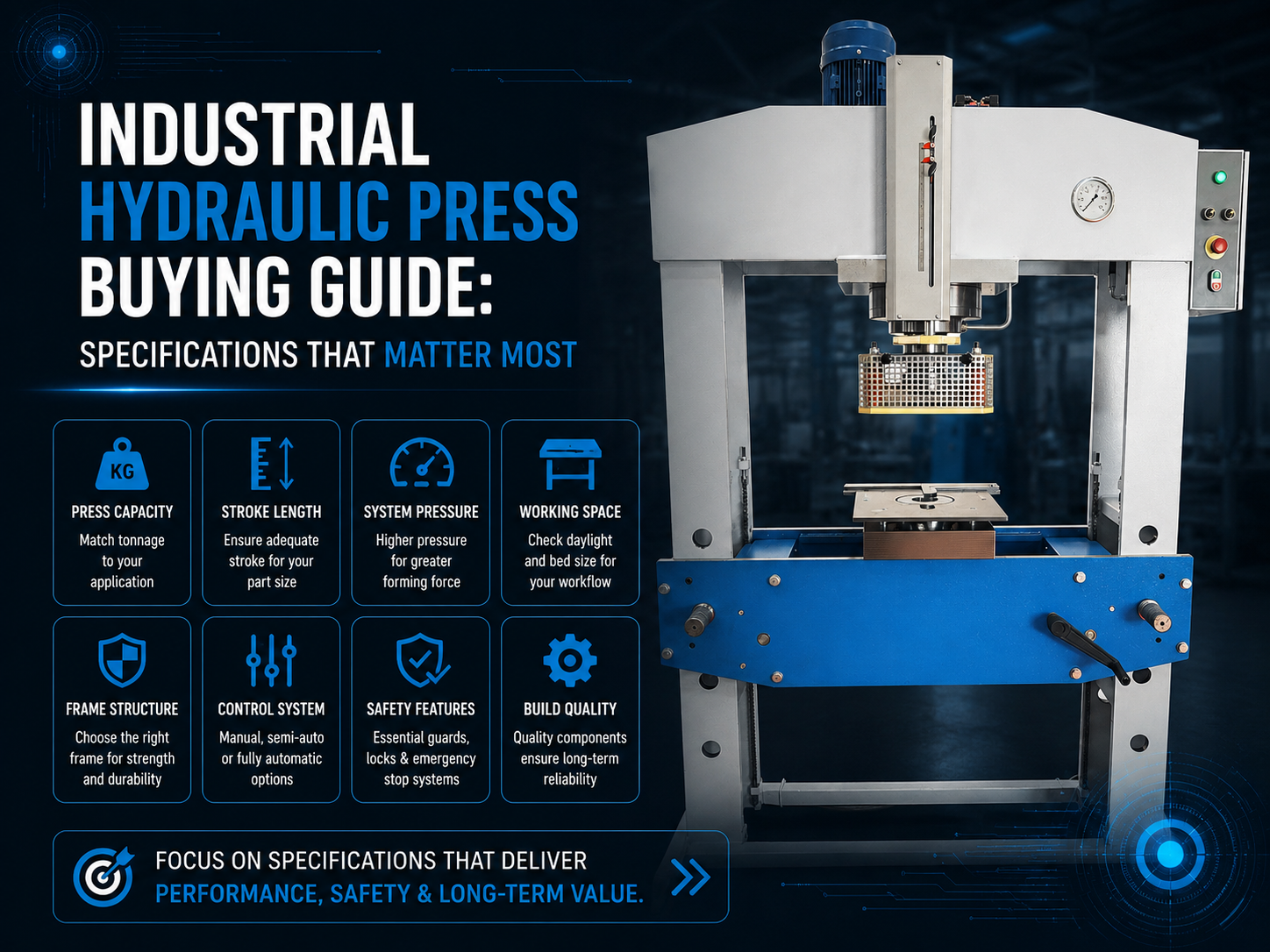
Introduction to Industrial Hydraulic Press Procurement
In the realm of modern metal fabrication, the hydraulic press remains a cornerstone of production efficiency. Whether you are involved in deep drawing, stamping, forging, or assembly, selecting the right machine is a high-stakes decision that impacts your bottom line for decades. This Industrial Hydraulic Press Buying Guide: Specifications That Matter Most is designed to navigate the complexities of technical data sheets and marketing jargon to help you identify the equipment that truly fits your operational needs.
HARSLE has long been at the forefront of providing high-performance hydraulic solutions. We understand that a press is not just a piece of iron; it is a critical asset that must deliver precision, repeatability, and safety. When embarking on the journey of industrial hydraulic press buying, specifications that matter most often go beyond the simple tonnage rating. Factors such as frame rigidity, approach speeds, and control integration play a pivotal role in determining the long-term success of your investment.
As global manufacturing shifts toward Industry 4.0, the criteria for selecting a hydraulic press have evolved. It is no longer sufficient to look at the physical dimensions alone. Today’s buyers must consider energy efficiency, data connectivity, and modularity. This guide will break down the essential components of the buying process, from initial cost assessments to calculating the return on investment (ROI).
Price Range Overview: What to Expect
The price of an industrial hydraulic press can vary significantly based on its capacity, technology, and origin. Understanding the market tiers is the first step in budgeting. Generally, industrial presses fall into three primary price categories: entry-level, mid-range, and high-end specialized systems.
- Entry-Level (Basic Utility): These machines typically range from $15,000 to $50,000. They are often C-frame or small H-frame presses with manual or semi-automatic controls. They are ideal for low-volume production, repair shops, or simple assembly tasks where high precision is not the primary concern.
- Mid-Range (Production Grade): Ranging from $60,000 to $250,000, these presses are the workhorses of the industry. They feature PLC controls, enhanced safety light curtains, and higher tonnage capacities (100 to 500 tons). This category includes many of HARSLE’s most popular models, offering a balance of speed and reliability.
- High-End (Advanced/Servo-Driven): These systems can exceed $500,000. They incorporate servo-hydraulic technology, multi-axis CNC controls, and massive tonnage (1,000+ tons). These are designed for high-speed automotive lines, aerospace components, and complex deep-drawing applications where every micron counts.
When considering the price, it is vital to remember that the sticker price is only the beginning. A cheaper machine with high maintenance requirements or slow cycle times can quickly become more expensive than a premium model over a five-year period. Therefore, the focus should always be on the total cost of ownership (TCO).
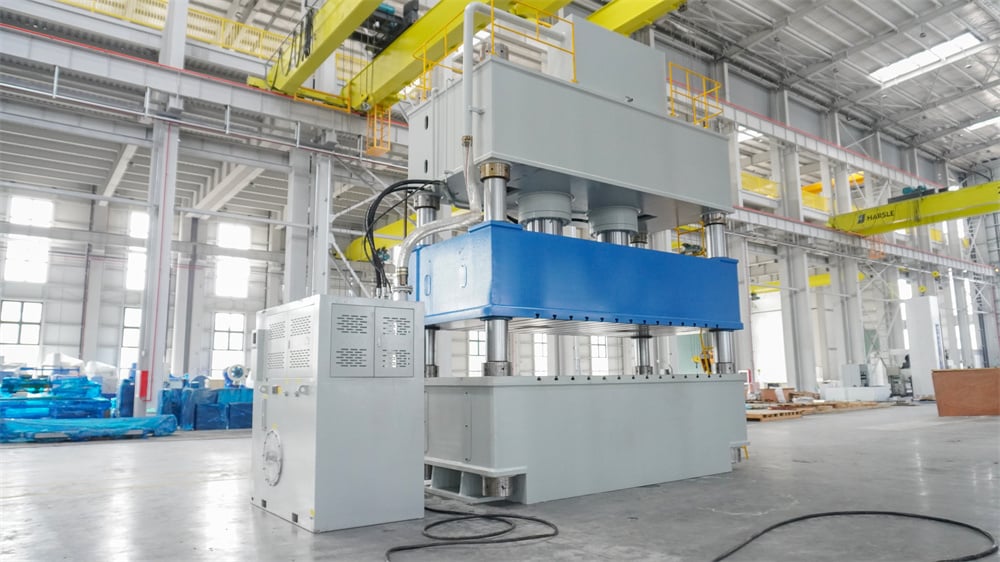
Main Cost Drivers in Hydraulic Press Selection
Several technical factors directly influence the manufacturing cost and, consequently, the selling price of a hydraulic press. In the context of Industrial Hydraulic Press Buying : Specifications That Matter Most, understanding these drivers allows you to prioritize features that align with your production goals.
1. Tonnage and Pressure Capacity
Tonnage is the most obvious cost driver. The amount of force required to deform a material determines the size of the hydraulic cylinders, the thickness of the steel frame, and the power of the motor. Over-specifying tonnage leads to unnecessary energy consumption, while under-specifying can lead to frame fatigue and tool damage. It is essential to calculate the required force based on material thickness, tensile strength, and the geometry of the part.
2. Stroke Length and Daylight
The stroke is the total distance the ram can move, while the daylight is the maximum vertical opening between the bed and the ram. Larger stroke and daylight requirements necessitate longer cylinders and taller frames, which increase material costs and shipping complexities. For deep drawing applications, these specifications are non-negotiable and must be matched to the height of the finished part and the die set.
3. Bed Size and Bolster Dimensions
The bed size determines the maximum dimensions of the workpiece and the tooling. A larger bed requires a more robust frame to prevent deflection under load. Deflection is the enemy of precision; if the bed bows even slightly during a press cycle, the parts will be inconsistent, and the dies will wear prematurely. High-quality presses use finite element analysis (FEA) to ensure the bed remains rigid under maximum tonnage.
4. Speed and Cycle Time
In high-volume manufacturing, seconds matter. A press with fast approach, pressing, and return speeds requires larger pumps and more sophisticated valving. Servo-hydraulic systems are particularly effective here, as they can accelerate and decelerate the ram with extreme precision, reducing non-productive time and increasing parts-per-hour output.
Configuration Impact: Frame Types and Control Systems
The physical configuration of the press dictates its versatility and footprint. Choosing the right frame is a critical part of the Industrial Hydraulic Press Buying : Specifications That Matter Most checklist.
C-Frame (Gap Frame) Presses
C-frame presses provide three-sided access to the work area, making them ideal for manual loading and unloading or for use with automated transfer systems. They occupy less floor space but are generally limited to lower tonnages (usually under 250 tons) because the “C” shape is more prone to deflection (yawning) under heavy loads compared to closed-frame designs.
H-Frame (Straight-Side) Presses
H-frame presses are characterized by their four-column or solid-side construction. This design is incredibly rigid and can handle massive tonnages with minimal deflection. They are the preferred choice for high-precision stamping and heavy-duty forging. While they offer less accessibility than C-frames, their stability ensures longer tool life and better part quality.
4-Column Presses
The 4-column design offers excellent accessibility from all four sides and provides uniform pressure distribution across the entire bed. This is particularly useful for large, complex dies where off-center loading might be a concern. These presses are widely used in the plastics and rubber industries, as well as for specialized metal forming.
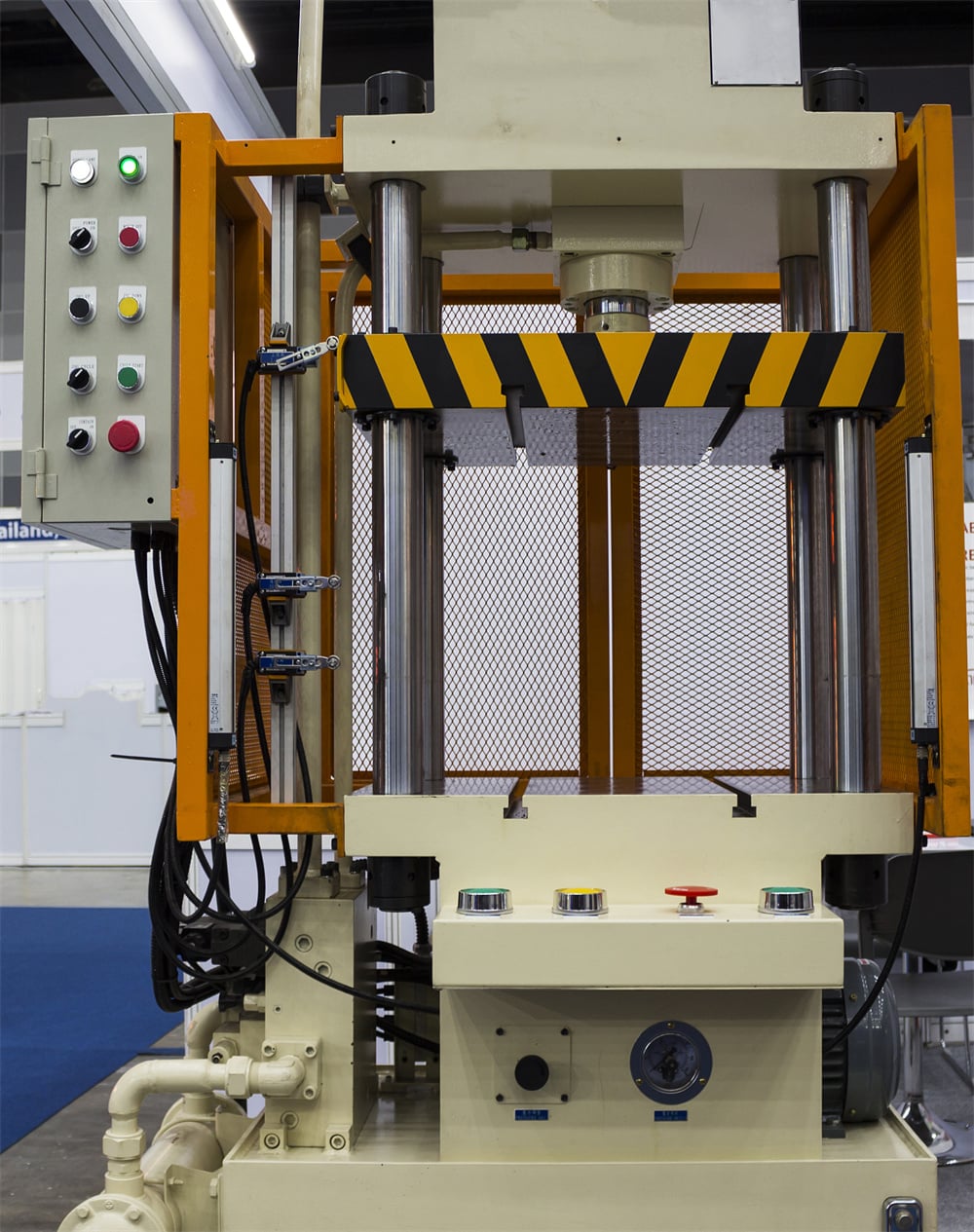
Control Systems: PLC vs. CNC
The “brain” of the press is just as important as its “muscle.” Basic PLC (Programmable Logic Controller) systems are sufficient for simple, repetitive tasks. However, for complex operations involving multiple steps, variable speeds, and pressure dwelling, a CNC (Computer Numerical Control) system is necessary. Modern CNCs allow for recipe storage, remote diagnostics, and integration with factory-wide ERP systems, which is a key component of the Industrial Hydraulic Press Buying Specifications That Matter Most.
Hidden Costs of Ownership
When calculating the budget for a new hydraulic press, many buyers overlook the secondary expenses that can arise during and after installation. To avoid surprises, consider the following:
- Foundation and Installation: Large presses require specialized reinforced concrete foundations to handle the vibration and weight. Additionally, the cost of rigging, leveling, and electrical hookup can add thousands to the initial investment.
- Hydraulic Fluid and Cooling: A large press can require hundreds of gallons of high-grade hydraulic oil. Furthermore, the heat generated during continuous operation must be managed via water or air cooling systems, which have their own utility and maintenance costs.
- Tooling and Die Sets: The press is only as good as the tools inside it. Custom dies are a significant expense and must be maintained regularly to ensure part quality.
- Operator Training: Modern presses with advanced CNC controls require skilled operators. Investing in comprehensive training ensures the machine is used safely and efficiently, reducing the risk of costly accidents or downtime.
- Maintenance and Spare Parts: Seals, filters, and valves are wear items. A proactive maintenance schedule is essential. Choosing a manufacturer like HARSLE, which provides excellent after-sales support and readily available spare parts, is a strategic move to minimize long-term costs.
ROI Calculation: Measuring the Value
An industrial hydraulic press should be viewed as a profit generator. To calculate the ROI, you must look at both the tangible and intangible benefits. The formula for ROI is generally (Net Profit / Cost of Investment) x 100.
Tangible Gains: These include increased production speed (more parts per shift), reduced scrap rates due to higher precision, and lower energy bills if opting for servo-hydraulic technology. For example, a servo-driven press can reduce energy consumption by up to 50% compared to traditional fixed-displacement pump systems.
Intangible Gains: These include improved worker safety, which reduces insurance premiums and turnover, and the ability to take on more complex projects that competitors with older equipment cannot handle. By upgrading to a modern HARSLE press, a shop can often replace two or three older, slower machines, freeing up valuable floor space.
| Feature | Traditional Hydraulic | Servo-Hydraulic (HARSLE) | Impact on ROI |
|---|---|---|---|
| Energy Usage | High (Constant) | Low (On-demand) | Significant Cost Savings |
| Precision | Moderate | Very High | Reduced Scrap/Rework |
| Noise Level | High | Low | Better Work Environment |
| Maintenance | Frequent Oil Changes | Less Heat, Longer Oil Life | Lower Operating Costs |
Buying Advice: A Step-by-Step Checklist
To ensure you make the right choice in your Industrial Hydraulic Press Buying : Specifications That Matter Most journey, follow this checklist:
- Define Your Primary Application: Are you punching, forming, or deep drawing? The application dictates the frame type and speed requirements.
- Calculate Required Tonnage: Use a safety factor of 20% above your maximum calculated force to prevent running the machine at its absolute limit constantly.
- Evaluate Bed and Stroke Requirements: Ensure the machine can accommodate your largest dies and provide enough clearance for part removal.
- Consider Future Growth: Don’t just buy for today’s needs. If you plan to expand into thicker materials or larger parts, choose a machine with slightly higher capacity.
- Check Safety Compliance: Ensure the press meets local safety standards (such as OSHA in the US or CE in Europe). Look for integrated light curtains, dual-hand controls, and emergency stop circuits.
- Assess Vendor Reputation: Research the manufacturer’s track record. HARSLE, for instance, has a global reputation for durability and technical support.
- Request a Demonstration: If possible, see the machine in action or request a video of a similar model performing a task relevant to your industry.
Frequently Asked Questions (FAQ)
What is the average lifespan of an industrial hydraulic press?
With proper maintenance, a high-quality industrial hydraulic press can last 20 to 30 years or more. Many machines from the mid-20th century are still in operation today, though they often require retrofitting with modern controls and safety features to remain competitive.
How often should the hydraulic oil be changed?
This depends on the usage intensity and the environment. Generally, oil should be tested every 2,000 hours of operation. If the oil is clean and the additive package is intact, it may not need a full change, but filters should be replaced much more frequently.
Can a hydraulic press be customized for specific tasks?
Absolutely. Most manufacturers, including HARSLE, offer customization options such as heated platens, moving bolsters, die cushions for deep drawing, and specialized PLC programming to meet unique production requirements.
Is servo-hydraulic technology worth the extra cost?
For high-cycle applications or processes requiring extreme precision and energy efficiency, the answer is usually yes. The initial higher investment is often recouped within 2-3 years through energy savings and increased productivity.
What are the most common causes of hydraulic press failure?
The leading causes are contaminated oil, which damages pumps and valves, and off-center loading, which puts undue stress on the frame and bushings. Regular inspections and operator training can prevent the vast majority of these issues.
Conclusion
Choosing the right machinery is a pivotal moment for any fabrication business. By focusing on the Industrial Hydraulic Press Buying : Specifications That Matter Most—tonnage, frame rigidity, control sophistication, and total cost of ownership—you can ensure that your investment drives growth and efficiency for years to come. HARSLE remains committed to providing the industry with the tools and knowledge necessary to excel in an increasingly competitive global market. Whether you are a small shop or a large-scale manufacturer, the principles of quality, precision, and support remain the same.