Choosing the Right Press Brake for Small-Batch and High-Volume Applications


Introduction to Modern Press Brake Selection
In the rapidly evolving landscape of metal fabrication, the ability to adapt to varying production demands is the hallmark of a successful workshop. Whether you are a custom job shop handling diverse, low-volume prototypes or a large-scale manufacturer churning out thousands of identical components, the press brake remains the heart of your bending operations. However, the requirements for these two extremes—small-batch and high-volume applications—are vastly different. Choosing the wrong machine can lead to bottlenecks, excessive downtime, or unnecessary capital expenditure.
HARSLE, a leader in industrial metalworking machinery, understands that the decision-making process involves more than just looking at tonnage and length. It requires a deep dive into workflow integration, software capabilities, and mechanical precision. This guide aims to demystify the process of Choosing Press Brake Small-Batch High-Volume Applications, providing you with the technical insights needed to make an informed investment that aligns with your business goals.
As we navigate through the technical specifications and operational strategies, we will explore how modern CNC technology has bridged the gap between flexibility and speed. From the intricacies of backgauge movement to the efficiency of hybrid drive systems, every component plays a role in determining the machine’s suitability for your specific production environment.
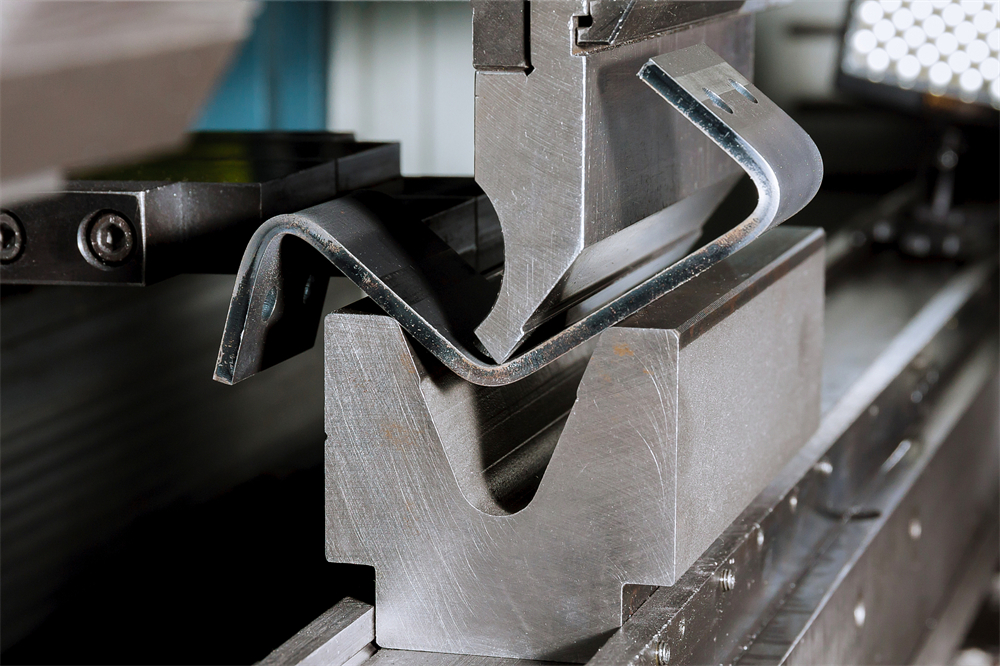
Key Considerations for Press Brake Selection
Understanding Tonnage and Bending Length
The first step in any selection process is determining the physical capacity required. Tonnage is the pressure the press brake can exert. Calculating the required tonnage involves considering the material type, thickness, and the V-opening of the die. For high-volume applications, it is often wise to select a machine with a 20% buffer over your maximum calculated tonnage to prevent long-term wear on the hydraulic system. In small-batch environments, versatility is key; a machine that can handle a wide range of thicknesses allows the shop to accept more diverse contracts.
Bending length is equally critical. While a 4-meter machine offers great flexibility, it may be overkill for a shop that primarily produces small brackets. Conversely, a machine that is too short will limit your ability to grow. Consider the footprint of the machine in your facility, especially in high-volume settings where floor space is optimized for material flow and robotic integration.
Material Properties and Springback
Different materials behave differently under pressure. Stainless steel requires significantly more tonnage than aluminum, and high-tensile strength materials exhibit more “springback”—the tendency of the metal to return to its original shape after bending. For small-batch work where you might switch between materials frequently, a press brake with advanced angle measurement systems is invaluable. For high-volume work, consistency is the priority, requiring a machine that can maintain identical results over thousands of cycles despite slight variations in material batches.
Accuracy and Repeatability
In the context of Choosing Press Brake Small-Batch High-Volume Applications, accuracy is non-negotiable. For small batches, the “first part, right part” philosophy is essential to minimize waste. This requires a high-precision CNC controller and a responsive hydraulic system. In high-volume production, repeatability is the metric of success. The machine must be able to perform the same bend with micron-level precision for an entire shift without drifting due to thermal expansion or mechanical fatigue.
Technical Details: The Engine of Productivity
CNC Controllers and Software Integration
The brain of the press brake is its CNC controller. Brands like Delem, Cybelec, and ESA offer various levels of sophistication. For small-batch applications, look for controllers with 3D visualization and offline programming capabilities. This allows engineers to program the machine from an office, reducing the time the machine sits idle during setup. For high-volume applications, the focus shifts to user interface simplicity and the ability to integrate with ERP systems for real-time production tracking.
Backgauge Systems: The Key to Complexity
The backgauge determines how accurately the workpiece is positioned. A standard 2-axis (X, R) backgauge might suffice for simple boxes, but complex geometries require 4-axis (X, R, Z1, Z2) or even 6-axis (X1, X2, R1, R2, Z1, Z2) systems. In small-batch environments, a multi-axis backgauge allows for complex setups without manual repositioning. In high-volume environments, high-speed backgauge movement is essential to shave seconds off each cycle time, which adds up to significant productivity gains over a year.
Crowning Systems: Ensuring Straightness
When a press brake applies pressure, the bed and the ram naturally deflect. Without compensation, this results in a “canoe effect” where the bend angle is wider in the middle than at the ends. Crowning systems—either hydraulic or mechanical—counteract this deflection. Mechanical crowning is often preferred for its precision and stability over time, making it a favorite for high-volume manufacturers who demand perfect straightness across long workpieces.
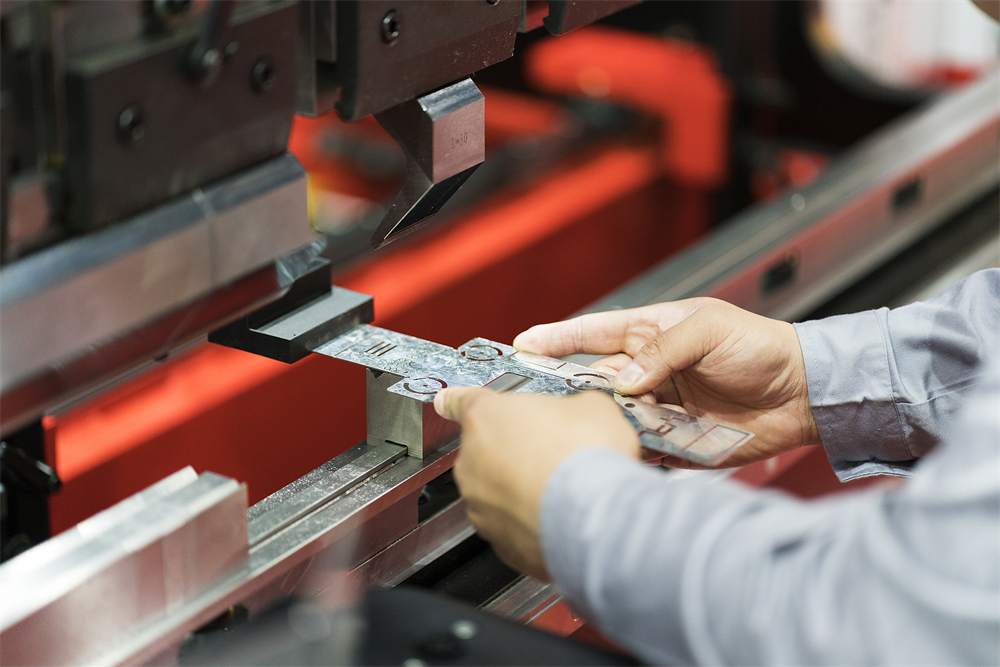
Drive Systems: Hydraulic vs. Hybrid
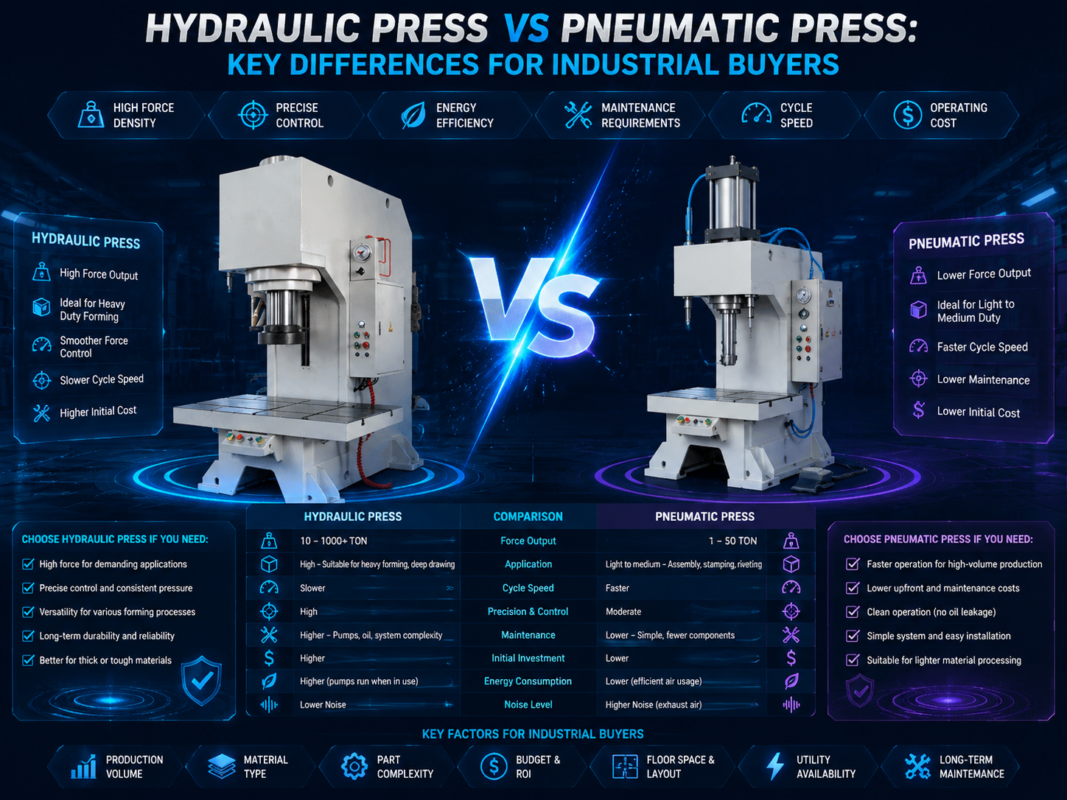
Traditional hydraulic systems are robust and cost-effective. However, the industry is moving toward hybrid drive systems, especially for high-volume users. Hybrid systems use servo motors to drive the hydraulic pumps, operating only when the machine is actually bending. This results in up to 60% energy savings, quieter operation, and less heat generation. For a high-volume shop running multiple shifts, the energy savings alone can justify the higher initial investment of a hybrid HARSLE press brake.
Selection Advice: Tailoring the Machine to the Workflow
Strategies for Small-Batch Success
If your business model revolves around small batches, your biggest enemy is setup time. To combat this, prioritize the following features:
- Quick-Change Tooling: Systems like Wila or Amada-style hydraulic clamping allow operators to swap tools in seconds rather than minutes.
- Offline Programming: Ensure your machine supports software that can import CAD files and automatically generate bend sequences.
- Large Tool Library: Having a wide variety of tools ready to go reduces the need for custom setups.
- Angle Sensors: Laser or contact-based angle measurement systems ensure the first part is perfect, eliminating the need for trial-and-error scrap.
Optimizing for High-Volume Production
For high-volume manufacturers, the goal is maximum throughput and minimum intervention. Focus on these aspects:
- Automation Readiness: Even if you don’t use robots now, choose a machine with a controller and interface that can easily integrate with a robotic arm in the future.
- High-Speed Hydraulics: Look for machines with fast approach and return speeds to minimize non-bending time.
- Durability: High-volume work puts immense stress on the frame. HARSLE machines utilize heavy-duty, stress-relieved steel frames to ensure long-term structural integrity.
- Thermal Stability: Ensure the hydraulic system has efficient cooling to maintain oil viscosity and consistent pressure throughout long production runs.
Comparison Table: Small-Batch vs. High-Volume Requirements
| Feature | Small-Batch Priority | High-Volume Priority |
|---|---|---|
| Setup Time | Critical (Needs Quick Clamping) | Moderate (Long Runs) |
| Programming | Offline/3D Visualization | Simple/Macro-based |
| Backgauge | Multi-axis (Flexibility) | High Speed (Cycle Time) |
| Drive System | Standard Hydraulic/Electric | Hybrid (Energy Efficiency) |
| Accuracy | First-Part Precision | Long-Term Repeatability |
| Automation | Manual/Semi-Automatic | Full Robotic Integration |
Maintenance and Total Cost of Ownership
Regardless of the application, a press brake is a long-term asset. Maintenance plays a pivotal role in the Total Cost of Ownership (TCO). For high-volume users, a breakdown can halt an entire production line, making a proactive maintenance schedule essential. This includes regular oil analysis, filter changes, and lubrication of the backgauge guideways.
For small-batch shops, the machine might not run 24/7, but it must be ready to perform a wide variety of tasks at a moment’s notice. Keeping the tool clamping surfaces clean and the CNC software updated is vital. HARSLE provides comprehensive support and spare parts availability to ensure that whether you are running one shift or three, your machine remains a reliable profit center.
Frequently Asked Questions (FAQ)
1. Can a high-volume press brake be used for small batches?
Yes, but it may not be the most cost-effective solution. High-volume machines are often optimized for speed and automation. While they can perform small-batch work, the lack of quick-change tooling or complex backgauging might make the setup process slower than on a machine specifically designed for flexibility.
2. Is an electric press brake better than a hydraulic one for small parts?
Electric press brakes are excellent for small, high-precision parts. They offer incredible speed and accuracy with lower energy consumption. However, they are generally limited in tonnage. For heavy-duty applications, hydraulic or hybrid systems remain the industry standard.
3. How important is the CNC controller brand?
The brand is less important than the functionality. However, choosing a well-known brand like Delem ensures that you can find trained operators easily and that technical support and software updates will be available for years to come. HARSLE integrates top-tier controllers to ensure global compatibility.
4. What is the benefit of a 6-axis backgauge?
A 6-axis backgauge (X1, X2, R1, R2, Z1, Z2) allows each gauge finger to move independently in three dimensions. This is crucial for bending parts with non-parallel sides or complex tapered shapes, which are common in custom, small-batch fabrication.
5. How does crowning affect high-volume production?
In high-volume production, even a slight deviation in the bend angle can lead to assembly issues downstream. A reliable crowning system ensures that every part in a 1,000-piece run is identical, reducing the need for manual inspection and rework.
Conclusion: Making the Right Choice with HARSLE
Choosing the right press brake is a strategic decision that impacts your shop’s efficiency, capability, and bottom line. By understanding the specific demands of Choosing Press Brake Small-Batch High-Volume Applications, you can select a machine that not only meets your current needs but also provides a platform for future growth. Small-batch operations should prioritize agility, quick setups, and advanced software, while high-volume manufacturers should focus on speed, energy efficiency, and automation readiness.
HARSLE offers a diverse range of press brakes, from the versatile and user-friendly Genius series to the high-performance, hybrid-driven models designed for the most demanding production environments. By combining robust mechanical engineering with the latest in CNC technology, HARSLE ensures that your investment delivers precision and reliability for years to come. Evaluate your workflow, consider your material requirements, and choose a partner that understands the nuances of modern metal fabrication.