
How to Choose the Right Press Brake for Different Bending Applications: A Comprehensive Guide

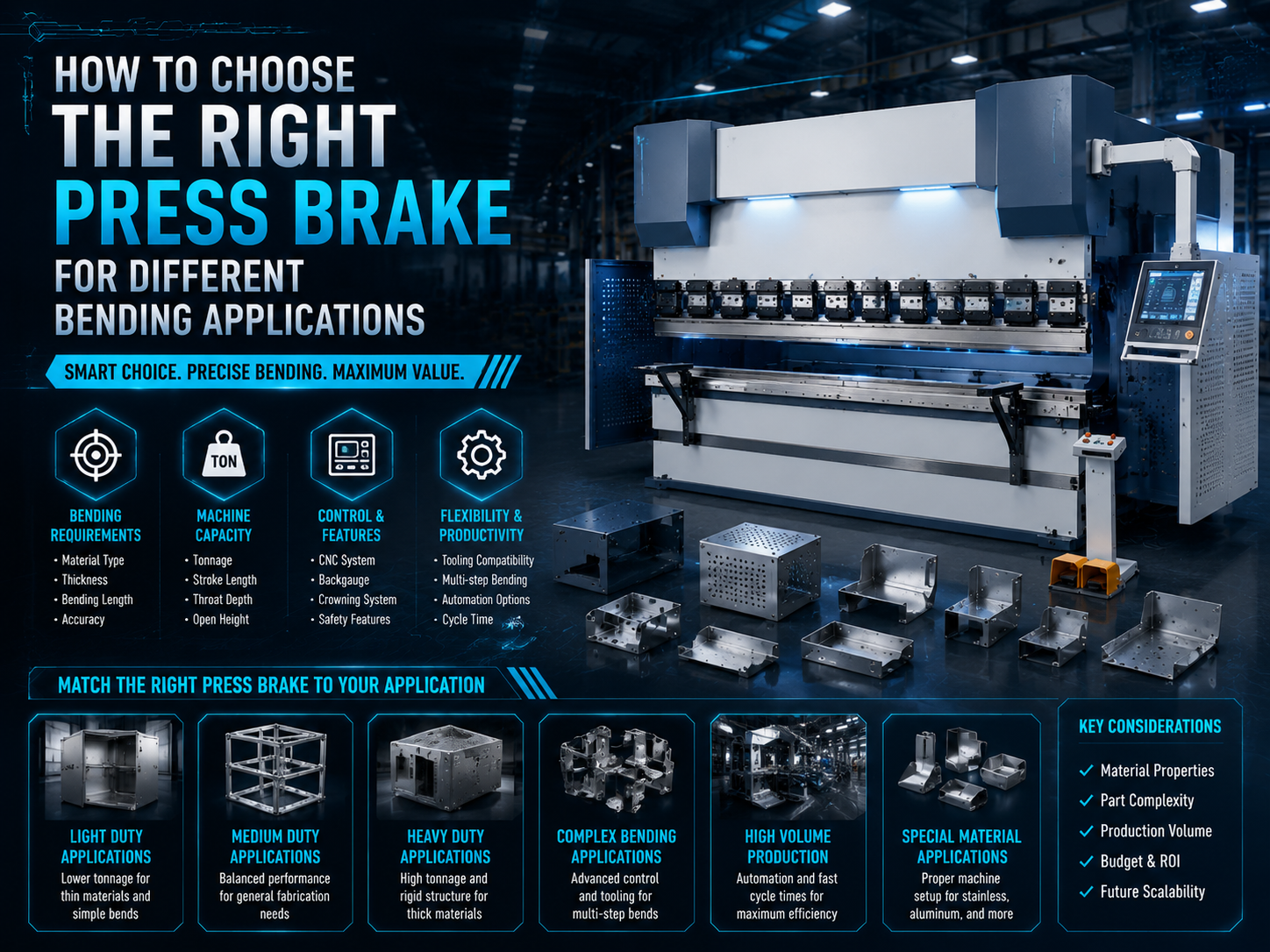
Introduction to Selecting the Ideal Press Brake
In the competitive landscape of metal fabrication, the ability to deliver high-quality, precise bends consistently is what separates industry leaders from the rest. Choosing the right press brake is not merely a matter of purchasing a machine; it is a strategic investment that dictates your shop’s capability, efficiency, and long-term profitability. Whether you are a small job shop or a large-scale industrial manufacturer, understanding how to choose press brake different bending applications is critical to optimizing your production line.
The modern press brake has evolved from simple mechanical levers to highly sophisticated, CNC-controlled systems capable of micron-level accuracy. However, with this technological advancement comes a complex array of choices. From tonnage and bed length to the number of axes and the type of crowning system, every specification must align with your specific material types and production volumes. This guide provides a deep dive into the technical considerations and practical applications of press brakes, ensuring you make an informed decision for your business.
Application Scenarios: Matching Machine to Industry
The first step in choosing a press brake is identifying the primary application scenarios your facility handles. Different industries have vastly different requirements for precision, speed, and material handling. For instance, the automotive industry often requires high-speed, repetitive bending of relatively thin, high-strength steel components. In this scenario, an electric or hybrid press brake with fast cycle times and high-precision backgauging is often the preferred choice.
In contrast, the heavy machinery and construction sectors deal with thick plates, often exceeding 20mm in thickness. Here, the focus shifts from speed to raw power and structural rigidity. Large-format hydraulic press brakes with high tonnage (300T to 2000T+) and deep throats are necessary to accommodate large workpieces like crane booms or chassis frames. The ability to handle heavy-duty materials without frame deflection is paramount in these high-stress environments.
The aerospace and medical device industries represent the pinnacle of precision requirements. Components in these fields often involve complex geometries and exotic materials like titanium or specialized aluminum alloys. For these applications, a multi-axis CNC press brake (8 axes or more) with integrated angle measurement systems is essential. These systems can compensate for material variations in real-time, ensuring that every bend meets stringent aerospace tolerances without the need for manual adjustment.
Material and Process Requirements
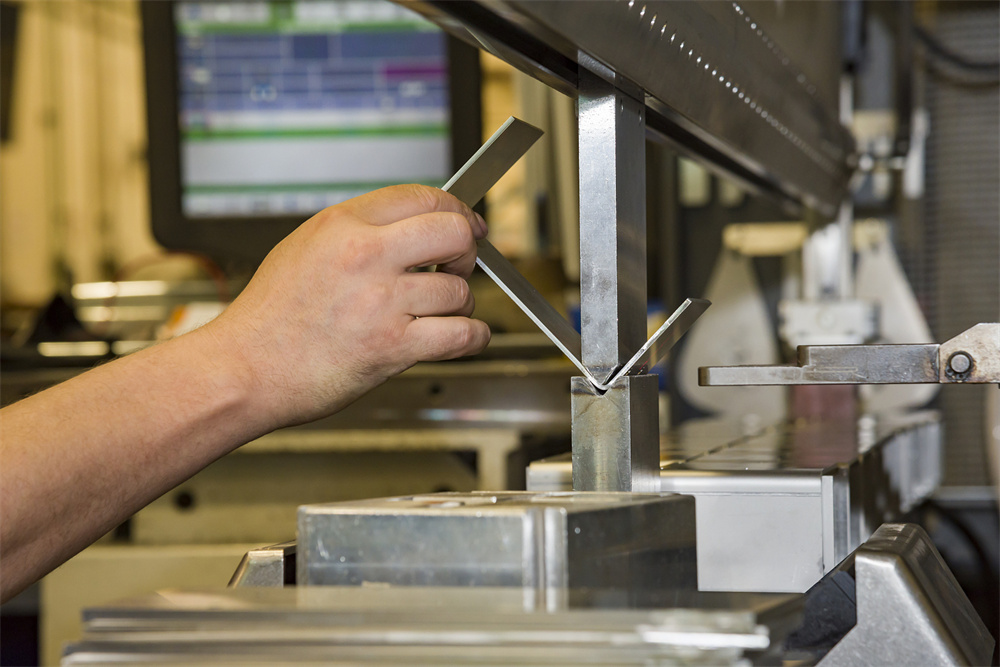
To choose press brake different bending applications effectively, you must analyze the physical properties of the materials you intend to process. The three most critical factors are material type, thickness, and maximum bend length. These factors directly determine the required tonnage and the type of tooling needed.
Understanding Tonnage and Tensile Strength
Tonnage is the amount of pressure the press brake can apply. It is calculated based on the material’s tensile strength, thickness, and the V-die opening. For example, stainless steel requires significantly more tonnage than mild steel or aluminum of the same thickness due to its higher tensile strength and work-hardening properties. If you frequently work with stainless steel, you must factor in a 50% increase in required tonnage compared to mild steel calculations.
Bend Length and Deflection
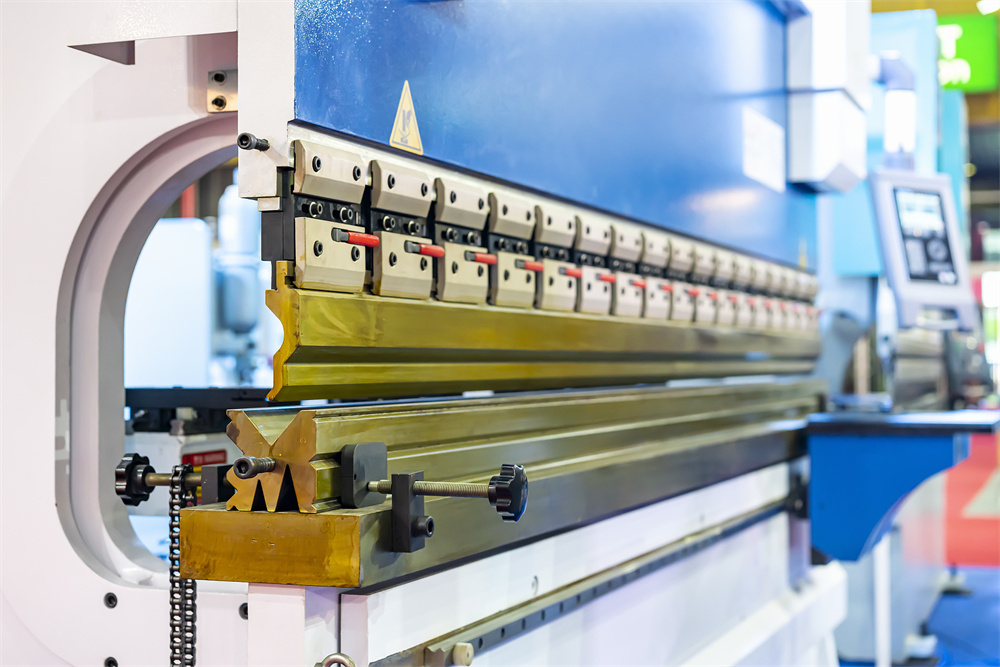
The length of the part determines the bed length of the machine. However, it also introduces the challenge of deflection. When a long piece of metal is bent, the center of the machine’s ram and bed can flex slightly under pressure, leading to a “canoe effect” where the angle in the middle of the bend is wider than at the ends. To counter this, high-quality press brakes incorporate crowning systems. Mechanical crowning, often integrated into the table, uses a series of wedges to create a counter-curve, ensuring a uniform bend angle across the entire length of the workpiece.
Springback and Minimum Flange Requirements
Every material exhibits some degree of springback—the tendency of the metal to return to its original shape after the pressure is released. Advanced CNC controllers like the Delem DA-66T or DA-69T include extensive material libraries that automatically calculate the necessary over-bend to compensate for springback. Additionally, the minimum flange length you can produce is limited by the V-die width. Choosing a machine that supports a wide range of modular tooling is essential for shops that handle diverse part designs.
Recommended Machine Configuration
Once the application and material requirements are clear, you can move on to the specific machine configuration. A well-configured press brake acts as a force multiplier for your workforce.
- Drive System: Choose between Hydraulic, Electric, or Hybrid. Hydraulic systems are the workhorses for high-tonnage applications. Electric press brakes offer superior speed and energy efficiency for light-gauge work. Hybrid systems combine the power of hydraulics with the precision and energy savings of servo-electric motors.
- CNC Controller: The “brain” of the machine. For complex 3D parts, a controller with graphical simulation capabilities is vital. It allows operators to visualize the bending sequence, preventing collisions with the machine or tooling before the first bend is even made.
- Backgauge System: The backgauge is responsible for the accuracy of the flange dimensions. A standard 2-axis (X, R) backgauge is sufficient for simple boxes, but complex parts with tapered flanges or multiple steps require 4-axis (X, R, Z1, Z2) or even 6-axis (X1, X2, R1, R2, Z1, Z2) systems for maximum flexibility.
- Tooling Clamping: Manual clamping is cost-effective but slow. Hydraulic or pneumatic quick-clamping systems can reduce setup times by up to 80%, which is crucial for high-mix, low-volume production environments.
The Professional Workflow: From CAD to Finished Part
Implementing a new press brake involves more than just plugging it in. A professional workflow ensures that the machine’s capabilities are fully utilized. The process typically begins in the engineering department using CAD/CAM software. Modern software can “unfold” a 3D model, accounting for the specific K-factor of the material and the tooling geometry of the press brake.
The resulting program is then transferred to the CNC controller via a network or USB. The operator selects the program, and the controller displays the required tooling setup. With a quick-clamping system, the operator installs the punches and dies in minutes. The first part is then bent, and if the machine is equipped with an automatic angle measurement system (like a laser or contact sensor), the controller makes real-time adjustments to ensure the first part is a good part. This “first-part-right” philosophy significantly reduces scrap and setup time.
Productivity Benefits of the Right Choice
When you correctly choose press brake different bending applications, the productivity gains are immediate and measurable. The most obvious benefit is the reduction in cycle time. Modern CNC machines move faster, settle quicker, and have higher approach and return speeds than older models. This allows for more bends per hour, directly increasing throughput.
Furthermore, accuracy reduces the need for secondary operations. If a bend is inaccurate, it may require manual straightening or, worse, the part may be scrapped. A high-precision press brake ensures that downstream processes, such as welding or assembly, go smoothly because every part is identical and within tolerance. This consistency is the foundation of Lean Manufacturing and Just-In-Time (JIT) production strategies.
| Feature | Impact on Productivity | Best For |
|---|---|---|
| CNC Crowning | Eliminates manual shimming; ensures angle consistency. | Long workpieces (>2 meters) |
| Multi-Axis Backgauge | Reduces manual part positioning; handles complex shapes. | Complex, multi-bend components |
| High-Speed Servo Drive | Faster cycle times; lower energy consumption. | High-volume, light-gauge parts |
| Offline Programming | Machine stays running while new programs are created. | High-mix job shops |
Case Example: Upgrading for Precision and Scale
Consider a mid-sized fabrication company specializing in electrical enclosures. Their old torsion-bar press brake required highly skilled operators to manually adjust the machine for every material batch, and scrap rates were hovering around 5%. They struggled with consistent angles across the 3-meter length of their cabinets.
After analyzing their needs, they decided to choose press brake different bending applications specifically tailored for their product line: a HARSLE WE67K Series 160T/3200mm Electro-hydraulic Synchronized Press Brake. This machine featured a Delem DA-66T controller, a 4-axis backgauge, and an integrated hydraulic crowning system.
The results were transformative. Setup times for new parts dropped from 45 minutes to less than 10 minutes. The automatic crowning system ensured that the long bends on the enclosure doors were perfectly straight, eliminating the need for manual rework. Within six months, the scrap rate dropped to under 1%, and the company was able to take on more complex projects that they previously had to outsource, resulting in a full return on investment (ROI) in less than two years.
Frequently Asked Questions
1. How do I calculate the tonnage I need?
The standard formula for mild steel is: Tonnage (P) = (650 x Thickness² x Length) / V-die opening. However, it is always recommended to consult a tonnage chart provided by the manufacturer, as material variations and bend radii can affect the final requirement. Always add a 20% safety margin to your calculations.
2. What is the difference between NC and CNC press brakes?
An NC (Numerical Control) press brake typically controls only the depth of the ram (Y-axis) and the position of the backgauge (X-axis) with limited automation. A CNC (Computer Numerical Control) press brake offers full synchronization of the cylinders (Y1, Y2), advanced multi-axis backgauging, graphical interfaces, and automatic compensation for material thickness and deflection.
3. Why is crowning important?
Crowning compensates for the natural deflection of the machine’s frame under load. Without crowning, a long bend will be “open” in the middle. Crowning ensures the bend angle is uniform from one end of the machine to the other, which is critical for parts longer than 1.5 meters.
4. Can I bend small parts on a high-tonnage machine?
Yes, but it is not always efficient. High-tonnage machines have slower speeds and larger footprints. Additionally, bending small parts in the center of a large machine can cause “concentrated loading,” which might eventually wear the ram and bed unevenly if not managed correctly. It is better to match the machine size to the average part size.
5. How often should I maintain my press brake?
Daily maintenance includes checking oil levels and cleaning the work area. Monthly, you should inspect the hydraulic filters, lubricate the backgauge guides, and check the tightness of all bolts. Annual professional calibration is recommended to ensure the Y1/Y2 synchronization and backgauge accuracy remain within factory specifications.
Conclusion: Partnering with HARSLE for Success
Choosing the right press brake is a journey that requires a deep understanding of your current needs and your future growth goals. By focusing on the specific application scenarios, material requirements, and the latest technological configurations, you can select a machine that not only meets your production targets but also provides a competitive edge in the market.
At HARSLE, we specialize in providing high-performance metal fabrication solutions tailored to your unique challenges. Our range of CNC hydraulic press brakes is designed for durability, precision, and ease of use. Whether you are looking for a compact machine for intricate parts or a heavy-duty tandem system for massive industrial components, our team of experts is here to help you navigate the selection process.
Ready to elevate your fabrication capabilities? Contact HARSLE today for a personalized consultation and discover how our advanced press brake technology can transform your production workflow. Let us help you choose the perfect machine for your different bending applications.












