Press Brake Won’t Bend Accurately: Common Causes and Fast Troubleshooting Steps

Introduction to Press Brake Accuracy Challenges
In the world of precision metal fabrication, accuracy is the cornerstone of quality. When a press brake won’t bend accurately, it doesn’t just result in a single rejected part; it can lead to a cascade of production delays, wasted material, and increased operational costs. For operators using high-performance machinery like HARSLE press brakes, maintaining the tight tolerances required for modern aerospace, automotive, and electronic components is paramount. However, even the most robust machines can encounter issues where the final bend angle deviates from the programmed specifications.
Understanding why a press brake loses its precision requires a holistic view of the machine’s ecosystem. Accuracy is not solely dependent on the CNC controller; it is a synergy between mechanical integrity, hydraulic stability, tooling quality, and material consistency. When this synergy is disrupted, troubleshooting must be systematic. This guide is designed to help operators and maintenance technicians identify the root causes of bending inaccuracies and implement fast, effective solutions to get production back on track.
Whether you are dealing with a consistent angular error across the entire length of the workpiece or localized deviations, the troubleshooting process remains the same: isolate the variables. From the thermal expansion of hydraulic oil to the microscopic wear on a V-die, every detail matters. In the following sections, we will delve deep into the technical nuances of press brake operation and provide a comprehensive roadmap for restoring your machine’s precision.
Key Considerations for Bending Precision
Material Variability and Springback
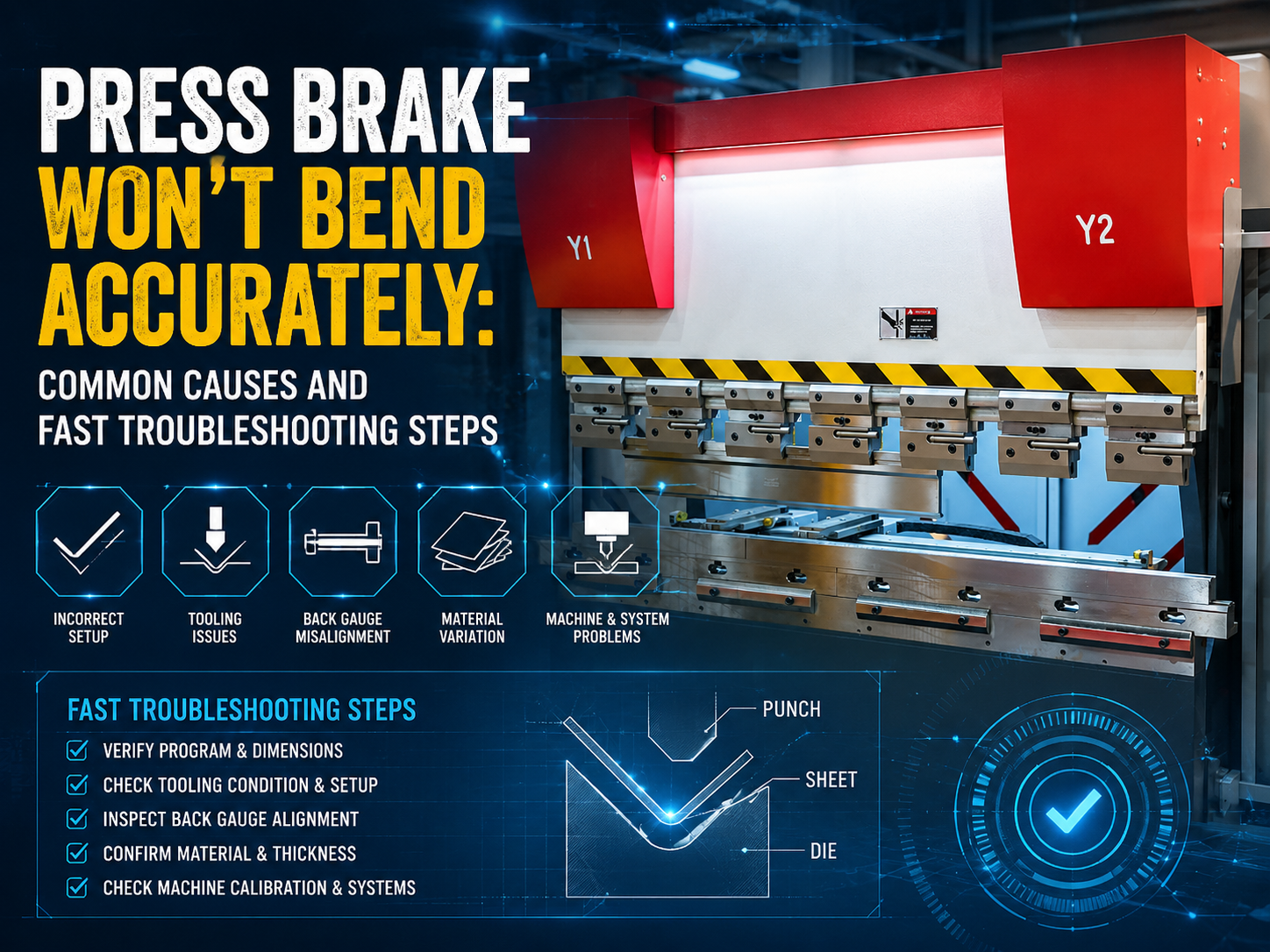
One of the most common reasons a press brake won’t bend accurately is the inherent variability in the material being processed. Metal is not a perfectly uniform substance; variations in yield strength, thickness, and grain direction can significantly impact how it reacts under pressure. Springback—the tendency of the metal to return to its original shape after the bending force is removed—is a primary culprit. If the material batch has a higher yield strength than the previous one, the springback will be greater, leading to an under-bent angle.
To combat this, operators must ensure that the CNC controller is programmed with the correct material constants. Advanced HARSLE machines often feature angle sensors that measure the bend in real-time and compensate for springback automatically. Without these sensors, manual testing and adjustment of the ‘bend deduction’ and ‘springback compensation’ parameters are necessary for every new batch of material.
Tooling Condition and Selection
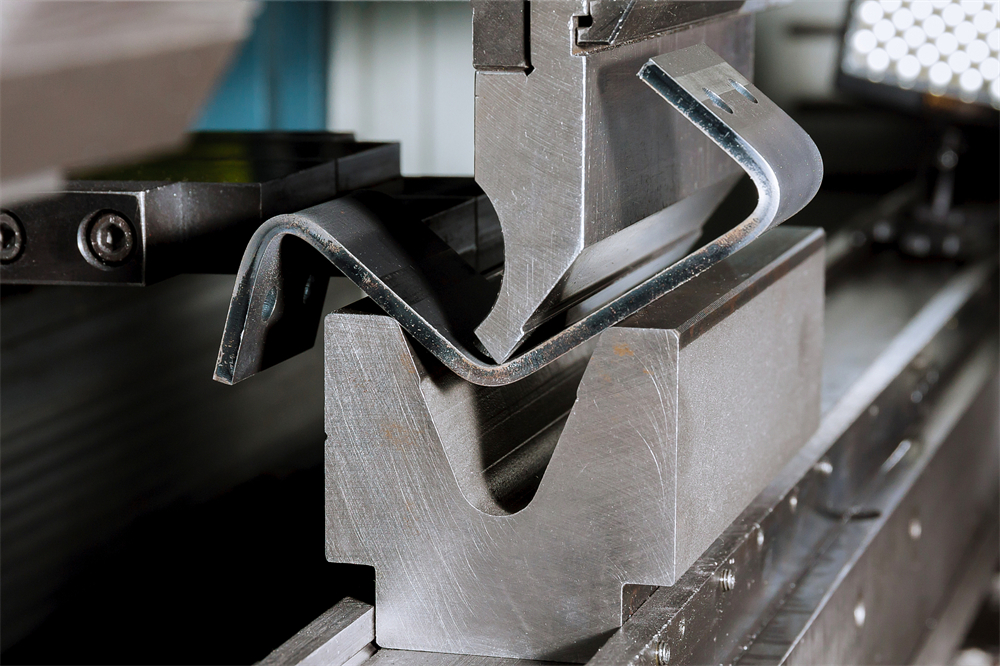
The relationship between the punch and the die is the most critical mechanical interface in the bending process. Over time, the tips of punches can wear down, and the shoulders of V-dies can become deformed. Even a few thousandths of an inch of wear can translate into several degrees of angular error. Furthermore, using the wrong tool for the job—such as a V-opening that is too narrow for the material thickness—can cause excessive tonnage requirements and unpredictable results.
Regular inspection of tooling is essential. Technicians should look for signs of galling, cracking, or uneven wear. It is also vital to ensure that the tools are properly seated and aligned in the ram and bed. A punch that is slightly offset will create an uneven load, leading to a twist in the workpiece or a inconsistent bend angle across the length of the part.
Machine Deflection and Crowning
When a press brake applies several hundred tons of force, the machine frame itself undergoes microscopic deformation. The center of the ram and the bed tend to deflect away from each other, a phenomenon known as the “canoeing effect.” If this deflection is not compensated for, the resulting bend will be more open in the middle than at the ends. This is a classic reason why a press brake won’t bend accurately across long workpieces.
Modern press brakes utilize crowning systems—either hydraulic or mechanical—to counteract this deflection. A hydraulic crowning system uses cylinders in the lower bed to push upward, while mechanical systems use a series of wedges. If the crowning system is miscalibrated or the seals in the hydraulic crowning cylinders are leaking, the machine will fail to produce straight, accurate bends. Troubleshooting this involves checking the crowning pressure settings and ensuring the mechanical wedges are moving freely.
Technical Details of Press Brake Inaccuracy
Hydraulic System Synchronization (Y1 and Y2 Axes)
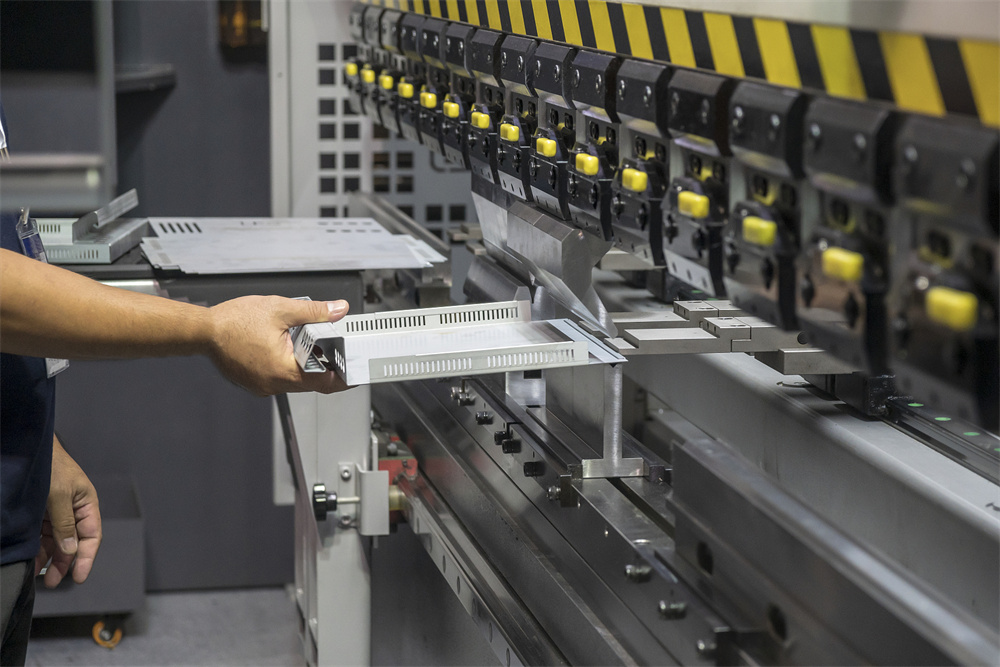
In a modern CNC press brake, the ram is driven by two independent hydraulic cylinders, referred to as the Y1 and Y2 axes. For the ram to descend perfectly level, these two axes must be perfectly synchronized. This synchronization is managed by the CNC controller, which receives feedback from linear encoders mounted on the side frames and adjusts proportional valves to regulate oil flow to each cylinder.
If the Y1 and Y2 axes are out of sync, the ram will tilt, causing one side of the workpiece to be bent more than the other. Common causes for synchronization failure include air trapped in the hydraulic lines, a faulty proportional valve, or a dirty linear encoder scale. If the encoder cannot read the position accurately, the controller cannot make the necessary micro-adjustments, leading to significant angular deviations.
Backgauge Alignment and Precision
Accuracy isn’t just about the angle; it’s also about the flange length. The backgauge system (X, R, and Z axes) determines where the bend occurs. If the backgauge fingers are not perfectly parallel to the center of the die, the bend line will be crooked. Over time, the lead screws or belt drives of the backgauge can wear, leading to backlash—a small amount of play that prevents the gauge from returning to the exact same position every time.
Technical troubleshooting of the backgauge involves checking the mechanical rigidity of the gauge bar and ensuring the servo motors are properly tuned. A common mistake is neglecting the lubrication of the backgauge guide rails, which increases friction and can cause the motors to lose steps, resulting in inconsistent flange dimensions. Regular calibration using a precision square and calipers is necessary to ensure the X-axis zero point remains accurate.
The Role of Hydraulic Oil Temperature
Hydraulic oil changes its viscosity as it heats up. At the start of a shift, the oil is cool and thick; after several hours of high-speed operation, it becomes thin. This change in viscosity affects the response time of the proportional valves and the efficiency of the pumps. If a press brake won’t bend accurately during the first hour of operation but stabilizes later (or vice versa), the issue is likely thermal.
High-end HARSLE machines often include oil heaters or coolers to maintain a consistent operating temperature. If your machine lacks these, you may need to implement a “warm-up” cycle where the ram cycles for 15-20 minutes before production begins. Additionally, using the correct grade of hydraulic oil (typically ISO VG 46 or 32) is crucial for maintaining the predictable flow rates required for precision bending.
Fast Troubleshooting Steps: A Systematic Approach
When faced with accuracy issues, follow these steps to quickly identify and resolve the problem:
- Verify the Basics: Check that the material thickness matches the program. Use a micrometer to measure the actual sheet thickness, as even a 0.1mm difference can change the bend angle.
- Inspect Tooling: Ensure the punch and die are clean and free of debris. Check for any visible wear or nicks. Re-seat the tools to ensure they are perfectly centered.
- Check Hydraulic Levels and Pressure: Ensure the oil reservoir is full and the pump is reaching the required tonnage. Look for leaks around the Y1/Y2 cylinders and the crowning system.
- Clean Linear Encoders: Use a lint-free cloth and appropriate cleaning solution to wipe down the encoder scales. Dust or oil mist on the scales is a frequent cause of positioning errors.
- Perform a “No-Load” Test: Cycle the ram without material and check the Y1/Y2 readings on the CNC screen. They should be identical throughout the stroke.
- Recalibrate the Backgauge: Move the backgauge to a known position and measure the distance to the die center with a physical gauge. Adjust the CNC offsets if necessary.
- Test the Crowning: Bend a long strip of material. If the center is open, increase the crowning value. If the center is over-bent, decrease it.
| Symptom | Probable Cause | Recommended Action |
|---|---|---|
| Inconsistent angle across length | Improper crowning or ram tilt | Adjust crowning settings; check Y1/Y2 synchronization. |
| Flange length varies | Backgauge backlash or misalignment | Lubricate lead screws; recalibrate X-axis zero point. |
| Angle changes during the day | Hydraulic oil temperature fluctuations | Implement warm-up cycle; check oil cooler function. |
| Over-bending or under-bending | Material thickness or yield variation | Measure material with micrometer; adjust springback compensation. |
| Ram hesitates or jerks | Air in hydraulics or faulty valve | Bleed the hydraulic system; inspect proportional valves. |
Selection Advice: Choosing a Press Brake for Long-Term Accuracy
When purchasing a new press brake, accuracy should be the primary metric. Not all machines are created equal, and the structural design plays a massive role in how well the machine maintains its precision over years of heavy use. Look for machines with a heavy, stress-relieved O-frame or C-frame design. HARSLE machines, for instance, utilize high-grade steel plates that are welded and then machined in a single pass to ensure perfect parallelism between the bed and the ram.
The choice of CNC controller is equally important. A high-end controller like the Delem DA-66T or ESA S630 offers sophisticated algorithms for calculating bend allowance, springback, and crowning. These controllers can also store vast libraries of tool and material data, reducing the risk of operator error. Furthermore, ensure the machine is equipped with high-quality hydraulic components from reputable brands like Bosch Rexroth or Hoerbiger, as these components offer the fastest response times and highest reliability.
Finally, consider the backgauge configuration. For complex parts, a 4-axis (X, R, Z1, Z2) or 6-axis backgauge provides the flexibility needed to support the workpiece accurately. Precision-ground ball screws and linear guides are non-negotiable for maintaining flange accuracy. When evaluating a machine, ask the manufacturer for a repeatability specification; a high-quality press brake should offer a ram repeatability of ±0.01mm or better.
Frequently Asked Questions (FAQ)
Why is my press brake bending differently at the ends than in the middle?
This is typically caused by machine deflection. When the ram applies pressure, the center of the machine bows slightly. To fix this, you need to adjust your crowning system. If your machine doesn’t have automatic crowning, you may need to use shims under the die, although this is a less precise and more time-consuming method.
How often should I calibrate my press brake?
For high-precision shops, a quick daily check of the backgauge and a weekly verification of the bend angles are recommended. A full system calibration, including checking the hydraulic pressures and linear encoder alignment, should be performed every six months or whenever the machine is moved.
Can worn tooling really affect the bend angle that much?
Absolutely. The geometry of the bend is dictated by the contact points between the punch and the die. If the radius of the punch is worn or the V-die opening has widened due to wear, the material will flow differently into the die, resulting in an inaccurate angle. Always keep your tools clean and replace them when they show signs of significant wear.
Does the ambient temperature of the shop affect bending accuracy?
Yes, extreme temperatures can affect both the hydraulic oil and the physical frame of the machine. In very cold shops, the machine may require a longer warm-up period. In very hot environments, the hydraulic oil may thin out too much, leading to a loss of pressure and precision. Maintaining a stable shop temperature is ideal for high-precision work.
Conclusion
When a press brake won’t bend accurately, it is a signal that one or more elements of the bending system require attention. By systematically evaluating material properties, tooling condition, hydraulic performance, and CNC settings, operators can quickly identify the source of the error. Precision is not a one-time setup but a continuous process of maintenance and calibration. Investing in high-quality machinery from manufacturers like HARSLE, and following a rigorous troubleshooting and maintenance schedule, ensures that your fabrication shop remains competitive and productive.
Remember that the key to fast troubleshooting is understanding the “why” behind the “how.” By mastering the technical details of hydraulic synchronization and mechanical deflection, you transform from a machine operator into a precision specialist. Keep your machine clean, your oil fresh, and your tools sharp, and your press brake will deliver the accurate results your customers demand for years to come.