CNC Press Brake Price Guide: Pricing, Features, and Budget Tips


Introduction to CNC Press Brake Investment
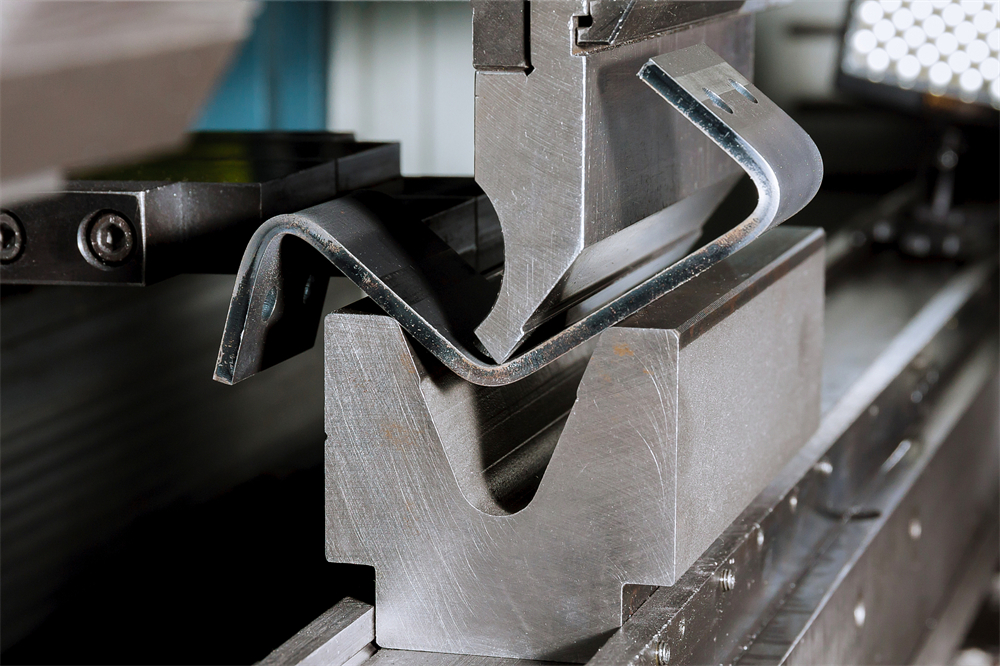
Investing in a CNC press brake is one of the most significant capital expenditures a metal fabrication shop will undertake. Whether you are upgrading from a manual torsion bar machine or establishing a new production line, understanding the nuances of the CNC Press Brake Price : Pricing, Features, Budget Tips is essential for making an informed decision. A CNC (Computer Numerical Control) press brake offers unparalleled precision, repeatability, and efficiency, but the price spectrum is vast, ranging from entry-level units to high-end, multi-axis robotic cells.
The modern manufacturing landscape demands tighter tolerances and faster turnaround times. To meet these demands, the CNC press brake has evolved from a simple bending tool into a sophisticated piece of technology integrated with advanced software and high-precision hydraulics. However, the initial sticker price is only one part of the equation. To truly understand the value of your investment, you must look at the configuration, the long-term operational costs, and the specific features that drive productivity in your unique shop environment.
In this comprehensive guide, we will break down the various factors that influence the cost of a CNC press brake. We will explore the price ranges for different machine classes, identify the primary cost drivers, and provide actionable budget tips to help you secure the best machine for your money. By the end of this article, you will have a clear roadmap for navigating the complex world of metal fabrication machinery procurement.
CNC Press Brake Price Range Overview
The price of a CNC press brake is primarily determined by its tonnage (bending force) and its length (bending capacity). However, the level of automation and the sophistication of the control system also play massive roles. Generally, we can categorize these machines into three main price tiers: Entry-Level, Mid-Range, and High-End/Specialized.
Entry-Level CNC Press Brakes ($15,000 – $35,000)
Entry-level machines are typically 2-axis or 3-axis (Y, X, and sometimes R) machines with basic CNC controllers. These are ideal for small shops or startups that need more precision than a manual machine but don’t require high-speed production or complex multi-bend sequences. These machines usually range from 30 to 100 tons and have bending lengths of 1.2 to 2.5 meters. While they lack advanced features like automatic crowning or high-speed servo-hydraulics, they are workhorses for simple parts and standard materials.
Mid-Range CNC Press Brakes ($35,000 – $85,000)
This is the most popular category for established fabrication businesses. These machines typically feature 4 to 6 axes (Y1, Y2, X, R, Z1, Z2) and come equipped with reputable controllers like the Delem DA-53T or Cybelec CybTouch series. In this price range, you start to see features like hydraulic or mechanical crowning, higher approach and return speeds, and better component brands (e.g., Rexroth valves, Schneider electronics). Tonnage usually ranges from 100 to 250 tons, with lengths up to 4 meters.
High-End and Specialized Systems ($85,000 – $250,000+)
High-end machines are designed for high-precision, high-volume, or heavy-duty applications. These systems often feature 8+ axes, 3D graphical controllers (like Delem DA-66T or DA-69T), and advanced safety systems like laser guarding. This category also includes large-tonnage machines (400T to 2000T) used in shipbuilding or heavy infrastructure. Furthermore, fully electric press brakes or hybrid models, which offer extreme energy efficiency and speed, fall into this premium bracket. Robotic integration for automated bending cells can push these prices even higher.
Main Cost Drivers in CNC Press Brake Pricing
When reviewing a quote for a CNC press brake, it is important to understand what exactly you are paying for. Several technical specifications directly correlate with the manufacturing cost and, consequently, the retail price.
1. Tonnage and Bending Length
The physical size of the machine is the most obvious cost driver. A higher tonnage requires a thicker, more robust steel frame to withstand the immense pressure without deforming. Similarly, a longer bed requires more material and more complex machining to ensure the bed remains flat over its entire length. For example, a 100-ton 3200mm machine will always be significantly cheaper than a 300-ton 4000mm machine due to the sheer volume of steel and the size of the hydraulic cylinders required.
2. The Number of Controlled Axes
In the world of CNC bending, axes equal flexibility and speed. A basic machine controls the ram depth (Y axis) and the backgauge distance (X axis). However, as you add more axes, the price increases. An R-axis (vertical movement of the backgauge) allows for bending flanges of different heights in one setup. Z1 and Z2 axes (lateral movement of the backgauge fingers) are essential for bending parts of varying widths. Advanced machines may also include X-prime or independent delta-X axes for tapered bending. Each additional axis requires a servo motor, a drive, and more complex programming within the controller.
3. The CNC Controller (The Brain)
The controller is the interface between the operator and the machine. High-end controllers from brands like Delem (Netherlands), Cybelec (Switzerland), or ESA (Italy) can add thousands of dollars to the price. A 2D graphical controller is standard for mid-range machines, while 3D visualization and offline programming capabilities are reserved for premium models. These advanced controllers allow for automatic bend sequencing, collision detection, and integration with CAD/CAM software, which drastically reduces setup time.
4. Hydraulic and Electrical Components
The reliability of a press brake depends on its internal components. Machines equipped with world-class hydraulics (like Hoerbiger or Bosch Rexroth) and electrical components (like Siemens or Schneider) command a higher price because they offer longer lifespans and easier sourcing of replacement parts. Cheaper machines often use domestic or generic components that may have lower duty cycles and higher failure rates over time.
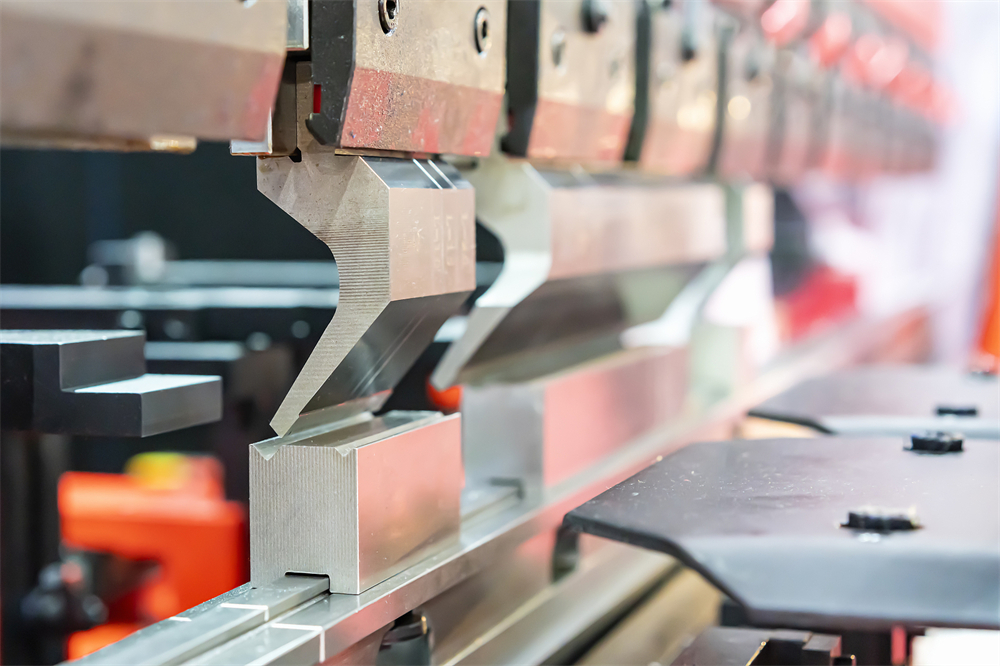
Configuration Impact: Features That Add Value
Beyond the basic specs, several configuration options can significantly impact the final price and the machine’s performance. Choosing the right configuration is about balancing the initial cost with the long-term productivity gains.
Crowning Systems (Mechanical vs. Hydraulic)
When a press brake bends a long piece of metal, the center of the beam and bed tend to deflect slightly, leading to an inconsistent bend angle across the length of the part. A crowning system compensates for this. Hydraulic crowning uses cylinders in the lower bed to push upward, while mechanical crowning uses a series of wedges. Mechanical crowning is generally more expensive but offers higher precision and is less affected by temperature changes in the hydraulic oil. For any machine over 2.5 meters, a crowning system is almost mandatory for quality work.
Tooling Clamping Systems
Standard manual clamping requires the operator to tighten bolts for every tool change, which is time-consuming. Upgrading to quick-change manual clamps or fully hydraulic/pneumatic clamping systems can reduce setup times by 50-80%. While these systems add to the upfront cost, the labor savings in a high-mix, low-volume shop are immense.
Backgauge Precision and Speed
The backgauge is responsible for the accuracy of the flange dimensions. High-speed backgauges driven by ball screws and servo motors allow for faster cycle times. Some high-end machines feature “active” backgauges that can move during the bending process to support the material. The complexity and speed of the backgauge system are major factors in the overall machine price.
Safety Systems
Safety is paramount in metal fabrication. Basic machines might come with simple light curtains, but advanced laser-based systems (like DSP, Fiessler, or LazerSafe) provide much better protection while allowing the operator to work closer to the tools without triggering a stop. These laser systems are expensive but are often required by local safety regulations and can prevent costly workplace injuries.
Hidden Costs of Purchasing a CNC Press Brake
The “CNC Press Brake Price” you see on a quote is rarely the total cost of getting the machine into production. Buyers must account for several additional expenses that can add 10% to 20% to the total project budget.
- Shipping and Logistics: Press brakes are heavy and oversized. Shipping a 10-ton machine across the ocean or even across the country requires specialized freight, rigging, and sometimes permits for wide loads.
- Installation and Commissioning: Most manufacturers require a factory-trained technician to oversee the installation to validate the warranty. This includes leveling the machine, filling it with hydraulic oil (which can be hundreds of liters), and performing initial calibration.
- Tooling: A press brake is useless without punches and dies. Depending on the variety of parts you produce, a starter set of high-quality precision-ground tooling can cost anywhere from $3,000 to $15,000.
- Training: While CNC controllers are user-friendly, your operators will need training to maximize the machine’s potential. This might involve travel costs for your team or daily rates for a trainer to visit your facility.
- Power Infrastructure: Large press brakes require significant electrical power. You may need to upgrade your shop’s electrical panel or run new high-voltage lines to the machine’s location.
ROI Calculation: Justifying the Price
To determine if a CNC press brake is a good investment, you must calculate the Return on Investment (ROI). A more expensive machine with advanced features often has a shorter ROI period than a cheaper, basic machine due to increased efficiency.
Consider a scenario where a 4-axis CNC machine costs $50,000 and a 2-axis machine costs $30,000. If the 4-axis machine reduces setup time by 15 minutes per job and you run 10 jobs a day, you save 150 minutes (2.5 hours) of labor daily. At a shop rate of $60/hour, that is $150 saved per day. Over a 250-day work year, that is $37,500 in labor savings alone. In this case, the $20,000 price difference is recouped in less than a year, and the machine continues to generate higher profits for the rest of its 15-20 year lifespan.
Furthermore, CNC machines reduce scrap. Precision backgauges and automatic crowning ensure that the first part is a good part, eliminating the “trial and error” waste associated with manual machines. When you factor in material savings, especially with expensive alloys like stainless steel or aluminum, the financial argument for a higher-spec machine becomes even stronger.
Buying Advice: How to Get the Best Value
When shopping for a CNC press brake, follow these tips to ensure you get the best possible value for your budget:
- Define Your Needs, Not Your Wants: Don’t pay for an 8-axis machine if 90% of your work is simple 90-degree bends. However, don’t under-buy; if you plan to grow into more complex work, a 4-axis machine is the minimum recommended baseline.
- Evaluate the Manufacturer’s Reputation: Companies like HARSLE have built a reputation for balancing high-quality components with competitive pricing. Look for manufacturers that offer transparent specifications and robust after-sales support.
- Check the Controller’s Software: Ask if the machine comes with offline programming software. This allows your office team to program parts while the machine is running, keeping the “green light” on as much as possible.
- Consider the Total Cost of Ownership: A machine that is $5,000 cheaper but uses proprietary parts that are hard to find might cost you $20,000 in downtime over five years. Stick to machines with name-brand components.
- Negotiate the Package: Often, manufacturers are more willing to throw in a tooling credit or an extended warranty than they are to drop the base price of the machine.
Frequently Asked Questions (FAQ)
What is the average lifespan of a CNC press brake?
With proper maintenance, a high-quality CNC press brake can last 15 to 25 years. The mechanical frame often outlasts the electronic controller. Many shops choose to retrofit new controllers onto older frames after 15 years to extend the machine’s life further.
Is an electric press brake better than a hydraulic one?
Electric press brakes are faster, more accurate, and more energy-efficient, but they are generally limited to lower tonnages (usually under 100 tons) and carry a higher initial price tag. For heavy-duty bending, hydraulic systems remain the industry standard due to their power-to-cost ratio.
How much should I budget for annual maintenance?
You should budget approximately 1-3% of the machine’s purchase price for annual maintenance. This includes hydraulic oil changes, filter replacements, lubrication, and periodic calibration by a professional technician.
Can I use my old tooling on a new CNC press brake?
It depends on the clamping system. Most new CNC machines use European-style or Amada-style tool holders. If your old tooling is compatible, you can reuse it, but be aware that using worn or inaccurate tooling on a high-precision CNC machine will negate many of the machine’s accuracy benefits.
Does the CNC Press Brake Price include the software?
Most machines include the on-board controller software. However, advanced offline PC software (for 3D modeling and automatic sequencing) is often an optional add-on that can cost between $2,000 and $5,000.
What is the difference between a 3-axis and a 4-axis machine?
A 3-axis machine typically controls Y1/Y2 (ram) and X (backgauge depth). A 4-axis machine adds the R-axis (backgauge height). The R-axis is crucial for parts with multiple flange heights, as it allows the backgauge to move up and down automatically between bends.
Why are some Chinese press brakes so much cheaper than European ones?
The price difference usually comes down to labor costs, scale of production, and component selection. While European machines often lead in cutting-edge innovation, top-tier Chinese manufacturers like HARSLE utilize the same global component brands (Rexroth, Delem, Schneider) to offer similar performance and reliability at a more accessible price point for global fabricators.