Hydraulic Press Brake Price Guide: Typical Costs and Buying Factors


Introduction to Hydraulic Press Brake Pricing
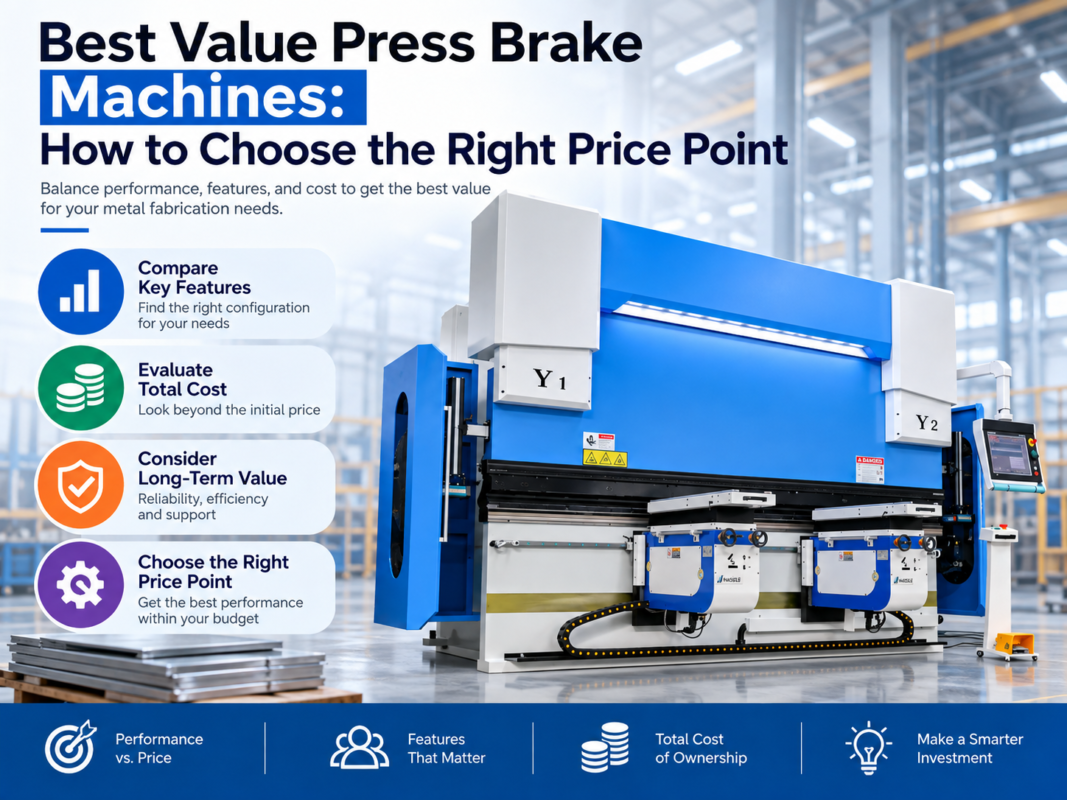
In the world of metal fabrication, the hydraulic press brake stands as a cornerstone of production. Whether you are a small job shop or a large-scale industrial manufacturer, understanding the Hydraulic Press Brake Price : Typical Costs Buying Factors is essential for making a sound financial investment. A press brake is not just a purchase; it is a long-term asset that dictates your shop’s capability, precision, and throughput. However, the price range for these machines is incredibly broad, spanning from $15,000 for basic entry-level models to well over $500,000 for high-tonnage, automated systems.
The complexity of pricing stems from the sheer variety of configurations available. Factors such as tonnage, bending length, control systems, and backgauge sophistication all play a role in the final invoice. For a company like HARSLE, providing transparency in these costs helps customers align their technical requirements with their budgetary constraints. This guide aims to deconstruct the pricing architecture of hydraulic press brakes, providing you with the insights needed to navigate the market effectively.
When evaluating the cost, it is vital to look beyond the initial sticker price. A cheaper machine might save capital upfront but could lead to higher operational costs due to slower cycle times or frequent maintenance. Conversely, a high-end CNC press brake might seem expensive but can offer a rapid Return on Investment (ROI) through increased accuracy and reduced scrap rates. In the following sections, we will explore the typical price ranges and the specific factors that drive those numbers up or down.
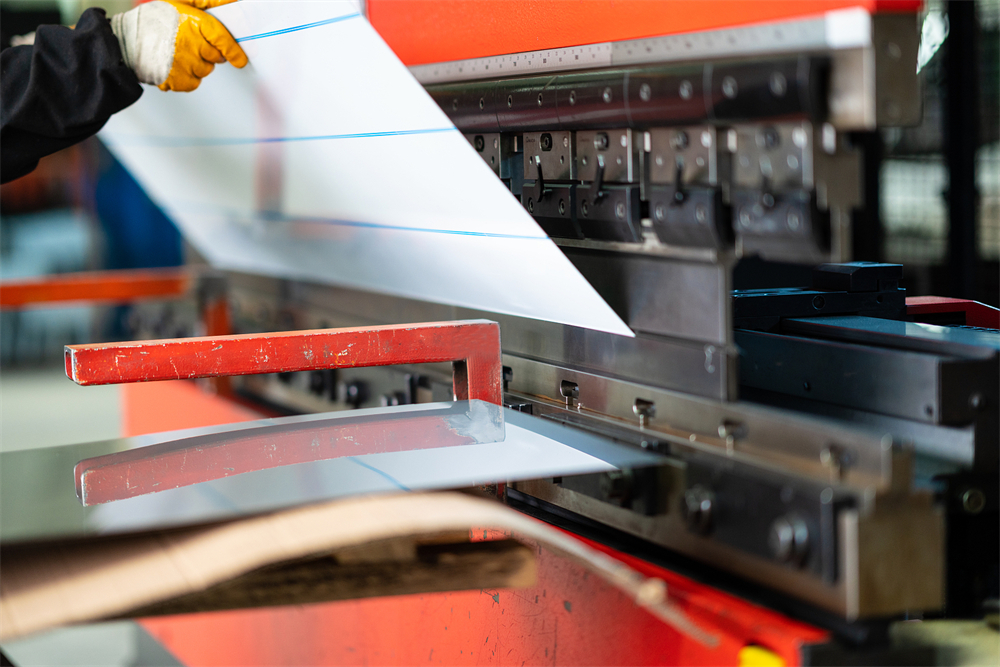
Price Range Overview: Categorizing the Investment
To understand the Hydraulic Press Brake Price Guide Typical Costs And Buying Factors, we must first categorize machines based on their capacity and technology level. Generally, the market is divided into three main tiers: entry-level/economy, mid-range/standard, and high-end/precision CNC machines.
Entry-Level Hydraulic Press Brakes ($15,000 – $35,000)
Entry-level machines are typically NC (Numerical Control) or basic CNC models with lower tonnage (usually 30 to 80 tons) and shorter bending lengths (1.5 to 2.5 meters). These machines are ideal for small workshops or businesses that perform simple, repetitive bends on thinner materials. While they lack the advanced automation of higher-end models, they offer a reliable entry point into hydraulic bending. Brands like HARSLE offer robust entry-level solutions that prioritize durability over complex software features.
Mid-Range Standard Machines ($40,000 – $90,000)
This is the most popular segment for general fabrication. These machines typically offer 100 to 200 tons of pressure and bending lengths of 3 to 4 meters. In this price bracket, you start to see more sophisticated CNC controllers (like the Delem DA-50 series), multi-axis backgauges (4-axis is common), and hydraulic crowning systems. These features significantly improve the speed of setup and the accuracy of the final product, making them suitable for shops with diverse project requirements.
High-End and Custom Systems ($100,000 – $500,000+)
High-end press brakes are designed for high-precision industries like aerospace, medical equipment, or heavy infrastructure. These machines feature high tonnage (300+ tons), long beds (6 meters or more), and advanced 6-8 axis backgauges. They often include integrated robotic loading, 3D graphical controllers, and laser angle measurement systems. The price in this category is driven by the extreme precision requirements and the high level of automation that reduces human error to near zero.
Main Cost Drivers: What Are You Paying For?
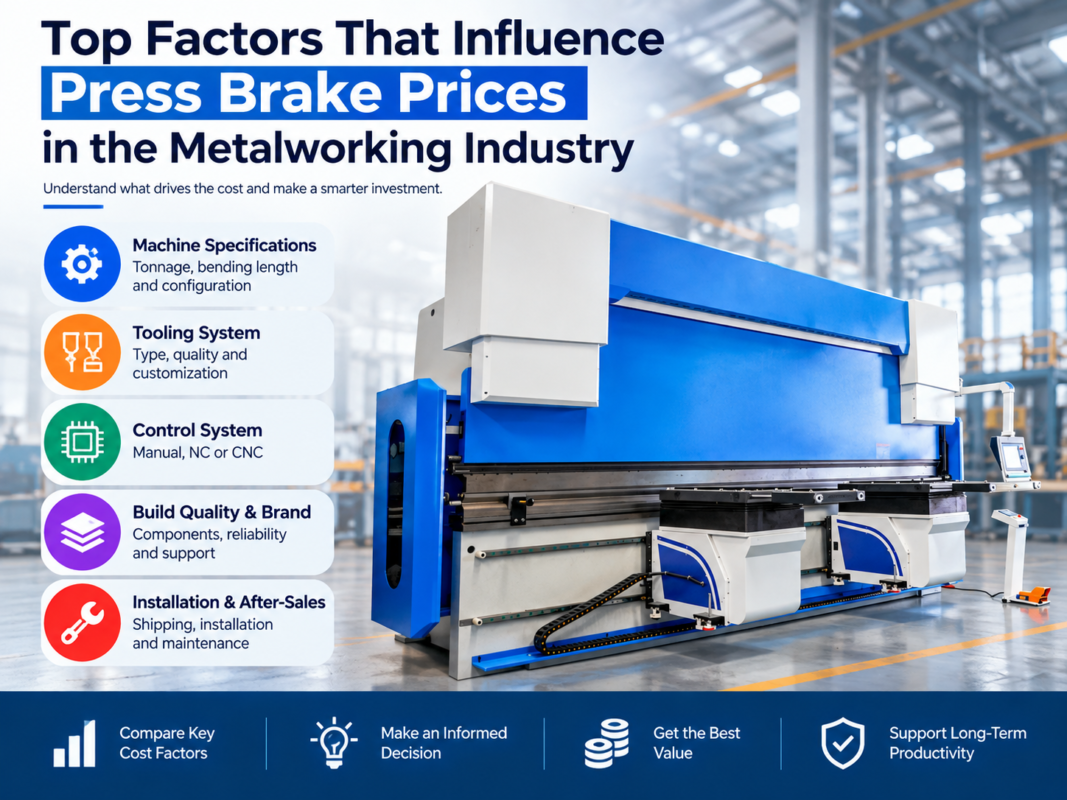
When analyzing the Hydraulic Press Brake Price Typical Costs Buying Factors, several core technical specifications act as the primary drivers of cost. Understanding these will help you determine where to allocate your budget for maximum impact.
Tonnage and Bending Length
Tonnage refers to the pressing force the machine can exert. The higher the tonnage, the thicker the material you can bend. Similarly, the bending length determines the maximum width of the sheet metal. Increasing either of these requires a more massive frame, larger hydraulic cylinders, and more powerful motors. For example, moving from a 100-ton machine to a 200-ton machine can increase the price by 40-60% because the entire structural integrity of the machine must be enhanced to handle the increased stress.
Frame Construction and Material Quality
Not all steel frames are created equal. High-quality press brakes use heavy-duty, vibration-dampened, welded steel frames that undergo stress-relieving processes. This ensures that the machine remains stable and accurate over decades of use. Cheaper machines may use lighter frames that can deflect under load, leading to inconsistent bends. The quality of the hydraulic components (valves, pumps, and seals) also impacts the price; premium brands like Bosch-Rexroth or Hoerbiger add to the cost but offer superior reliability.
The Control System (CNC vs. NC)
The “brain” of the machine is a significant cost factor. A simple NC controller that only manages the X and Y axes is inexpensive. However, a modern CNC controller with a touch-screen interface, 3D visualization, and offline programming capabilities can add $10,000 to $30,000 to the price. These advanced systems allow for faster setup times and the ability to simulate the bending process before the first piece of metal is even touched, which drastically reduces waste.
Configuration Impact: Customizing for Performance
Beyond the base model, the specific configuration you choose will heavily influence the final Hydraulic Press Guide price. Customization allows you to tailor the machine to your specific workflow, but each addition comes with a cost.
Backgauge Complexity
The backgauge is responsible for positioning the metal sheet accurately. A basic 2-axis backgauge (X and R) is standard. However, if you are working with complex geometries, you may need Z1, Z2, X-Prime, or even 6-axis backgauges. Each additional axis requires its own servo motor, drive, and mechanical assembly, adding several thousand dollars per axis. For high-volume production, the time saved in manual positioning often justifies this expense.
Crowning Systems
When a press brake applies pressure, the bed and the ram can deflect slightly in the center, leading to a “canoe” effect where the bend angle is not consistent across the length of the part. To counteract this, machines use crowning systems. Manual crowning is the cheapest option, while hydraulic or motorized mechanical crowning (controlled by the CNC) is more expensive. Motorized crowning is highly recommended for any machine over 3 meters in length to ensure precision.
Tooling and Clamping Systems
The type of tooling (punches and dies) and how they are clamped also affects the price. Standard manual clamps are included in the base price, but hydraulic or pneumatic quick-change clamping systems can save hours of setup time every week. Furthermore, specialized tooling for specific radii or materials (like stainless steel) represents an additional investment that must be factored into the total project cost.
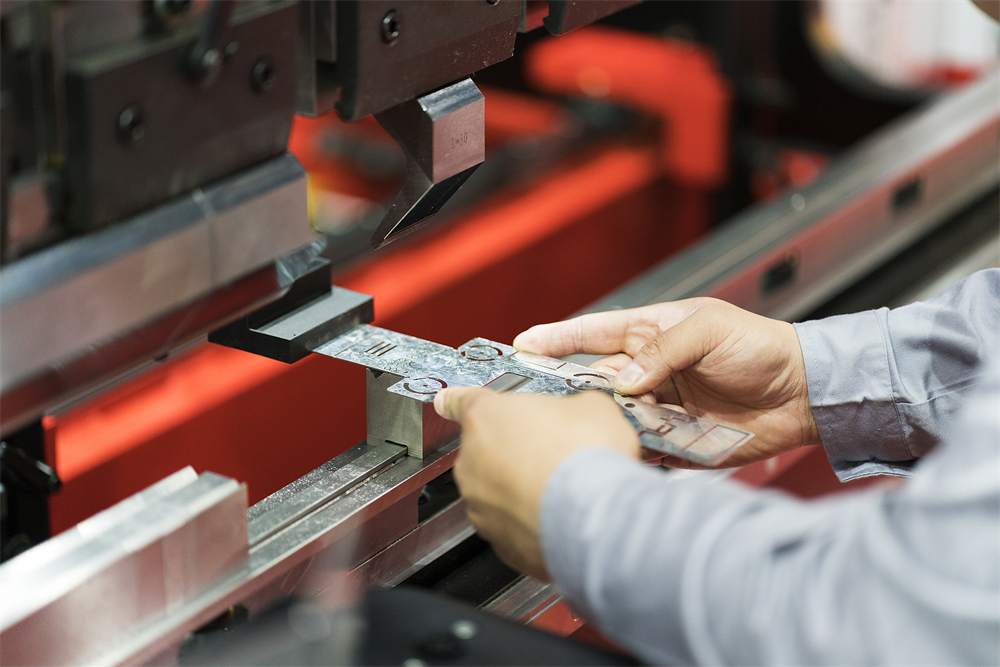
Hidden Costs: Beyond the Purchase Price
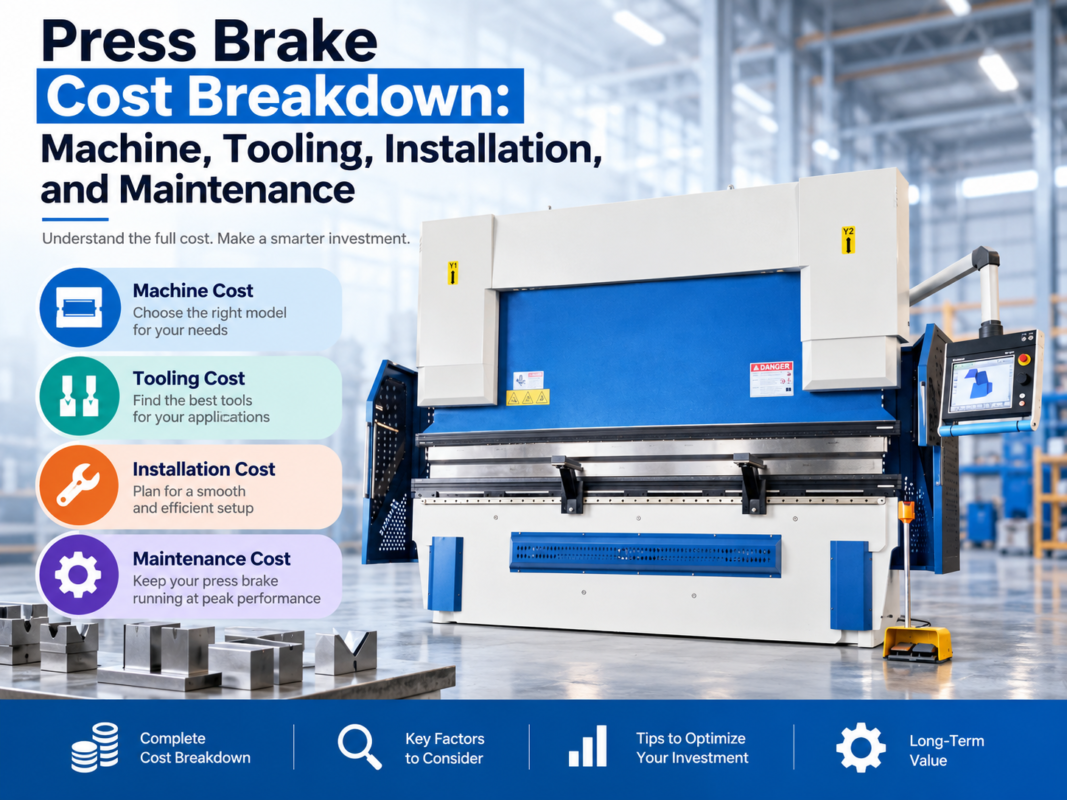
When budgeting for a hydraulic press brake, many buyers overlook the secondary costs associated with bringing the machine into operation. A comprehensive Press Brake Guide must include these “hidden” expenses to provide an accurate financial picture.
- Shipping and Logistics: Press brakes are incredibly heavy. Shipping a 10-ton machine across the country or importing it from overseas involves specialized freight, rigging, and insurance. Depending on the distance, this can cost between $2,000 and $10,000.
- Installation and Commissioning: You will likely need a technician to level the machine, connect the hydraulics, and calibrate the CNC system. Many manufacturers, including HARSLE, offer installation packages, but these should be confirmed during the quoting process.
- Foundation Requirements: Large tonnage machines require a reinforced concrete foundation to prevent the floor from cracking and to maintain machine alignment. Preparing a dedicated pit or reinforced slab can be a significant construction expense.
- Operator Training: A high-tech CNC machine is only as good as its operator. Budgeting for professional training ensures that your staff can utilize the machine’s full potential safely and efficiently.
- Maintenance and Consumables: Hydraulic oil, filters, and seal kits are ongoing costs. Additionally, tooling wears out over time and will eventually need replacement or regrinding.
ROI Calculation: Justifying the Expense
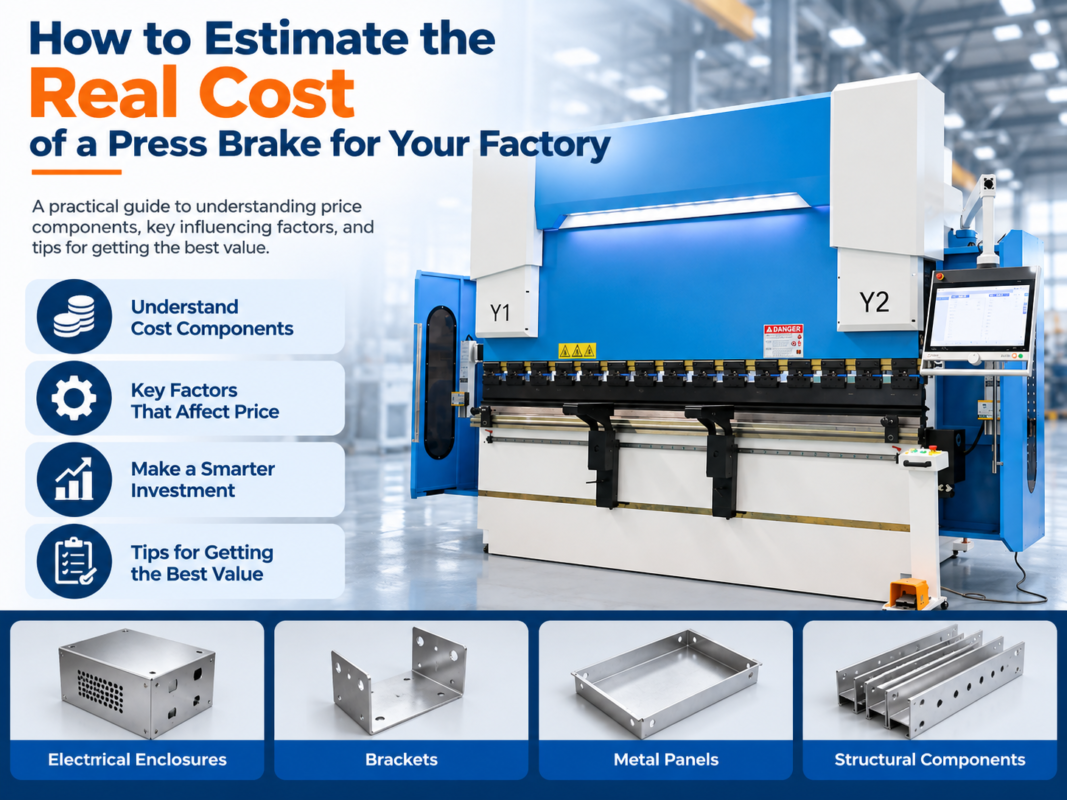
Investing in a HARSLE hydraulic press brake should be viewed through the lens of Return on Investment (ROI). While the Hydraulic Press Brake Price Typical Costs Buying Factors might seem daunting, the efficiency gains often lead to the machine paying for itself within 18 to 36 months.
To calculate ROI, consider the following: How many parts can you produce per hour on a new CNC machine versus your current method? If a modern CNC system reduces setup time from 30 minutes to 5 minutes, and you perform five setups a day, you save over 125 hours of labor per year. At a shop rate of $75/hour, that is nearly $10,000 in labor savings alone. Furthermore, the reduction in scrap material due to the precision of CNC controls can save thousands more, especially when working with expensive materials like aluminum or stainless steel.
Another factor is the ability to take on more complex work. A 4-axis or 6-axis machine allows you to bid on high-precision contracts that were previously out of reach. This expansion of your service offering can lead to higher profit margins and a stronger market position.
Buying Advice: How to Choose the Right Machine
Choosing the right machine involves balancing your current needs with your future growth. Here is a checklist to guide your decision-making process:
- Define Your Maximum Requirements: Don’t just buy for what you do today. If your thickest material is 6mm, consider a machine that can handle 8mm to avoid running the hydraulics at 100% capacity constantly.
- Prioritize the Controller: If you have high staff turnover or less experienced operators, invest in a more intuitive, graphical CNC controller. It reduces the learning curve and minimizes errors.
- Evaluate After-Sales Support: A machine that is down is costing you money. Ensure the manufacturer has a solid reputation for parts availability and technical support. HARSLE prides itself on providing comprehensive support to ensure long-term machine uptime.
- Consider the Tooling: Always ask what tooling is included. Some “cheap” machines come with no tooling, while others include a standard set that might not fit your specific needs.
- Safety First: Ensure the machine meets local safety standards (like CE or OSHA). Laser safety guards (like DSP or Fiessler) are an additional cost but are essential for protecting your employees and reducing insurance premiums.
Frequently Asked Questions (FAQ)
What is the average lifespan of a hydraulic press brake?
With proper maintenance, a high-quality hydraulic press brake from a reputable manufacturer like HARSLE can last 20 to 25 years. The mechanical frame often outlives the electronic CNC components, which may need upgrading after 10-15 years.
Is it better to buy a new or used hydraulic press brake?
While used machines have a lower initial cost, they often come with hidden wear, outdated controllers, and no warranty. New machines offer the latest safety features, energy efficiency, and manufacturer support, which usually provides better long-term value for production environments.
How does material type affect the price of the machine?
The material doesn’t change the machine price directly, but it dictates the tonnage you need. For example, bending stainless steel requires about 50% more pressure than mild steel of the same thickness. If you primarily work with stainless, you will need a higher-tonnage (and thus more expensive) machine.
What are the most common maintenance tasks?
Regular maintenance includes checking hydraulic oil levels and quality, lubricating the backgauge and ram guides, inspecting seals for leaks, and ensuring the cooling system is functioning. Keeping the machine clean and well-lubricated is the best way to protect your investment.
Can I upgrade an NC machine to a CNC machine later?
While possible, it is often cost-prohibitive. Upgrading involves replacing motors, drives, and the entire control unit. It is almost always more economical to purchase the CNC capability upfront if you anticipate needing it within the next few years.
Conclusion
Navigating the Hydraulic Press Brake Price : Typical Costs Buying Factors requires a deep dive into your production needs and a clear understanding of the technology available. By considering the tonnage, control systems, and hidden operational costs, you can make an informed decision that benefits your bottom line. HARSLE remains committed to providing high-performance, cost-effective solutions for the metal fabrication industry, ensuring that every dollar you invest translates into precision, speed, and reliability. Whether you are looking for a basic workhorse or a sophisticated CNC center, the right hydraulic press brake is a transformative tool for any fabrication shop.