Boosting Output with a Hydraulic Press in Automotive Parts Manufacturing


Introduction: The Evolution of Automotive Metal Fabrication
In the hyper-competitive world of automotive manufacturing, efficiency and precision are not just goals—they are requirements for survival. As vehicle designs become more complex and the demand for lightweight yet ultra-strong materials grows, the role of the hydraulic press has become more pivotal than ever. Boosting Output A Hydraulic Press In Automotive Parts Manufacturing is a strategic move that allows manufacturers to meet high-volume demands while maintaining the rigorous safety standards of the automotive industry.
Hydraulic presses have long been the workhorses of the metal fabrication industry, but modern advancements have transformed them into sophisticated, high-tech machines. From forming intricate body panels to stamping heavy-duty chassis components, these machines provide the force and control necessary to manipulate advanced high-strength steels (AHSS) and aluminum alloys. HARSLE, a leader in metal fabrication machinery, understands that the key to modern production lies in the synergy between raw power and intelligent control systems.
This article explores the multifaceted ways in which a hydraulic press can revolutionize automotive production lines. We will delve into the technical nuances of these machines, the critical factors for selection, and how integrating the right equipment can lead to a significant increase in throughput and a reduction in operational costs. Whether you are a Tier 1 supplier or a specialized parts manufacturer, understanding the potential of your hydraulic equipment is the first step toward industrial excellence.
Key Considerations for Boosting Output A Hydraulic Press In Automotive Parts Manufacturing
When focusing on Boosting Output A Hydraulic Press In Automotive Parts Manufacturing, several critical factors must be addressed to ensure that the equipment is operating at its peak potential. The first consideration is cycle time. In high-volume automotive production, every second saved per stroke translates into thousands of additional parts over a production year. Modern hydraulic presses utilize rapid-advance and fast-return speeds to minimize non-productive time, ensuring that the actual forming process is the primary focus of the machine’s cycle.
Precision and repeatability are equally vital. Automotive components often require tolerances within microns. A hydraulic press must be able to deliver consistent pressure and position control across thousands of cycles. This is achieved through high-quality linear scales and pressure transducers that provide real-time feedback to the machine’s controller. If a press cannot maintain repeatability, the resulting scrap rate will negate any gains made in production speed.
Material versatility is another key consideration. The automotive industry is increasingly moving toward aluminum and high-strength steels to reduce vehicle weight and improve fuel efficiency. These materials behave differently under pressure than traditional mild steel. A versatile hydraulic press allows for adjustable pressure profiles and dwell times, enabling the manufacturer to switch between different materials and part geometries without needing multiple specialized machines. This flexibility is a cornerstone of boosting overall facility output.
Finally, the integration of automation cannot be overlooked. A hydraulic press is most effective when it is part of a synchronized cell. This includes automated coil feeding systems, robotic transfer arms, and scrap removal conveyors. By reducing manual intervention, manufacturers can achieve a continuous flow of production, significantly Boosting Output A Hydraulic Press In Automotive Parts Manufacturing. HARSLE’s equipment is designed with these integration capabilities in mind, featuring open-architecture control systems that communicate seamlessly with peripheral automation hardware.
Technical Details: The Mechanics of High-Performance Presses
To truly understand how a hydraulic press enhances output, one must look at the technical components that drive its performance. The heart of the machine is the hydraulic circuit. Modern presses often employ variable displacement pumps and logic valves that optimize oil flow based on the specific requirements of the stroke. This not only increases speed but also significantly reduces energy consumption, as the pump only delivers the necessary power at any given moment.
Frame Construction and Rigidity
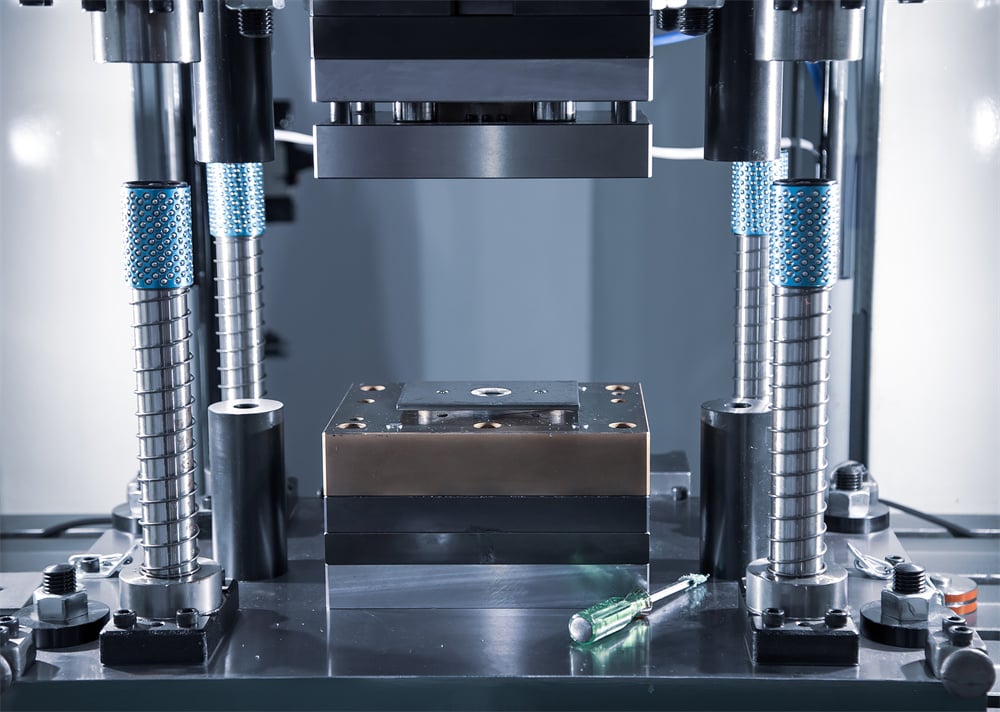
The structural integrity of the press frame is fundamental to its performance. In automotive applications, H-frame (or four-column) designs are preferred for their superior rigidity and resistance to deflection. When a press exerts hundreds or thousands of tons of force, any slight flex in the frame can lead to uneven part thickness or premature tool wear. HARSLE utilizes finite element analysis (FEA) during the design phase to ensure that the frames can withstand maximum loads with minimal deformation, ensuring long-term accuracy and Boosting Output A Hydraulic Press In Automotive Parts Manufacturing.
Servo-Hydraulic Technology
One of the most significant technological leaps in recent years is the introduction of servo-hydraulic systems. Unlike traditional systems that rely on a constantly running motor, servo-driven pumps only operate when movement or pressure is required. This allows for incredibly precise control over the ram’s velocity and position. For complex automotive parts like deep-drawn housings or structural pillars, the ability to fine-tune the speed at different points in the stroke is essential for preventing material tearing or wrinkling.
Advanced Control Systems
The “brain” of the hydraulic press is the PLC (Programmable Logic Controller) or CNC (Computer Numerical Control) system. Modern interfaces allow operators to store hundreds of different tool profiles, reducing setup times from hours to minutes. These systems also monitor machine health, tracking parameters such as oil temperature, filter status, and cycle counts. Predictive maintenance features can alert operators to potential issues before they cause unplanned downtime, which is critical for maintaining a high output in a 24/7 manufacturing environment.
Selection Advice: Choosing the Right Press for Your Facility
Selecting the right hydraulic press is a complex process that requires a deep understanding of your production goals. The first step is determining the required tonnage. This is calculated based on the material type, thickness, and the total perimeter of the cut or the surface area of the form. It is always advisable to select a press with a capacity roughly 20-30% higher than your maximum calculated requirement to avoid running the machine at its absolute limit, which can lead to increased wear and tear.
Bed size and stroke length are the next considerations. In automotive manufacturing, parts can range from small brackets to large floor pans. The bed must be large enough to accommodate the largest die sets, including any necessary nitrogen spring manifolds or die cushions. Similarly, the stroke length must be sufficient to allow for easy part removal, especially in deep-drawing applications. A press with an adjustable stroke can help in Boosting Output A Hydraulic Press In Automotive Parts Manufacturing by shortening the cycle for shallower parts.
Consider the following checklist when evaluating a hydraulic press for automotive use:
- Tonnage Capacity: Does it meet the requirements for AHSS and other modern alloys?
- Bolster and Slide Dimensions: Are they compatible with existing and future die sets?
- Speed Specifications: What are the approach, pressing, and return speeds?
- Control Features: Does it offer multi-stage pressure control and recipe storage?
- Safety Compliance: Does it meet CE, OSHA, or local safety standards (e.g., light curtains, dual-hand resets)?
- Automation Compatibility: Can it be easily interfaced with robots and feeders?
Furthermore, the choice between a standard hydraulic press and a specialized deep-drawing press depends on the complexity of the parts. Deep-drawing presses often include a hydraulic die cushion in the bed, which provides controllable blank-holder pressure. This is essential for manufacturing parts like fuel tanks or oil pans where material flow must be precisely managed to prevent thinning.
Technical Comparison Table
| Feature | Conventional Hydraulic Press | Servo-Hydraulic Press | Mechanical Press |
|---|---|---|---|
| Pressure Control | Good | Excellent (Variable) | Limited |
| Energy Efficiency | Moderate | High | Moderate |
| Cycle Speed | Moderate | High | Very High |
| Maintenance Needs | Regular (Oil/Seals) | Lower (Less Heat) | High (Mechanical Wear) |
| Versatility | High | Very High | Low |
FAQ: Boosting Output A Hydraulic Press In Automotive Parts Manufacturing
How does a hydraulic press improve part quality compared to mechanical presses?
Hydraulic presses provide full rated tonnage throughout the entire stroke, whereas mechanical presses only reach full tonnage at the bottom of the stroke. This allows for more consistent forming, especially in deep-draw applications. Additionally, the ability to control the speed and dwell time helps in reducing internal stresses in the metal, leading to better dimensional stability of the automotive parts.
What maintenance is required to keep output high?
To ensure you are consistently Boosting Output A Hydraulic Press In Automotive Parts Manufacturing, a strict maintenance schedule is required. This includes regular oil analysis to check for contamination, monitoring seal integrity to prevent pressure loss, and ensuring the cooling system is functioning correctly to prevent oil thinning. Lubrication of the gibs and guide rails is also essential to maintain precision and prevent frame wear.
Can older hydraulic presses be upgraded for higher output?
Yes, many older presses can be retrofitted with modern servo-pumps, new PLC controllers, and improved safety systems. This “remanufacturing” process can bring an older machine up to modern standards of speed and efficiency at a fraction of the cost of a new machine. However, the structural integrity of the frame must be verified before such upgrades are performed.
What role does the die cushion play in automotive stamping?
The die cushion is located in the bed of the press and provides upward force against the downward movement of the ram. In automotive stamping, it is used to hold the blank in place with a specific amount of pressure, allowing the metal to flow into the die cavity without wrinkling or tearing. Modern hydraulic die cushions are programmable, allowing for different pressures at different stages of the stroke.
Conclusion: Driving Efficiency with HARSLE Technology
In conclusion, Boosting Output A Hydraulic Press In Automotive Parts Manufacturing is a multi-faceted endeavor that combines high-performance hardware with intelligent software and strategic automation. As the automotive industry continues to evolve toward electric vehicles and more sustainable manufacturing practices, the demand for precise, efficient, and versatile metal forming solutions will only increase. A high-quality hydraulic press is not just a tool; it is a platform for innovation.
By focusing on rigidity, servo-hydraulic efficiency, and seamless automation integration, manufacturers can significantly reduce their cycle times and scrap rates. HARSLE remains committed to providing the automotive sector with the machinery needed to meet these challenges head-on. Investing in the right hydraulic press technology today ensures that your production line is ready for the demands of tomorrow, providing a clear path to increased profitability and market leadership in the competitive world of automotive parts manufacturing.