Hydraulic Press Machine Guide: Types, Functions, and Industrial Uses


Technical Overview of Hydraulic Press Technology
The hydraulic press machine stands as a cornerstone of modern industrial manufacturing, utilizing the fundamental principles of fluid mechanics to exert massive amounts of force. At its core, the hydraulic press operates based on Pascal’s Law, which states that pressure exerted anywhere in a confined incompressible fluid is transmitted equally in all directions throughout the fluid. This principle allows a relatively small amount of force applied to a small piston to be magnified into a tremendous force at a larger piston, enabling the shaping, molding, and configuration of heavy-duty metal components with surgical precision.
Modern hydraulic presses, such as those engineered by HARSLE, integrate sophisticated hydraulic circuits consisting of high-pressure pumps, precision control valves, accumulators, and heavy-duty cylinders. The evolution of these machines has moved from simple manual operations to fully automated CNC (Computer Numerical Control) systems. These advancements allow for variable pressure control, precise stroke positioning, and synchronized movement of multiple cylinders, which are essential for complex metal forming tasks like deep drawing and precision stamping. The structural integrity of the machine frame—whether it is a C-frame, H-frame, or four-column design—is critical to resisting the immense reactive forces generated during the pressing cycle.
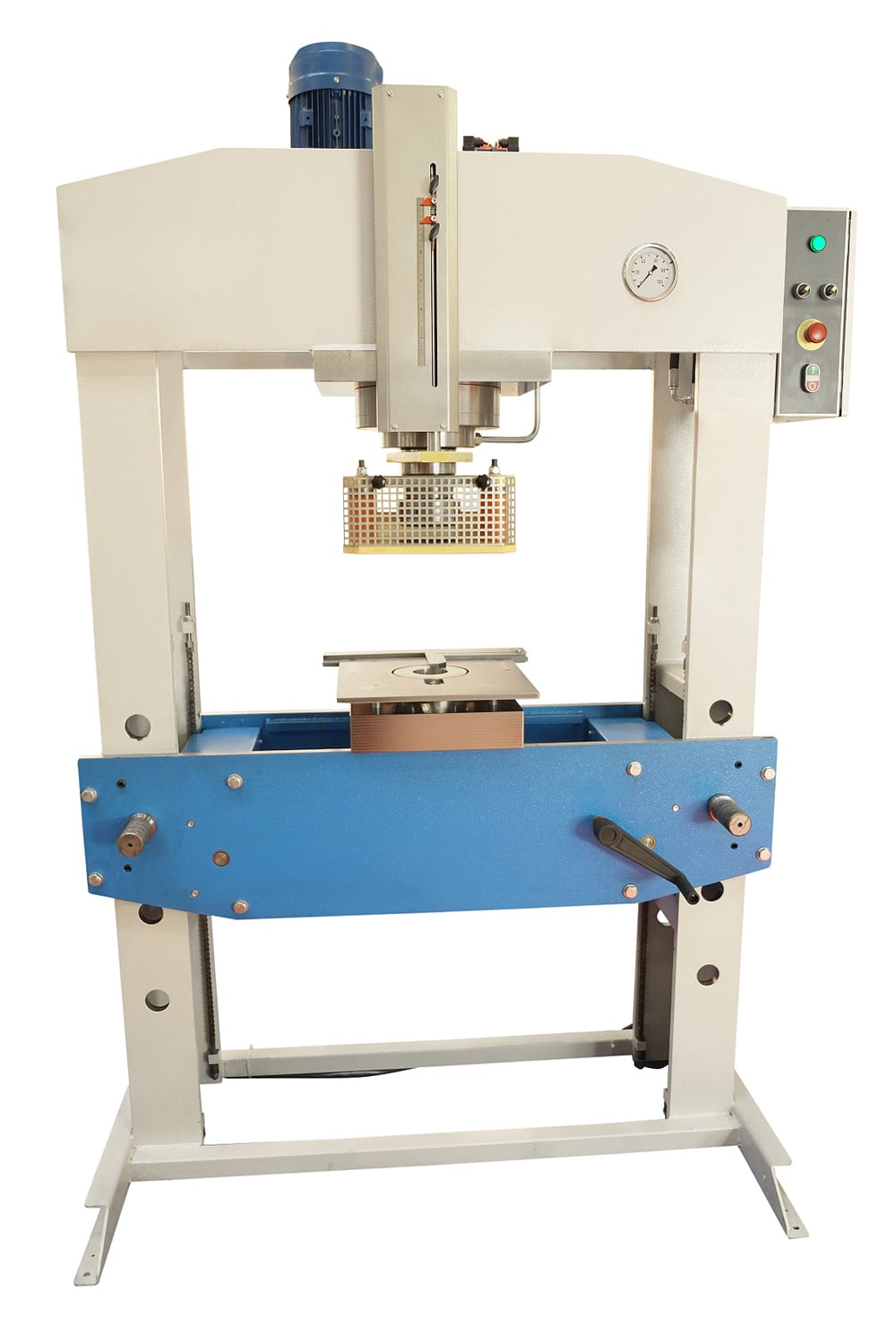
Beyond the mechanical structure, the hydraulic system’s efficiency is determined by the quality of its components. High-performance hydraulic oil serves not only as the medium for power transmission but also as a lubricant and coolant for the internal parts. Modern systems often incorporate oil cooling units and filtration systems to maintain optimal viscosity and prevent contamination, which could lead to valve failure or seal degradation. As industries push toward Industry 4.0, hydraulic presses are increasingly equipped with IoT sensors that monitor pressure fluctuations, temperature, and cycle times in real-time, providing valuable data for predictive maintenance and process optimization.
Core Parameters of Hydraulic Press Machines
Understanding the technical parameters of a hydraulic press is essential for selecting the right equipment for specific industrial applications. The most critical parameter is Tonnage, which represents the maximum force the press can exert. This is typically measured in metric tons or kilonewtons (kN). Selecting the correct tonnage requires a deep understanding of the material’s yield strength, thickness, and the complexity of the part being produced. Underestimating tonnage leads to incomplete forming, while overestimating can cause unnecessary energy consumption and potential tool damage.
The Stroke Length is another vital parameter, defining the total distance the ram can move from its top dead center (TDC) to its bottom dead center (BDC). For deep drawing applications, a long stroke is necessary to accommodate the depth of the part and the removal of the finished product. Closely related to stroke is the Daylight (or Open Height), which is the maximum distance between the bed and the ram when the press is fully open. This space must be sufficient to house the tooling (dies) and allow for easy loading and unloading of workpieces.
Speed parameters are categorized into three phases: Approach Speed, Pressing Speed, and Return Speed. The approach speed is the rapid movement of the ram toward the workpiece to minimize cycle time. The pressing speed is the controlled, slower movement during the actual deformation of the material, where maximum force is applied. Finally, the return speed is the rapid retraction of the ram. Modern servo-hydraulic presses allow for infinitely variable speed control, which is crucial for materials that are sensitive to deformation rates, such as certain aluminum alloys or high-strength steels.
Bed Size and Bolster Dimensions
The bed size or bolster area determines the maximum physical dimensions of the dies that can be installed. It is important to ensure that the bed is rigid enough to prevent deflection under full load. Deflection can lead to uneven pressure distribution, resulting in part inaccuracies and premature die wear. Engineers must also consider the throat depth in C-frame presses, which limits the width of the material that can be processed from the front of the machine.
Calculation Method for Pressing Force
To ensure the longevity of the hydraulic press and the quality of the manufactured parts, engineers must accurately calculate the required pressing force. The basic formula for the force generated by a hydraulic cylinder is F = P × A, where F is the force, P is the hydraulic pressure, and A is the effective area of the piston. However, in practical metal fabrication, the calculation must account for the material properties and the specific process being performed.
For a standard blanking or punching operation, the required force (L) can be calculated using the formula: L = P × t × τ. In this equation, P is the perimeter of the cut, t is the material thickness, and τ is the shear strength of the material. It is a standard engineering practice to add a safety margin of 20-30% to this calculated value to account for tool dulling, material variations, and friction losses within the machine’s mechanical linkages.
In deep drawing operations, the calculation becomes more complex as it involves the drawing force and the blank holder force. The blank holder force is necessary to prevent wrinkling of the material as it is drawn into the die cavity. If the blank holder force is too low, wrinkles form; if it is too high, the material may tear. Advanced hydraulic presses utilize independent hydraulic cushions or secondary cylinders to provide precise, adjustable blank holder pressure throughout the stroke, ensuring optimal material flow and part integrity.
Technical Parameter Table for Common Hydraulic Press Models
The following table provides a comparative overview of standard hydraulic press specifications typically found in industrial settings. These values serve as a general reference for procurement and engineering planning.
| Model Type | Nominal Force (kN) | Stroke (mm) | Max Daylight (mm) | Approach Speed (mm/s) | Work Speed (mm/s) |
|---|---|---|---|---|---|
| H-Frame 100T | 1000 | 500 | 800 | 120 | 10-15 |
| 4-Column 200T | 2000 | 600 | 1000 | 150 | 8-12 |
| C-Frame 63T | 630 | 400 | 600 | 100 | 15-20 |
| Deep Drawing 500T | 5000 | 800 | 1200 | 200 | 5-10 |
| Heavy Forging 1000T | 10000 | 1000 | 1500 | 180 | 3-8 |
Common Engineering Mistakes in Hydraulic Press Operation
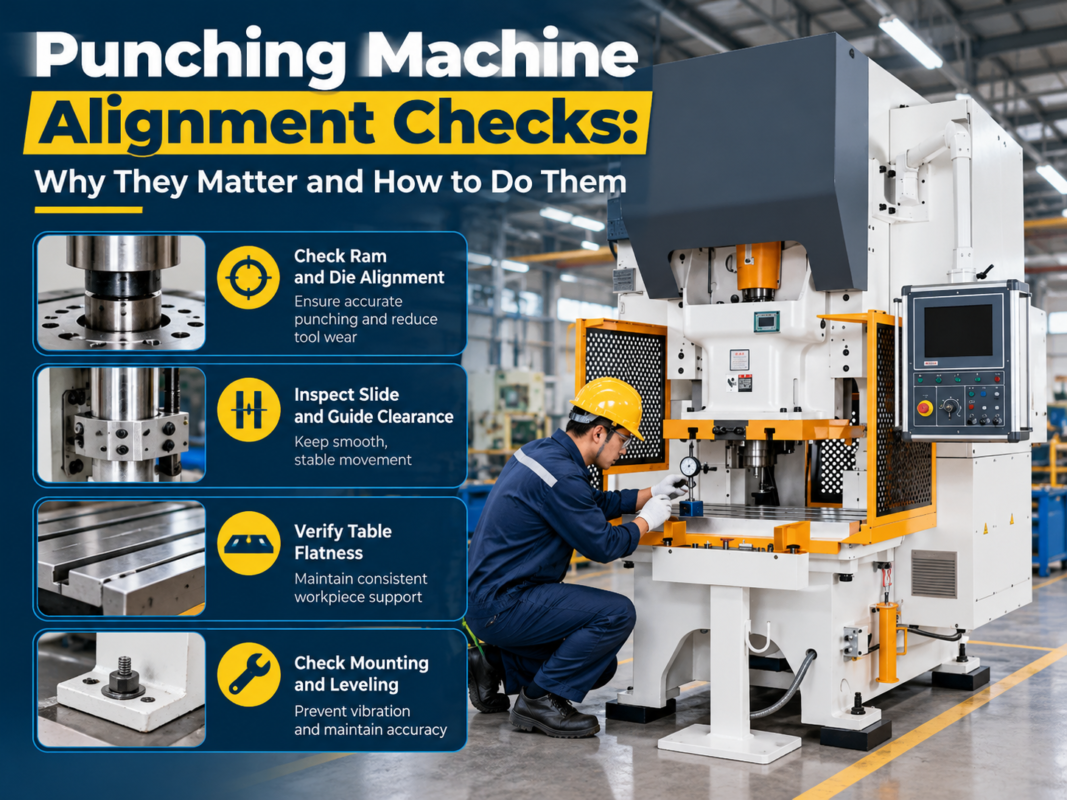
One of the most frequent mistakes in hydraulic press operation is Eccentric Loading. This occurs when the workpiece or die is not centered under the ram, causing asymmetrical forces to be applied to the machine frame and guide rails. Over time, eccentric loading leads to uneven wear on the bushings, potential bending of the ram, and catastrophic failure of the hydraulic seals. Operators must always ensure that the center of pressure of the tooling aligns with the centerline of the press ram.
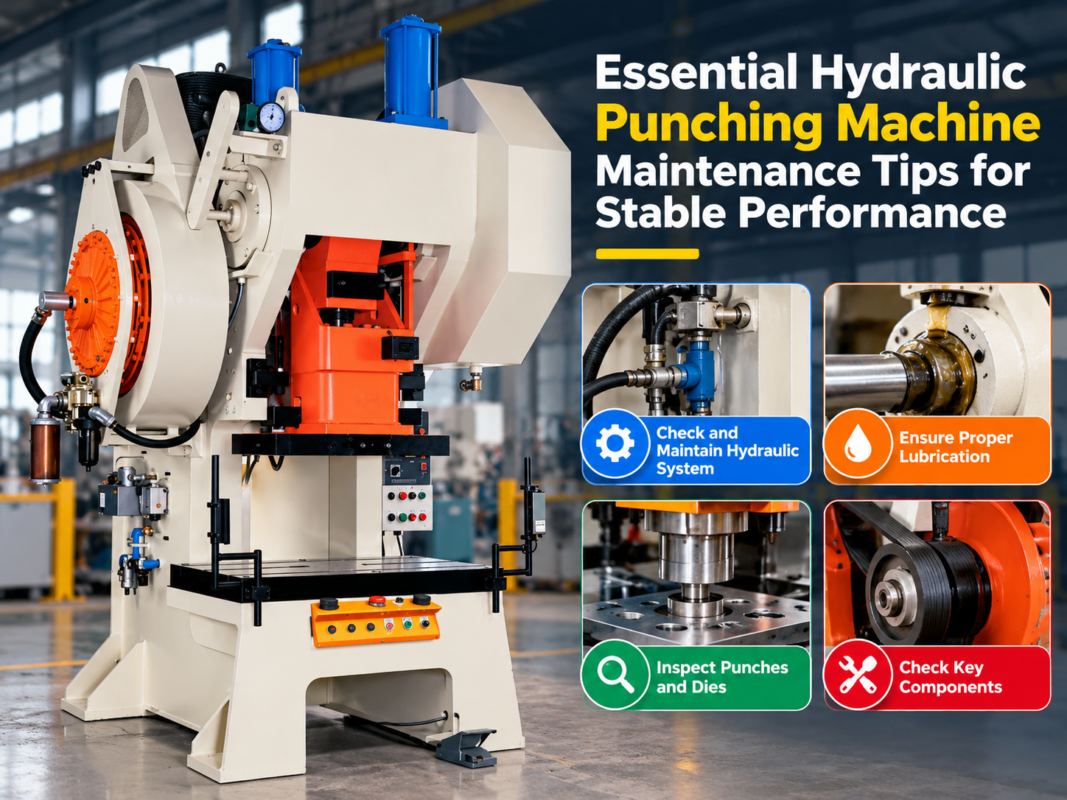
Another common error is Neglecting Thermal Management. Hydraulic systems generate significant heat during continuous operation. If the oil temperature exceeds the recommended range (usually 40°C to 55°C), the viscosity drops, leading to internal leakage, reduced volumetric efficiency, and accelerated wear of the pump components. High temperatures also cause hydraulic seals to become brittle and fail. Implementing an effective cooling strategy and monitoring oil temperature is vital for maintaining consistent performance in high-duty cycle environments.
Ignoring Contamination Control is a silent killer of hydraulic machinery. Even microscopic particles can act as abrasives, scoring cylinder walls and clogging precision valve orifices. Many shops fail to implement a rigorous oil analysis program or neglect to change filters at the specified intervals. Furthermore, using the wrong type of hydraulic fluid can lead to chemical incompatibility with seals or inadequate lubrication at high pressures. Always adhere to the manufacturer’s specifications for fluid type and filtration levels.
Selection Checklist for Industrial Hydraulic Presses
Choosing the right hydraulic press requires a systematic evaluation of both current production needs and future growth. Use the following checklist to guide your selection process:
- Tonnage Requirement: Calculate the maximum force needed for your toughest material and add a 25% safety buffer.
- Frame Rigidity: Choose an H-frame or 4-column design for high-precision tasks to minimize deflection. C-frames are better for smaller parts requiring 3-side access.
- Stroke and Daylight: Ensure the stroke is long enough for part removal and the daylight accommodates your largest die sets.
- Control System: Determine if you need simple manual controls or a CNC system for programmable pressure and position profiles.
- Speed Requirements: Evaluate if high approach and return speeds are necessary to meet your production cycle time targets.
- Safety Features: Verify the inclusion of light curtains, dual-hand start buttons, safety interlocks, and emergency stop circuits.
- Maintenance Accessibility: Check if hydraulic components, filters, and lubrication points are easily accessible for routine servicing.
- Energy Efficiency: Consider servo-driven hydraulic systems which can reduce energy consumption by up to 50% compared to traditional constant-speed motors.
- Manufacturer Support: Ensure the supplier provides comprehensive technical documentation, spare parts availability, and on-site training.
Frequently Asked Questions (FAQ)
1. What is the difference between a hydraulic press and a mechanical press?
A hydraulic press uses fluid pressure to move the ram, providing full tonnage throughout the entire stroke and allowing for adjustable speeds and pressures. A mechanical press uses a flywheel and crankshaft, delivering maximum force only at the bottom of the stroke, but generally operating at much higher cycle speeds for blanking and simple stamping.
2. How often should hydraulic oil be changed?
Typically, hydraulic oil should be changed every 2,000 to 4,000 hours of operation, or at least once a year. However, this depends on the operating environment and oil quality. Regular oil analysis is the best way to determine the exact timing for a change based on contamination levels and additive depletion.
3. Why is my hydraulic press losing pressure?
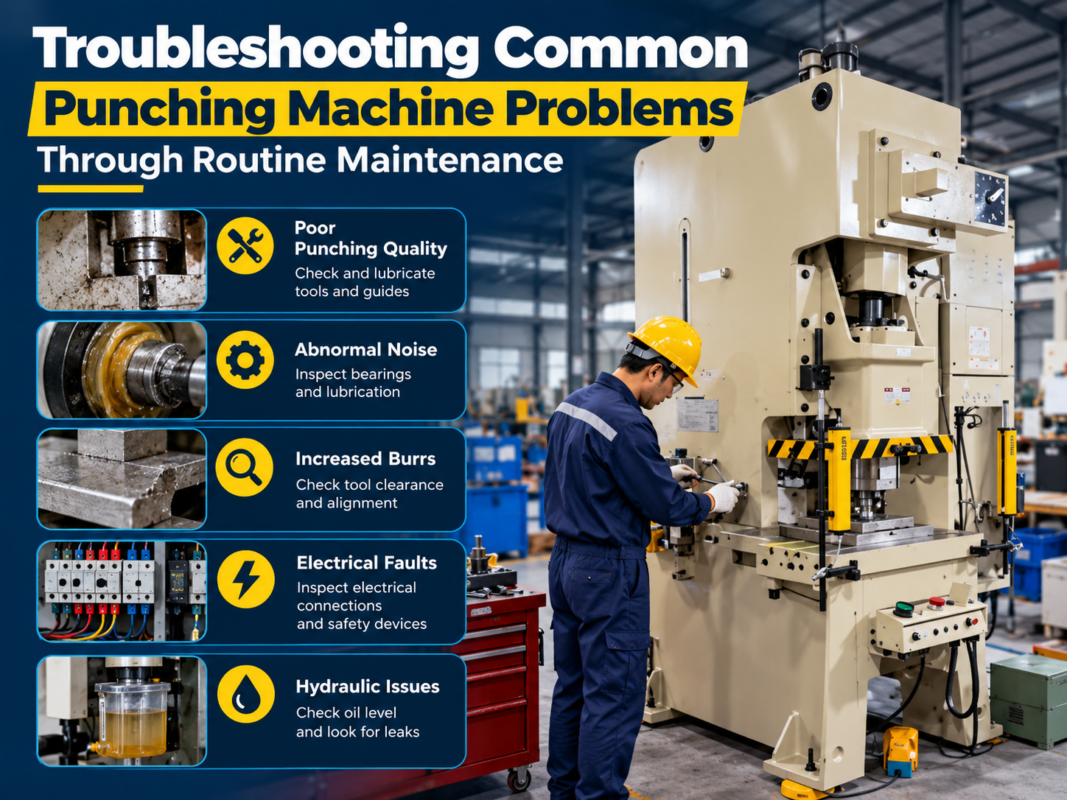
Pressure loss can be caused by several factors, including internal leaks in the cylinder seals, a malfunctioning relief valve, a worn-out hydraulic pump, or air trapped in the hydraulic circuit. Check for visible external leaks first, then inspect the valve settings and pump performance.
4. Can a hydraulic press be used for forging?
Yes, hydraulic presses are excellent for forging, especially for large components that require a “squeezing” action rather than the “impact” action of a hammer. They allow for deep penetration of the force into the center of the workpiece, ensuring a uniform grain structure in the forged metal.
5. What safety standards should a hydraulic press meet?
In most regions, hydraulic presses must comply with specific safety standards such as OSHA in the USA or CE/EN standards in Europe. These standards require specific safety guarding, redundant control systems, and fail-safe mechanisms to prevent accidental ram descent during maintenance or operation.
6. How do I prevent the hydraulic system from overheating?
To prevent overheating, ensure the cooling system (air or water-cooled) is functioning correctly and that the heat exchanger fins are clean. Additionally, avoid running the pump at high pressure for extended periods without flow, as this generates significant heat through friction and internal bypass.