Industrial Press Brake Price Guide: How to Budget for Production Needs


Introduction to Industrial Press Brake Budgeting
Investing in an industrial press brake is one of the most significant capital expenditures a metal fabrication shop will undertake. Whether you are upgrading from manual folding or expanding a high-volume production line, understanding the Industrial Press Brake Price : Budget Production Needs is critical for long-term financial health. The market for press brakes is vast, ranging from entry-level NC machines to highly sophisticated, multi-axis robotic bending cells. Navigating this landscape requires more than just looking at a sticker price; it requires a deep dive into how specific features translate into production efficiency and cost savings.
At HARSLE, we recognize that every workshop has unique requirements. A small job shop focusing on prototype work has vastly different budgeting needs than an automotive supplier running three shifts a day. This guide is designed to demystify the pricing structures of modern press brakes, helping you identify where to invest for performance and where you can potentially save without compromising quality. By the end of this article, you will have a comprehensive framework for budgeting your next machine purchase, ensuring that your investment aligns perfectly with your production goals.
Price Range Overview: Categorizing the Market
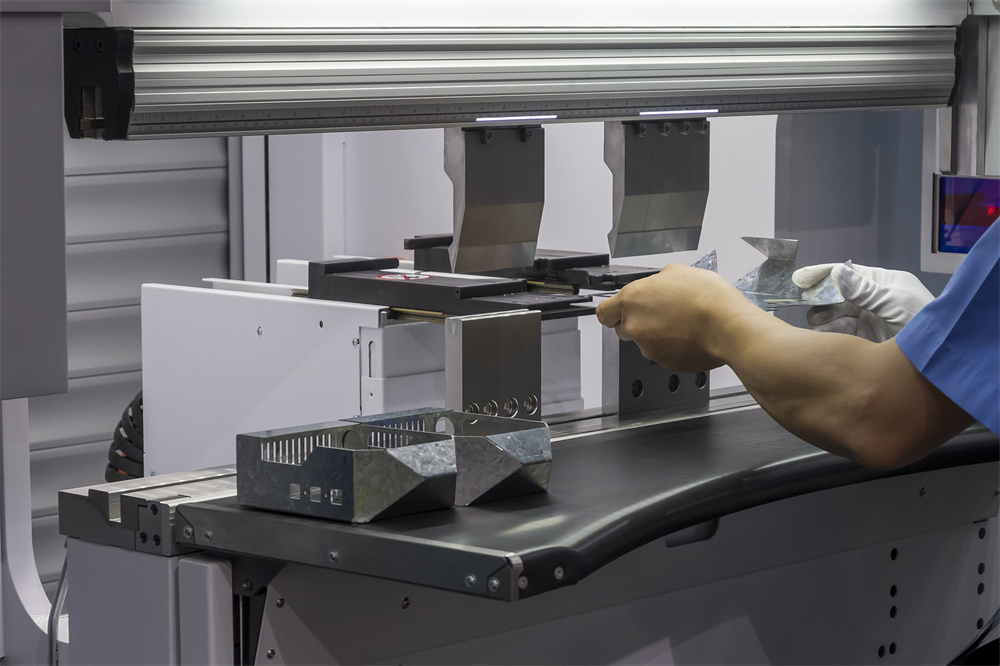
The price of an industrial press brake is primarily determined by its technology level, tonnage, and bending length. To help you budget effectively, we can categorize these machines into three main tiers. Note that these are estimated price ranges for new equipment and can fluctuate based on global steel prices and shipping costs.
1. Entry-Level NC and Basic Hydraulic Press Brakes ($10,000 – $25,000)
These machines are typically torsion bar synchronized (NC) rather than electro-hydraulic (CNC). They are ideal for simple bending tasks where high precision across the entire length of the bed is not the primary concern. They usually feature simple controllers like the E21 or E300, which manage the X-axis (backgauge) and Y-axis (stroke). While affordable, they require more manual adjustment and skilled operator intervention to achieve consistent results.
2. Mid-Range CNC Press Brakes ($30,000 – $75,000)
This is the most popular category for growing fabrication businesses. These machines are typically electro-hydraulic synchro models (often referred to as CNC Press Brakes). They offer 3 to 5 axes of control (Y1, Y2, X, R, and sometimes V-axis crowning). Prices in this range usually include a graphical controller like the Delem DA-53T or ESA S630. These machines provide the precision needed for complex parts and significantly reduce setup times through computerized tool libraries and angle calculations.
3. High-End and Specialized Bending Cells ($80,000 – $250,000+)
In this tier, you are paying for extreme precision, high speed, and automation. These machines often feature 6 to 8 axes of backgauge movement (X1, X2, R1, R2, Z1, Z2), high-speed servo-hydraulic systems, and advanced laser angle measurement systems. This category also includes hybrid press brakes, which use servo-electric drives for the hydraulics to save energy and increase cycle speeds. Large-format machines (over 400 tons or 6 meters in length) also fall into this price bracket due to the sheer volume of material and engineering required.
Main Cost Drivers: What Are You Paying For?
When evaluating an Industrial Press Brake Price : Budget Production Needs, it is essential to understand the technical components that drive the cost upward. It is rarely a single factor but rather a combination of the following specifications.
Tonnage and Bending Length
The most obvious cost driver is the physical size and power of the machine. Tonnage refers to the maximum pressure the machine can exert. A 100-ton machine is significantly cheaper than a 300-ton machine because the latter requires thicker steel frames, larger hydraulic cylinders, and more robust motors. Similarly, the bending length (the distance between the side frames) dictates the size of the workpiece you can handle. A 4-meter machine requires more structural reinforcement than a 2.5-meter machine to prevent frame deflection under load.
The Control System (The Brain)
The CNC controller is one of the most expensive individual components. A basic NC controller might cost a few hundred dollars, whereas a high-end Delem DA-66T or DA-69T with 3D visualization and offline software integration can add $10,000 to $15,000 to the machine’s price. The choice of controller affects not just the price, but the ease of use, the speed of programming, and the ability to integrate with CAD/CAM software.
Backgauge Complexity
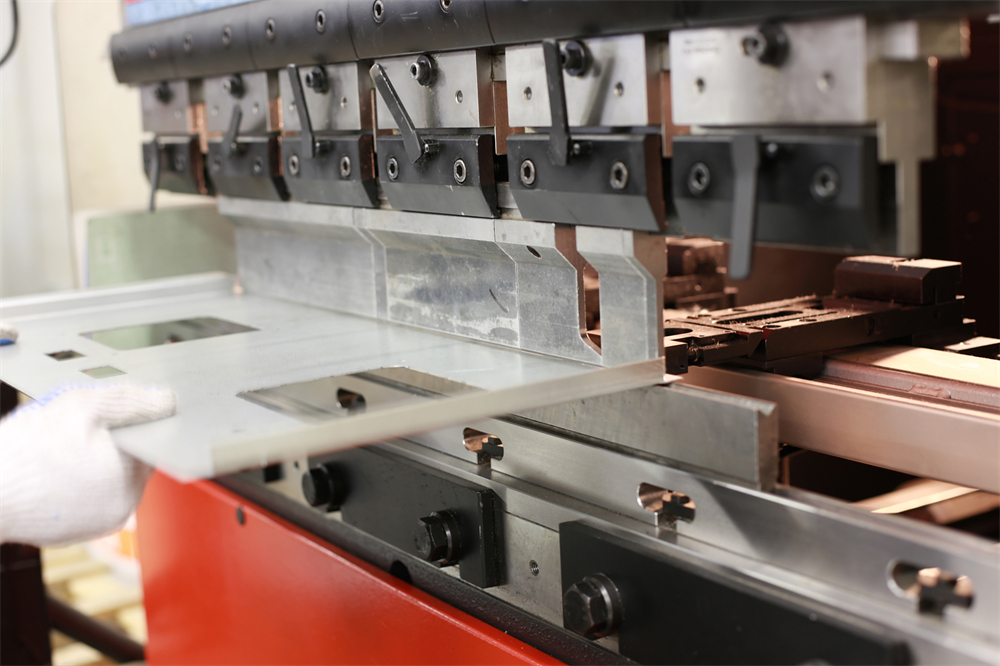
The backgauge is responsible for positioning the sheet metal accurately. A simple 1-axis backgauge (X) is standard. However, as you add axes—R (height), Z1/Z2 (lateral movement), and X-prime (for tapered bends)—the price increases. Each axis requires its own servo motor, drive, and precision ball screw. For complex geometry, a 4-axis or 6-axis backgauge is essential, but it can represent 15-20% of the total machine cost.
Configuration Impact: Customizing for Efficiency
Beyond the base model, the configuration you choose will heavily impact your budget. These choices should be dictated by your specific production needs.
- Crowning Systems: To compensate for the natural deflection of the machine bed during bending, a crowning system is necessary. Manual crowning is cheaper but requires the operator to adjust it for different thicknesses. Motorized CNC crowning is more expensive but ensures consistent angles across the entire length of the bend automatically.
- Hydraulic vs. Hybrid vs. Electric: Standard hydraulic systems are the baseline. Hybrid systems (servo-driven pumps) are more expensive upfront but can reduce electricity costs by up to 60% and offer quieter operation. Full electric press brakes are the most expensive but offer the highest speeds and precision for small, thin parts.
- Safety Systems: In many regions, laser safety guards (like DSP or Lazersafe) are mandatory. These systems protect the operator’s hands while allowing the machine to operate at high speeds. Adding a high-quality laser safety system can add $3,000 to $7,000 to the budget.
- Tooling Clamping: Standard manual clamping is included in the base price. Upgrading to quick-change pneumatic or hydraulic clamping systems can drastically reduce setup times for shops that change tools frequently, though it adds several thousand dollars to the initial cost.
Hidden Costs: Beyond the Sticker Price
When budgeting for an industrial press brake, many buyers fail to account for the “soft costs” associated with the purchase. To avoid a budget shortfall, ensure you include the following:
| Cost Category | Description | Estimated Impact |
|---|---|---|
| Shipping & Logistics | Ocean freight, insurance, and inland trucking from the port to your facility. | $2,000 – $8,000 |
| Installation & Rigging | Hiring a crane or heavy-duty forklift and a technician to level and bolt down the machine. | $1,500 – $5,000 |
| Foundation Work | Large machines (250T+) may require a reinforced concrete pit or specialized flooring. | $2,000 – $10,000 |
| Tooling Sets | Most machines come with a standard set, but specialized jobs require custom punches and dies. | $3,000 – $15,000 |
| Training | On-site training for operators to master the CNC controller and safety protocols. | $1,000 – $3,000 |
Furthermore, consider the cost of electrical upgrades. An industrial press brake requires a stable power supply, often 3-phase power. If your shop is not currently wired for this, the electrical contractor’s bill can be a significant surprise.
ROI Calculation: Justifying the Investment
A higher Industrial Press Brake Price is often justified by a faster Return on Investment (ROI). When budgeting, calculate how much time a more expensive machine will save you. For example, a CNC machine with a 4-axis backgauge might cost $20,000 more than a basic NC machine. However, if it reduces setup time by 30 minutes per job and you run four jobs a day, you save 2 hours of labor daily. At a shop rate of $75/hour, that is $150 a day, or roughly $37,500 a year. In this scenario, the more expensive machine pays for its price difference in less than seven months.
Additionally, consider scrap reduction. Advanced CNC controllers with angle sensors prevent over-bending and under-bending, which reduces wasted material. In high-value materials like stainless steel or aluminum, reducing scrap by even 5% can result in thousands of dollars in annual savings.
Buying Advice: How to Choose the Right Partner
Choosing the right manufacturer is as important as choosing the right machine. When looking at HARSLE or other reputable brands, consider the following advice:
- Define Your Maximums: Don’t buy a machine based on your average job. Buy it based on the thickest material and longest bend you anticipate doing in the next 3-5 years. Retrofitting a machine for more tonnage is impossible.
- Prioritize the Controller: If you have high operator turnover, invest in a more intuitive, graphical controller. It reduces the learning curve and minimizes human error.
- Check After-Sales Support: A cheap machine becomes very expensive if it sits idle for three weeks waiting for a spare part. Ensure the manufacturer has a reliable support network and readily available components.
- Consider the Resale Value: Well-known brands like HARSLE maintain their value better on the secondary market. If you decide to upgrade in five years, a machine with a recognized CNC system will be much easier to sell.
Frequently Asked Questions (FAQ)
What is the average lifespan of an industrial press brake?
With proper maintenance, a high-quality hydraulic press brake can last 20 to 25 years. The mechanical frame often outlasts the electronic controller, which may need an upgrade or replacement after 10-15 years.
Is it better to buy new or used?
While used machines have a lower initial price, they often lack modern safety features, have worn hydraulic seals, and use outdated controllers that are hard to repair. For production environments, a new machine with a warranty is usually the safer financial bet.
How much should I budget for annual maintenance?
You should budget approximately 1-3% of the machine’s purchase price for annual maintenance, including hydraulic oil changes, filter replacements, and periodic calibration by a technician.
Does the price include tooling?
Most manufacturers include a standard set of multi-V dies and a standard punch. However, for specific bending radii or deep box bending, you will need to budget extra for specialized tooling.
Can I upgrade an NC machine to a CNC later?
While technically possible, it is rarely cost-effective. Upgrading requires replacing the entire hydraulic valve system, the backgauge, and the electrical cabinet. It is almost always better to buy the CNC capability upfront if you anticipate needing it.
Conclusion
Budgeting for an industrial press brake is a balancing act between current financial constraints and future production needs. By understanding the drivers of the Industrial Press Brake Price : Budget Production Needs, you can make an informed decision that maximizes your shop’s capability while ensuring a healthy return on investment. Whether you choose a robust HARSLE NC model for straightforward tasks or a high-precision CNC synchro machine for complex fabrication, the key is to look beyond the initial cost and focus on the total cost of ownership and the value the machine brings to your production floor.