
Industrial Uses of Fiber Laser Cutting Machines in Hardware Manufacturing


Introduction to Fiber Laser Technology in Hardware Manufacturing
The landscape of modern hardware manufacturing has been fundamentally transformed by the advent of fiber laser technology. As industries demand higher precision, faster turnaround times, and more complex geometries, traditional mechanical cutting methods often fall short. Fiber laser cutting machines have emerged as the gold standard, offering unparalleled efficiency and versatility. In the context of hardware manufacturing—which encompasses everything from tiny electronic components to heavy-duty construction fasteners—the industrial uses of fiber laser cutting machines are both vast and critical. This guide explores how these machines are utilized, the technical requirements for various materials, and the significant productivity benefits they bring to the factory floor.
Fiber lasers utilize an optical fiber doped with rare-earth elements as the active gain medium. This design allows for a highly concentrated beam of light that can melt, vaporize, or blow away material with extreme precision. For hardware manufacturers, this means the ability to cut intricate patterns in various metals without the need for expensive custom tooling or dies. As we delve into the specific industrial uses of fiber laser cutting machines in hardware manufacturing, it becomes clear why this technology is a cornerstone of Industry 4.0.

Application Scenarios in Hardware Manufacturing
1. Automotive Hardware and Components
The automotive industry relies heavily on precision hardware. From seat brackets and exhaust hangers to intricate dashboard supports, fiber laser cutting machines provide the speed and accuracy required for high-volume production. In this sector, the industrial uses of fiber laser cutting machines in hardware manufacturing focus on producing lightweight yet strong components. The ability to cut high-strength steel and aluminum alloys with minimal heat-affected zones ensures that the structural integrity of the automotive hardware is maintained.
2. Construction and Architectural Hardware
In construction, hardware such as gusset plates, connectors, and decorative metal facades require robust manufacturing processes. Fiber lasers are used to cut thick carbon steel plates for structural supports as well as thin stainless steel for aesthetic architectural elements. The flexibility of the laser allows manufacturers to switch between different designs instantly, making it ideal for custom architectural projects where unique hardware shapes are often required.
3. Kitchenware and Household Hardware
The production of sinks, cutlery, cabinet handles, and shelving systems involves extensive sheet metal work. Fiber laser cutting machines are preferred here because they produce clean, burr-free edges that require little to no post-processing. This is particularly important for stainless steel kitchenware, where hygiene and aesthetics are paramount. The high speed of fiber lasers ensures that household hardware can be produced at a cost-effective price point for the mass market.
4. Electronics and Precision Instruments
Miniaturization is a key trend in electronics, requiring hardware components that are incredibly small and precise. Fiber lasers can achieve tolerances as tight as +/- 0.05mm, making them perfect for cutting EMI shielding, small brackets, and internal chassis components for computers and smartphones. The non-contact nature of laser cutting prevents the mechanical deformation of thin, fragile materials used in electronic hardware.
5. Medical Device Hardware
The medical industry demands the highest levels of precision and cleanliness. Fiber lasers are used to manufacture surgical instruments, orthopedic implants, and hospital equipment hardware. Since the laser beam is a sterile tool that does not physically touch the material, the risk of contamination is significantly reduced. Furthermore, the ability to cut medical-grade stainless steel and titanium with extreme detail is a primary industrial use of fiber laser cutting machines in this specialized hardware sector.
Material and Process Requirements
Material Versatility
One of the primary reasons for the widespread industrial uses of fiber laser cutting machines in hardware manufacturing is their ability to handle a diverse range of materials. Unlike CO2 lasers, fiber lasers are highly effective at cutting reflective metals. Common materials include:
- Carbon Steel: Often used for industrial fasteners and structural hardware. Fiber lasers provide high-speed cutting for thin sheets and high-quality finishes for thick plates using oxygen as an assist gas.
- Stainless Steel: Essential for kitchenware and medical hardware. Nitrogen is typically used as the assist gas to prevent oxidation, resulting in a bright, clean edge.
- Aluminum: Widely used in automotive and aerospace hardware. Fiber lasers overcome aluminum’s high thermal conductivity and reflectivity.
- Brass and Copper: These highly reflective materials were difficult to cut with older laser technologies. Fiber lasers, with their specific wavelength, can process these materials efficiently for electrical hardware and decorative items.
Thickness and Precision
The process requirements vary significantly based on the hardware’s intended use. For precision electronic hardware, a low-power laser (1kW – 2kW) with a small nozzle and high-pressure nitrogen is used to achieve fine detail. Conversely, for heavy-duty construction hardware, high-power lasers (12kW – 30kW) are employed to pierce and cut through thick steel plates. Maintaining a consistent focal point and gas pressure is essential for ensuring that the hardware meets industrial quality standards.
Edge Quality and Surface Finish
In hardware manufacturing, the finish of the cut edge is often a critical requirement. For consumer-facing hardware, a smooth, polished edge is necessary. This is achieved by optimizing the cutting speed and the frequency of the laser pulse. Fiber lasers minimize the “dross” (solidified molten metal) on the bottom of the cut, which reduces the labor costs associated with grinding and polishing.
Recommended Machine Configuration for Hardware Production
Choosing the right configuration is vital for maximizing the industrial uses of fiber laser cutting machines in hardware manufacturing. A standard setup for a hardware factory usually includes the following components:
1. Laser Source Power
For general hardware manufacturing, a 3kW to 6kW fiber laser source (such as Raycus or IPG) is often the “sweet spot.” It provides enough power to cut through 20mm carbon steel while remaining incredibly fast on thinner 1mm-3mm sheets. If the factory specializes in heavy industrial hardware, upgrading to 12kW or higher is recommended to increase throughput on thick materials.
2. Cutting Head Technology
An autofocus cutting head is essential. In hardware manufacturing, material sheets may not always be perfectly flat. An autofocus head (like those from Precitec or Raytools) adjusts the focal length in real-time, ensuring consistent cut quality across the entire workpiece. This reduces waste and prevents damage to the machine.
3. Bed Size and Motion System
A standard 3015 (3m x 1.5m) or 4020 (4m x 2m) bed size is typical for most hardware applications. However, the motion system—including the rack, pinion, and servo motors—must be of high quality. High-speed hardware production requires rapid acceleration and deceleration to maintain efficiency during complex cuts. Linear motors are an excellent option for those requiring the highest possible speeds.
4. Control System and Software
The control system (such as CypCut) should be user-friendly and support advanced nesting software. Nesting is crucial in hardware manufacturing to minimize material waste. By intelligently arranging parts on a sheet, manufacturers can save thousands of dollars in raw material costs annually.
The Workflow of Fiber Laser Cutting in a Hardware Factory
The integration of a fiber laser into a hardware manufacturing workflow is a streamlined process that enhances overall shop efficiency. The typical workflow follows these steps:
- Design and CAD Preparation: The hardware component is designed using CAD software (like SolidWorks or AutoCAD). The file is then exported as a DXF or DWG format.
- Nesting and CAM Processing: The design is imported into nesting software. Here, the software calculates the most efficient way to place multiple parts on a single metal sheet. It also determines the cutting path, lead-ins, and lead-outs.
- Material Loading: The metal sheet is loaded onto the laser bed. Many modern machines feature an exchange table system, allowing one sheet to be loaded while another is being cut, virtually eliminating downtime.
- Parameter Setting: The operator selects the appropriate cutting parameters based on the material type and thickness. This includes laser power, cutting speed, gas pressure, and nozzle height.
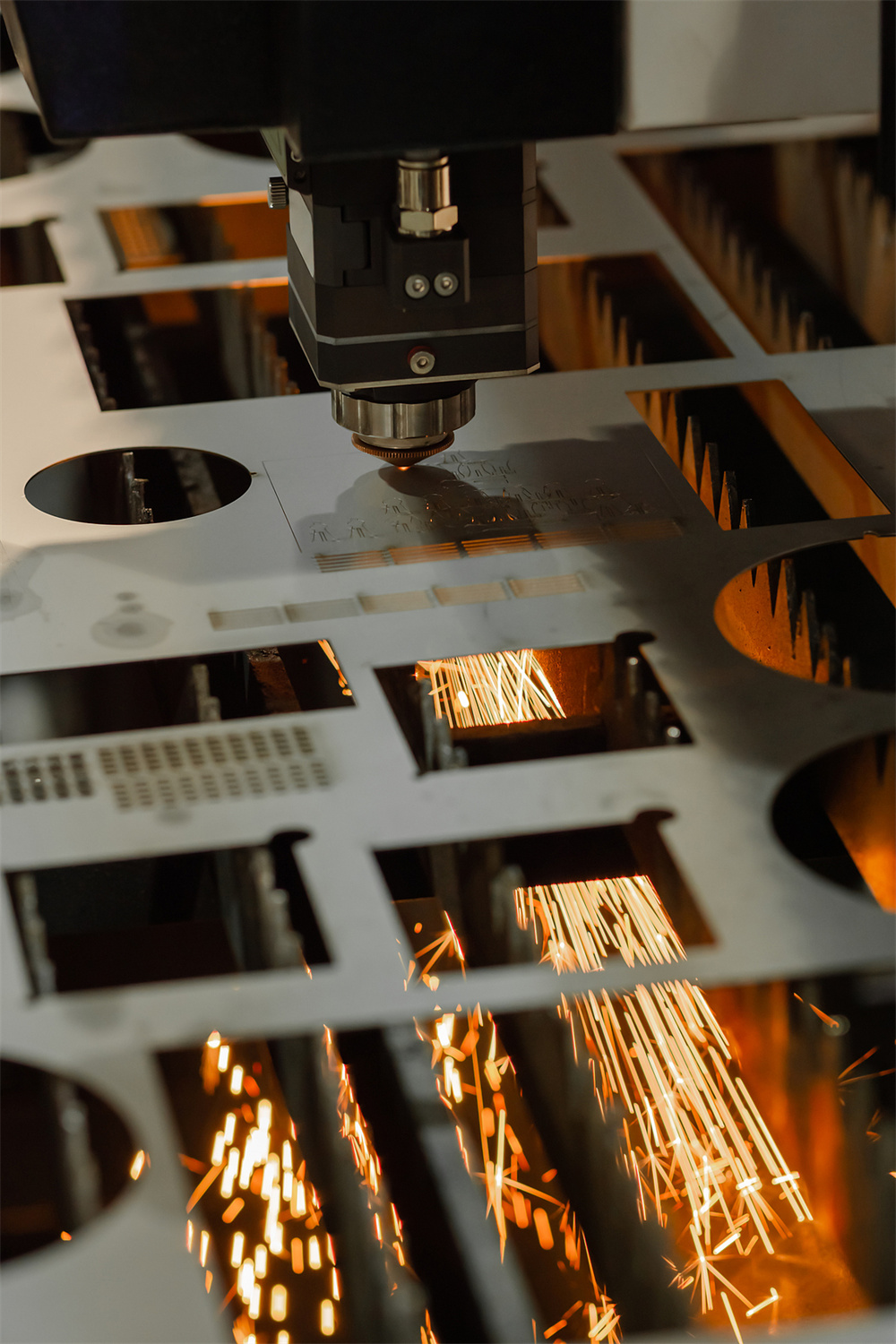
- The Cutting Process: The fiber laser executes the program. The high-speed movement of the gantry combined with the intense laser beam quickly transforms the sheet into finished hardware parts.
- Part Collection and Sorting: Once the cycle is complete, the parts are removed from the bed. Because of the high precision, these parts are often ready for immediate assembly or the next stage of production (such as bending or coating).
Productivity Benefits for Hardware Manufacturers
Unmatched Speed and Efficiency
The most immediate benefit of the industrial uses of fiber laser cutting machines in hardware manufacturing is speed. For thin materials, fiber lasers are significantly faster than CO2 lasers or plasma cutters. This high throughput allows manufacturers to meet tight deadlines and take on more orders without increasing their physical footprint.
Reduced Operational Costs
Fiber lasers are highly energy-efficient, converting about 30-35% of electrical energy into laser light, compared to only 10% for CO2 lasers. Additionally, they have fewer moving parts and no mirrors to align, which drastically reduces maintenance costs and downtime. For a hardware factory, this translates to a lower cost per part.
Material Savings through Precision Nesting
Because the laser beam is so thin (the kerf width is minimal), parts can be placed very close together on the sheet. Advanced nesting algorithms further optimize this, ensuring that scrap metal is kept to an absolute minimum. In high-volume hardware production, even a 5% saving in material can result in significant annual profit increases.
Versatility and Flexibility
A single fiber laser machine can replace multiple traditional machines. It can cut, mark, and sometimes even drill. This versatility allows hardware manufacturers to diversify their product lines without investing in new specialized equipment. Whether it’s a simple washer or a complex decorative hinge, the fiber laser handles it all with ease.
Case Example: Transitioning to Fiber Laser Cutting
Consider a mid-sized manufacturer of industrial cabinet hardware. Previously, they used a combination of mechanical punching presses and older CO2 lasers. The punching presses required expensive custom dies for every new product design, and the CO2 laser was slow and expensive to maintain. The manufacturer faced long lead times and high costs for small-batch custom orders.
After investing in a 6kW HARSLE fiber laser cutting machine, the company saw immediate results. They eliminated the need for new dies, allowing them to prototype and produce new hardware designs in hours rather than weeks. The cutting speed for their 3mm stainless steel handles tripled, and the edge quality was so high that they eliminated a secondary vibrating deburring step. Within 14 months, the machine had paid for itself through labor savings and increased production capacity.
Frequently Asked Questions (FAQ)
What is the maximum thickness a fiber laser can cut for hardware?
The maximum thickness depends on the laser’s power. A 3kW laser can comfortably cut up to 20mm carbon steel, while a 12kW or 20kW machine can handle 50mm or more. For most hardware applications, which use materials under 12mm, a 3kW to 6kW machine is more than sufficient.
Is fiber laser cutting safe for all types of hardware materials?
Yes, provided the correct safety measures are in place. Fiber lasers operate at a wavelength that is dangerous to the human eye, so machines should be fully enclosed (Class 1 safety rating). Additionally, proper ventilation is required to remove fumes generated during the cutting of certain materials like galvanized steel or aluminum.
How does fiber laser cutting compare to waterjet cutting for hardware?
Fiber laser cutting is much faster and more cost-effective for most metal hardware. Waterjet cutting is typically reserved for very thick materials (over 50mm) or materials that are sensitive to heat (like plastics or composites). For the vast majority of metal hardware manufacturing, the fiber laser is the superior choice due to its speed and lower operating cost.
What maintenance does a fiber laser machine require?
Maintenance is relatively low. Key tasks include cleaning the protective windows in the cutting head, checking the chiller’s water levels, and lubricating the guide rails and racks. Unlike CO2 lasers, there are no gas tubes or mirrors to maintain within the laser source itself.
Conclusion and Call to Action
The industrial uses of fiber laser cutting machines in hardware manufacturing have redefined what is possible in terms of speed, precision, and cost-effectiveness. From automotive components to intricate medical tools, this technology provides the flexibility that modern manufacturers need to stay competitive in a global market. By adopting fiber laser technology, hardware manufacturers can reduce waste, lower operational costs, and deliver superior products to their customers.
At HARSLE, we specialize in providing high-performance fiber laser cutting solutions tailored to the unique needs of the hardware industry. Our machines are engineered for durability, precision, and ease of use, ensuring that your investment yields the highest possible return. Whether you are looking to upgrade your current capabilities or are starting a new production line, our team of experts is here to guide you.
Ready to elevate your hardware manufacturing process? Contact HARSLE today to learn more about our fiber laser cutting machines and how they can transform your production floor. Visit our website or speak with a representative to request a custom quote and a live demonstration of our technology in action.












