Precision Engineering: Press Brake Applications in Power Distribution Cabinet Manufacturing


Introduction to Power Distribution Cabinet Manufacturing
The global demand for reliable electrical infrastructure has placed immense pressure on manufacturers of power distribution cabinets. These enclosures, which house critical components like circuit breakers, switches, and busbars, must meet stringent standards for safety, durability, and precision. At the heart of this manufacturing process lies the CNC press brake. The integration of advanced Press Brake Applications In Power Distribution Cabinet Manufacturing has revolutionized how these complex metal structures are designed and assembled.
Power distribution cabinets are not merely metal boxes; they are sophisticated protective shells that must withstand environmental stressors, internal heat, and mechanical vibrations. Achieving the necessary structural integrity requires precise bending of various sheet metal components. From the main frame to the intricate internal mounting brackets, the accuracy of every bend determines the final quality of the cabinet. This article explores the technical nuances of using press brakes in this specialized sector, providing a comprehensive guide for manufacturers looking to optimize their production lines.
Application Scenarios in Cabinet Fabrication
In the realm of electrical engineering, cabinets come in various forms, such as GGD (Fixed Type), GCS (Withdrawable Type), and MNS (Modular Type). Each type presents unique challenges for sheet metal bending. The application of press brakes in this field can be categorized into several key scenarios:
1. Main Frame Construction
The skeleton of a power distribution cabinet is typically composed of C-profiles or multi-fold profiles. These profiles require multiple bends on a single strip of metal to create a rigid structure capable of supporting heavy electrical equipment. A CNC press brake with high repeatability is essential here to ensure that the frame remains perfectly square, which is critical for the subsequent installation of doors and side panels.
2. Door Panels and Sealing Edges
Cabinet doors require precise 90-degree bends and often complex return flanges to accommodate rubber gaskets for IP-rated sealing. The aesthetic quality is also paramount; any marking or deformation on the outer surface of the door is unacceptable. Using specialized tooling and precision backgauging, manufacturers can achieve clean, sharp bends that ensure a flush fit and professional finish.
3. Internal Mounting Plates and Brackets
The interior of a cabinet is filled with mounting plates, busbar supports, and cable management trays. These parts often involve small, intricate bends and multiple holes that must align perfectly with the frame. The ability of a press brake to handle small workpieces with high precision is vital for the modular assembly of internal components.
4. Ventilation Louvers and Heat Dissipation Features
While some louvers are punched, many ventilation structures involve bending sequences that allow for airflow while preventing the ingress of dust or moisture. Press brakes equipped with specific forming tools can create these features efficiently, maintaining the structural integrity of the panel while providing necessary functional attributes.
Material and Process Requirements
The choice of material in power distribution cabinet manufacturing is dictated by the installation environment (indoor vs. outdoor) and the electrical load. Each material behaves differently under the pressure of a press brake, requiring specific process adjustments.
- Cold-Rolled Steel (SPCC): The most common material for indoor cabinets. It offers excellent formability and a smooth surface for powder coating. However, it requires precise springback compensation to maintain tight tolerances.
- Galvanized Steel (SECC/SGCC): Used for its corrosion resistance. The challenge here is bending without damaging the zinc coating. Manufacturers often use protective films or specialized die lubricants to prevent galling.
- Stainless Steel (304/316): Reserved for outdoor or highly corrosive environments (e.g., chemical plants or coastal areas). Stainless steel has a higher tensile strength and significant springback, necessitating more powerful hydraulic systems and advanced CNC control for angle correction.
- Aluminum Alloys: Occasionally used for lightweight applications or specific electromagnetic shielding requirements. Aluminum is prone to cracking if the bend radius is too tight, requiring careful selection of V-die widths.
Process requirements also include strict adherence to dimensional tolerances. In modular cabinet designs, a deviation of even 0.5mm can lead to cumulative errors, making it impossible to slide in withdrawable units or align busbars. Therefore, the press brake must offer high-precision positioning of the backgauge and consistent ram depth control.
Recommended Machine Configuration
To meet the rigorous demands of Press Brake Applications In Power Distribution Cabinet Manufacturing, a standard machine often falls short. A specialized configuration is recommended to maximize efficiency and quality.
1. Advanced CNC Control System
Systems like the Delem DA-66T or DA-69T are preferred. These controllers offer 3D visualization, allowing operators to see the bending sequence and identify potential collisions before the first piece of metal is touched. They also support offline programming, which reduces machine downtime during setup.
2. Multi-Axis Backgauge System
A 4-axis (X, R, Z1, Z2) or 6-axis (X1, X2, R1, R2, Z1, Z2) backgauge is essential. Cabinet parts are often asymmetrical or require multiple setups. A multi-axis system allows for the independent positioning of fingers, enabling the bending of complex shapes in a single handling cycle.
3. Crowning System (Deflection Compensation)
Long cabinet frames (often 2 meters or more) are susceptible to the “canoe effect,” where the center of the bend is not as deep as the ends. A high-quality hydraulic or mechanical crowning system integrated into the CNC table compensates for machine deflection, ensuring a consistent angle across the entire length of the workpiece.
4. Specialized Tooling
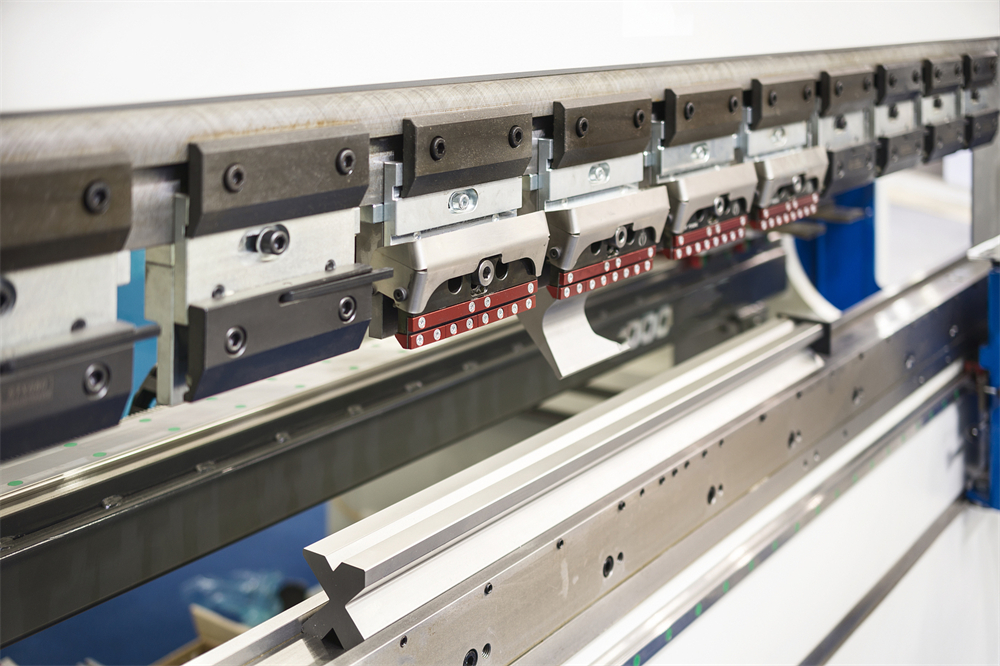
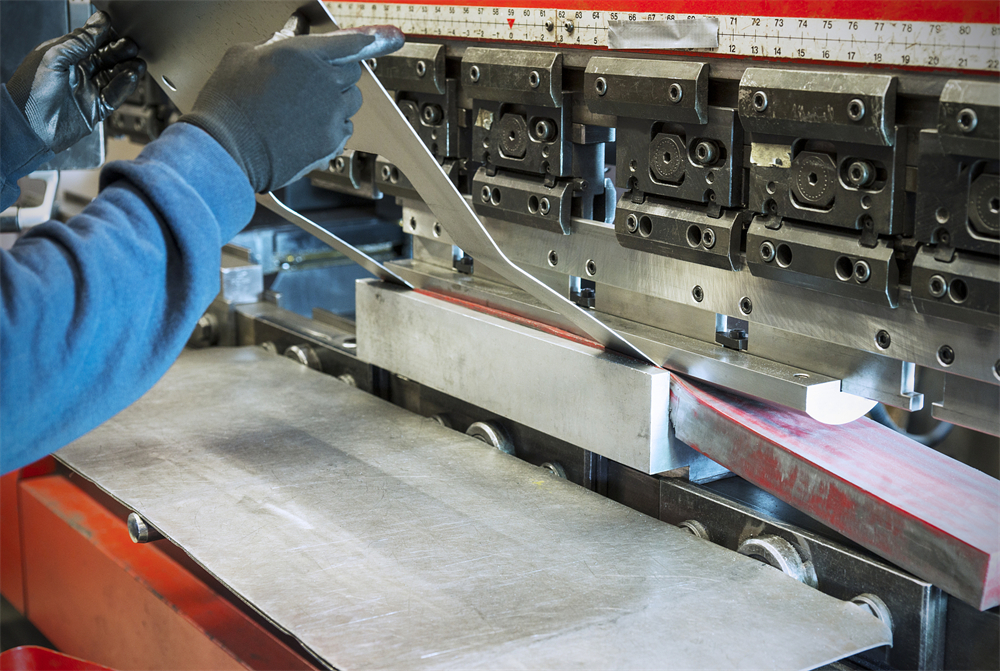
Gooseneck punches are indispensable for cabinet manufacturing. Their deep relief allows for the creation of deep “U” channels and return flanges without the workpiece hitting the punch body. Additionally, quick-change clamping systems (like the Amada-Promecam style) significantly reduce the time required to switch between different part profiles.
Optimized Workflow for Cabinet Production
Efficiency in cabinet manufacturing is not just about the speed of the ram; it is about the entire workflow from design to finished part. A typical optimized workflow includes:
- CAD/CAM Integration: Engineers design the cabinet in 3D software. This data is exported to CAM software, which calculates the flat pattern, accounts for material-specific K-factors, and generates the bending program.
- Material Preparation: Sheets are laser-cut or punched with all necessary holes and notches. The precision of the flat pattern is the foundation for a successful bend.
- Program Loading and Tooling Setup: The operator loads the CNC program and installs the recommended tools. Modern machines with tool identification systems can verify that the correct punch and die are in place.
- Sequential Bending: The operator follows the 3D prompts on the controller. For complex cabinet frames, this might involve 10 or more bends. The use of front supports can help manage large panels, reducing operator fatigue and improving safety.
- In-Process Inspection: Using laser angle measuring systems, the machine can check the angle of the first bend and automatically adjust the ram depth for subsequent parts to account for material variations.
Productivity and Economic Benefits
Investing in a high-end CNC press brake for cabinet manufacturing yields significant economic returns. Firstly, the reduction in scrap is substantial. In manual operations, the “trial and error” method of setting angles often wastes several expensive sheets of metal. CNC precision eliminates this waste.
Secondly, labor productivity is greatly enhanced. A modern CNC press brake can perform complex sequences much faster than a manual machine. Features like automatic crowning and multi-axis backgauges mean that even less experienced operators can produce high-quality parts with minimal training. Furthermore, the consistency of CNC bending ensures that the assembly department spends less time “forcing” parts to fit, which speeds up the entire factory throughput.
Finally, the ability to take on more complex, high-value projects (such as custom stainless steel enclosures for the oil and gas industry) allows manufacturers to diversify their client base and increase profit margins. The precision offered by advanced Press Brake Applications In Power Distribution Cabinet Manufacturing becomes a competitive advantage in a crowded market.
Case Example: High-Efficiency Cabinet Production Line
Consider a manufacturer specializing in GCS withdrawable switchgear. Previously, they used traditional hydraulic press brakes, which required two operators for large panels and frequent manual adjustments for angle consistency. This resulted in an average production time of 45 minutes per cabinet frame, with a 5% reject rate due to misalignment.
After upgrading to a HARSLE CNC Press Brake with a 6-axis backgauge and DA-66T controller, the transformation was immediate. By utilizing offline programming, the setup time was reduced by 70%. The integrated crowning system ensured that 2.2-meter side panels were perfectly straight, reducing the reject rate to under 0.5%. The most significant gain was in the assembly phase: because every part was bent to exact specifications, the assembly time per cabinet dropped by 30%, allowing the factory to increase its monthly output from 200 to 280 units without hiring additional staff.
Frequently Asked Questions (FAQ)
What is the best tonnage for cabinet manufacturing?
For most standard power distribution cabinets (1.5mm to 3.0mm mild steel), a 100-ton to 160-ton press brake is usually sufficient. However, if you are working with long frames (over 3 meters) or thicker stainless steel, you may need 200 tons or more.
How do I prevent scratches on stainless steel cabinet doors?
Use “no-mar” bending tape on the die or utilize urethane die inserts. Additionally, ensuring that the dies are clean and polished will minimize surface marking. Some manufacturers also leave the protective plastic film on the sheet during the bending process.
Can one press brake handle all parts of a cabinet?
While one machine can technically do it, it is often more efficient to have a larger machine for frames and side panels, and a smaller, faster machine (like an electric or high-speed hydraulic press brake) for small internal brackets and components.
Why is the backgauge so important for electrical enclosures?
Electrical enclosures often have multiple holes and cutouts that must align with internal components. The backgauge ensures that the bend line is perfectly positioned relative to these features, ensuring that the final assembly is accurate.
Conclusion and CTA
The evolution of Press Brake Applications In Power Distribution Cabinet Manufacturing has turned a traditional metalworking task into a high-tech, precision-driven process. For manufacturers, staying competitive means embracing these technological advancements to deliver higher quality, more durable, and more complex electrical enclosures.
At HARSLE, we specialize in providing state-of-the-art CNC press brakes tailored for the electrical industry. Our machines offer the precision, speed, and reliability needed to excel in cabinet fabrication. Whether you are looking to upgrade a single machine or overhaul your entire production line, our team of experts is here to help. Contact HARSLE today to discover how our bending solutions can power your manufacturing success.