Air Bending, Bottoming, and Coining on a Press Brake: Technical Differences Explained


Technical Overview of Press Brake Bending Methods
In the world of precision metal fabrication, the press brake is the workhorse of the shop floor. However, the machine is only as effective as the technique applied by the operator. Understanding the nuances between Air Bending, Bottoming, and Coining On A Press Brake: Technical Differences Explained is fundamental for any engineer or technician aiming for high-quality results. These three methods represent the evolution of sheet metal forming, each offering distinct advantages in terms of accuracy, tonnage requirements, and tooling flexibility.
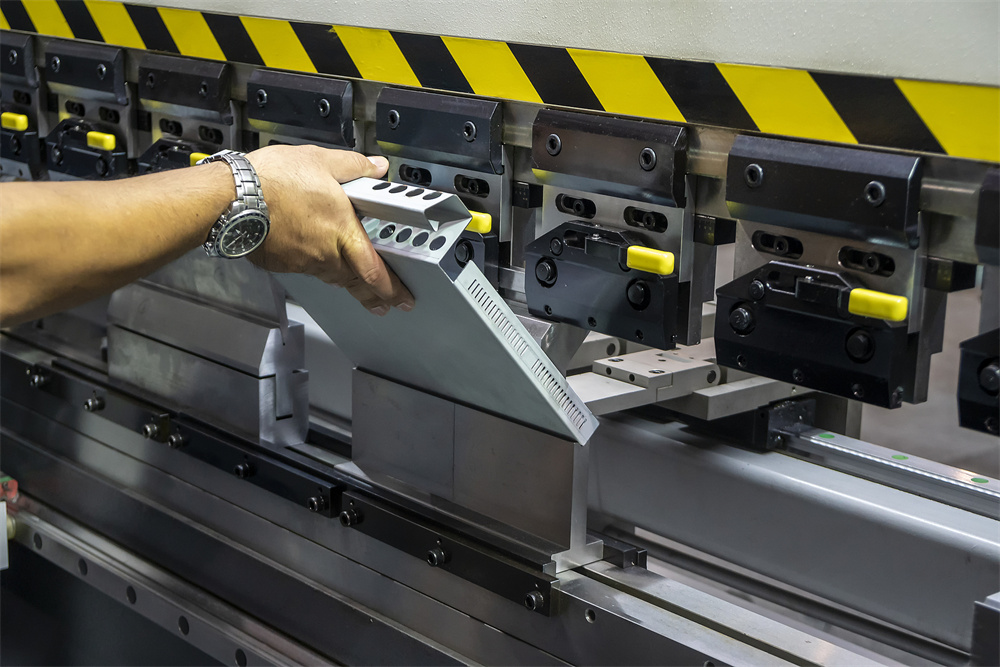
Air bending is the most modern and widely used technique in CNC fabrication. It involves the punch pressing the material into the die without the material touching the bottom of the V-opening. The angle is determined by the depth of the punch stroke. This method is highly versatile because a single set of tools can produce a wide range of angles simply by adjusting the CNC controller settings. Because the material only contacts the punch tip and the two edges of the die, friction is minimized, and the machine requires significantly less tonnage compared to other methods.
Bottoming, or bottom-pressing, is a technique where the punch presses the material against the surface of the V-die. Unlike air bending, the material is forced to conform to the angle of the tooling. This method was the industry standard before the advent of high-precision CNC depth control. It provides better consistency than air bending for older mechanical machines because the physical stop of the die ensures the angle is met. However, it requires more force and specific tooling for every desired angle.
Coining is the most traditional and high-pressure method. In coining, the punch actually penetrates the neutral axis of the metal, thinning the material at the bend point to eliminate springback entirely. This results in incredibly high precision and sharp internal radii. However, the tonnage required for coining is five to ten times higher than that of air bending, which can lead to rapid tool wear and potential damage to the press brake if not managed correctly. While less common today due to the capabilities of modern CNC air bending, coining remains essential for specific high-precision aerospace and medical components.
Core Parameters: Tonnage, Springback, and Tooling
Tonnage Requirements
Tonnage is the amount of pressure the press brake exerts to form the metal. In air bending, tonnage is relatively low because you are only overcoming the material’s initial resistance to deformation. As a rule of thumb, air bending requires the least amount of force. Bottoming requires roughly 3 to 4 times the tonnage of air bending to ensure the material makes full contact with the die. Coining is the most demanding, often requiring 5 to 10 times the tonnage of air bending to physically displace the metal’s molecular structure at the bend line.
Springback Management
Springback is the tendency of metal to return to its original shape after the bending force is removed. In air bending, springback is a significant factor. Operators must “over-bend” the material (e.g., bending to 87 degrees to achieve a final 90-degree angle). Bottoming reduces springback by pressing the material into the die, though some elastic recovery still occurs. Coining virtually eliminates springback because the high pressure permanently deforms the metal at the bend radius, “setting” the angle permanently.
Tooling Selection
Tooling for air bending is usually universal; an 85-degree punch and die can create any angle from 180 down to 90 degrees. For bottoming, the punch and die must match the desired final angle exactly (usually 90 degrees). Coining requires heavy-duty, hardened tooling capable of withstanding extreme pressures without deforming. The V-die width also changes based on the method; air bending typically uses a V-opening 8 times the material thickness (8x rule), while coining may use smaller openings to concentrate force.
Calculation Method for Bending Operations
To ensure a successful bend, engineers must calculate the required tonnage and the bend allowance. The standard formula for calculating air bending tonnage is:
P = (650 x S² x L) / V
- P: Tonnage (kN)
- S: Material thickness (mm)
- L: Length of the sheet (m)
- V: V-die opening width (mm)
For bottoming, you would typically multiply the result of the air bending formula by 3 or 4. For coining, the multiplier can be as high as 10. It is critical to check the machine’s capacity before attempting coining, as exceeding the rated tonnage can crack the bed or the ram.
Another vital calculation is the Bend Allowance (BA), which determines the developed length of the flat sheet. This is calculated using the formula: BA = A(π/180)(R + K*S), where A is the angle, R is the inside radius, S is the thickness, and K is the K-factor (usually 0.3 to 0.5 depending on the material and bending method). In air bending, the inside radius is roughly 15-20% of the V-opening width, whereas in coining, the inside radius is equal to the punch tip radius.
Parameter Comparison Table
| Feature | Air Bending | Bottoming | Coining |
|---|---|---|---|
| Tonnage Required | Low (1x) | Medium (3x – 4x) | High (5x – 10x) |
| Accuracy | High (with CNC) | Very High | Extreme |
| Springback | Significant (2° – 4°) | Minimal (0.5° – 1°) | None |
| Tooling Flexibility | High (Universal) | Low (Specific to angle) | Very Low (Specific) |
| Inside Radius | ~16% of V-opening | Equal to punch radius | Equal to punch radius |
| Material Stress | Low | Moderate | High (Thins material) |
Common Engineering Mistakes in Press Brake Operations
One of the most frequent mistakes in metal fabrication is using the wrong tonnage for the chosen method. Operators often attempt to “bottom out” an air-bending setup to achieve better accuracy. This results in a massive tonnage spike that the machine and tooling are not designed for, leading to “ram upset” or permanent deformation of the press brake bed. Always ensure the CNC controller’s tonnage limit is set correctly for the material and die width.
Another common error is ignoring the material’s grain direction. Sheet metal has a grain resulting from the rolling process at the mill. Bending with the grain (parallel) is easier but more prone to cracking, especially in coining. Bending across the grain (perpendicular) requires more force but results in a stronger, more reliable bend. In air bending, this is less critical but still affects the final springback and radius consistency.
Incorrect V-die selection is a third major pitfall. Using a V-opening that is too small increases the tonnage exponentially and can cause the material to fracture. Conversely, a V-opening that is too wide makes it difficult to achieve small flanges and reduces the accuracy of the bend radius. For air bending, the 8x rule (V = 8 * Thickness) is the industry standard for mild steel, but this must be adjusted for stainless steel (10x) or aluminum (6x).
Finally, many engineers fail to account for tooling wear. In bottoming and coining, the physical condition of the punch tip and die shoulders is paramount. Even a few thousandths of an inch of wear can lead to inconsistent angles across the length of the part. Regular inspection and precision grinding of tools are necessary to maintain the high tolerances these methods are designed to provide.
Selection Checklist: Choosing the Right Method
When deciding between air bending, bottoming, and coining, consider the following factors to optimize your production workflow:
- Material Type and Thickness: Air bending is ideal for high-strength materials that might crack under the extreme pressure of coining.
- Required Tolerance: If your project requires +/- 0.25 degrees, coining or precision bottoming may be necessary. For standard industrial parts (+/- 1 degree), air bending is sufficient.
- Production Volume: Air bending is faster for setup and allows for multiple angles in a single program, making it better for high-mix, low-volume production.
- Machine Capacity: Does your press brake have the tonnage required for coining? Never exceed 80% of the machine’s rated capacity for extended periods.
- Tooling Budget: Air bending requires fewer tools. If you are on a budget, invest in a high-quality set of universal air bending tools.
- Surface Finish: Coining and bottoming can leave marks on the material. If aesthetic appearance is critical, use air bending with protective tape or specialized urethane dies.
Frequently Asked Questions (FAQ)
1. Can I perform coining on a standard hydraulic press brake?
While possible, it is generally discouraged unless the machine is specifically rated for high-tonnage applications. Coining requires extreme precision and force; most modern hydraulic brakes are optimized for air bending. If you must coin, ensure your tooling is hardened and your machine’s frame can handle the concentrated load.
2. Why is air bending the preferred method for CNC machines?
Air bending offers the most flexibility. Since the angle is controlled by the stroke depth, the CNC can compensate for material thickness variations in real-time. It also reduces the need for a massive library of specialized tools, saving both time and money.
3. How does material thickness affect the choice?
For very thick materials (over 12mm), air bending is almost always used because the tonnage required for bottoming or coining would be astronomical. For very thin materials where high precision is needed, bottoming is often preferred to ensure the part holds its shape.
4. What is the “8x Rule” in press brake bending?
The 8x rule suggests that the V-die opening should be eight times the thickness of the material being bent. This ratio provides an ideal balance between the required tonnage and the resulting inside bend radius for mild steel. Adjustments are made based on material ductility and the specific bending method used.
5. Does coining weaken the metal?
Coining thins the metal at the bend line, which can technically create a localized weak point. However, because the metal is work-hardened under extreme pressure, the bend itself is often very rigid. In structural applications, engineers must account for this thinning in their stress calculations.