Understanding Hydraulic Press Capacity: How to Select the Right Tonnage


Technical Overview of Hydraulic Press Capacity
In the realm of metal fabrication, the hydraulic press stands as a cornerstone of industrial productivity. At its core, a hydraulic press is a machine that uses a hydraulic cylinder to generate a compressive force. This mechanism relies on Pascal’s principle, which states that pressure exerted anywhere in a confined incompressible fluid is transmitted equally in all directions throughout the fluid. For engineers and shop managers, the most critical specification of this machine is its capacity, commonly referred to as ‘tonnage.’ Understanding hydraulic press capacity: select tonnage is not merely about picking the largest number available; it is about matching the machine’s force delivery to the specific physical requirements of the material and the process at hand.
The capacity of a hydraulic press is defined by the maximum force the ram can exert on the workpiece. Unlike mechanical presses, which reach their peak tonnage at a specific point near the bottom of the stroke, a hydraulic press can deliver its full rated tonnage at any point during the ram’s travel. This flexibility makes hydraulic presses ideal for deep drawing, molding, and complex forming operations where consistent pressure is required over a long distance. However, this versatility also introduces complexity in selection. If the tonnage is too low, the machine will stall, leading to incomplete parts and potential hydraulic overheating. Conversely, excessive tonnage can lead to unnecessary energy consumption, increased tool wear, and higher capital expenditure.
HARSLE has spent decades refining the hydraulic systems within our presses to ensure that the rated capacity is not just a theoretical maximum but a reliable, repeatable output. When we discuss capacity, we are also discussing the structural integrity of the press frame. A 200-ton press must be built to withstand the reactive forces of that 200-ton load without significant deflection. Therefore, selecting the right tonnage is as much about the machine’s longevity as it is about the part’s quality. In the following sections, we will delve into the technical parameters and mathematical formulas required to make an informed decision.
Core Parameters Influencing Tonnage Selection
When evaluating a hydraulic press, tonnage is the headline figure, but it does not exist in a vacuum. Several secondary parameters directly influence how that tonnage is applied and whether the machine is suitable for your specific application. The first of these is the ‘Stroke Length.’ This is the total distance the ram can move. For deep drawing applications, the stroke must be at least twice the depth of the part plus clearance for loading and unloading. If the stroke is insufficient, even the highest tonnage will not allow you to complete the part.
Another critical parameter is ‘Daylight’ or ‘Open Height.’ This refers to the distance between the bolster plate and the ram in its fully retracted position. This space must accommodate the height of your tooling (dies) and the workpiece. If you select a press based solely on tonnage but ignore daylight, you may find that your dies simply do not fit. Furthermore, the ‘Bed Area’ (or bolster size) must be large enough to support the die set. A common mistake is placing a small, high-tonnage die in the center of a large, lower-capacity bed, which can cause localized deflection and damage the bolster plate over time.
The speed of the press is also a factor that indirectly affects the required capacity. Hydraulic presses typically have three speeds: fast approach, pressing speed, and rapid return. The pressing speed is where the actual work is done. If your material is sensitive to strain rates (like certain high-strength steels or aluminum alloys), the speed at which the tonnage is applied can change the material’s flow characteristics. Finally, consider the ‘Dwell Time’—the duration the press holds the maximum pressure. In applications like composite molding or rubber vulcanization, the ability to maintain tonnage over a specific period is more important than the speed of the stroke itself.
Calculation Method: Determining Your Force Requirements
To accurately select the tonnage, you must calculate the force required for your specific operation. The most common operations are blanking (punching), bending, and drawing. Each has a unique formula. For blanking, the formula is: Force (Tons) = L x t x S / 2000, where ‘L’ is the total length of the cut (perimeter), ‘t’ is the material thickness, and ‘S’ is the shear strength of the material in pounds per square inch (PSI). It is standard practice to add a 20% safety factor to this result to account for tool dulling and material variations.
For V-bending operations, the calculation is slightly different. The force required depends on the die opening (V-width). The general rule is: Force = (1.42 x Tensile Strength x Thickness^2 x Length) / V-width. Note that as the die opening gets smaller, the required force increases exponentially. This is why selecting the correct tooling is inseparable from selecting the correct press tonnage. If you are working with stainless steel, which has a much higher tensile strength than mild steel, you will need significantly more tonnage for the same thickness and length.
Deep drawing is perhaps the most complex to calculate because it involves both the force to push the material into the die and the ‘blank holder force’ required to prevent wrinkling. The blank holder force is typically 30% to 40% of the total drawing force. If your press does not have a dedicated hydraulic cushion, you must ensure the main ram has enough capacity to provide both the drawing force and the resistance for the blank holder. Understanding hydraulic press capacity: select tonnage requires a holistic view of these forces combined. Always consult with material data sheets to get accurate shear and tensile strength values before finalizing your calculations.
Parameter Table: Tonnage Reference for Common Materials
The following table provides a general guideline for the tonnage required per inch of cut or bend for various materials. These values are estimates for standard industrial applications and should be used as a starting point for your specific calculations.
| Material Type | Thickness (mm) | Operation | Estimated Tonnage (per linear inch) |
|---|---|---|---|
| Mild Steel (A36) | 2.0 | Blanking | 12 – 15 Tons |
| Mild Steel (A36) | 5.0 | Blanking | 30 – 35 Tons |
| Stainless Steel (304) | 2.0 | Blanking | 18 – 22 Tons |
| Aluminum (6061-T6) | 2.0 | Blanking | 8 – 10 Tons |
| Mild Steel (A36) | 3.0 | 90° V-Bend (8x thickness) | 6 – 8 Tons |
| Stainless Steel (304) | 3.0 | 90° V-Bend (8x thickness) | 10 – 12 Tons |
Note: These values assume sharp tooling and standard industrial conditions. For high-precision or high-speed applications, HARSLE recommends a more detailed analysis of the material’s yield point and work-hardening characteristics.
Common Engineering Mistakes in Tonnage Selection
One of the most frequent errors in selecting a hydraulic press is underestimating the ‘Snap-Through’ or ‘Shock Load.’ This occurs during blanking operations when the material suddenly yields, and the stored energy in the press frame is released instantly. This can cause massive vibration and damage to hydraulic components. If your application involves heavy blanking, you should select a press with a capacity significantly higher than the calculated force, or ensure the press is equipped with shock absorbers to dampen the release of energy.
Another common mistake is ignoring ‘Off-Center Loading.’ Hydraulic presses are generally designed for the load to be centered under the ram. If your die is positioned off-center, it creates a tilting moment on the ram and the guiding system (gibbing). This leads to uneven wear on the seals and can eventually cause the ram to score the cylinder walls. If your process requires off-center loading, you must select a press with heavy-duty 8-point gibbing or a larger tonnage capacity to compensate for the side-loading forces.
Furthermore, many buyers fail to account for the ‘Heat Factor.’ In high-cycle applications, the hydraulic oil can heat up significantly. As the oil temperature rises, its viscosity drops, which can lead to internal leakage and a slight drop in effective tonnage. If your production schedule is intense, you must ensure the press has an adequate cooling system or select a higher tonnage to ensure the machine can still perform at its peak even when the oil is at its maximum operating temperature. Finally, never assume that a press rated for 100 tons can run at 100 tons 24/7. For continuous production, it is best to operate at 70-80% of the machine’s rated capacity to extend its lifespan.
Selection Checklist for Procurement and Engineering
To ensure you choose the right HARSLE hydraulic press, follow this comprehensive selection checklist. This list is designed to bridge the gap between theoretical calculations and practical shop floor requirements.
- Define the Primary Operation: Is it blanking, drawing, bending, or assembly? Each requires a different approach to tonnage application.
- Calculate Maximum Force: Use the formulas provided above, including a 20% safety margin.
- Determine Material Properties: Confirm the tensile and shear strength of the specific alloy you are using.
- Assess Tooling Dimensions: Ensure the bed size and daylight can accommodate your largest die sets.
- Evaluate Stroke Requirements: Does the ram have enough travel to clear the part after forming?
- Consider Cycle Time: Do you need high-speed approach and return to meet production targets?
- Check for Off-Center Loads: Will the force be applied centrally, or do you need a press designed for eccentric loading?
- Review Future Needs: Will you be running thicker materials or larger parts in the next 2-3 years? It is often cheaper to buy more capacity now than to replace the machine later.
- Safety and Compliance: Ensure the press meets local safety standards (e.g., CE, OSHA) and includes necessary light curtains or interlocks.
- Maintenance and Support: Choose a manufacturer like HARSLE that provides clear documentation and readily available spare parts.
Frequently Asked Questions (FAQ)
1. Can I use a 100-ton press for a job that requires exactly 100 tons?
Technically, yes, but it is not recommended for long-term use. Running a press at its absolute maximum capacity increases wear on the hydraulic seals, pump, and frame. It is better to use a 120-ton or 150-ton press for a 100-ton job to ensure longevity and provide a buffer for material variations.
2. How does tonnage affect the accuracy of the finished part?
Tonnage itself doesn’t dictate accuracy, but the press’s ability to maintain that tonnage without frame deflection does. A press with a more rigid frame (often found in higher tonnage models) will produce more consistent parts because it minimizes the ‘spring-back’ effect during the forming process.
3. What is the difference between a 4-column and a C-frame press in terms of capacity?
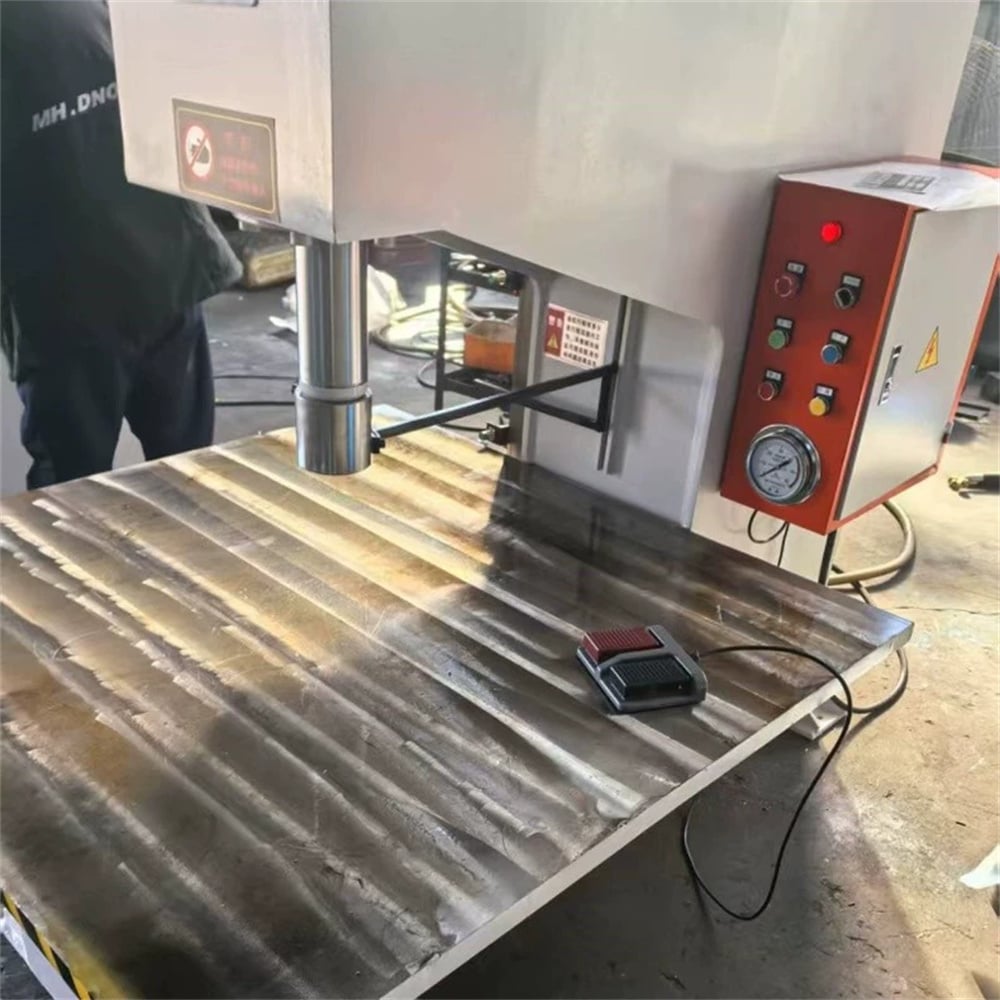
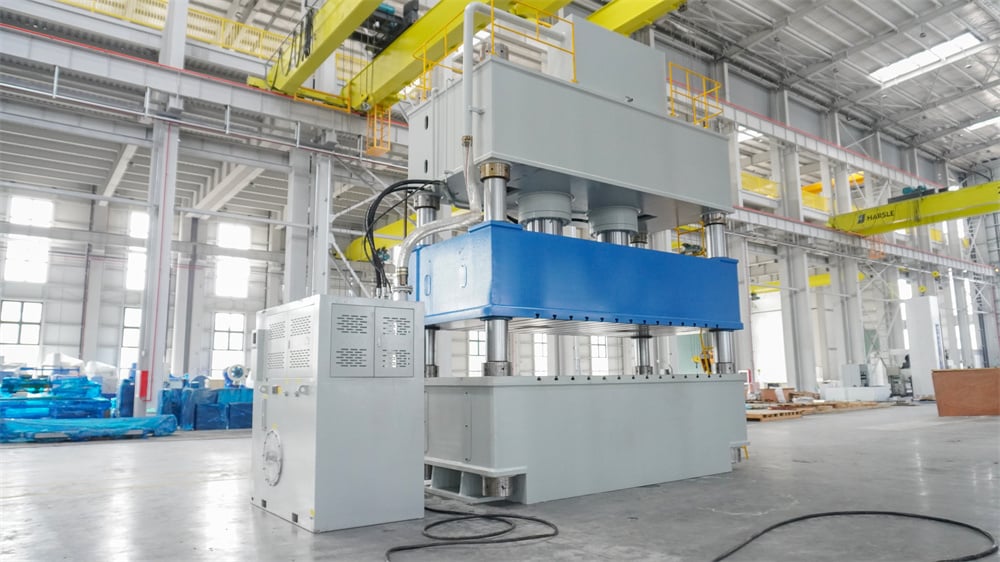
C-frame presses offer excellent access to the work area but are generally limited to lower tonnages (usually under 250 tons) because the ‘C’ shape can flex under high pressure. 4-column presses provide much better load distribution and rigidity, making them the preferred choice for high-tonnage and high-precision applications.
4. Does the hydraulic oil type affect the press capacity?
The oil type does not change the rated capacity, but its condition does. Contaminated or overheated oil can reduce the efficiency of the pump and valves, preventing the press from reaching its full tonnage. Regular oil changes and filtration are essential for maintaining capacity.
5. Can I upgrade the tonnage of my existing hydraulic press?
Generally, no. The tonnage is limited by the structural design of the frame and the diameter of the hydraulic cylinder. Increasing the pressure of the hydraulic system beyond its design limits is extremely dangerous and can lead to catastrophic frame failure.
6. Why is my press not reaching its rated tonnage?
Common causes include internal leaks in the cylinder seals, a worn hydraulic pump, a malfunctioning relief valve, or air trapped in the hydraulic circuit. Regular maintenance and pressure testing can help identify and resolve these issues quickly.
By following this guide on understanding hydraulic press capacity: select tonnage, you can ensure that your investment in HARSLE machinery provides the performance, reliability, and precision your manufacturing processes demand. Choosing the right tonnage is the first step toward operational excellence in metal fabrication.