Hydraulic Press Die Setup Guide for Better Forming Quality and Repeatability

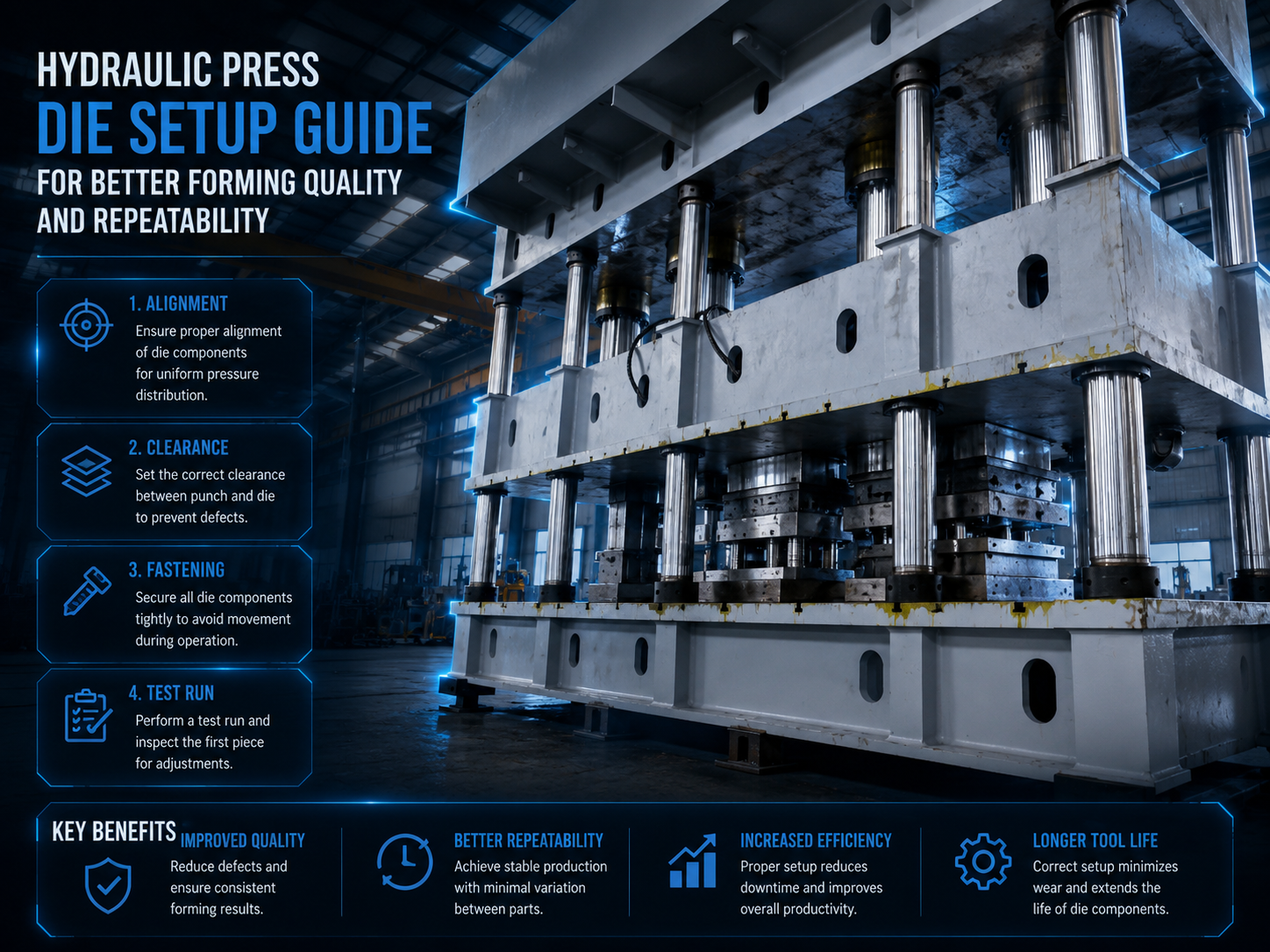
Technical Overview: The Foundation of Precision in Hydraulic Pressing
In the realm of modern metal fabrication, the hydraulic press remains a cornerstone of production, capable of exerting massive force with controlled precision. However, the machine’s inherent power is only as effective as the setup of the dies it houses. Achieving Hydraulic Press Die Setup Better Forming Quality Repeatability requires a deep understanding of the interaction between the machine’s hydraulic system, the structural integrity of the frame, and the geometric precision of the tooling. At HARSLE, we emphasize that die setup is not merely a mechanical task but a critical engineering process that dictates the success of the entire manufacturing cycle.
The primary objective of a professional die setup is to ensure that the force is distributed evenly across the workpiece, minimizing internal stresses and preventing material defects such as wrinkling, tearing, or thinning. When a die is improperly aligned, the resulting off-center loading can lead to premature wear of the press gibs and bushings, as well as inconsistent part dimensions. This guide explores the technical nuances of die installation, focusing on how to calibrate the press environment to achieve sub-millimeter accuracy and high-cycle repeatability.
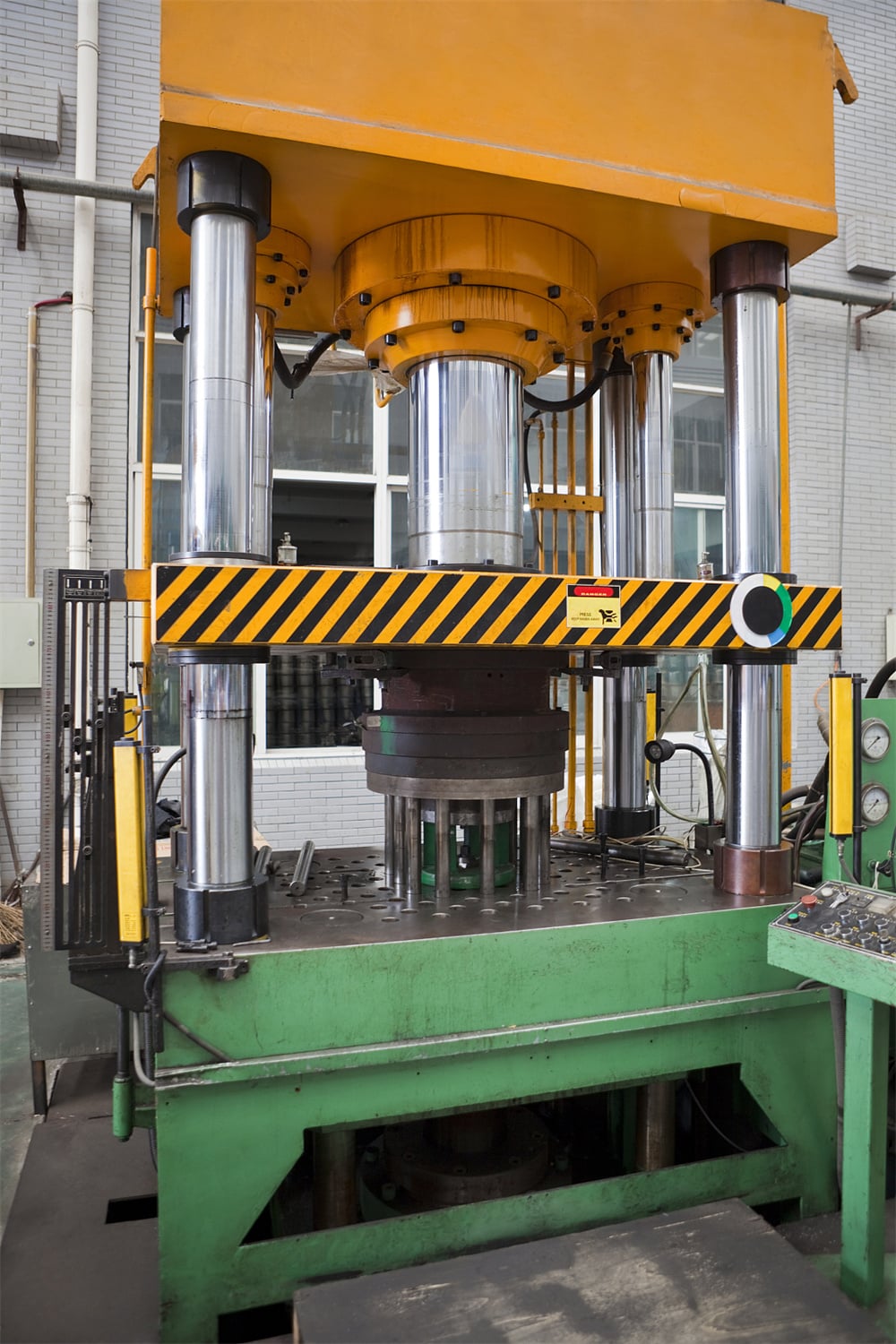
Repeatability in hydraulic pressing is often challenged by variables such as oil temperature fluctuations, material thickness variations, and mechanical deflection. To counteract these, the setup must incorporate robust clamping systems and precise limit switch adjustments. By standardizing the setup procedure, manufacturers can reduce downtime during tool changes and ensure that the first part produced is as accurate as the thousandth. This consistency is vital for industries like automotive and aerospace, where tolerances are exceptionally tight.
Core Parameters for Die Setup Optimization
To achieve Hydraulic Press Die Setup Better Forming Quality Repeatability, several core parameters must be meticulously managed. The first is the Shut Height, which is the distance between the bottom of the ram and the top of the bolster plate when the ram is at the bottom of its stroke. Incorrect shut height can lead to either incomplete forming or catastrophic damage to the die and press. Operators must use precision blocks or digital readouts to verify this distance before initiating a full-pressure cycle.
Another critical parameter is Ram Parallelism. Even a slight tilt in the ram can cause uneven pressure distribution. This is particularly problematic in large-bed presses where the workpiece might span several feet. Parallelism should be checked using dial indicators at the four corners of the ram. HARSLE presses often feature advanced hydraulic leveling systems that automatically compensate for minor deviations, but manual verification remains a best practice for high-stakes forming operations.
Tonnage Control is the third pillar of a successful setup. While a press might be rated for 500 tons, using the maximum force for a job that only requires 200 tons can cause excessive tool wear and energy waste. Modern hydraulic systems allow for fine-tuning of the pressure curve, enabling a soft-touch approach where the force increases gradually as the die engages the material. This reduces shock loads and improves the surface finish of the formed part.
Finally, Dwell Time and Decompression Speed must be considered. In deep drawing or complex molding, holding the pressure for a specific duration (dwell) allows the material to ‘set’ into its new shape, reducing springback. Controlled decompression prevents the ‘hydraulic shock’ that occurs when pressure is released too quickly, which can vibrate the die out of alignment over time.
Calculation Method: Determining Force and Clearance
Precision in die setup is rooted in mathematics. Before the die even touches the press, engineers must calculate the required forming force. The basic formula for blanking or simple forming is: Force (P) = L × t × τ, where L is the perimeter of the cut, t is the material thickness, and τ is the shear strength of the material. For complex forming, factors for friction and material hardening must be added to ensure the press has sufficient capacity.
Clearance calculation is equally vital for Hydraulic Press Die Setup Better Forming Quality Repeatability. The gap between the punch and the die (die clearance) typically ranges from 5% to 10% of the material thickness per side. If the clearance is too tight, the press requires more force, and the tools wear out faster. If it is too loose, the part will exhibit large burrs and poor dimensional stability. Engineers must also account for Springback, which is the tendency of the metal to return to its original shape after the load is removed. This is calculated using the formula: Δα = K × (σ / E), where σ is yield strength and E is the modulus of elasticity.
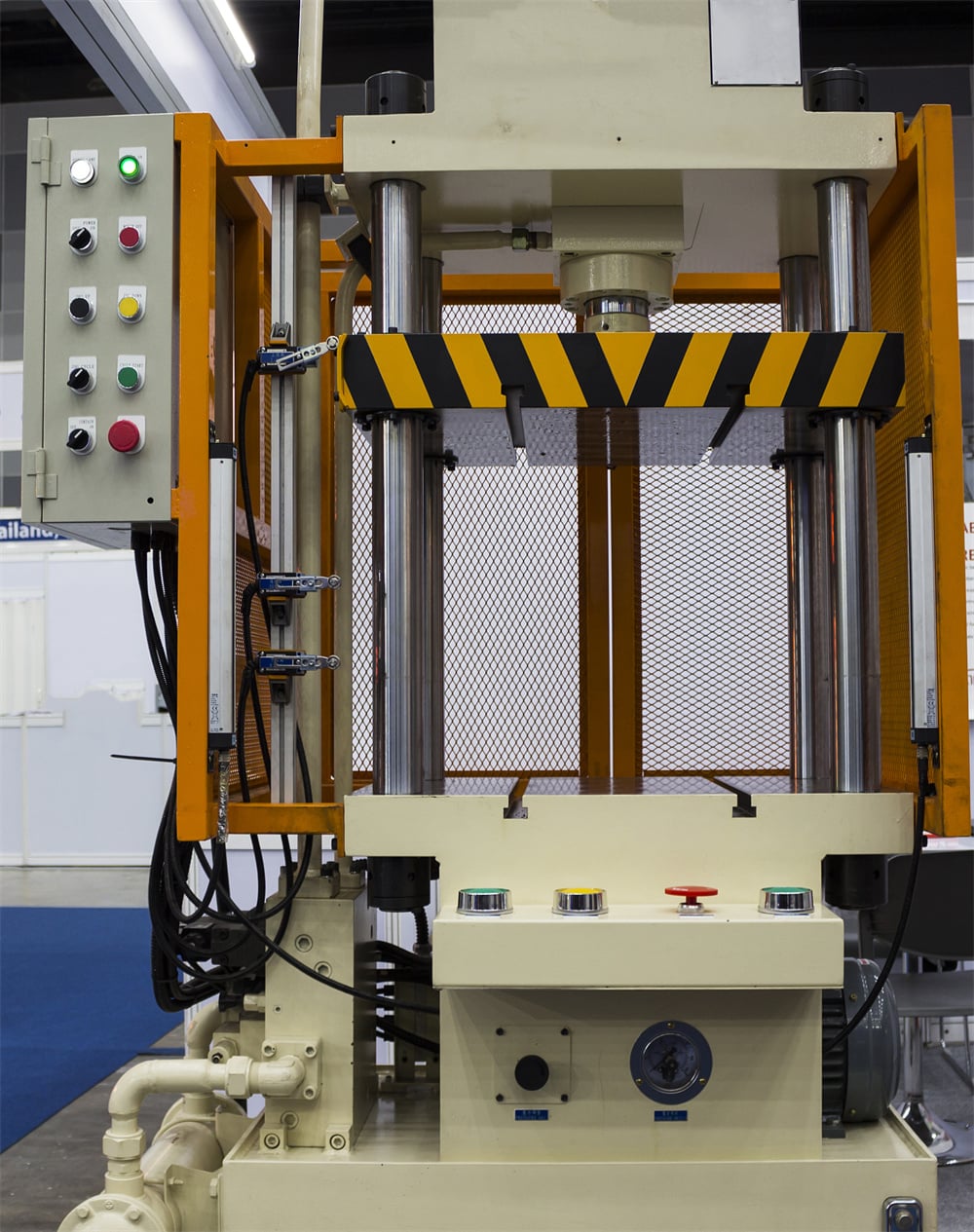
Parameter Table for Common Materials
The following table provides a reference for initial setup parameters across various common industrial materials. Note that these are starting points and should be adjusted based on specific die geometry and lubricant usage.
| Material Type | Thickness (mm) | Recommended Tonnage (per cm²) | Die Clearance (% of t) | Typical Springback (Degrees) |
|---|---|---|---|---|
| Mild Steel (A36) | 2.0 | 3.5 – 4.5 | 6% – 8% | 1° – 2° |
| Stainless Steel (304) | 1.5 | 5.5 – 7.0 | 8% – 10% | 3° – 5° |
| Aluminum (6061-T6) | 3.0 | 2.0 – 3.0 | 5% – 7% | 2° – 4° |
| High-Strength Steel | 2.0 | 8.0 – 10.0 | 10% – 12% | 5° – 8° |
Common Engineering Mistakes in Die Setup
One of the most frequent errors in hydraulic press operations is Off-Center Loading. When the center of pressure of the die does not align with the centerline of the press ram, it creates a moment arm that tries to tilt the ram. This results in uneven wear on the gibs and can eventually lead to frame fatigue. Always center the die or use a press with a multi-cylinder design that can compensate for eccentric loads.
Another common mistake is Inadequate Die Clamping. Using too few clamps or bolts of the wrong grade can allow the die to shift slightly during the high-pressure phase of the stroke. Even a shift of 0.1mm can ruin the repeatability of a high-precision run. Operators should always use hardened washers and torque bolts to the manufacturer’s specifications to ensure the die remains monolithic with the bolster plate.
Neglecting Thermal Expansion is a subtle but damaging oversight. As the hydraulic oil heats up and the die undergoes repeated friction, the physical dimensions of the components change. A setup performed on a ‘cold’ machine may not produce the same results after two hours of continuous operation. High-end HARSLE machines include oil coolers to mitigate this, but operators should still perform periodic checks on part dimensions during long production runs.
Selection Checklist for Hydraulic Press and Die Integration
- Tonnage Capacity: Does the press have at least 20% more capacity than the calculated maximum force required?
- Bed and Ram Dimensions: Is there sufficient space for the die set plus clamping hardware without overhanging the bolster?
- Stroke Control: Does the press offer programmable stroke limits and speed profiles for delicate forming?
- Parallelism Specs: Is the ram parallelism within 0.02mm per meter?
- Safety Systems: Are light curtains and two-hand controls properly integrated with the die setup?
- Lubrication Points: Are the die’s moving parts (pins, bushings) easily accessible for manual or automatic lubrication?
- Ejection System: Does the press have a compatible hydraulic cushion or mechanical knockout for part removal?
Frequently Asked Questions (FAQ)
How often should I check the alignment of my hydraulic press dies?
Alignment should be checked at the beginning of every shift and after any significant event, such as a die crash or a change in material batch. For high-precision work, a mid-shift verification using a master part or gauge is recommended to ensure Hydraulic Press Die Setup Better Forming Quality Repeatability.
What is the best way to prevent springback in heavy-gauge forming?
Springback can be managed through ‘over-bending’ (designing the die to bend the part further than the desired angle) or by using a dwell time at the bottom of the stroke. Increasing the forming pressure slightly can also help ‘set’ the material, though this must be balanced against tool wear.
Can I use the same die setup for different materials?
Generally, no. Different materials have different shear strengths, thicknesses, and springback characteristics. Using a die designed for aluminum on stainless steel will likely result in poor quality and potential tool breakage due to the higher forces required and different clearance needs.
Why is my hydraulic press losing pressure during the forming cycle?
This is often due to internal leaks in the hydraulic cylinders, worn seals, or a malfunctioning relief valve. It can also be caused by air trapped in the hydraulic lines. Regular maintenance and using high-quality hydraulic oil are essential for maintaining consistent pressure and repeatability.
How does ram speed affect forming quality?
Ram speed influences the flow of the metal. For deep drawing, a slower speed is often required to allow the material to stretch without tearing. For blanking, a faster speed can produce a cleaner edge. Modern HARSLE presses allow for multi-stage speed control to optimize each part of the stroke.