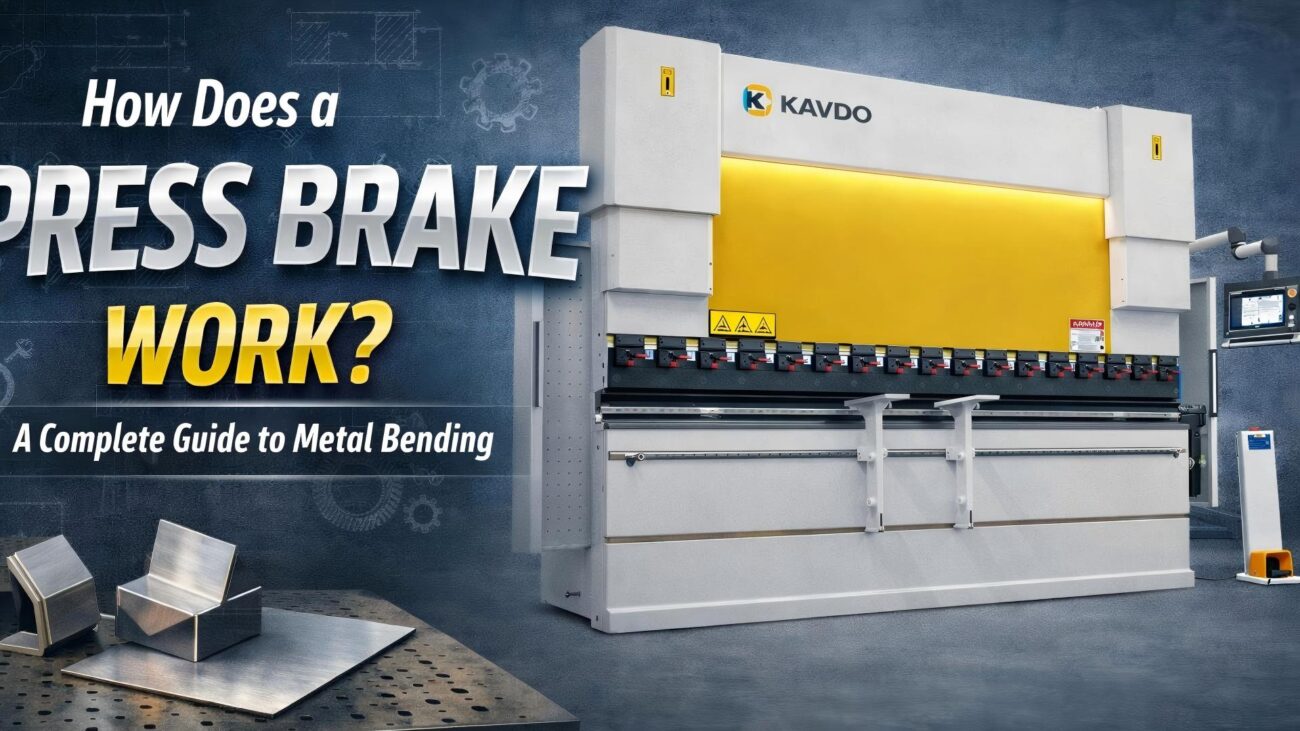
What Is a Press Brake? A Complete Guide for Beginners


In the metal fabrication industry, the press brake is one of the most essential machines used to bend sheet metal into precise shapes. Whether producing electrical cabinets, automotive components, elevator panels, or structural parts, manufacturers rely on press brakes for accurate and repeatable bending operations.
If you are new to sheet metal fabrication or considering purchasing bending equipment, understanding what a press brake is, how it works, and what types are available will help you make better production decisions.
What Is a Press Brake Machine?

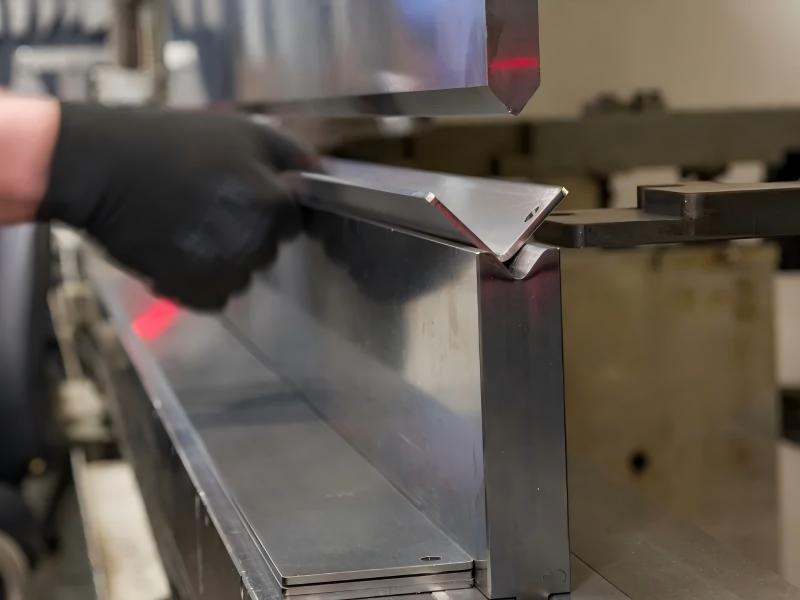
A press brake is a machine used to bend sheet metal and metal plates into specific angles and shapes by pressing the material between a punch and a die. The machine applies controlled force to deform the metal without cutting it.
Press brakes are widely used in industries such as:
- Sheet metal fabrication
- Automotive manufacturing
- Electrical enclosure production
- Construction equipment manufacturing
- Aerospace and industrial equipment
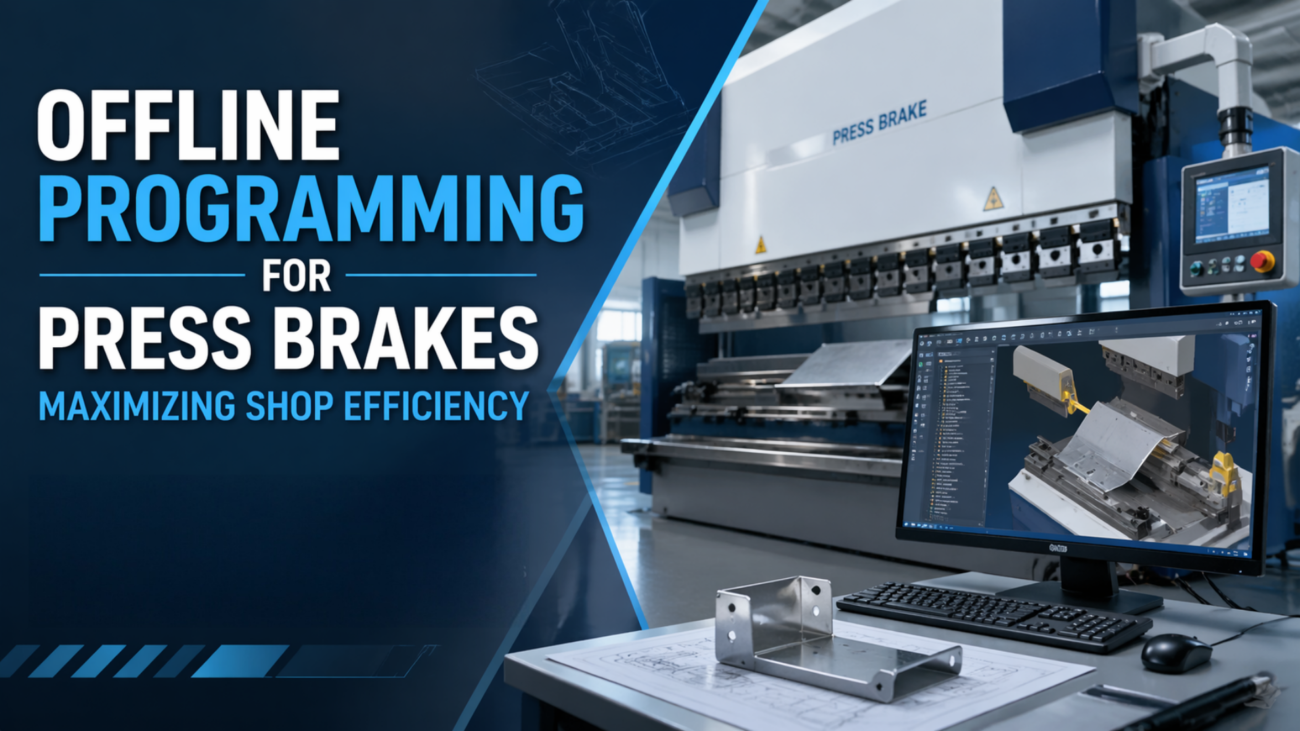
Modern press brakes can achieve high precision bending, often controlled by CNC systems that allow operators to program bending angles, backgauge positions, and bending sequences.
A CNC press brake machine uses a computer numerical control system to automatically control the movement of the ram and backgauge. Operators input parameters such as material thickness, bending angle, and flange length, and the system calculates the required bending force and positioning.
This automation significantly improves accuracy, repeatability, and production efficiency.
Main Components of a Press Brake
To understand how the machine functions, it is helpful to know its key components.
Frame
The machine frame is the structural body of the press brake. It provides rigidity and stability during bending operations to ensure accurate results.
Ram (Upper Beam)
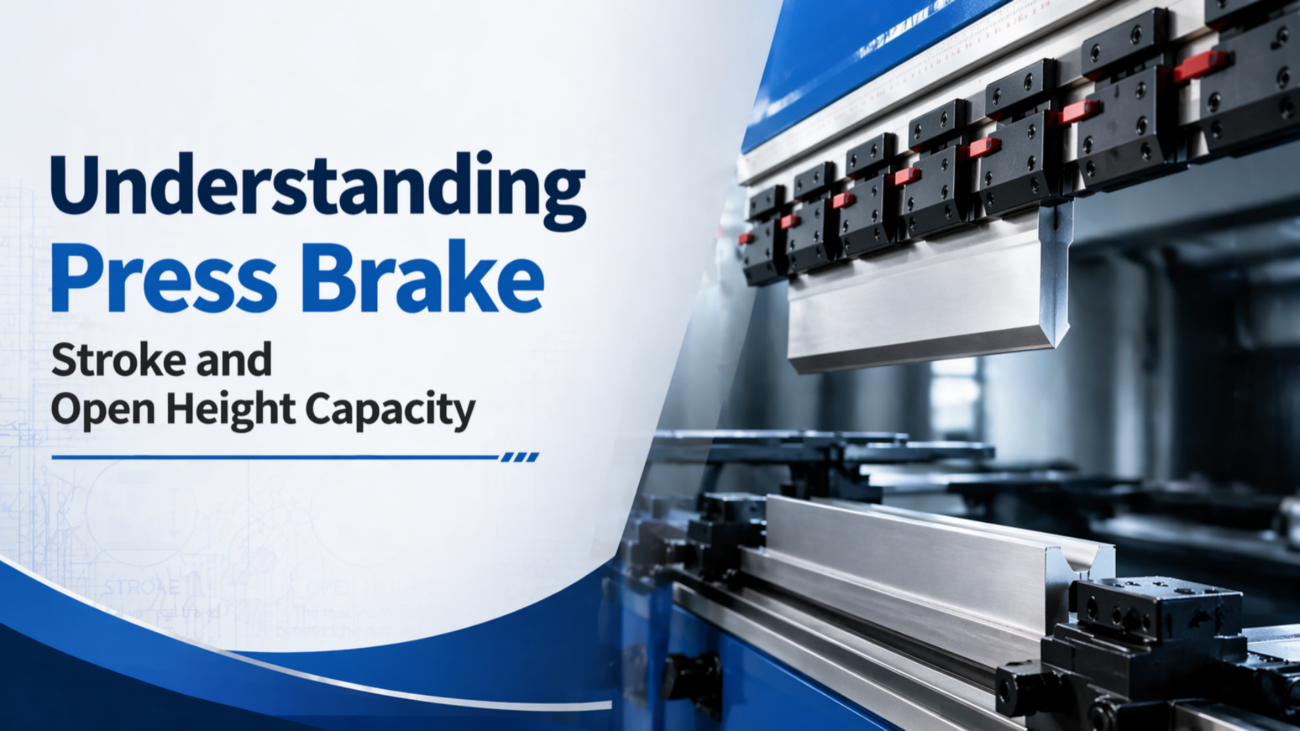
The ram moves vertically to apply force on the sheet metal through the punch tool.
Worktable
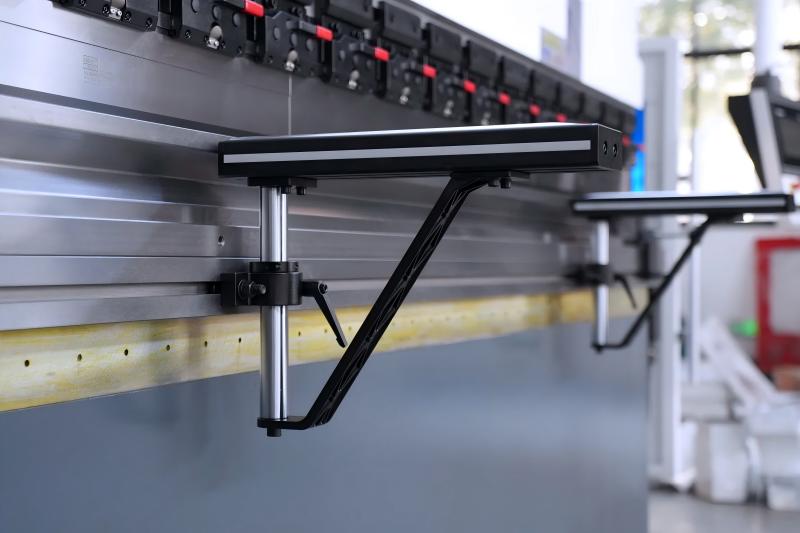
The worktable supports the sheet metal and holds the lower die during bending operations.
Punch and Die Tooling
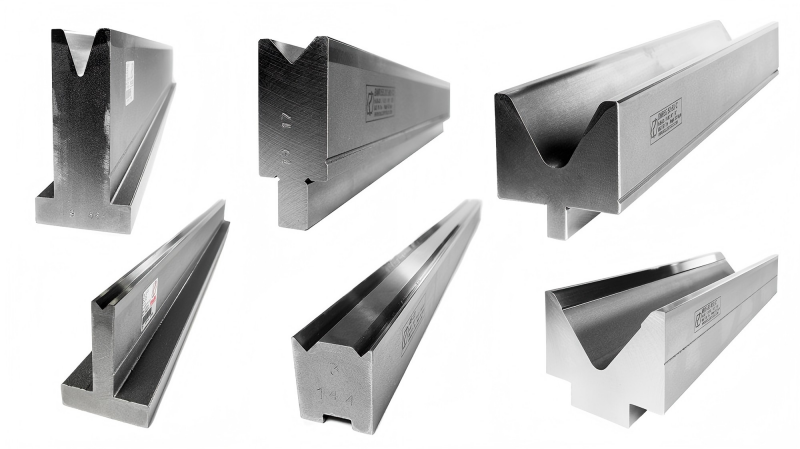
The press brake tooling system consists of:
- Punch (upper tool) – presses down on the metal
- Die (lower tool) – supports the metal and defines the bending shape
Different tooling designs allow manufacturers to create V-bends, U-bends, hems, and complex profiles.
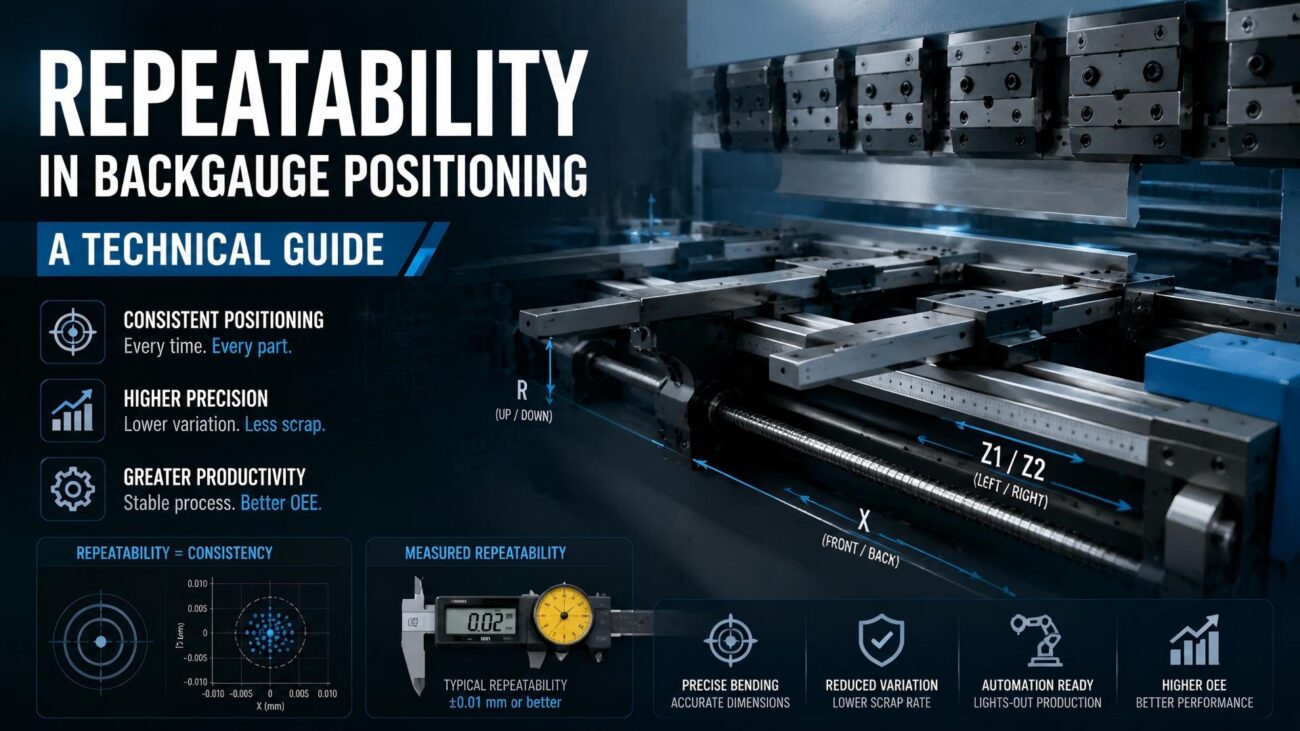
Backgauge System
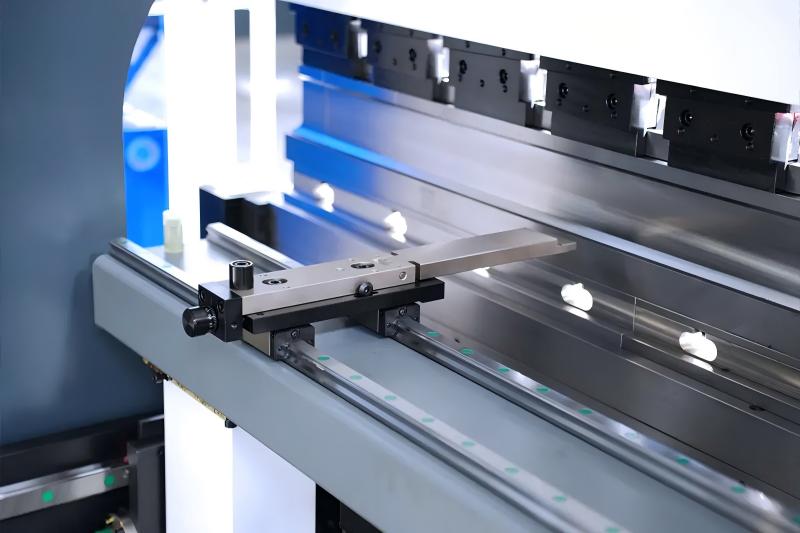
The backgauge positions the sheet metal precisely before bending. In modern CNC machines, the backgauge moves automatically to ensure consistent flange dimensions.
How Does a Press Brake Work?
The basic working process of a press brake includes the following steps:
- Material positioning
The sheet metal is placed on the worktable and aligned with the backgauge. - Tool selection
The correct punch and die are installed according to the required bending angle and material thickness. - Programming parameters
On CNC press brakes, the operator enters bending parameters such as angle, bending sequence, and backgauge positions. - Bending operation
The ram moves downward, pressing the metal sheet between the punch and die to form the desired angle.
- Release and repositioning
The ram returns upward, allowing the operator to reposition the sheet for the next bend.
This process ensures highly controlled deformation, resulting in accurate and repeatable metal parts.
Types of Press Brake Machines
Different manufacturing environments require different types of press brakes.
Mechanical Press Brake
Mechanical press brakes use a flywheel-driven system to generate bending force. They are fast but less flexible compared with modern machines.
Hydraulic Press Brake
Hydraulic press brakes use hydraulic cylinders to control the ram movement. These machines are widely used because they provide:
- Stable bending force
- Better control
- Higher safety
CNC Press Brake
A CNC press brake is the most advanced type. It uses a computer control system to automate bending operations. Benefits include:
- High precision bending
- Automatic backgauge positioning
- Complex multi-step bending programs
- Improved production efficiency
These machines are ideal for high-precision sheet metal fabrication and mass production.
Electric Press Brake
Electric press brakes use servo motors instead of hydraulic systems. They offer:
- Energy efficiency
- Low noise operation
- Faster response
- Reduced maintenance
Advantages of Using a Press Brake
Press brakes are widely used because they offer several production advantages.
High Precision
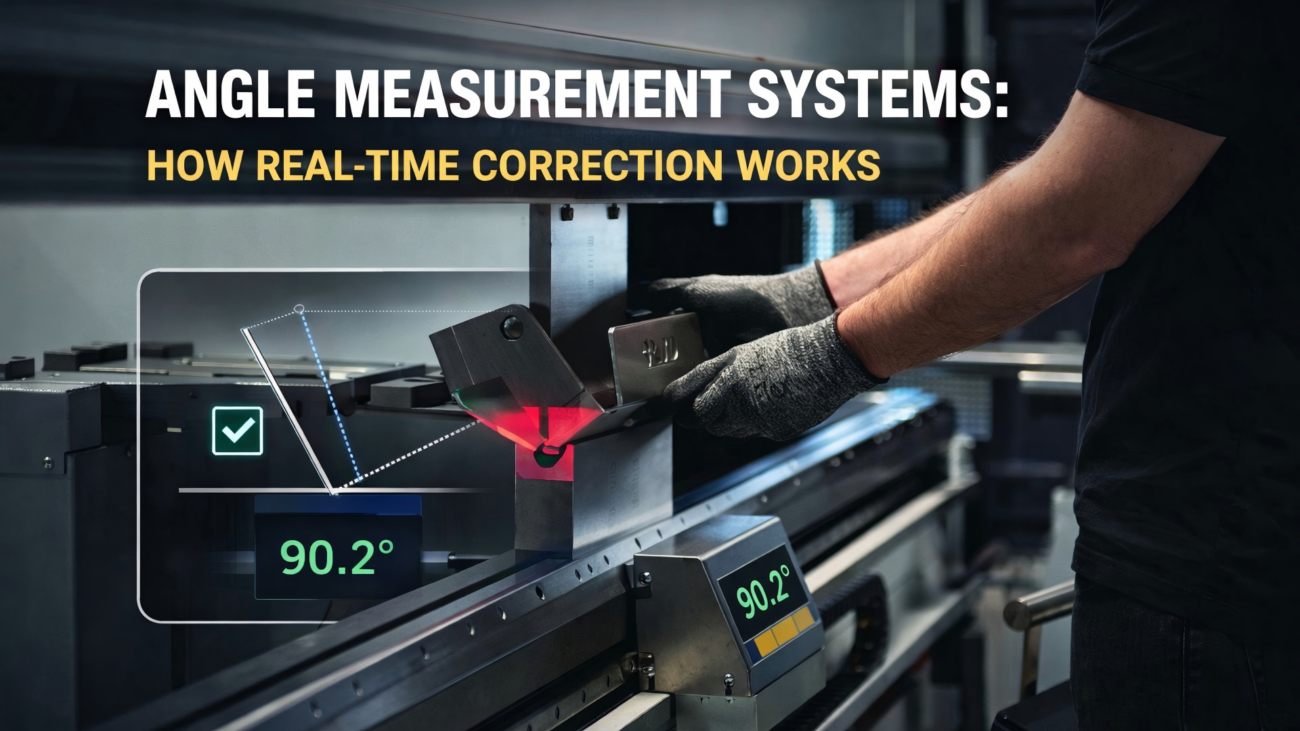
Modern CNC press brakes can achieve extremely accurate bending angles and repeatable results.
Versatile Applications
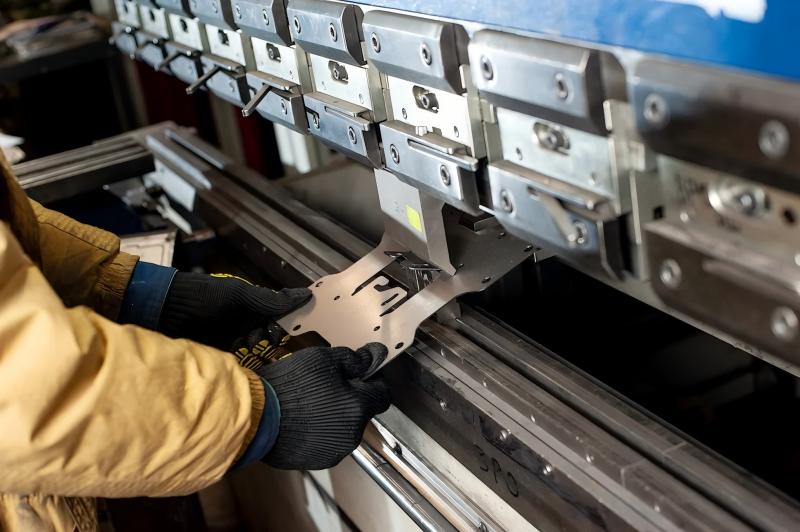
Press brakes can process different materials, including:
- Mild steel
- Stainless steel
- Aluminum
- Copper
- Galvanized sheet
Flexible Production
By changing tooling, the same machine can produce many different metal parts.
Cost-Effective Manufacturing
Press brakes allow manufacturers to produce complex parts with lower tooling costs compared to stamping processes.
Common Applications of Press Brake Machines
Press brakes are used in many industries that require sheet metal forming.
Electrical Enclosures
Control cabinets and electrical boxes are often manufactured using precision press brake bending.
Automotive Components
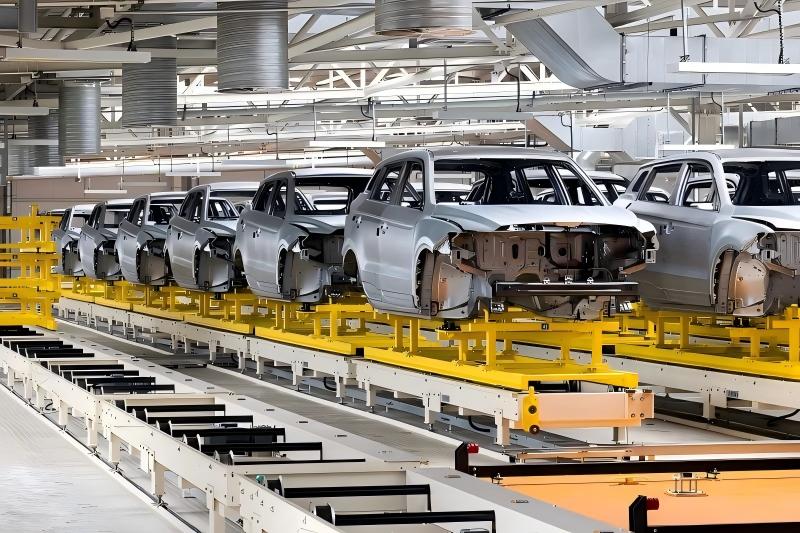
Automotive brackets, frames, and body parts are frequently produced with press brakes.
Construction Equipment
Many structural metal components in construction machinery require heavy-duty press brake bending.
Elevator and Furniture Panels
Stainless steel panels used in elevators and metal furniture are commonly formed using CNC press brakes.
How to Choose the Right Press Brake

When selecting a press brake, manufacturers usually consider several key factors:
- Bending force (tonnage)
- Bending length
- Material thickness
- Control system (NC or CNC)
- Backgauge axis configuration
- Tooling compatibility
Choosing the right machine ensures stable production, better bending accuracy, and improved productivity.
Conclusion
A press brake is a critical machine in modern metal fabrication, used to bend sheet metal into precise shapes for a wide range of industries. From simple manual machines to advanced CNC press brakes for precision sheet metal bending, these machines provide the flexibility, accuracy, and efficiency required in today’s manufacturing environments.
Understanding how press brakes work, their main components, and their different types helps manufacturers select the right equipment and optimize their production processes.
As sheet metal fabrication continues to evolve, press brake technology will remain essential for producing high-quality metal components with consistent accuracy.