How to Select a Hydraulic Press for Sheet Metal and Deep Drawing Applications: A Comprehensive Industrial Guide


Introduction to Hydraulic Press Selection for Deep Drawing
In the realm of metal fabrication, the ability to transform a flat sheet of metal into a complex, three-dimensional shape is a cornerstone of modern manufacturing. This process, known as deep drawing, requires precision, power, and control. Selecting the right machinery is not merely a matter of purchasing a tool; it is a strategic investment in your production capacity. When you look to select a hydraulic press for sheet metal and deep drawing applications, you must navigate a landscape of technical specifications, varying configurations, and long-term financial implications.
Hydraulic presses are favored for deep drawing because they offer full tonnage throughout the entire stroke, unlike mechanical presses which only reach peak force at the bottom of the stroke. This characteristic is vital for the steady, controlled flow of metal into a die cavity. However, the diversity of available models—ranging from compact C-frame units to massive H-frame four-column presses—can make the selection process daunting. This guide aims to provide a roadmap for manufacturers, engineers, and procurement specialists to make an informed decision that balances performance with cost-efficiency.
Price Range Overview: What to Expect in the Market
The cost of a hydraulic press is primarily determined by its capacity (tonnage) and its structural design. For entry-level applications, such as small-scale component manufacturing or prototyping, a basic C-frame hydraulic press might range from $15,000 to $45,000. These machines are excellent for simple punching or shallow drawing but may lack the rigidity required for high-precision deep drawing of thicker materials.
Mid-range industrial presses, typically H-frame or four-column designs with capacities between 100 and 500 tons, generally fall within the $60,000 to $150,000 bracket. These machines often include basic PLC controls and are suitable for a wide variety of automotive and appliance parts. They offer the stability needed to prevent frame deflection, which is critical for maintaining part quality in deep drawing.
High-end, heavy-duty hydraulic presses designed for large-scale deep drawing (800 tons to 3,000+ tons) can exceed $250,000 and reach into the millions. These units are often custom-engineered with advanced servo-hydraulic systems, multi-axis control, and integrated material handling. When you select a hydraulic press for sheet metal and deep drawing applications at this level, you are investing in a dedicated production cell capable of 24/7 operation with minimal downtime.
Main Cost Drivers in Hydraulic Press Procurement
Understanding what drives the price of a hydraulic press is essential for budgeting. The most significant factor is Tonnage. The force required to deform the metal and overcome the resistance of the blank holder is the primary engineering constraint. As tonnage increases, the thickness of the steel plates used in the frame, the size of the hydraulic cylinders, and the power of the motor all scale upward, driving costs higher.
Stroke Length and Daylight are the next major drivers. Deep drawing, by definition, requires a long stroke to push the punch deep into the die. A press with a 1000mm stroke will be significantly more expensive than one with a 400mm stroke, even if the tonnage is the same, because the longer cylinders and taller frame require more material and more complex hydraulic management to ensure speed and stability.
The Control System also plays a pivotal role. A basic manual valve system is inexpensive but lacks the repeatability needed for modern quality standards. Moving to a PLC-based system with a Touch Screen HMI (Human Machine Interface) adds cost but allows for precise control over pressure, speed, and position. Advanced systems that offer remote diagnostics and data logging for Industry 4.0 compliance represent the top tier of the cost spectrum.
Configuration Impact: Tailoring the Press to the Process
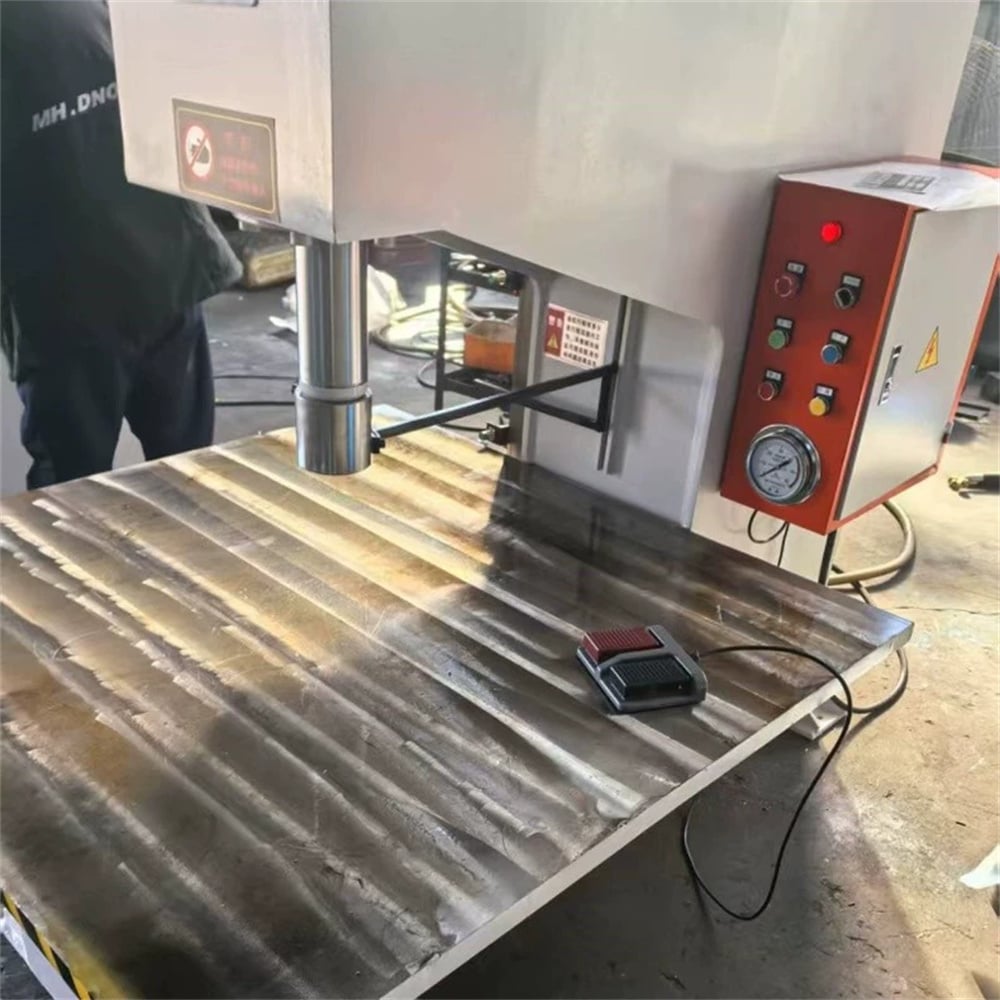
When you select a hydraulic press for sheet metal and deep drawing applications, the configuration of the machine determines its versatility. The most critical component for deep drawing is the Hydraulic Cushion (or Die Cushion). This system sits beneath the lower bolster and provides a controlled resistance against the blank holder. Without a properly configured cushion, the metal may wrinkle or tear as it is drawn into the die. A press with an integrated, programmable hydraulic cushion is more expensive but is non-negotiable for high-quality deep drawing.
Another configuration choice is the Drive System. Traditional induction motors with constant-displacement pumps are the standard. However, Servo-Hydraulic Systems are becoming increasingly popular. These systems use servo motors to drive the pumps, allowing for precise control of flow and pressure only when needed. While the initial investment is 20-30% higher, the energy savings and reduced heat generation often lead to a lower total cost of ownership over the machine’s life.
Frame design is also a key configuration point. Four-Column Presses offer excellent accessibility from all four sides, making them ideal for automated lines. H-Frame (Side-Housing) Presses offer superior rigidity and are better suited for high-tonnage applications where frame deflection must be kept to an absolute minimum to ensure the concentricity of the drawn parts.
Hidden Costs: Beyond the Purchase Price
The invoice price of the machine is only part of the story. One of the most overlooked hidden costs is Foundation and Installation. Large hydraulic presses generate significant vibration and require a reinforced concrete pit or foundation. Depending on your facility’s soil conditions and the press size, foundation work can cost anywhere from $5,000 to $50,000. Additionally, rigging the machine into place often requires specialized heavy-lift cranes and professional millwrights.
Hydraulic Oil and Cooling are ongoing operational costs. A large press may require hundreds of gallons of high-grade hydraulic oil. Furthermore, the heat generated by the hydraulic system must be managed. If your facility does not have a central cooling water system, you may need to invest in a dedicated industrial chiller to prevent the oil from overheating, which would otherwise lead to seal failure and oil degradation.
Finally, consider Tooling and Maintenance. Deep drawing dies are precision instruments and are often as expensive as the press itself. Regular maintenance schedules, including oil filtration, seal replacement, and PLC updates, must be factored into the annual budget. Neglecting these can lead to catastrophic failures that halt production for weeks.
ROI Calculation: Justifying the Investment
To justify the decision to select a hydraulic press for sheet metal and deep drawing applications, a clear Return on Investment (ROI) analysis is required. The primary driver of ROI in deep drawing is Cycle Time and Throughput. A modern press with fast approach and return speeds can significantly increase the number of parts produced per hour compared to an older or underpowered unit.
Scrap Reduction is another major factor. Precision control over the blank holder pressure via a hydraulic cushion reduces the rate of torn or wrinkled parts. In industries using expensive materials like stainless steel or aluminum, reducing the scrap rate by even 2-3% can save tens of thousands of dollars annually. Furthermore, the energy efficiency of servo-driven systems can reduce electricity bills by up to 50% compared to traditional hydraulic setups.
Consider the following table for a simplified ROI comparison:
| Feature | Standard Hydraulic Press | Advanced Servo-Hydraulic Press |
|---|---|---|
| Initial Cost | $100,000 | $135,000 |
| Annual Energy Cost | $12,000 | $6,000 |
| Scrap Rate | 4% | 1% |
| Annual Maintenance | $5,000 | $3,000 |
| Estimated Payback Period | 3.5 Years | 2.2 Years |
Buying Advice: A Step-by-Step Checklist
Before finalizing your purchase, follow this checklist to ensure the machine meets your specific needs:
- Define Your Maximum Tonnage: Calculate the force required for your thickest material and largest diameter draw. Always add a 20% safety margin.
- Evaluate the Stroke and Daylight: Ensure the press has enough opening (daylight) to remove the finished part and enough stroke to complete the draw.
- Check the Cushion Capacity: The die cushion should typically provide about 15-20% of the main ram’s tonnage.
- Assess the Frame Rigidity: For deep drawing, H-frame or Four-Column designs are preferred over C-frames to prevent misalignment.
- Verify After-Sales Support: Ensure the manufacturer (like HARSLE) provides local or rapid-response technical support and has spare parts readily available.
- Test Run with Your Dies: If possible, conduct a trial run with your specific tooling to verify the press’s performance and part quality.
When you select a hydraulic press for sheet metal and deep drawing applications, remember that the cheapest option is rarely the most cost-effective in the long run. Focus on the technical requirements of your parts and the reliability of the machine’s components.
Frequently Asked Questions (FAQ)
1. Why is a hydraulic press better than a mechanical press for deep drawing?
Hydraulic presses provide constant pressure throughout the entire stroke, which is essential for the slow and steady deformation required in deep drawing. Mechanical presses have a fixed stroke and varying force, which can cause material fracturing in deep draws.
2. What is the role of a die cushion in a hydraulic press?
A die cushion provides controllable resistance to the blank holder. This keeps the sheet metal taut as it is drawn into the die, preventing wrinkles from forming in the flange area of the part.
3. How do I calculate the tonnage needed for my deep drawing application?
Tonnage is calculated based on the material’s tensile strength, the thickness of the sheet, and the circumference of the draw. It is highly recommended to use professional engineering software or consult with the press manufacturer for these calculations.
4. Can I use a single-action press for deep drawing?
Yes, but you will likely need to install a die cushion or use specialized spring-loaded tooling. A double-action press, which has two independent slides, is specifically designed for complex deep drawing but is more expensive.
5. What maintenance does a hydraulic press require?
Key maintenance tasks include monitoring oil levels and cleanliness, checking for leaks in hoses and seals, lubricating moving parts, and ensuring the cooling system is functioning. Regular calibration of the pressure sensors and PLC is also necessary for precision work.