Laser Cutting Machine Parameters Explained: Power, Frequency, Gas, and Focus

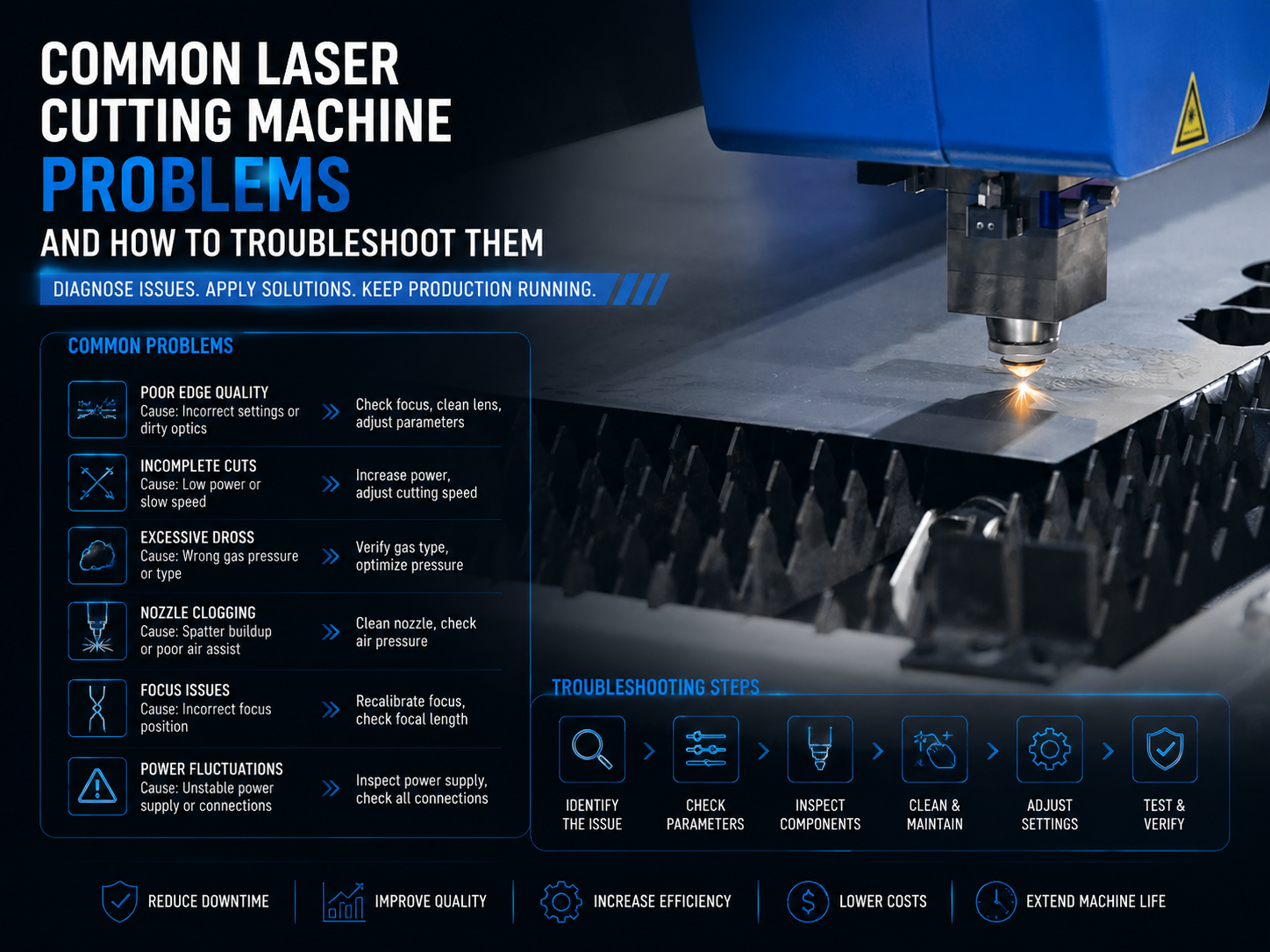
Technical Overview of Laser Cutting Dynamics
In the modern industrial landscape, the fiber laser cutting machine has become the cornerstone of precision metal fabrication. At its core, laser cutting is a thermal process where a high-intensity light beam is focused onto a material surface, causing it to melt, burn, or vaporize. However, achieving a perfect cut—one characterized by smooth edges, minimal dross, and high dimensional accuracy—requires a deep understanding of the interplay between various physical parameters. For HARSLE machines, which are engineered for high-performance industrial environments, mastering these settings is the difference between a high-quality finished part and a piece of scrap metal.
The process begins with the generation of the laser beam within the fiber source. This beam is then delivered through a transport fiber to the cutting head, where it is shaped and focused. As the beam interacts with the metal, several variables come into play simultaneously. The energy density of the beam, the speed at which it moves, and the chemical reactions triggered by assist gases all contribute to the final result. Understanding Laser Cutting Machine Parameters Explained: Power, Frequency, Gas, and Focus is essential for any operator or engineer looking to optimize production cycles and reduce operational costs.
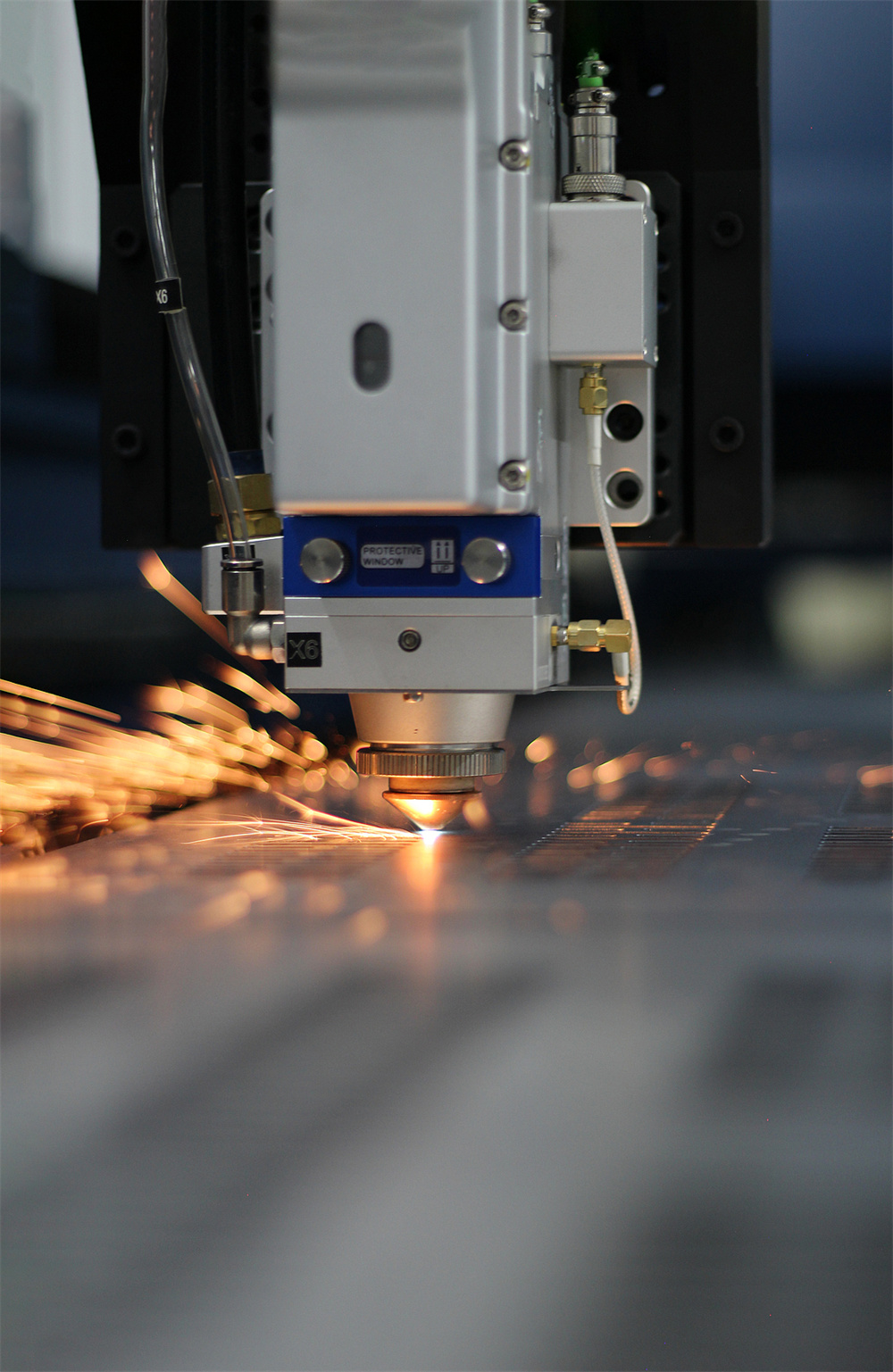
Furthermore, the dynamics of laser cutting are not static. They change based on the material type (e.g., carbon steel vs. aluminum), the thickness of the plate, and the desired edge finish. A setting that works perfectly for 2mm stainless steel will fail spectacularly on 12mm carbon steel. This technical guide delves into the four pillars of laser parameter management, providing the theoretical and practical knowledge needed to master the HARSLE fiber laser system.
The Role of Laser Power in Metal Fabrication
Laser power, measured in Watts (W) or Kilowatts (kW), is perhaps the most visible parameter in the cutting process. It represents the total energy output of the laser source per unit of time. In the context of Laser Cutting Machine Parameters Explained: Power, Frequency, Gas, Focus, power is the primary driver of cutting speed and thickness capacity. Higher power levels allow the machine to overcome the thermal conductivity and melting points of thicker materials more rapidly.
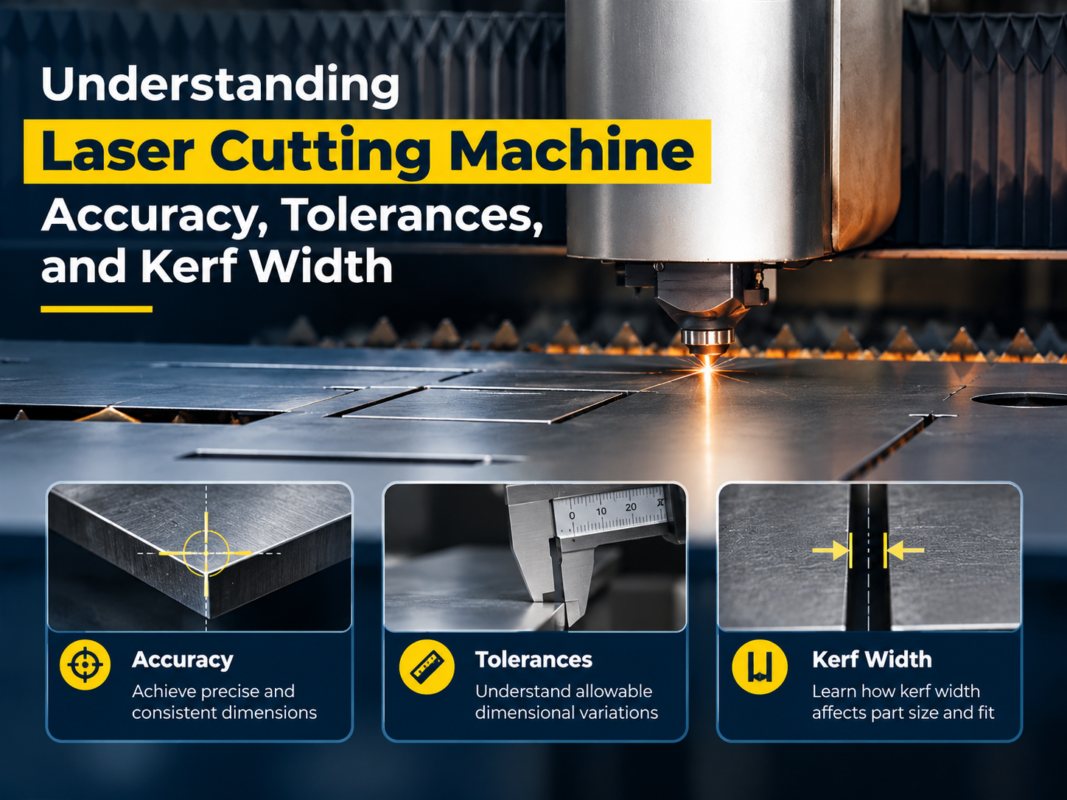
When cutting thin sheets (under 3mm), excessive power can actually be detrimental. It can lead to an oversized kerf (the width of the cut) and excessive heat-affected zones (HAZ), which may warp the material. Conversely, for thick plates, insufficient power results in an incomplete cut, where the laser cannot penetrate the full depth of the material, leading to heavy dross or even damage to the cutting head due to back-reflection. HARSLE machines are designed to provide stable power delivery, but the operator must calibrate this based on the specific alloy being processed.
It is also important to distinguish between peak power and average power. Peak power is the maximum energy delivered during a single pulse, which is crucial for piercing thick materials. Average power is the total energy delivered over time. For continuous wave (CW) cutting, these are the same, but for pulsed cutting, they differ. Modern fiber lasers allow for fine-tuning of the power ramp-up and ramp-down, which is essential when the machine slows down to navigate sharp corners or intricate geometries, preventing over-burning at the vertices.
Understanding Pulse Frequency and Duty Cycle
Frequency, measured in Hertz (Hz), refers to the number of laser pulses emitted per second. While some cutting is done in Continuous Wave (CW) mode, many precision tasks, especially piercing and cutting intricate details, utilize pulsed mode. The frequency determines how the energy is distributed over time. In the discussion of Laser Cutting Machine Parameters Explained: Power, Frequency, Gas, and Focus, frequency is often the most misunderstood variable.
High frequency results in a smoother cut edge because the pulses overlap more closely, creating a continuous melt pool. However, high frequency also increases the total heat input into the material. If the frequency is too high for a specific speed, the material may overheat, leading to a loss of cut quality. Low frequency is typically used for the “piercing” phase, where the goal is to blast a hole through the metal without creating a large crater. By using low-frequency, high-peak-power pulses, the machine can “drill” through the metal while allowing the surrounding area to cool slightly between pulses.
Closely related to frequency is the Duty Cycle, expressed as a percentage. This represents the ratio of the “on” time to the “off” time within a single pulse cycle. A 50% duty cycle means the laser is firing for half the time and is off for the other half. Adjusting the duty cycle allows operators to control the average heat input without changing the peak power. This is particularly useful when cutting heat-sensitive materials or very thin foils where thermal distortion is a major concern.
Assist Gas Selection and Pressure Optimization
The assist gas is not merely a secondary component; it is a critical participant in the cutting reaction. The three most common gases used in fiber laser cutting are Oxygen (O2), Nitrogen (N2), and Compressed Air. Each serves a distinct purpose and requires different pressure settings. In the framework of Laser Cutting Machine Parameters Explained: Power, Frequency, Gas, Focus, gas selection dictates the chemical finish of the cut edge.
- Oxygen (O2): Primarily used for carbon steel. Oxygen acts as an oxidant, creating an exothermic reaction that adds heat to the process. This allows for faster cutting of thick steel with lower laser power. However, it leaves an oxide layer on the edge that must be removed if the part is to be painted or welded.
- Nitrogen (N2): Used for stainless steel, aluminum, and high-quality carbon steel cuts. Nitrogen is an inert gas that acts as a mechanical force to blow away the molten metal. Because it prevents oxidation, the resulting edge is clean, shiny, and ready for subsequent processes. Nitrogen cutting requires much higher pressures (often 10-20 bar) compared to oxygen.
- Compressed Air: An economical alternative for thin materials. It contains roughly 78% nitrogen and 21% oxygen. It provides a faster cut than pure nitrogen but leaves a slight oxide layer. It is ideal for parts where edge aesthetics are less critical than cost-efficiency.
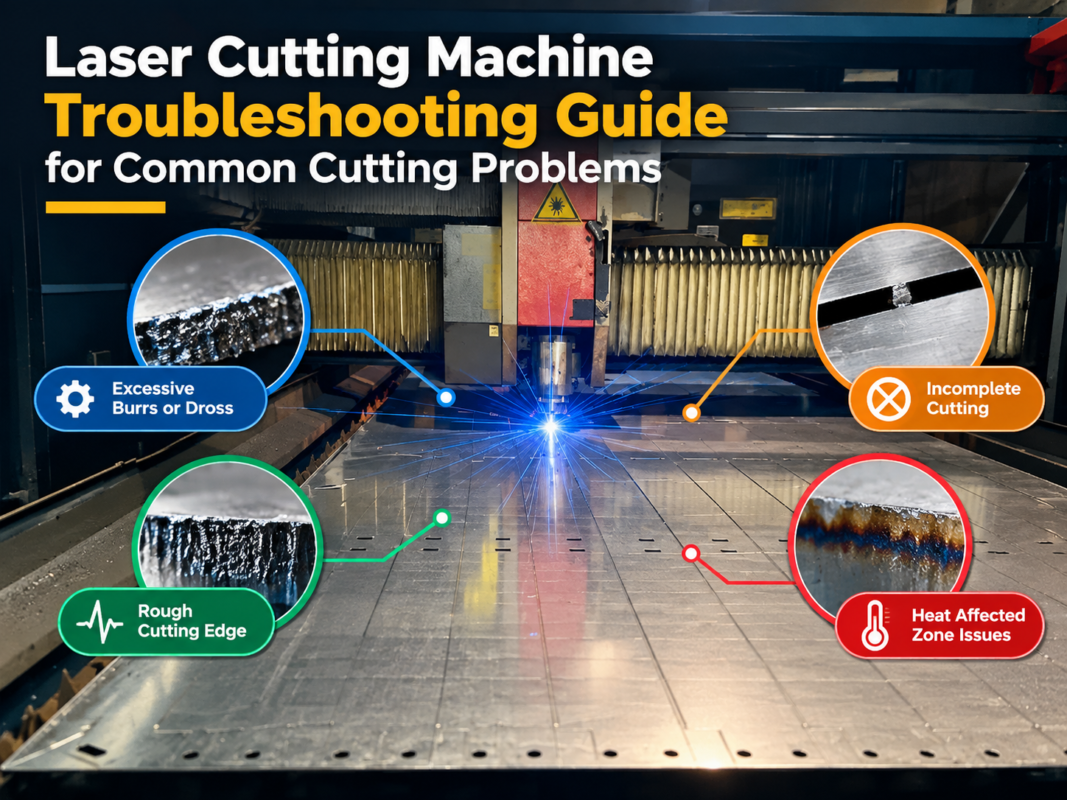
Gas pressure must be meticulously balanced. Too little pressure fails to clear the molten slag, resulting in dross at the bottom of the cut. Too much pressure can create turbulence in the melt pool, leading to a rough, striated edge finish. HARSLE machines feature electronic proportional valves to precisely control these pressures through the CNC interface.
The Science of Focal Position and Beam Waist
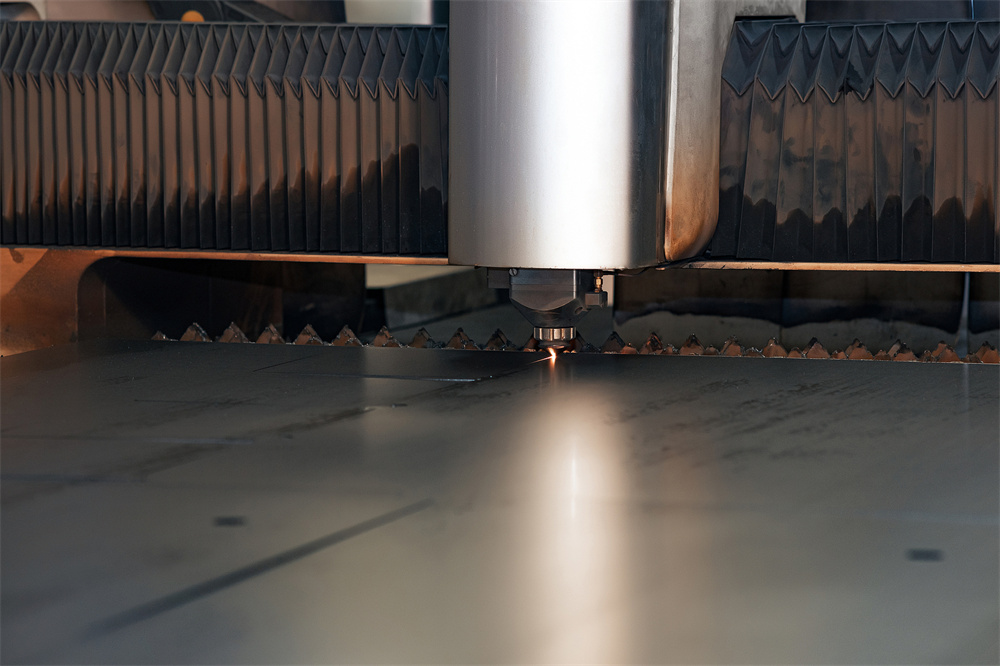
The focal position refers to where the narrowest part of the laser beam (the “waist”) is located relative to the surface of the material. This is a vital component of Laser Cutting Machine Parameters Explained: Power, Frequency, Gas, and Focus. The focus determines the energy density at the point of contact and the shape of the kerf. Modern HARSLE fiber lasers often utilize auto-focus cutting heads, which can adjust the focal point dynamically during the cutting process.
There are three types of focal positions: Zero Focus (on the surface), Positive Focus (above the surface), and Negative Focus (below the surface). For thin materials, a zero or slightly positive focus is often used to create a narrow kerf and a sharp edge. However, for thick plates, a negative focus is essential. By focusing deep inside the material, the beam width at the top of the plate is wider, which allows the assist gas to enter the cut more effectively and clear out the molten metal from the bottom.
If the focus is off by even a fraction of a millimeter, the results can be disastrous. A focus that is too high will result in a wide, messy cut with heavy dross. A focus that is too low may prevent the laser from piercing the material entirely. Operators must also be aware of “thermal shift,” where the focus position can drift slightly as the protective lens in the cutting head heats up during long production runs. High-quality optics and cooling systems in HARSLE machines are designed to minimize this effect.
Parameter Calculation and Empirical Formulas
While most modern CNC systems come with a library of pre-set parameters, understanding the underlying calculations helps in troubleshooting and optimizing new materials. A common relationship used in the industry is the Power-to-Speed ratio. Generally, if you double the power, you can significantly increase the cutting speed, though the relationship is not always linear due to the physics of heat dissipation.
Another important calculation involves gas consumption. The flow rate of the assist gas can be estimated based on the nozzle diameter and the gas pressure. For example, a larger nozzle diameter (e.g., 2.0mm vs 1.5mm) will consume significantly more gas at the same pressure but may be necessary for thicker materials to ensure the melt is cleared. Operators often use the formula: Flow Rate ∝ Nozzle Area × Pressure. Balancing these costs against production speed is a key part of industrial management.
Comprehensive Parameter Reference Table
The following table provides a general starting point for HARSLE fiber laser cutting machines. Note that these values are indicative and should be adjusted based on the specific grade of material and the condition of the machine optics.
| Material | Thickness (mm) | Power (W) | Gas Type | Pressure (Bar) | Focus (mm) | Speed (m/min) |
|---|---|---|---|---|---|---|
| Carbon Steel | 1.0 | 1000 | O2 | 0.5 – 0.8 | 0 | 15 – 20 |
| Carbon Steel | 6.0 | 3000 | O2 | 0.4 – 0.6 | -2.5 | 2.0 – 2.5 |
| Carbon Steel | 12.0 | 6000 | O2 | 0.3 – 0.5 | -5.0 | 1.2 – 1.5 |
| Stainless Steel | 1.0 | 1500 | N2 | 12 – 14 | -0.5 | 30 – 40 |
| Stainless Steel | 5.0 | 4000 | N2 | 16 – 18 | -3.5 | 3.5 – 4.5 |
| Aluminum | 2.0 | 2000 | N2/Air | 14 – 16 | -1.0 | 15 – 18 |
| Brass | 2.0 | 3000 | N2 | 16 – 18 | -1.5 | 10 – 12 |
Avoiding Common Engineering Mistakes in Laser Setup
Even with the best equipment, errors in parameter setup can lead to significant downtime. One of the most common mistakes is incorrect piercing parameters. Operators often focus solely on the cutting speed and neglect the pierce. If the pierce is too violent, it can splash molten metal onto the nozzle or the protective window, leading to immediate component failure. Using a multi-stage piercing process—where power and frequency are gradually increased—is the professional approach.
Another frequent issue is neglecting the nozzle condition. A nozzle that is slightly deformed or has a tiny bit of slag attached will disrupt the coaxiality of the gas flow and the laser beam. This leads to asymmetrical cuts, where one side of a part is smooth and the other is rough. Regularly checking nozzle centering and cleanliness is a fundamental maintenance task that directly impacts the effectiveness of your chosen parameters.
Finally, many engineers fail to account for material quality. “Laser-grade” steel is processed to have a consistent chemical composition and a flat surface. Using lower-grade hot-rolled steel with heavy scale will require much slower speeds and higher gas pressures, often leading to inconsistent results. When troubleshooting, always consider the material as a variable in the Laser Cutting Machine Parameters Explained: Power, Frequency, Gas, Focus equation.
Selection Checklist for Industrial Laser Cutting
When setting up a new job on your HARSLE machine, use this checklist to ensure all parameters are optimized:
- Material Verification: Is the material type and thickness correctly identified in the CNC?
- Nozzle Selection: Is the nozzle diameter appropriate for the thickness? (Single nozzle for O2, double nozzle for N2/High-speed).
- Lens Check: Is the protective window clean and free of spots?
- Gas Purity: Is the Nitrogen purity at least 99.99% for stainless steel?
- Focus Calibration: Has the machine’s focal point been calibrated recently to ensure the software value matches the physical reality?
- Lead-in Strategy: Is the lead-in length sufficient to allow the beam to stabilize before entering the part geometry?
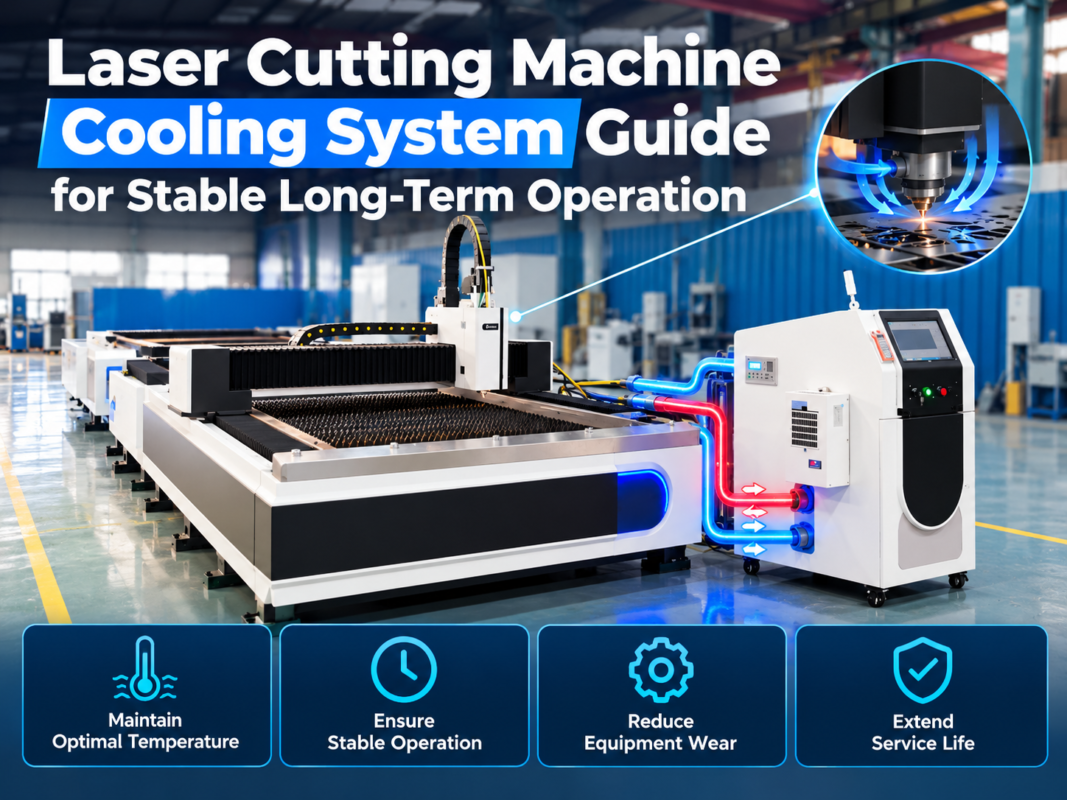
- Cooling System: Is the chiller running at the correct temperature to prevent laser source fluctuations?
Frequently Asked Questions
What happens if the laser power is too high?
If the power is too high for the material thickness and speed, it causes “over-burning.” This results in a wider kerf, rounded corners, and a rougher edge finish. In extreme cases, it can cause the material to warp due to excessive heat input.
Why is my laser cutting machine leaving dross on the bottom of the cut?
Dross is usually caused by one of three things: cutting speed that is too fast (the melt isn’t fully cleared), gas pressure that is too low, or an incorrect focal position. If the dross is hard and difficult to remove, it’s often a sign of cutting too fast. If it’s bubbly and easy to remove, it may be a sign of cutting too slow or having the focus too high.
Can I cut aluminum with Oxygen?
It is not recommended. Aluminum should be cut with Nitrogen or Compressed Air. Using Oxygen on aluminum creates a thick, hard aluminum oxide layer that is very difficult to clear and results in a very poor cut quality. Furthermore, aluminum is highly reflective, and Nitrogen helps in maintaining a stable cutting process.
How often should I check the focus of my HARSLE laser?
While modern machines have auto-focus, you should perform a manual focus test (like a blue film test or a line-cut test) weekly or whenever you notice a decline in cut quality. This ensures that the mechanical zero of the cutting head still aligns with the software settings.
Is compressed air really as good as Nitrogen for cutting?
For thin carbon steel and some stainless steel applications where the edge will be hidden or painted, compressed air is an excellent cost-saving measure. However, for high-end medical, food-grade, or aerospace components, Nitrogen is required to ensure a completely oxide-free edge.