Laser Cutting Machine Automation Guide: CNC Control, Nesting, and Production Efficiency


Technical Overview of Laser Cutting Machine Automation
In the modern era of metal fabrication, the transition from manual operations to fully automated systems has redefined the benchmarks of productivity. Laser cutting machine automation is not merely about the speed of the laser beam; it is a holistic integration of CNC (Computer Numerical Control) systems, sophisticated nesting algorithms, and mechanical handling solutions. At HARSLE, we recognize that the ‘brain’ of the machine—the CNC controller—must work in perfect harmony with the ‘muscles’—the servo motors and drive systems—to achieve the micron-level precision required by today’s aerospace, automotive, and electronics industries.
The evolution of fiber laser technology has been the primary catalyst for this automation surge. Unlike older CO2 lasers, fiber lasers offer higher electrical efficiency and a shorter wavelength, allowing for faster cutting speeds in thin materials and superior absorption in reflective metals like aluminum and copper. However, high-speed cutting is only effective if the machine can handle the rapid data processing required for complex geometries. This is where advanced CNC control comes into play, utilizing high-speed bus communication (such as EtherCAT) to synchronize the laser source, the cutting head, and the motion system in real-time.
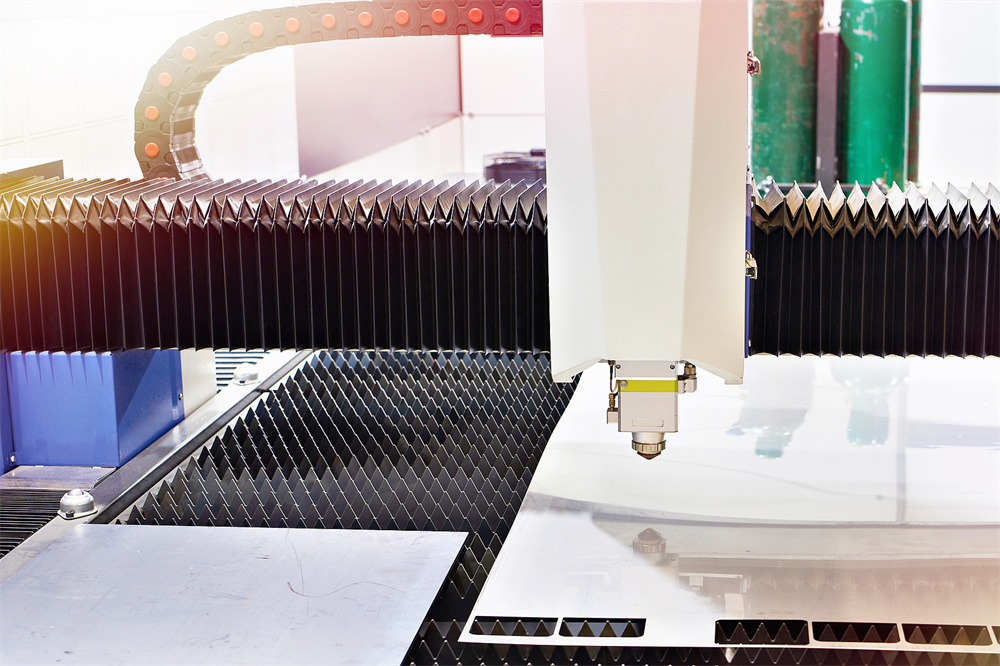
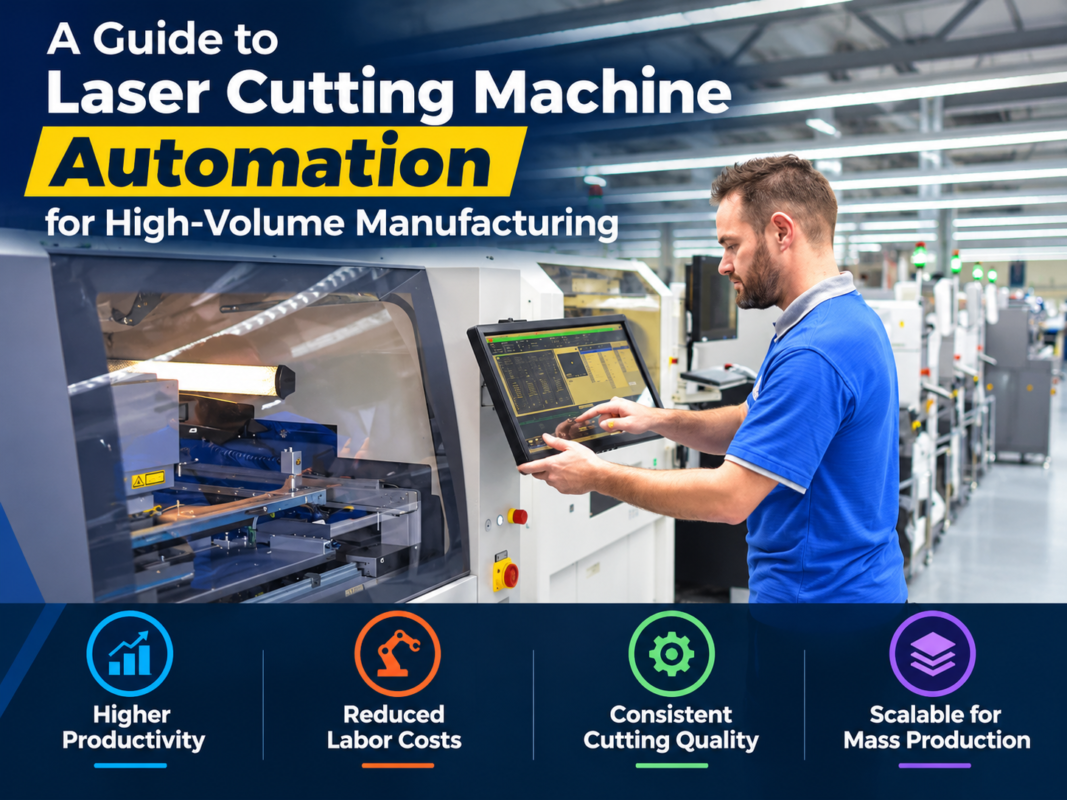
Automation also extends to the physical handling of materials. Modern laser cutting cells often feature automatic shuttle tables, which allow one sheet to be cut while the operator (or a robot) unloads the previous job. More advanced setups include tower storage systems and robotic loading/unloading arms, creating a ‘lights-out’ manufacturing environment where the machine can operate unattended for hours. This level of automation minimizes downtime and significantly reduces the labor cost per part, making high-volume production more competitive.
Furthermore, the integration of IoT (Internet of Things) and Industry 4.0 principles allows these machines to provide feedback on their own health. Sensors monitor everything from the temperature of the cutting head to the purity of the assist gas. This data is fed back into the CNC system, which can automatically adjust parameters to compensate for environmental changes or alert maintenance teams before a component fails. This proactive approach to machine management is the cornerstone of modern production efficiency.
Core Parameters of Automated Laser Systems
To master laser cutting machine automation, one must understand the critical parameters that dictate performance. These parameters are not static; they must be dynamically adjusted by the CNC system based on the material type, thickness, and the complexity of the part being cut. The primary parameters include laser power, pulse frequency, duty cycle, cutting speed, and gas pressure.
1. Laser Power and Beam Quality
Laser power, measured in kilowatts (kW), determines the maximum thickness a machine can cut and the speed at which it can process thinner materials. However, power alone is not enough. Beam quality (M2 factor) determines how tightly the laser can be focused. A high-quality beam allows for a smaller kerf width and a higher energy density, which is essential for clean cuts in thick stainless steel or carbon steel. Automation systems use ‘Power Ramping’ to reduce power during cornering, preventing the laser from burning through the material when the machine slows down to change direction.
2. Acceleration and Jerk Control
While maximum cutting speed is a common marketing metric, acceleration (measured in Gs) is often more important for production efficiency. In complex parts with many small holes or intricate details, the machine rarely reaches its top speed. High acceleration allows the cutting head to reach the target speed faster. Jerk control—the rate of change of acceleration—is equally vital; it ensures that the motion is smooth, preventing vibrations that could degrade the cut quality or damage the machine’s mechanical components over time.
3. Assist Gas Management
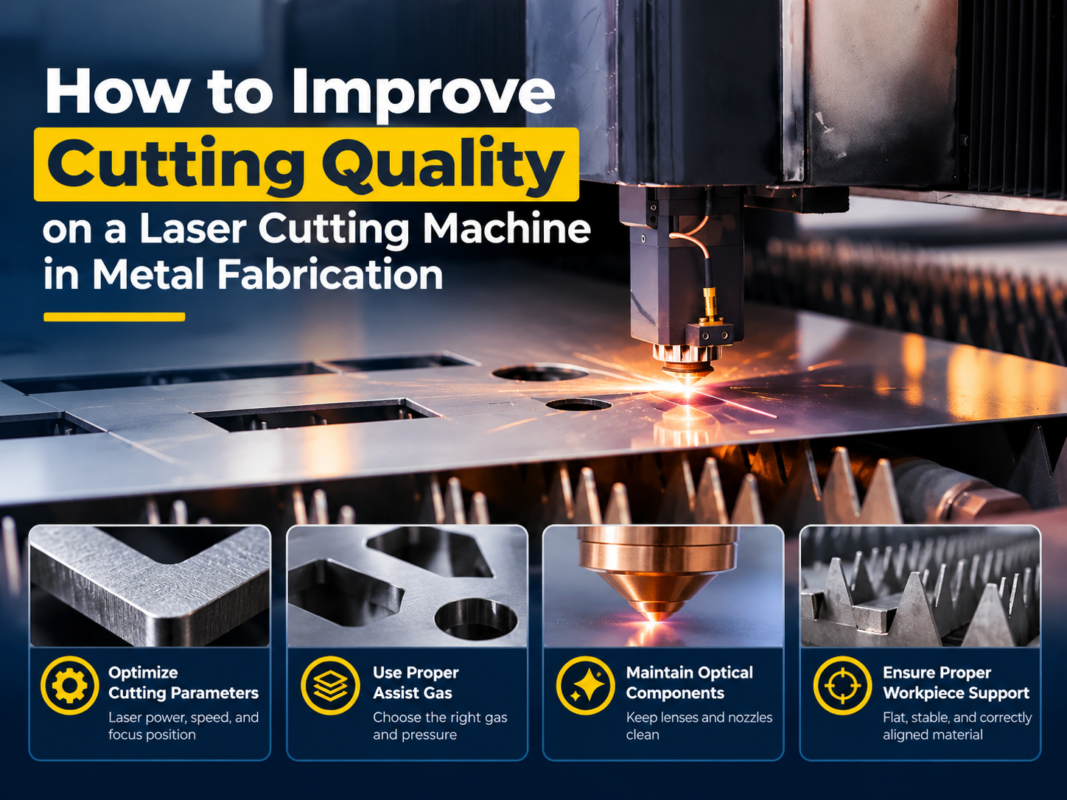
The choice and pressure of assist gas (Oxygen, Nitrogen, or Compressed Air) significantly impact the cut’s edge quality and speed. Automation in gas management involves electronic proportional valves that adjust gas pressure on the fly. For instance, when cutting carbon steel with oxygen, the CNC must precisely control the pressure to maintain a stable exothermic reaction. When switching to nitrogen for stainless steel, the system must purge the lines and increase pressure to blow away the molten metal, ensuring a burr-free finish.
4. Focal Position and Nozzle Calibration
Automated cutting heads now feature motorized focus adjustment. The CNC system can change the focal point relative to the material surface based on the specific layer being cut (piercing vs. cutting). Additionally, automatic nozzle changers and cleaners ensure that the machine can switch between different material types without human intervention, maintaining optimal airflow and beam alignment throughout the production cycle.
Calculation Method for Production Efficiency
Quantifying the efficiency of an automated laser cutting system requires more than just looking at the ‘inches per minute’ rating. Engineers must calculate the Total Cycle Time and the Material Utilization Rate. These metrics provide a realistic view of the machine’s ROI (Return on Investment).
Total Cycle Time Calculation:
The total time to complete a nest of parts is calculated as:
T_total = T_load + T_pierce + T_cut + T_traverse + T_unload
Where:
- T_load/T_unload: Time taken by the shuttle table or robot to swap sheets.
- T_pierce: The sum of all piercing times. High-power lasers with ‘Fly-Piercing’ capabilities can reduce this significantly.
- T_cut: The actual time the laser is on and moving along the cut path (Total Path Length / Average Cutting Speed).
- T_traverse: The time spent moving between cuts (G00 moves). This is where high acceleration pays off.
Material Utilization (Nesting Efficiency):
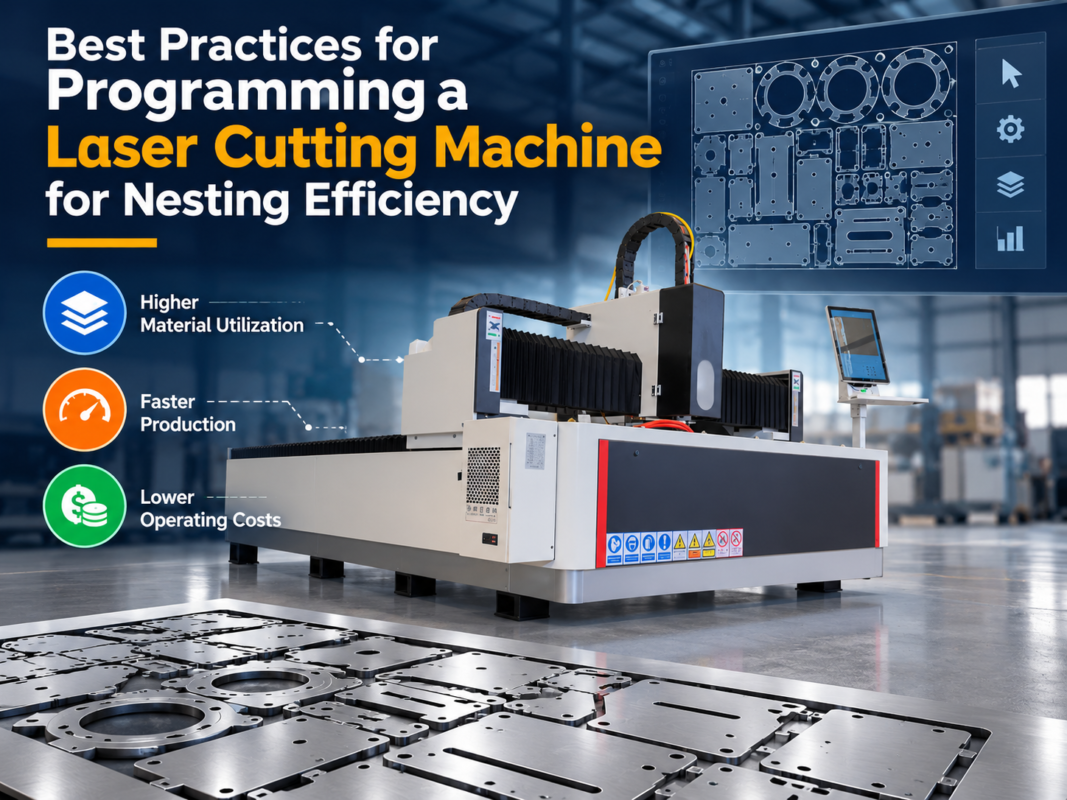
Nesting efficiency is the ratio of the area of the parts cut to the total area of the raw sheet. It is expressed as:
Efficiency (%) = (Area of Parts / Total Sheet Area) x 100
Advanced nesting software uses ‘Part-in-Part’ nesting and ‘Common Line Cutting’ to push this efficiency above 80%. Common line cutting allows two parts to share a single cut path, reducing both the time taken and the amount of gas consumed.

Laser Cutting Parameter Table
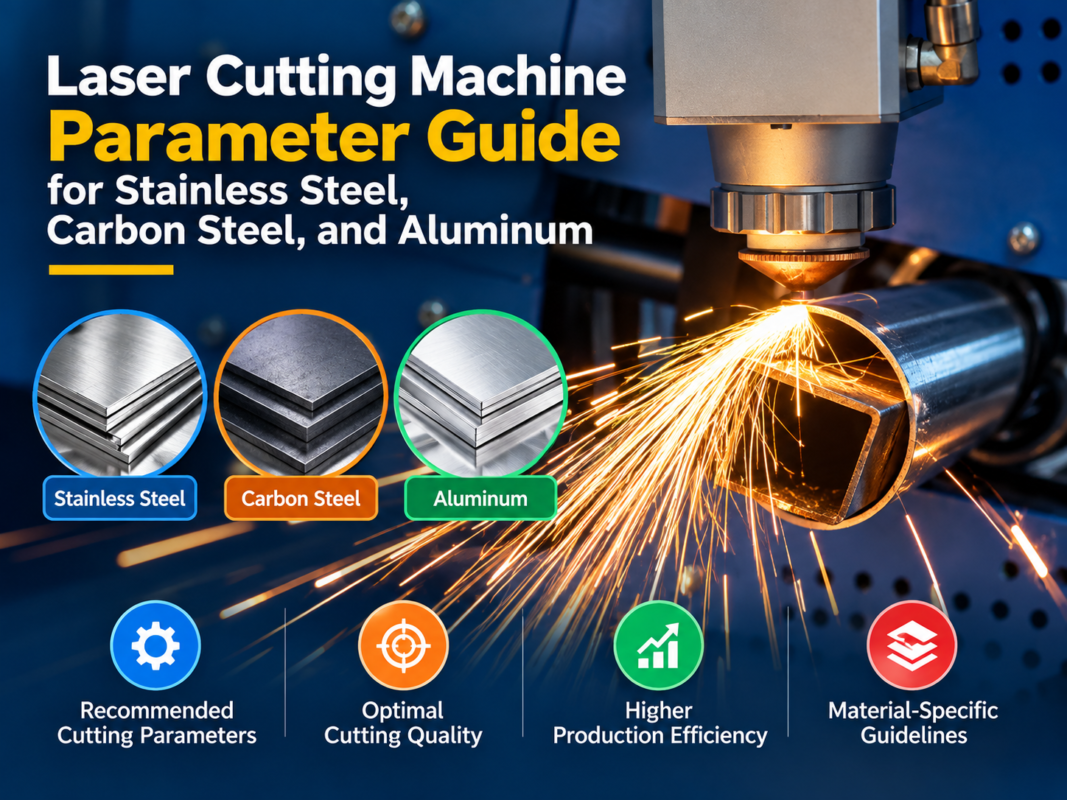
The following table provides a general guideline for automated fiber laser cutting parameters across different power levels for Mild Steel (using Oxygen) and Stainless Steel (using Nitrogen). Note: These values are indicative and may vary based on the specific CNC system and machine brand.
| Material | Thickness (mm) | Laser Power (kW) | Cutting Speed (m/min) | Gas Pressure (Bar) | Focus Position (mm) |
|---|---|---|---|---|---|
| Mild Steel | 2 | 3 | 6.0 – 8.0 | 0.6 – 0.8 (O2) | -1.0 to -2.0 |
| Mild Steel | 10 | 6 | 2.2 – 2.8 | 0.5 – 0.7 (O2) | +2.0 to +4.0 |
| Mild Steel | 20 | 12 | 1.2 – 1.6 | 0.4 – 0.6 (O2) | +5.0 to +8.0 |
| Stainless Steel | 2 | 3 | 15.0 – 20.0 | 12.0 – 14.0 (N2) | -1.5 to -2.5 |
| Stainless Steel | 6 | 6 | 4.5 – 6.0 | 16.0 – 18.0 (N2) | -4.0 to -6.0 |
| Stainless Steel | 12 | 12 | 2.5 – 3.5 | 18.0 – 22.0 (N2) | -8.0 to -10.0 |
| Aluminum | 3 | 3 | 12.0 – 15.0 | 12.0 – 14.0 (N2) | -2.0 to -3.0 |
| Aluminum | 10 | 12 | 5.0 – 7.0 | 16.0 – 20.0 (N2) | -6.0 to -9.0 |
Common Engineering Mistakes in Automated Laser Cutting
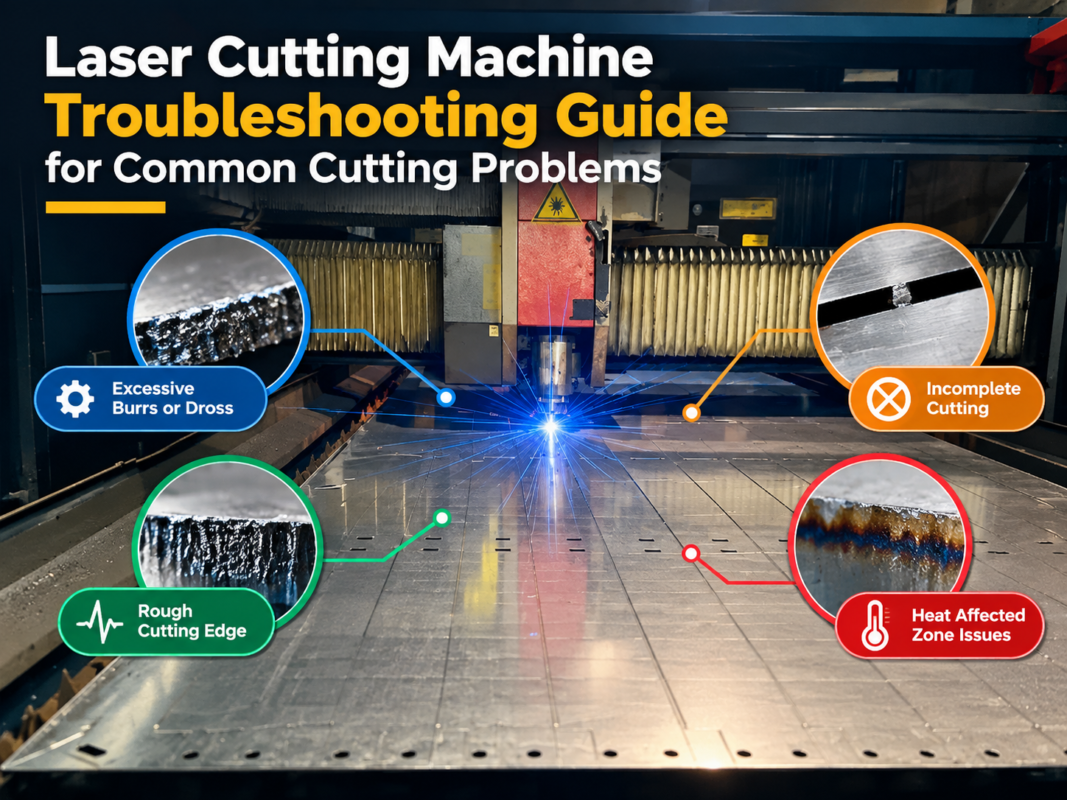
Even with the most advanced automation, human error in setup or logic can lead to significant waste. One of the most common mistakes is ignoring the ‘Lead-in’ and ‘Lead-out’ strategy. In automated nesting, if the lead-ins are too long or placed incorrectly, they can collide with adjacent parts or cause the laser to tip the part, leading to a machine crash. Engineers must use software that automatically detects potential collisions and adjusts the cutting sequence accordingly.
Another frequent error is improper gas selection or purity. Using low-purity Nitrogen (less than 99.99%) when cutting stainless steel will result in yellowing or oxidation of the edge, which may require secondary cleaning—defeating the purpose of automation. Similarly, failing to maintain the air compressor filters in a ‘Shop Air’ cutting setup can introduce moisture or oil into the laser head, leading to expensive lens damage and downtime.
Over-nesting is also a hidden productivity killer. While it is tempting to squeeze as many parts as possible onto a sheet to save material, if the ‘skeleton’ (the remaining scrap) becomes too thin, it can warp under the heat of the laser. This warping can cause the cutting head to strike the material. A balanced approach that maintains the structural integrity of the sheet during the cutting process is essential for reliable, unattended operation.
Finally, many shops fail to update their technology tables. As the protective windows and nozzles age, the optimal cutting parameters shift. Relying on ‘factory default’ settings for the entire life of the machine leads to a gradual decrease in speed and quality. Automated systems should be periodically calibrated, and the CNC parameters should be fine-tuned to reflect the current state of the machine’s optics and mechanical components.
Selection Checklist for Automated Laser Cutting Machines
When investing in a laser cutting machine with a focus on automation and efficiency, use the following checklist to evaluate your options:
- CNC Controller Capability: Does the system support high-speed communication (EtherCAT) and real-time parameter adjustment? Is the interface user-friendly for the operators?
- Nesting Software Integration: Does the software support common line cutting, bridge cutting, and automatic collision avoidance? Can it import files directly from your CAD/ERP system?
- Drive System and Acceleration: What is the maximum G-force? Are the motors high-inertia or low-inertia? (High-inertia is often better for stability in heavy-duty machines).
- Automated Features: Does the machine include an automatic nozzle changer, motorized focus adjustment, and automatic sheet edge detection?
- Material Handling Options: Is the machine compatible with future upgrades like pallet changers, loading robots, or material towers?
- Laser Source Reliability: Is the fiber laser source from a reputable manufacturer (e.g., IPG, Raycus, nLIGHT) with a proven track record of stability?
- After-Sales Support: Does the manufacturer provide remote diagnostics? In an automated environment, quick software troubleshooting is as important as mechanical repair.
Frequently Asked Questions (FAQ)
1. How does nesting software improve production efficiency?
Nesting software optimizes the arrangement of parts on a metal sheet to minimize scrap. Beyond just saving material, advanced nesting reduces the total travel distance of the laser head and can implement ‘Common Line Cutting,’ where one cut separates two parts, effectively doubling the cutting speed for those edges and reducing gas consumption.
2. What is the difference between ‘Fly-Cutting’ and standard cutting?
Fly-cutting (or Leapfrog motion) is an automation technique where the laser head does not stop and start for every hole. Instead, it moves in a continuous path, and the laser pulses on and off at high speeds as it passes over the programmed shapes. This is significantly faster for sheets with hundreds of small perforations.
3. Can I automate the cutting of different materials in one session?
Yes, provided the machine is equipped with an automatic nozzle changer and a CNC system that can store multiple parameter libraries. The machine can cut a sheet of stainless steel, automatically swap the nozzle and gas type, and then proceed to cut a sheet of aluminum without manual intervention.
4. Why is ‘Positioning Accuracy’ different from ‘Repeatability’?
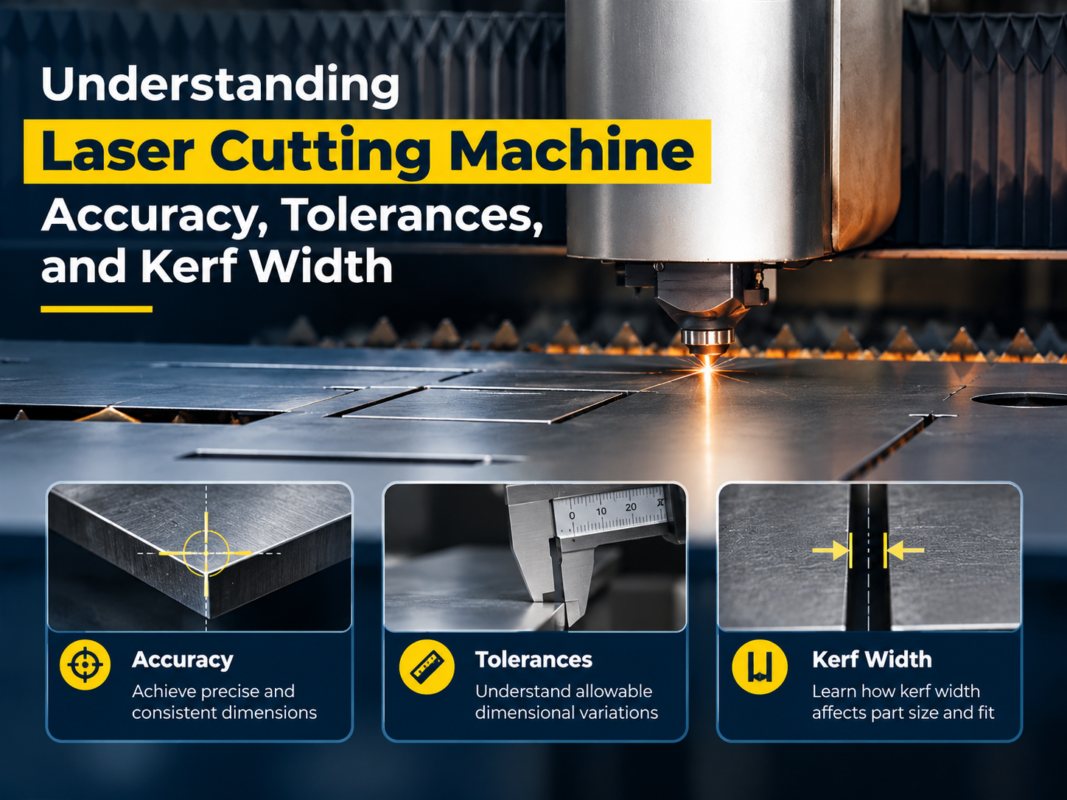
Positioning accuracy refers to how close the machine can get to a specific coordinate. Repeatability refers to how consistently it can return to that same spot. For automation, high repeatability is crucial to ensure that parts cut at the beginning of a shift are identical to those cut at the end, especially when using robotic unloading systems that expect parts to be in a precise location.
5. Is compressed air a viable assist gas for automated cutting?
Yes, compressed air is increasingly popular for cutting thin to medium-thickness materials (up to 6mm) because it is significantly cheaper than Nitrogen or Oxygen. However, it requires a high-quality filtration and drying system to ensure the air is free of oil and moisture, which could otherwise damage the laser optics.